The debate about how to hang toilet paper rolls has been raging for decades, with some people insisting that it should be hung over-handed, while others are equally adamant that it should be hung under-handed. While this may seem like a trivial matter, it has become a source of much amusement and heated discussion, with both sides presenting their arguments with great conviction.
Toilet Paper Hanging?
Those who prefer over-hand hanging argue that it is more convenient and easier to reach, as the paper is hanging down towards you. They also point out that it is more aesthetically pleasing, as the design on the toilet paper is visible and facing outwards. Furthermore, they argue that it is more hygienic, as the paper is less likely to touch the wall or other surfaces, reducing the risk of germ transfer.
On the other hand, those who prefer under-hand hanging argue that it is more practical, as it prevents the paper from unraveling and falling to the floor. They also argue that it is more efficient, as less paper is used when the roll is hanging under-handed. Furthermore, they point out that it is more traditional, as this is how toilet paper was originally designed to be hung. The under-hand method can also be beneficial for households with pets or small children who might otherwise play with or unroll an over-hand hung roll.
The debate has become so popular that it has even spawned its own internet memes and social media pages, with people sharing humorous images and videos about the topic. There are also numerous online forums where people can discuss the matter at length and share their opinions.
Some people have taken the debate to extreme lengths, with one man reportedly suing a hotel for hanging the toilet paper under-handed, claiming it was a breach of his human rights. Others have even conducted scientific studies to determine which method is more effective, with one study suggesting that over-handed hanging is more efficient, as it allows people to tear off the paper more easily. Additionally, research has suggested that over-handed hanging might be more environmentally friendly due to the reduced likelihood of waste from accidental over-pulling.
Despite the seriousness with which some people take this topic, it is important to remember that it is ultimately a matter of personal preference. Whether you prefer over-handed or under-handed hanging, the most important thing is that you are comfortable and able to use the toilet paper in a way that suits you best.
In many households, this debate can be influenced by personal quirks and habits. For instance, taller individuals might find over-hand more intuitive, while those with limited reach might find under-hand less troublesome. Accessibility and ease of use are essential considerations, especially for individuals with disabilities or elderly family members, who might find one method preferable over the other for practical reasons.
In the end, it is perhaps best to approach this debate with a sense of humor and to enjoy the ongoing discussion and banter that it generates. After all, there are far more important things in life to worry about than the direction in which your toilet paper is hanging. Embracing the light-hearted nature of this debate can foster good-natured conversations and laughs, reminding us that sometimes, the simplest topics can bring joy and camaraderie.
Rod: A creative force, blending words, images, and flavors. Blogger, writer, filmmaker, and photographer. Cooking enthusiast with a sci-fi vision. Passionate about his upcoming series and dedicated to TNC Network. Partnered with Rebecca Washington for a shared journey of love and art. View all posts
Rod: A creative force, blending words, images, and flavors. Blogger, writer, filmmaker, and photographer. Cooking enthusiast with a sci-fi vision. Passionate about his upcoming series and dedicated to TNC Network. Partnered with Rebecca Washington for a shared journey of love and art.
Hollywood vs. Reality: How LA’s Wilshire Subway Was Really Built
Wilshire Subway: Did LA blast subway tunnels under Wilshire Boulevard? Hollywood says yes — engineers say no. Here’s how Metro safely tunneled beneath Miracle Mile.
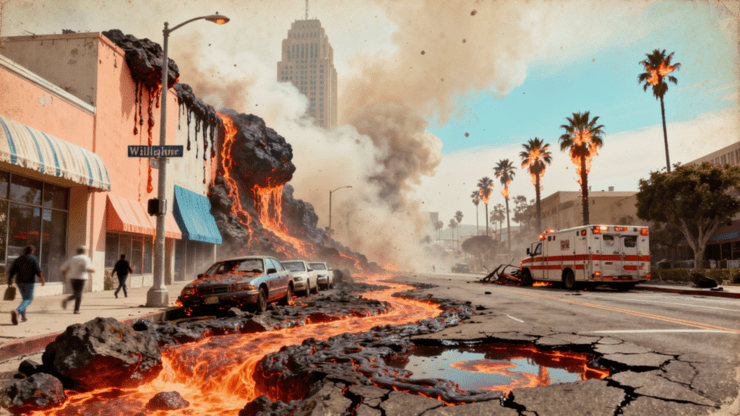
When the 1997 disaster film Volcano depicted lava erupting along Wilshire Boulevard and referenced blasting during Red Line subway construction, it delivered gripping cinema — but not accurate engineering.
In reality, Los Angeles Metro did not rely on large-scale blasting to construct subway tunnels beneath Wilshire Boulevard and the Miracle Mile. Instead, engineers used tunnel boring machines (TBMs) specifically to avoid the very risks Hollywood dramatized.
Why Blasting Was Avoided
The Wilshire Corridor sits atop historic oil fields, making methane gas pockets a known and serious concern. A deadly methane explosion near Fairfax Avenue in 1985 led to heightened scrutiny of underground construction in the area. Blasting in such conditions could have caused unpredictable gas releases, ground instability, or damage to surface structures.
As a result, Metro engineers chose pressurized, closed-face tunnel boring machines, which allow for:
Controlled excavation in dense urban environments
Continuous ground support to prevent settlement
Integrated gas detection and ventilation systems
These machines grind slowly through soil and rock while installing precast concrete tunnel linings, creating a sealed, gas-resistant structure as they advance.
The Real Engineering Feat
Although Volcano took creative liberties for dramatic effect, the true story of tunneling under Wilshire is no less impressive. Advances in TBM technology and methane mitigation ultimately allowed the Metro D Line (formerly the Red Line/Purple Line) to safely pass through one of Los Angeles’ most geologically complex corridors — without explosions, collapsing streets, or cinematic chaos.
Bottom Line
Volcano remains a memorable piece of 1990s disaster cinema, but its portrayal of subway construction is fiction. The real achievement lies in decades of careful planning, modern tunneling technology, and engineering solutions that quietly reshaped Los Angeles beneath its busiest boulevard.
More than half of new articles on the internet are being written by AI – is human writing headed for extinction?
A new study finds over 50% of online articles are now AI-generated, raising questions about the future of human writing. Discover why formulaic content is most at risk, and why authentic, creative voices may become more valuable than ever.
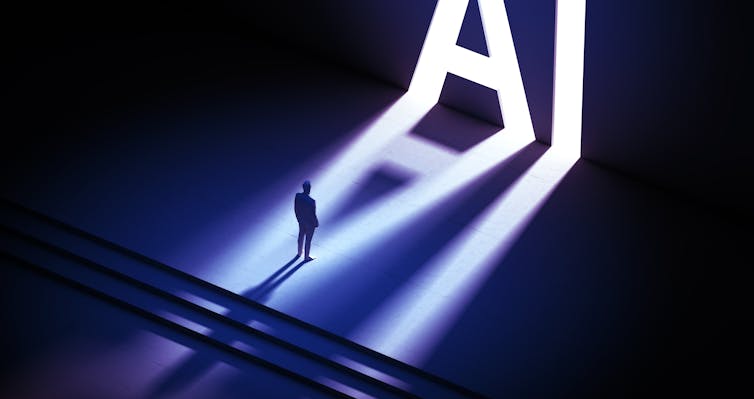
Preserving the value of real human voices will likely depend on how people adapt to artificial intelligence and collaborate with it. BlackJack3D/E+ via Getty Images
More than half of new articles on the internet are being written by AI – is human writing headed for extinction?
Francesco Agnellini, Binghamton University, State University of New York The line between human and machine authorship is blurring, particularly as it’s become increasingly difficult to tell whether something was written by a person or AI. Now, in what may seem like a tipping point, the digital marketing firm Graphite recently published a study showing that more than 50% of articles on the web are being generated by artificial intelligence. As a scholar who explores how AI is built, how people are using it in their everyday lives, and how it’s affecting culture, I’ve thought a lot about what this technology can do and where it falls short. If you’re more likely to read something written by AI than by a human on the internet, is it only a matter of time before human writing becomes obsolete? Or is this simply another technological development that humans will adapt to?
It isn’t all or nothing
Thinking about these questions reminded me of Umberto Eco’s essay “Apocalyptic and Integrated,” which was originally written in the early 1960s. Parts of it were later included in an anthology titled “Apocalypse Postponed,” which I first read as a college student in Italy. In it, Eco draws a contrast between two attitudes toward mass media. There are the “apocalyptics” who fear cultural degradation and moral collapse. Then there are the “integrated” who champion new media technologies as a democratizing force for culture.Italian philosopher, cultural critic and novelist Umberto Eco cautioned against overreacting to the impact of new technologies.Leonardo Cendamo/Getty Images Back then, Eco was writing about the proliferation of TV and radio. Today, you’ll often see similar reactions to AI. Yet Eco argued that both positions were too extreme. It isn’t helpful, he wrote, to see new media as either a dire threat or a miracle. Instead, he urged readers to look at how people and communities use these new tools, what risks and opportunities they create, and how they shape – and sometimes reinforce – power structures. While I was teaching a course on deepfakes during the 2024 election, Eco’s lesson also came back to me. Those were days when some scholars and media outlets were regularly warning of an imminent “deepfake apocalypse.” Would deepfakes be used to mimic major political figures and push targeted disinformation? What if, on the eve of an election, generative AI was used to mimic the voice of a candidate on a robocall telling voters to stay home? Those fears weren’t groundless: Research shows that people aren’t especially good at identifying deepfakes. At the same time, they consistently overestimate their ability to do so. In the end, though, the apocalypse was postponed. Post-election analyses found that deepfakes did seem to intensify some ongoing political trends, such as the erosion of trust and polarization, but there’s no evidence that they affected the final outcome of the election.
Listicles, news updates and how-to guides
Of course, the fears that AI raises for supporters of democracy are not the same as those it creates for writers and artists. For them, the core concerns are about authorship: How can one person compete with a system trained on millions of voices that can produce text at hyper-speed? And if this becomes the norm, what will it do to creative work, both as an occupation and as a source of meaning? It’s important to clarify what’s meant by “online content,” the phrase used in the Graphite study, which analyzed over 65,000 randomly selected articles of at least 100 words on the web. These can include anything from peer-reviewed research to promotional copy for miracle supplements. A closer reading of the Graphite study shows that the AI-generated articles consist largely of general-interest writing: news updates, how-to guides, lifestyle posts, reviews and product explainers. https://stmdailynews.com/wp-admin/post-new.php#visibility The primary economic purpose of this content is to persuade or inform, not to express originality or creativity. Put differently, AI appears to be most useful when the writing in question is low-stakes and formulaic: the weekend-in-Rome listicle, the standard cover letter, the text produced to market a business. A whole industry of writers – mostly freelance, including many translators – has relied on precisely this kind of work, producing blog posts, how-to material, search engine optimization text and social media copy. The rapid adoption of large language models has already displaced many of the gigs that once sustained them.
Collaborating with AI
The dramatic loss of this work points toward another issue raised by the Graphite study: the question of authenticity, not only in identifying who or what produced a text, but also in understanding the value that humans attach to creative activity. How can you distinguish a human-written article from a machine-generated one? And does that ability even matter? Over time, that distinction is likely to grow less significant, particularly as more writing emerges from interactions between humans and AI. A writer might draft a few lines, let an AI expand them and then reshape that output into the final text. This article is no exception. As a non-native English speaker, I often rely on AI to refine my language before sending drafts to an editor. At times the system attempts to reshape what I mean. But once its stylistic tendencies become familiar, it becomes possible to avoid them and maintain a personal tone. Also, artificial intelligence is not entirely artificial, since it is trained on human-made material. It’s worth noting that even before AI, human writing has never been entirely human, either. Every technology, from parchment and stylus paper to the typewriter and now AI, has shaped how people write and how readers make sense of it. Another important point: AI models are increasingly trained on datasets that include not only human writing but also AI-generated and human–AI co-produced text. This has raised concerns about their ability to continue improving over time. Some commentators have already described a sense of disillusionment following the release of newer large models, with companies struggling to deliver on their promises.
Human voices may matter even more
But what happens when people become overly reliant on AI in their writing? Some studies show that writers may feel more creative when they use artificial intelligence for brainstorming, yet the range of ideas often becomes narrower. This uniformity affects style as well: These systems tend to pull users toward similar patterns of wording, which reduces the differences that usually mark an individual voice. Researchers also note a shift toward Western – and especially English-speaking – norms in the writing of people from other cultures, raising concerns about a new form of AI colonialism. In this context, texts that display originality, voice and stylistic intention are likely to become even more meaningful within the media landscape, and they may play a crucial role in training the next generations of models. If you set aside the more apocalyptic scenarios and assume that AI will continue to advance – perhaps at a slower pace than in the recent past – it’s quite possible that thoughtful, original, human-generated writing will become even more valuable. Put another way: The work of writers, journalists and intellectuals will not become superfluous simply because much of the web is no longer written by humans. Francesco Agnellini, Lecturer in Digital and Data Studies, Binghamton University, State University of New York This article is republished from The Conversation under a Creative Commons license. Read the original article.
Dive into “The Knowledge,” where curiosity meets clarity. This playlist, in collaboration with STMDailyNews.com, is designed for viewers who value historical accuracy and insightful learning. Our short videos, ranging from 30 seconds to a minute and a half, make complex subjects easy to grasp in no time. Covering everything from historical events to contemporary processes and entertainment, “The Knowledge” bridges the past with the present. In a world where information is abundant yet often misused, our series aims to guide you through the noise, preserving vital knowledge and truths that shape our lives today. Perfect for curious minds eager to discover the ‘why’ and ‘how’ of everything around us. Subscribe and join in as we explore the facts that matter. https://stmdailynews.com/the-knowledge/
STM Daily News Pop-Culture Fact Check: Do electric cars have fuses?
Do electric cars have fuses? In a 2023 episode of The Neighborhood, Marty claims electric cars don’t have fuses — but that’s technically incorrect and out of character for an engineer. STM Daily News breaks down why EVs absolutely have fuses and why the sitcom got it wrong.
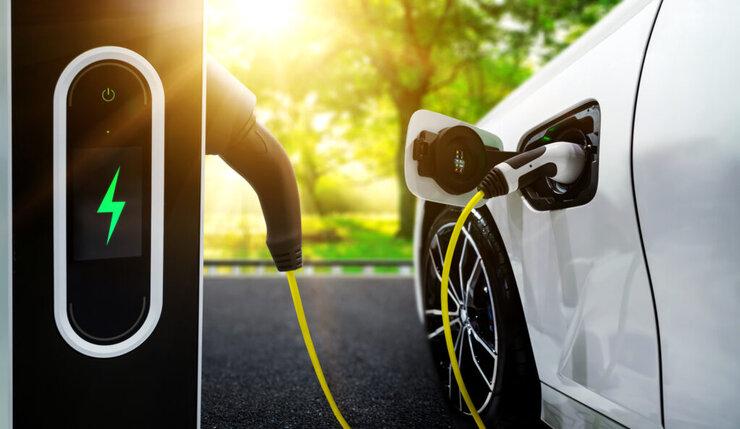
EV charging station for electric car in concept of green energy and eco power produced from sustainable source to supply to charger station in order to reduce CO2 emission .
Do electric cars have fuses?
Did The Neighborhood Get EV Fuses Wrong? Yes — And Marty Should’ve Known Better
Unexpectedly, Marty — the character known for his intelligence, engineering degree, and technical precision — responds with an emphatic: “No!”
For long-time fans, this answer sparked a double-take. Why? Because electric vehicles don’t just have fuses — they rely on multiple types of them to operate safely. Marty, of all people, should know this. While the line serves as a quick punchline, it contradicts the very foundation of his character: a calm, highly educated engineer who rarely makes basic technical mistakes.
The joke lands, but at the cost of technical accuracy and character consistency. Marty is typically the voice of reason and knowledge in the Butler household — especially when it comes to anything mechanical or technological. The idea that he’d misunderstand something as fundamental as an EV fuse system feels out of step with the show’s established internal logic.
Realistically, this is a line that should’ve come from Calvin, whose old-school, hands-on approach to mechanics leaves plenty of room for misunderstandings about modern electric vehicles. Marty would normally be the one who corrects him — not the other way around.
Fact Check: Yes, Electric Cars Have Fuses
Electric cars contain multiple fuse systems, each designed to protect different components and ensure safe operation:
High-Voltage Fuses: Protect the battery pack, inverter, DC-DC converter, and onboard charger.
12-Volt Fuses: Handle accessories like interior lighting, infotainment, power windows, door locks, and safety electronics.
Pyro-Fuses: Specialized safety fuses that instantly disconnect the battery during a crash.
This makes Marty’s confident “No!” not just incorrect but mechanically impossible. EVs rely on fuses in the same way traditional vehicles do — just at higher voltages and sometimes in more sophisticated configurations.
Why the Writers Made This Choice
Like many sitcoms, The Neighborhood occasionally sacrifices technical accuracy for quick comedic timing. The joke required a snappy, surprising answer — and Marty’s overconfident reply delivered that punch. The trade-off is that it momentarily breaks character for a laugh.
For viewers who pay attention to both pop culture and automotive technology, the moment stood out as one of the most transparent technical slips in the series.
What Marty Should Have Said
A more accurate and in-character response could’ve been:
Advertisement
“Yes — and EVs actually use high-voltage fuses, which is why our shop is called The Fuse Box.”
Or the scene could’ve played out with Calvin giving the wrong answer first, and Marty correcting him, keeping both accuracy and humor intact. Either way, the writers opted for the faster laugh, even if it meant bending Marty’s character logic.
Dive into “The Knowledge,” where curiosity meets clarity. This playlist, in collaboration with STMDailyNews.com, is designed for viewers who value historical accuracy and insightful learning. Our short videos, ranging from 30 seconds to a minute and a half, make complex subjects easy to grasp in no time. Covering everything from historical events to contemporary processes and entertainment, “The Knowledge” bridges the past with the present. In a world where information is abundant yet often misused, our series aims to guide you through the noise, preserving vital knowledge and truths that shape our lives today. Perfect for curious minds eager to discover the ‘why’ and ‘how’ of everything around us. Subscribe and join in as we explore the facts that matter. https://stmdailynews.com/the-knowledge/