

Food and Beverage
Tips for Encouraging Exploration and Learning in the Kitchen

Last Updated on July 23, 2024 by Daily News Staff

(Family Features) Planning, preparing, serving and cleaning up after mealtimes are skills that can be beneficial to everyone. Yet when it comes to meal prep, many families find it easier to tell children to go play rather than bringing them into the kitchen to help create meals.
“One of the best ways to encourage children to try new foods or simply eat their vegetables is to allow them the opportunity to plan and prepare a meal,” said Emily Hicks, a registered dietitian nutritionist for KinderCare Learning Centers. “Involving children in meal planning, preparation and serving in age-appropriate ways helps give them some autonomy in a world in which they often feel they do not have many choices. This can help reduce stress and food fights at mealtime, creating a more peaceful and enjoyable experience for everyone.”
Meal preparation can also bring certain classroom lessons such as counting and fractions to life as children measure ingredients. It can also be an opportunity for an impromptu science lesson about the parts of plants and animals people eat and the nutritional benefits of healthy foods.
Consider these tips to get kids more involved in mealtimes:
- Choose mealtimes when the family is typically together and make preparation a team effort. Allow children to pick out vegetables or other items at the grocery store (or from the fridge, freezer or pantry) to prepare. Alternatively, if you have a few meal options planned for the week, children can help decide what to make on which days. The key is to empower children to make choices, thus helping develop a sense of responsibility and encouraging variety in food choices.
- Allow children to help wash produce, stir food in mixing bowls, get tools like cutting boards from the cupboard and more. Children can help peel or chop foods or stir pots or pans with adult guidance. Even younger children can assist by using child-safe utensils to peel or chop food, sprinkle toppings, pour dressings or combine pre-measured meal components.
- Children can help place food on the table and serve themselves at young ages. Young children may find it easier to serve themselves by using measuring cups instead of serving utensils. Encourage children to try some of each food on the table but try not to push them to eat anything in particular. Instead, give them time and multiple opportunities to try different foods. If they are able, teach children how to pass food to others at the table and engage in conversation. Sharing at the table can help foster social development and family connections.
- After mealtime, children can help clean up and put things away. Even if they can’t reach the sink, children can help clear items from the table. They can also assist with putting dishes in the dishwasher or ferrying clean dishes to an adult to put back in cupboards and drawers. Additionally, they can help wipe up spills and crumbs, and push in chairs, too.
“The benefits of family mealtime go beyond health,” Hicks said. “Involving your children in your mealtime routines can bring food and fun to the table, creating a sense of belonging that will boost the whole family’s well-being. Remember, you don’t have to stick to a routine 100% of the time to be beneficial. Just do your best to keep routines when possible and practice balance.”
For more tips to help incorporate children into meal planning and preparation, visit kindercare.com.
SOURCE:
KinderCare


Food and Beverage
ALDI Rolls Out Its First-Ever Line of Ready-Made Meals
ALDI is entering the ready-made meal market with seven fresh, refrigerated dishes priced under $15. The rollout begins in October, with nationwide availability expected by January 2027.
Busy shoppers looking for a quick dinner option will soon have something new waiting in the refrigerated section at ALDI.
ALDI is launching its first-ever collection of fresh, ready-made meals, introducing seven single-serve and family-size dishes designed to combine convenience, affordability and familiar comfort-food flavors.
The new meals begin rolling out at select ALDI stores in early October, with additional markets receiving them throughout the fall. ALDI expects the entire collection to be available nationwide by January 2027.
Seven New Meals — Ready to Heat and Eat
Unlike frozen dinners, ALDI says its new meals are delivered fresh and sold refrigerated in easy-to-heat trays.
The initial lineup includes five single-serve meals priced under $8:
- Beef Bolognese Spaghetti
- Beef Brisket with White Mac & Cheese
- Butter Chicken & Rice
- Chicken Burrito Bowl
- Chicken Fettuccine Alfredo
Two larger family-size meals will be available for under $15:
- Chicken and Bacon Mac n’ Cheese
- Meat Lovers Pizza Bake
ALDI says the recipes were developed around ingredients including chicken breast, smoked beef brisket, real cheeses and made-from-scratch sauces.
The single-serve meals contain between 30 and 46 grams of protein per serving, according to the company. Family-size offerings provide between 16 and 22 grams per serving.
Convenience Without the Restaurant Bill
The move puts ALDI more directly into the growing market for prepared refrigerated meals — an increasingly attractive option for consumers who want something more substantial than a frozen dinner but don’t necessarily have the time or desire to cook from scratch.
ALDI cited the 2026 International Food Information Council Food & Health Survey, which found that 61% of Americans consider convenience an important factor when purchasing food.
“Our shoppers are looking for meals that fit into busy lives without sacrificing quality or stretching their budgets,” Joan Kavanaugh, Vice President of National Buying for ALDI U.S., said in the company’s announcement.
ALDI supplier Kitchen Food Company said hundreds of recipes were tested while developing the new collection.
Dinner in Just a Few Minutes
Convenience is a major part of the concept.
Depending on the variety, ALDI’s single-serve meals require roughly 3½ to 4½ minutes in the microwave. The company instructs consumers to heat the meals until they reach an internal temperature of 165 degrees Fahrenheit.
The larger family meals can be prepared in a conventional oven at 350 degrees, with approximately 40 minutes of total cooking time.
Shoppers will find the meals in the refrigerated meals section near the front of participating ALDI stores.
More Meals Are Coming
The seven dishes are only the beginning.
ALDI says it plans to introduce additional ready-made meals through its rotating ALDI Finds selection every month during the next year. That could allow the retailer to experiment with additional recipes, flavors and seasonal offerings while expanding its presence in prepared foods.
The timing also makes the rollout noteworthy. With restaurant meals and takeout competing for household food dollars, prepared grocery-store meals occupy a middle ground: more convenient than cooking from scratch while potentially costing considerably less than feeding a family through restaurant delivery or takeout.
For ALDI shoppers, that means the familiar question of “What’s for dinner?” may soon have a few more answers — and they could be waiting just inside the front door.
Source: ALDI, September 22, 2026
Sources & Related Links
- ALDI — Official Announcement: ALDI Launches First-Ever Collection of Ready-Made Meals
- Original Press Release: ALDI Ready-Made Meals — PR Newswire
- Consumer Research: 2026 IFIC Food & Health Survey — Convenience Outranks Healthfulness
- More ALDI News: ALDI U.S. Newsroom
- More Food & Drink Coverage: STM Daily News Food & Drink
Hungry for More?
Looking for more easy dinner ideas, meal-planning inspiration, and affordable meals? Explore STM Daily News Food & Drink for the latest recipes, food news, restaurant stories, culinary trends and more.


A poached egg may look fancy, but it is surprisingly easy to prepare. With a tender egg white and warm, runny yolk, it makes a delicious addition to toast, salads, breakfast bowls or avocado toast.
Ingredients
- 1 large fresh egg
- Water
- 1 teaspoon white vinegar, optional
- Salt and black pepper
- Toast or English muffin for serving, optional
Instructions
Fill a saucepan with about 2 to 3 inches of water and bring it to a gentle simmer. Avoid a rolling boil, which can break the egg apart.
Crack the egg into a small cup or bowl. Add the vinegar to the water if desired—it helps the egg white hold its shape.
Gently slide the egg into the simmering water. Cook for about 3 minutes for a runny yolk, or 4 to 5 minutes for a firmer center.
Remove the egg with a slotted spoon and place it briefly on a paper towel to absorb excess water. Season with salt and pepper, then serve immediately.
Quick Tip
Fresh, cold eggs usually produce the neatest poached eggs because their whites are thicker and stay closer to the yolk while cooking.
Simple, satisfying and ready in minutes, a poached egg is an easy way to make an everyday breakfast feel a little more special.
recipes
Fiber is Trending: Sorghum Makes it Simple
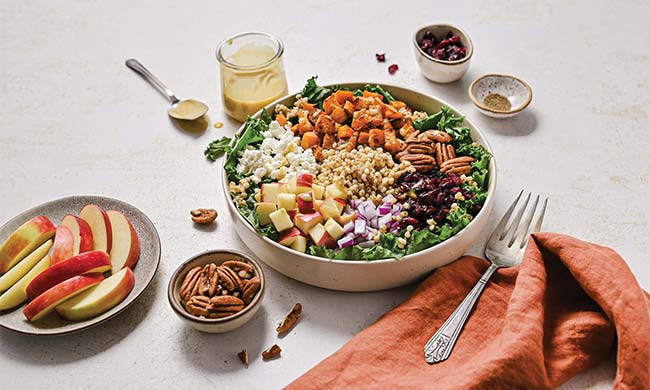
One whole grain quietly gaining recognition for its impressive nutritional profile and versatility in the kitchen is sorghum. This Sorghum Fall Harvest Salad makes it easy to add more fiber to your plate, pairing whole-grain sorghum with seasonal produce like kale, butternut squash and apples.
Fiber is Trending: Sorghum Makes it Simple
(Feature Impact) Protein has long dominated nutrition headlines. Now, dietitians encourage people to pay close attention to another important nutrient: fiber.
One whole grain quietly gaining recognition for its impressive nutritional profile and versatility in the kitchen is sorghum. It’s a naturally gluten-free whole grain that provides both fiber and protein, contains naturally occurring antioxidants and supplies essential nutrients including magnesium, iron and B vitamins.
One reason sorghum is attracting attention is its fiber content. Whole-grain sorghum contains a type of fiber called resistant starch, which research has shown can contribute to healthy body weight and improved insulin resistance.
Unlike many refined gluten-free products that are lower in fiber, sorghum delivers the benefits of a whole grain while remaining naturally gluten-free. Whether you have celiac disease, gluten sensitivity or simply want to enjoy a wider variety of whole grains, sorghum is an easy addition to your menu.
 Another reason nutrition experts are taking a closer look at sorghum is its antioxidant content, specifically its health-promoting polyphenols.
Perhaps the biggest surprise is how easy sorghum is to cook with. Whole-grain sorghum offers a mild, slightly nutty flavor and pleasantly chewy texture, making it a delicious alternative for brown rice, quinoa or farro in grain bowls, soups and salads.
Pearled sorghum cooks faster, making it ideal for busy weeknights. Sorghum flour can replace wheat flour in pancakes, muffins and quick breads, while popped sorghum creates bite-sized crunchy kernels for a fun snack or topping for yogurt, soups and salads. For example, this Sorghum Fall Harvest Salad makes it easy to add more fiber to your plate, pairing whole-grain sorghum with seasonal produce like kale, butternut squash and apples.
Healthy eating doesn’t have to mean following the latest trend. Sometimes it simply means rediscovering nutritious foods that have stood the test of time. With its combination of fiber, protein, antioxidants and naturally gluten-free, whole-grain goodness, sorghum is an ancient grain worth adding to your pantry.
You can find dozens of recipes, cooking tips and meal ideas at SorghumCheckoff.com/recipes.
Easy Sorghum Swaps for Everyday Dishes
If you’re looking for ways to add more sorghum to your meals, these easy swaps make it simple to enjoy this versatile grain in recipes you already love.
- Replace rice. Use cooked whole-grain or pearled sorghum instead of white or brown rice in grain bowls, stir fries, burrito bowls and side dishes.
- Swap for pasta. Stir cooked sorghum into pasta salads or use it in place of small pasta shapes in soups for a hearty twist.
- Mix into salads. Add cooked sorghum to green salads, grain salads or vegetable salads for extra texture and whole-grain nutrition.
- Boost your breakfast. Stir cooked sorghum into oatmeal, yogurt parfaits or breakfast bowls then top with fruit, nuts or cinnamon.
- Bake with sorghum flour. Replace wheat flour in pancakes, muffins, cookies, waffles or quick breads with sorghum flour for a mild, slightly sweet flavor.
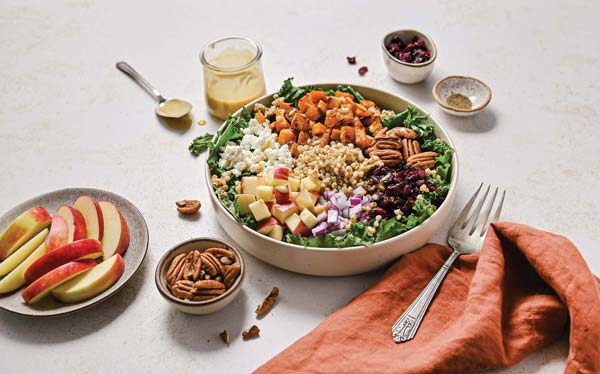
Sorghum Fall Harvest Salad
Recipe courtesy of Sorghum Checkoff
- 1 cup roasted butternut squash, cubed
- 1/4 cup olive oil, plus additional for drizzling, divided
- salt, to taste
- pepper, to taste
- 2 tablespoons apple cider vinegar
- 1 tablespoon sorghum syrup
- 1 teaspoon Dijon mustard
- 4 cups kale, chopped
- 1 cup cooked whole-grain sorghum
- 1 small apple, diced
- 1/2 cup pecan halves, toasted
- 1/4 cup dried cranberries
- 1/4 cup red onions, diced
- 1/3 cup feta cheese, crumbled
- Preheat oven to 400 F. Toss cubed butternut squash with a drizzle of olive oil and salt and pepper, to taste.
- Spread on a baking sheet and roast for 20-25 minutes, flipping halfway, until tender and golden.
- In a jar or small bowl, whisk 1/4 cup olive oil, apple cider vinegar, sorghum syrup, Dijon mustard and salt and pepper, to taste, until emulsified.
- Add chopped kale to a large bowl. Massage with a drizzle of olive oil 1-2 minutes until tender.
- Arrange precooked sorghum, roasted squash, apple, pecans, dried cranberries, red onion and feta cheese on top of kale.
- Drizzle with sorghum syrup dressing just before serving. Toss lightly to combine or serve dressing on the side.

SOURCE:
🍴 What’s your favorite food, recipe, or dining spot? Tell us in the comments! Then subscribe to the STM Daily News newsletter for fresh recipes, restaurant news, food trends, and delicious stories delivered straight to your inbox. Join our growing community of food lovers today!





