Connect with us

News

Girls and boys solve math problems differently – with similar short-term results but different long-term outcomes

Girls and Boys: New research finds girls and women more often use step-by-step algorithms, while boys and men use shortcuts. Accuracy is similar short-term, but algorithm use links to weaker performance on complex problems and may help explain gaps on high-stakes tests and in math-intensive careers.

Published

on

file 20251104 56 f7pa3s.jpg?ixlib=rb 4.1
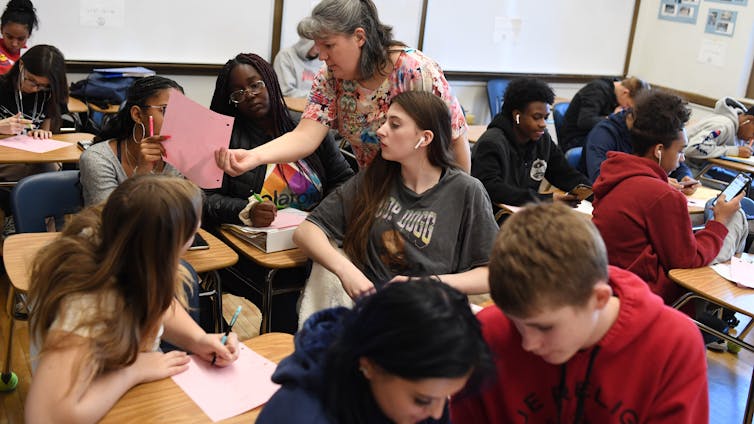
Math teachers have to accommodate high school students’ different approaches to problem-solving.
RJ Sangosti/MediaNews Group/The Denver Post via Getty Images

Girls and boys solve math problems differently – with similar short-term results but different long-term outcomes

Sarah Lubienski, Indiana University; Colleen Ganley, Florida State University, and Martha Makowski, University of Alabama

Among high school students and adults, girls and women are much more likely to use traditional, step-by-step algorithms to solve basic math problems – such as lining up numbers to add, starting with the ones place, and “carrying over” a number when needed. Boys and men are more likely to use alternative shortcuts, such as rounding both numbers, adding the rounded figures, and then adjusting to remove the rounding.

But those who use traditional methods on basic problems are less likely to solve more complex math problems correctly. These are the main findings of two studies our research team published in November 2025.

This new evidence may help explain an apparent contradiction in the existing research – girls do better at math in school, but boys do better on high-stakes math tests and are more likely to pursue math-intensive careers. Our research focuses not just on getting correct answers, but on the methods students use to arrive at them. We find that boys and girls approach math problems differently, in ways that persist into adulthood.

A possible paradox

In a 2016 study of U.S. elementary students, boys outnumbered girls 4 to 1 among the top 1% of scorers on a national math test. And over many decades, boys have been about twice as likely as girls to be among the top scorers on the SAT and AP math exams.

However, girls tend to be more diligent in elementary school and get better grades in math class throughout their schooling. And girls and boys across the grades tend to score similarly on state math tests, which tend to be more aligned with the school curriculum and have more familiar problems than the SAT or other national tests.

Beyond grades and test scores, the skills and confidence acquired in school carry far beyond, into the workforce. In lucrative STEM occupations, such as computer science and engineering, men outnumber women 3 to 1. Researchers have considered several explanations for this disparity, including differences in math confidence and occupational values, such as prioritizing helping others or making money. Our study suggests an additional factor to consider: gender differences in approaches to math problems.

When older adults think of math, they may recall memorizing times tables or doing the tedious, long-division algorithm. Memorization and rule-following can pay off on math tests focused on procedures taught in school. But rule-following has its limits and seems to provide more payoff among low-achieving than high-achieving students in classrooms.

More advanced math involves solving new, perplexing problems rather than following rules.

A teacher shows students a math lesson.
Math can be creative, not rote.
AP Photo/Jacquelyn Martin

Differing strategies

In looking at earlier studies of young children, our research team was struck by findings that young boys use more inventive strategies on computation problems, whereas girls more often use standard algorithms or counting. We wondered whether these differences disappear after elementary school, or whether they persist and relate to gender disparities in more advanced math outcomes.

In an earlier study, we surveyed students from two high schools with different demographic characteristics to see whether they were what we called bold problem-solvers. We asked them to rate how much they agreed or disagreed with specific statements, such as “I like to think outside the box when I solve math problems.” Boys reported bolder problem-solving tendencies than girls did. Importantly, students who reported bolder problem-solving tendencies scored higher on a math problem-solving test we administered.

Our newer studies echo those earlier results but reveal more specifics about how boys and girls, and men and women, approach basic math problems.

Advertisement
Get More From A Face Cleanser And Spa-like Massage

Algorithms and teacher-pleasing

In the first study, we gave three questions to more than 200 high school students: “25 x 9 = ___,” “600 – 498 = ___,” and “19 + 47 + 31 = ___.” Each question could be solved with a traditional algorithm or with a mental shortcut, such as solving 25 x 9 by first multiplying 25 x 8 to get 200 and then adding the final 25 to get 225.

Regardless of their gender, students were equally likely to solve these basic computation items correctly. But there was a striking gender difference in how they arrived at that answer. Girls were almost three times as likely as boys – 52% versus 18% – to use a standard algorithm on all three items. Boys were far more likely than girls – 51% versus 15% – to never use an algorithm on the questions.

We suspected that girls’ tendency to use algorithms might stem from greater social pressure toward compliance, including complying with traditional teacher expectations.

So, we also asked all the students eight questions to probe how much they try to please their teachers. We also wanted to see whether algorithm use might relate to gender differences in more advanced problem-solving, so we gave students several complex math problems from national tests, including the SAT.

As we suspected, we found that girls were more likely to report a desire to please teachers, such as by completing work as directed. Those who said they did have that desire used the standard algorithm more often.

Also, the boys in our sample scored higher than the girls on the complex math problems. Importantly, even though students who used algorithms on the basic computation items were just as likely to compute these items correctly, algorithm users did worse on the more complex math problems.

Continuing into adulthood

In our second study, we gave 810 adults just one problem: “125 + 238 = ___.” We asked them to add mentally, which we expected would discourage them from using an algorithm. Again, there was no gender difference in answering correctly.

But 69% of women, compared to 46% of men, reported using the standard algorithm for their mental calculation, rather than using another strategy entirely.

We also gave the adults a more advanced problem-solving test, this time focused on probability-related reasoning, such as the chances that rolling a seven-sided die would result in an even number. Similar to our first study, women and those who used the standard algorithm on the computation problem performed worse on the reasoning test.

Advertisement
Get More From A Face Cleanser And Spa-like Massage

The importance of inventiveness

We identified some factors that may play a role in these gender differences, including spatial-thinking skills, which may help people develop alternate calculation approaches. Anxiety about taking tests and perfectionism, both more prevalent among women, may also be a factor.

We are also interested in the power of gender-specific social pressures on girls. National data has shown that young girls exhibit more studious behavior than do boys. And the high school girls we studied were more likely than boys to report they made a specific effort to meet teachers’ expectations.

More research definitely is needed to better understand this dynamic, but we hypothesize that the expectation some girls feel to be compliant and please others may drive teacher-pleasing tendencies that result in girls using algorithms more frequently than boys, who are more socialized to be risk-takers.

While compliant behavior and standard math methods often lead to correct answers and good grades in school, we believe schools should prepare all students – regardless of gender – for when they face unfamiliar problems that require inventive problem-solving skills, whether in daily life, on high-stakes tests or in math-intensive professions.The Conversation

Sarah Lubienski, Professor of Mathematics Education, Indiana University; Colleen Ganley, Professor of Developmental Psychology, Florida State University, and Martha Makowski, Assistant Professor of Mathematics, University of Alabama

This article is republished from The Conversation under a Creative Commons license. Read the original article.

Hollywood vs. Reality: How LA’s Wilshire Subway Was Really Built

Link: https://stmdailynews.com/wilshire-subway-tunneling-hollywood-vs-reality/

Author

View recent photos

Unlock fun facts & lost history—get The Knowledge in your inbox!

We don’t spam! Read our privacy policy for more info.

Advertisement
Get More From A Face Cleanser And Spa-like Massage

Discover more from Daily News

Subscribe to get the latest posts sent to your email.

Continue Reading
Advertisement Sports Research
Click to comment

Leave a Reply

Your email address will not be published. Required fields are marked *

News

Gregory Outreach Services Expands Food Access with Addition of Third Refrigerated Van

Gregory Outreach Services expands its mission to fight food insecurity with the addition of a third refrigerated van, doubling food access for low-income seniors and veterans in Phoenix.

Published

on

Last Updated on January 8, 2026 by Daily News Staff

Gregory Outreach Services expands its mission to fight food insecurity with the addition of a third refrigerated van, doubling food access for low-income seniors and veterans in Phoenix.

Gregory Outreach Services’ newest refrigerated delivery van expands food access for low-income seniors and veterans across Phoenix.

Phoenix, AZ — Gregory Outreach Services has taken a major step forward in its mission to fight food insecurity with the addition of a third refrigerated delivery van, significantly expanding its capacity to serve low-income seniors and veterans across the Phoenix area.

The new refrigerated van was made possible through the support of a generous anonymous donor. The expansion is further strengthened by the continued generosity of the BHHS Legacy Foundation, who donated fresh produce to support the organization’s growing distribution efforts.

As rising food costs and inflation continue to place pressure on individuals living on fixed incomes, the need for reliable access to nutritious food has never been greater. This latest addition to the organization’s mobile fleet allows Gregory Outreach Services to double the number of individuals served, while maintaining strict food safety and quality standards.

“As the cost of living continues to rise, more seniors and veterans are struggling to afford nutritious food,” said Diana Gregory, Founder and CEO of Gregory Outreach Services. “This van allows us to bridge a widening gap for individuals living on fixed incomes, many of whom face mobility challenges and limited access to fresh food options.”

Meeting a Growing Community Need

Gregory Outreach Services works directly with seniors and veterans who are disproportionately affected by inflation, medical expenses, and transportation barriers. For many, simply reaching a grocery store can be a challenge. Refrigerated vehicles are essential to ensuring that fresh fruits and vegetables arrive safely and consistently at senior housing communities, veteran shelters, and community distribution sites.

“This third van complements the two already in operation and represents a critical milestone in our growth,” Gregory added. “We are deeply grateful to our anonymous donor for investing in our mission, and to BHHS Legacy Foundation’s Board of Directors and its CEO, Jerry Wissink for Legacy’s generosity in donating fresh produce. Together, this support allows us to scale our impact and respond to the increasing needs of our community.”

Expanding Impact While Preserving Dignity

With an expanded fleet and increased food supply, Gregory Outreach Services is better positioned to address food insecurity, promote healthier outcomes, and serve seniors and veterans with dignity, respect, and care. The organization’s mobile delivery model ensures help reaches those who need it most — directly and reliably.

About Gregory Outreach Services

Advertisement
Get More From A Face Cleanser And Spa-like Massage

Gregory Outreach Services is a nonprofit organization dedicated to improving health outcomes for low-income seniors and veterans through mobile produce delivery, nutrition education, and community-based wellness programs. By bringing fresh food directly to those most in need, the organization works to reduce food insecurity and strengthen community wellness.

For more information, visit dianagregory.com.

Stories of Change: People Making a Difference

Discover inspiring stories of changemakers making a positive impact. Explore videos and articles of people tackling today’s biggest challenges with action and hope. Visit: https://stmdailynews.com/stories-of-change/

Dive into “The Knowledge,” where curiosity meets clarity. This playlist, in collaboration with STMDailyNews.com, is designed for viewers who value historical accuracy and insightful learning. Our short videos, ranging from 30 seconds to a minute and a half, make complex subjects easy to grasp in no time. Covering everything from historical events to contemporary processes and entertainment, “The Knowledge” bridges the past with the present. In a world where information is abundant yet often misused, our series aims to guide you through the noise, preserving vital knowledge and truths that shape our lives today. Perfect for curious minds eager to discover the ‘why’ and ‘how’ of everything around us. Subscribe and join in as we explore the facts that matter.  https://stmdailynews.com/the-knowledge/   Get The Knowledge. Read more community news and local stories at STM Daily News.


Discover more from Daily News

Subscribe to get the latest posts sent to your email.

Continue Reading

Economy

How Bird Flu Upended the U.S. Egg Market — and Why Prices Are Finally Beginning to Stabilize

Egg Market: Egg prices surged during the U.S. bird flu outbreak as laying hen inventories collapsed. Here’s how flock recovery is helping stabilize egg prices today.

Published

on

The US Egg Market: A row of egg cartons on a grocery store shelf with price tags showing stabilized prices following the U.S. bird flu outbreak.

How Bird Flu Upended the U.S. Egg Market — and Why Prices Are Finally Beginning to Stabilize

Few grocery items frustrated American consumers over the past two years quite like eggs. Once an inexpensive staple, egg prices surged to historic highs following a prolonged outbreak of highly pathogenic avian influenza (HPAI), commonly known as bird flu. Today, however, prices appear to be stabilizing. Here’s how the crisis unfolded — and why relief is finally showing up at the checkout line.

The Bird Flu Crisis and Its Impact on Egg Supply

Beginning in 2022, the United States experienced one of the most severe bird flu outbreaks in modern history. The virus spread rapidly through poultry farms, forcing producers to cull millions of birds to prevent further transmission. Egg-laying hens were hit especially hard, leading to a sharp drop in egg production nationwide. By 2024 and into early 2025, the cumulative losses totaled well over one hundred million birds. With fewer hens producing eggs, supply tightened dramatically, and prices soared. At the peak of the crisis, consumers in some regions saw egg prices climb above six dollars per dozen.

Why Egg Prices Stayed High for So Long

Unlike other agricultural products, egg production cannot rebound quickly after a disruption. When laying hens are lost, they must be replaced with young birds known as pullets. These pullets require approximately four to six months to mature before they begin producing eggs. Even after farms were cleared to restock, producers faced additional challenges. Strict biosecurity measures, concerns about reinfection, and the logistical complexity of rebuilding flocks slowed the recovery process. As a result, egg supplies remained tight long after the initial outbreaks subsided.

Laying Hen Inventory Recovery Takes Shape

By mid to late 2025, signs of recovery became more apparent. Producers gradually increased pullet placements, and national laying hen inventories began to grow. While the total number of hens had not yet returned to pre-outbreak levels, the upward trend marked an important turning point. This steady rebuilding of flocks meant more eggs entering the supply chain. Wholesale markets responded first, with prices easing as inventories improved. Retail prices soon followed, signaling that the worst of the supply shock was beginning to fade.

Egg Prices Begin to Stabilize

As laying hen inventories recovered, egg prices moved away from their record highs. By late 2025 and into early 2026, prices at many grocery stores had fallen noticeably compared to peak levels. While costs remain somewhat higher than pre-pandemic norms, the extreme volatility seen during the height of the bird flu crisis has largely subsided. Additional factors also helped stabilize the market. Federal and state efforts to strengthen biosecurity, limited egg imports to supplement domestic supply, and improved disease monitoring all contributed to a more balanced egg market.

What This Means for Consumers

For consumers, the stabilization of egg prices offers a welcome sense of normalcy. Shoppers are less likely to encounter sudden price spikes, and eggs are once again becoming a predictable part of grocery budgets. While prices may not return to the ultra-low levels seen years ago, the recovery of laying hen inventories suggests that the egg market is on firmer footing. Continued vigilance against future outbreaks will be critical, but for now, the outlook is far more stable than it was during the height of the bird flu crisis.

Looking Ahead

The bird flu outbreak served as a reminder of how vulnerable food systems can be to disease disruptions. Thanks to gradual flock rebuilding and improved supply conditions, egg prices are stabilizing — a sign that recovery, while slow, is real. If current trends continue, consumers and producers alike may finally be moving past one of the most turbulent chapters in the modern egg market.

Further Reading & Sources


Author

  • Rod Washington

    Rod: A creative force, blending words, images, and flavors. Blogger, writer, filmmaker, and photographer. Cooking enthusiast with a sci-fi vision. Passionate about his upcoming series and dedicated to TNC Network. Partnered with Rebecca Washington for a shared journey of love and art.

    View all posts

Discover more from Daily News

Subscribe to get the latest posts sent to your email.

Continue Reading

Stories of Change

Senior Assist Day Marks Four Years of Supporting Seniors in South Phoenix

Senior Assist Day celebrates four years of serving seniors at Tanner Gardens in South Phoenix, led by Assistory Outreach Services and founder Jon Taylor.

Published

on

Senior Assist Day celebrates four years of serving seniors at Tanner Gardens in South Phoenix, led by Assistory Outreach Services and founder Jon Taylor.

Senior Assist Day Marks Four Years of Supporting Seniors in South Phoenix

PHOENIX, AZ — Senior Assist Day reached a meaningful milestone this year, marking four years of service to seniors living at Tanner Gardens in South Phoenix. Hosted by Assistory Outreach Services, the annual event continues to provide dignity, connection, and practical support to an often-overlooked population.

A Personal Beginning

The origins of Senior Assist Day are deeply personal for Assistory Outreach Services founder and CEO Jon Taylor.
“The origin of me going to Tanner Gardens was when I was with the 100 Black Men of Phoenix. We used to do a luncheon for seniors around December.”
That early connection took on new meaning as Taylor’s mother began showing signs of dementia, inspiring him to create an event rooted in empathy and care.
“I got a great feeling from being around those senior citizens. Senior Assist Day is roughly based on my mother.”

An Event That Continues to Grow

What began as a small gathering has grown into a full community experience. Seniors now enjoy catered meals, live music, personal care services, and gifts tailored to their needs. This year’s event included authentic Mexican food, live holiday music, haircuts provided by AJ’s Barbershop, and the donation of new shoes — a moment that stood out for many attendees.
“Seeing the excitement and how they were reacting to the new shoes was incredible,” Taylor said.

Beyond a Single Day

Senior Assist Day also helps build trust between Assistory Outreach Services and the residents of Tanner Gardens, opening the door to additional programs throughout the year. Through initiatives like the Digital Access Program for Seniors (DAPs), the organization helps seniors develop basic phone and computer skills, empowering them to stay connected and informed.

Challenges and Purpose

Keeping the event going year after year requires dedication and resources. Taylor personally raises funds and helps purchase gifts for more than 130 residents annually. Despite the challenges, his motivation remains strong.
“I do feel as though this is my ministry. I’m providing services, and I’m being fulfilled at the same time.”

Looking Ahead

Looking to the future, Taylor envisions Senior Assist Day becoming an all-day celebration, offering expanded services, entertainment, and meals — all focused exclusively on the residents of Tanner Gardens. As the event enters its fifth year, Senior Assist Day stands as a testament to what consistent community engagement and compassion can achieve.   About Assistory Outreach Services Assistory Outreach Services is a community-based nonprofit organization dedicated to empowering seniors, low-income residents, and individuals experiencing homelessness. Assistory helps senior citizens embrace technology by teaching basic cell phone and computer skills, using a formula rooted in education, love, and patience to remove fear and build confidence. In addition to senior programming, the organization focuses on serving low-income and homeless populations by providing food boxes, holiday meals, and homeless care packages known as Assist Packs. This year, Assistory Outreach Services is expanding its impact by partnering with other nonprofits and religious organizations to coordinate food distribution through its community food pantry. Coverage by STM Daily News.

STM Daily News is a multifaceted podcast that explores a wide range of topics, from life and consumer issues to the latest in food and beverage trends. Our discussions dive into the realms of science, covering everything from space and Earth to nature, artificial intelligence, and astronomy. We also celebrate the amateur sports scene, highlighting local athletes and events, including our special segment on senior Pickleball, where we report on the latest happenings in this exciting community. With our diverse content, STM Daily News aims to inform, entertain, and engage listeners, providing a comprehensive look at the issues that matter most in our daily lives. https://stories-this-moment.castos.com/

Author

  • Rod Washington

    Rod: A creative force, blending words, images, and flavors. Blogger, writer, filmmaker, and photographer. Cooking enthusiast with a sci-fi vision. Passionate about his upcoming series and dedicated to TNC Network. Partnered with Rebecca Washington for a shared journey of love and art.

    View all posts

Discover more from Daily News

Subscribe to get the latest posts sent to your email.

Continue Reading

Trending