

Family
6 Tips for Traveling with Your Furry Friend

Last Updated on September 30, 2025 by Daily News Staff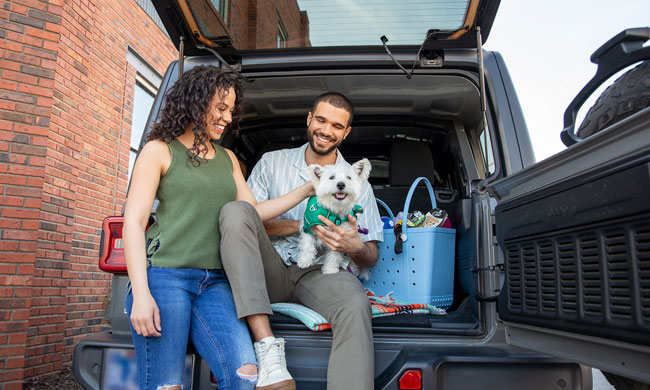
(Family Features) No matter the distance or destination, a vacation can make for a perfect opportunity for families – including four-legged family members – to bond and spend some quality time together.
In fact, nearly three-quarters (72%) of dog owners feel traveling with their pet makes the trip more enjoyable, according to research1 by Hilton, and 56% plan to travel with their pet in the next 3-9 months. Because traveling with your furry friend requires additional planning to ensure it’s a safe, comfortable experience for everyone, consider these tips from the experts at Mars Petcare and find more information to make your trip inclusive for your pets at BetterCitiesforPets.com.

Photo courtesy of Adobe Stock
Check In with Your Veterinarian
Prior to your trip – within 10 days if traveling by plane and the airline requires a health certificate – visit your vet to ensure all vaccinations are up-to-date and that your pet doesn’t have any underlying issues or conditions that could be worsened by dealing with the stress (or heat) of traveling. Also ask for ideas to relax your furry friend in the event he or she becomes afraid, anxious or uncomfortable while in the car or on the plane.

Photo courtesy of Adobe Stock
Ensure Proper Identification
Regardless of where you’re going or how you’re getting there, it’s important to make sure your pet can be properly identified. Ensure microchip data is current and that he or she is wearing a secure collar with your name and updated contact info. Also label your pet’s carrier in case you become separated.

Photo courtesy of Mars Petcare
Look for Pet-Friendly Accommodations
According to the same survey1, 79% of pet parents’ destination choices are influenced by their pets, so it’s important to research locations that offer pet-friendly lodging options. For example, to meet pet parents’ evolving needs when traveling, Mars Petcare joined forces with Hilton to provide pet-friendly resources at its approximately 5,000 hotels across the U.S. and Canada, including access to Mars PET On-Demand and a dedicated Hilton team sharing local pet-friendly resources.
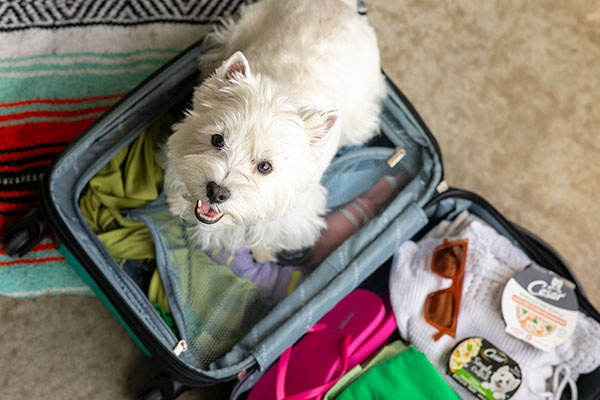
Photo courtesy of CESAR Canine Cuisine
Prep a Travel Kit
Remember you’re not the only one who will need some essentials while away from home and pack a bag for your four-legged friend that includes food, portable bowls, medications, a leash, grooming supplies and a pet-friendly first-aid kit. It may also be a good idea to pack a favorite toy to provide a sense of comfort.
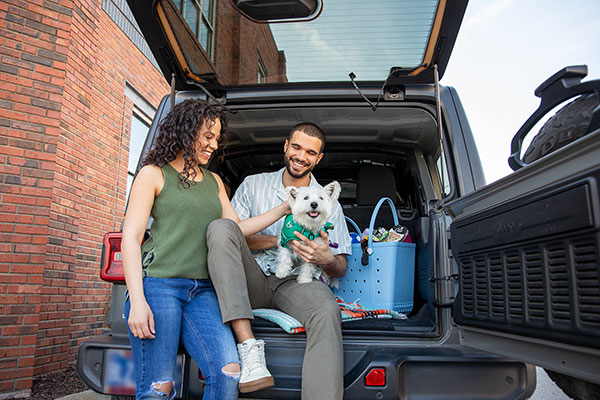
Photo courtesy of CESAR Canine Cuisine
Creating Meaningful Memories
As a pet owner, you want to provide the best care possible so your dog can travel comfortably. To celebrate traveling with four-legged friends, Mars Petcare and Hilton teamed up to provide free CESAR® Canine Cuisine (while supplies last) for all dogs staying at participating pet-friendly Hilton hotels in the U.S. and in select Toronto area hotels on International Dog Day – a holiday created by pet lifestyle expert Colleen Paige. By offering free CESAR Canine Cuisine on Saturday, Aug. 26, dog lovers and their pups can enjoy their travel experience together even more. Providing pets with meals and complements they love shows them the love they deserve, which can help make the most of spontaneous adventures.

Photo courtesy of Adobe Stock
Secure Your Pet During Travel
Whether traveling by car, boat, plane or train, the safest way to take your pet along is in a secure and well-ventilated crate or carrier that is large enough for him or her to stand, sit, lay down and turn around inside. Secure the carrier so it will not slide or shift in case of abrupt stops or turns. If you opt to forgo the carrier while driving, keep your pet harnessed in the back seat and ensure heads and paws remain inside the vehicle.
1Hilton partnered with Morning Consult to inform the Pet-Friendly Survey study. Morning Consult conducted an online survey among a sample of n=2,200 adults, n=1,445 of the adult sample self-identified as owning a pet, and n=1,029 of the self-identified pet owners self-identified as owning a dog and n=773 self-identified as owning a cat. The survey was conducted in May 2023.
SOURCE:
Mars Petcare


How Invasive Pests Spread and How You Can Help Stop Them
(Feature Impact) Invasive pests can hide in places you’d never expect, and once they spread, they can destroy the trees, plants and food people rely on every day. These pests pose a serious threat to agriculture, forests, ecosystems and the food supply. Many invasive species cannot travel far on their own; instead people unknowingly move them from place to place.
According to the U.S. Department of Agriculture’s Animal and Plant Health Inspection Service, invasive pests hitchhike on everyday items such as plants, produce, firewood, vehicles and outdoor equipment. That makes many common activities – from traveling and online shopping to camping and gardening – potential “pathways” for invasive pests to move and reach new areas. Understanding these pathways is the first step to stopping pests before they spread.
Traveling Abroad
When you travel abroad and return from another country, the agricultural items you bring back can introduce new invasive pests into the U.S. and threaten crops or trees that have no natural defenses against them. Even harmless-looking fruit, seed packets or souvenirs made with plant materials can carry pests such as fruit flies and diseases like citrus canker. That’s why it’s critical travelers declare food, plants and other agricultural products when entering the country from abroad.
Shopping Online
Just because you can order seeds and plants from sellers around the world, it doesn’t mean those items are legal or safe to import. In fact, some invasive snails and plant diseases have entered the U.S. this way. Many agricultural products from overseas require permits, inspections or special paperwork before they can enter the country. Buyers should check where an item ships from, learn the import requirements before purchasing and make sure sellers follow all labeling and shipping rules.
 Partaking in Outdoor Activities
When you spend time outdoors hiking, camping, hunting or fishing, you could inadvertently spread invasive species. For example, transporting firewood from one location to another can spread tree-killing insects, such as the emerald ash borer, which can live inside the wood and emerge later in a new area. The safest choice is to buy or use firewood where you burn it. Additionally, clean all outdoor clothing, gear, equipment and vehicles before leaving an area.
Moving Outdoor Equipment
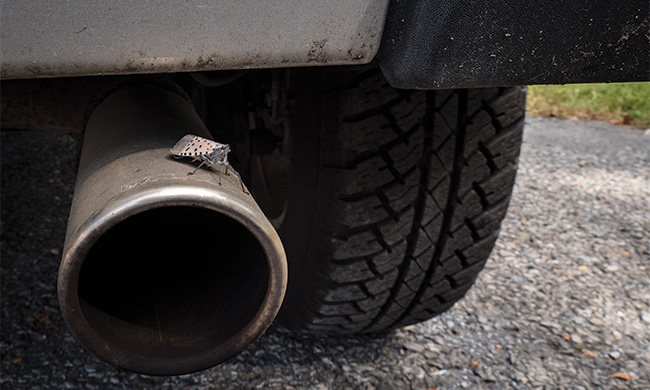
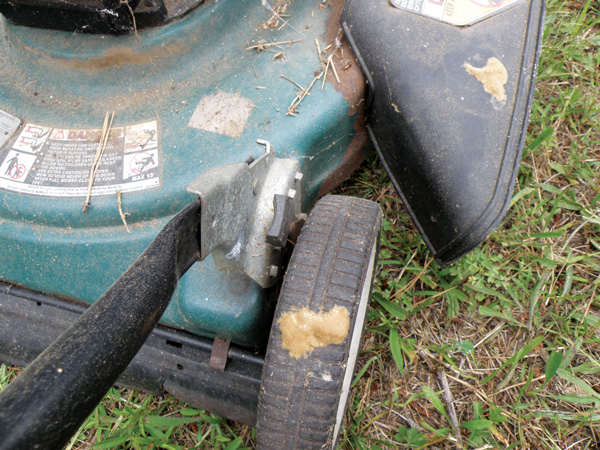
When you move to a new home, your move can create another opportunity for invasive insects to travel. Before relocating patio furniture, grills, trailers or lawn equipment, inspect and clean them carefully. Look for insects, plant debris and egg masses like spotted lanternfly egg masses, which can blend into outdoor surfaces and look like smears of mud or clumps of dirt. A few minutes of checking and cleaning before you move can help prevent pests from invading your new neighborhood.
Invasive pests cost the U.S. billions of dollars every year and damage forests, farms, parks and backyards. Stopping invasive pests starts with simple steps anyone can take: checking what you pack, clean, move and buy. When everyone does their part, fewer pests spread and communities stay healthier and more resilient.
Visit aphis.usda.gov/hungrypests to learn more about how invasive pests spread and the simple steps you can take to help stop them and protect America’s agriculture and natural resources.
Invasive Pest Protection Checklist
- Declare all food, plants and agricultural items when returning from another country.
- When ordering items online, check where the products ship from and verify U.S. import rules before buying.
- If you’re camping, buy firewood where you plan to burn it. Clean clothing, gear and vehicles before leaving.
- Before moving to a new home, inspect outdoor furniture and equipment, looking closely for egg masses or insects.
Content courtesy of USDA.

SOURCE:
United States Department of Agriculture
📰 Enjoying STM Daily News? Join the conversation!
💬 Leave a comment, share your thoughts, and subscribe to our newsletter for the latest stories, updates, and “News You Can Use This Moment!” delivered to your inbox.
Stay connected with STM Daily News!
Food and Beverage
Back-to-School Sandwiches to Nourish Kids’ Bodies and Minds
Back-to-School Sandwiches: When you picture a schoolchild sitting down at a cafeteria table and opening their lunchbox, you’re probably already imagining there’s a sandwich inside. For a nutritious lunch, pack this Ham, Turkey, Bacon and Cheese Pocket. Some school days call for simple, fun comfort food, and that’s where the Fluffernutter comes in.
Last Updated on July 16, 2026 by Daily News Staff
(Feature Impact) When you picture a schoolchild sitting down at a cafeteria table and opening their lunchbox, you’re probably already imagining there’s a sandwich inside. After all, it’s a classic back-to-school staple that parents rely on for ease, convenience and nutrition when they’re trying to get everyone out the door on time – all you have to do is put bread and fillings together, and you’re good to go. That, of course, only leaves the question of which bread and fillings to choose.
A new survey conducted by Atomik Research on behalf of Nature’s Own indicated that modern parents care a lot about nutrition when deciding which kind of bread to buy, with 88% of survey respondents agreeing that feeding their kids wholesome bread feels like an easy parenting win.
With clean, simple ingredients that balance taste and nutrition, Nature’s Own bread supports an attainably healthy lifestyle for busy families. Whether you choose a classic white bread, reach for a whole-wheat loaf or need to account for dietary restrictions, you can feel confident you’re selecting bread that’s free from artificial colors, flavors and preservatives.
For a nutritious lunch that fits the bill for 85% of parents who show strong interest in breads made with whole grains, pack this Ham, Turkey, Bacon and Cheese Pocket made with honey wheat bread. The flavorful mixture of deli meats and American cheese baked to perfection make every bite satisfying. Consider getting the whole family involved assembly-line style to make multiple batches at once, cutting down on time in the kitchen during the week ahead while encouraging learning opportunities as kids count ingredients and measure fillings.
Some school days call for simple, fun comfort food, and that’s where the Fluffernutter comes in. Soft bread, creamy peanut butter and fluffy marshmallow make for a combination that nourishes kids of all ages not just physically, but emotionally. Whether you pack it as a lunchbox surprise or have it ready as an after-school treat, this is a sandwich that promises sweetness and nostalgia – a perfect fit for the 78% of parents who agreed that sandwiches are a canvas for small moments of care, like notes in lunch bags.
Since sandwiches are so customizable, you can easily adapt these recipes to your family’s unique preferences and needs. Whether you decide to use different seasonings or swap to a multigrain bread, there’s no such thing as a wrong sandwich decision as long as it works for you.
To view ingredients and decide what kind of loaf you want to stock up on during the school year, visit naturesownbread.com.
Ham, Turkey, Bacon and Cheese Pocket
- 8 slices Nature’s Own Honey Wheat Bread
- 1/4 pound deli turkey
- 1/4 pound deli ham
- 4 slices cooked bacon
- 4 slices white American cheese
- 1 egg
- 1 tablespoon cold water
- 1 teaspoon coarse salt
- Preheat oven to 350 F.
- Chop turkey, ham and bacon and toss together. Set aside.
- Using knife, cut off crust on each piece of bread.
- With rolling pin, roll and flatten each slice of crustless bread. Take four slices and place spoonful of chopped meats in middle of each slice. Top with broken slices of cheese.
- Place remaining slices of crustless bread on top of each pocket.
- In small bowl, crack egg and add water. Beat together. Dip fork into egg mixture and crimp each edge of pocket until two slices are sealed together. Repeat on each pocket. Brush top of each pocket with remaining egg mixture and sprinkle salt on top.
- Place on sheet pan and bake until golden brown, 7-10 minutes.
- Let cool a few minutes and enjoy.

Fluffernutter Sandwich
Total time: 10 minutes
Servings: 1
- 2 tablespoons peanut butter
- 2 slices Nature’s Own Butterbread
- 2 tablespoons marshmallow fluff
- Spread peanut butter on one bread slice. Spread marshmallow fluff on second slice. Put both slices together to form sandwich.

SOURCE:
child education
Toy Story 5’s ‘Lilypad’ is an indictment of the world that birthed the ‘iPad Kid’
Toy Story 5 introduces “Lilypad,” a kid-friendly tablet that sidelines Woody and Buzz—and spotlights how the “iPad kid” debate is less about bad parenting and more about work, childcare costs, and a broken social safety net.


Aarushi Bhandari, Davidson College
In the trailer for “Toy Story 5,” a little girl named Bonnie is playing with her toys when a package arrives in the mail.
She opens it to find Lilypad, a tablet for children.
The iconic toys from the series – Woody, Buzz Lightyear, the Potato Heads, Forky and Slinky Dog – then watch in dismay as Bonnie casts them all aside in favor of the bright tablet screen. Rex the dinosaur exclaims, “What? Extinction? Not again!”
The film zeros in on a uniquely 21st-century phenomenon: the “iPad kid,” a term used – often disparagingly – to describe a generation of children who grew up enchanted by screens.
A lot of the discussion around tablet use among kids shames parents, framing it as an example of lazy or bad parenting. Yet factors such as long working hours and lack of access to affordable childcare compel many parents to rely on tablets.
As a scholar of the attention economy – and also as a mom to a 4-year-old – I’ve noticed a disconnect between the resources U.S. society offers parents versus what’s expected of them in the digital age.
’ Woody, Buzz and the gang must prove that traditional toys still matter when Bonnie becomes captivated by a high-tech tablet named Lilypad.
The pandemic and the ‘square au pair’
When the first “Toy Story” came out in 1995, many single-income families could still afford to comfortably raise multiple kids. It was more common for new parents to live near their extended families, such as grandparents, to provide childcare support. Federal policies provided some low-income families with cash assistance that helped ease the cost of transition to parenthood.
Since then, parenting has become a lot more challenging. Single-income households with kids under 18 have steadily declined as wages have stagnated, forcing both parents into the workforce. At the same time, it’s harder to qualify for government benefits.
And even when moms do earn a paycheck, working moms experience what sociologists call the “motherhood penalty” – career disadvantages, such as lower wages and promotion barriers, due to childbirth – even as U.S. parental leave policies remain weak.
So it’s hardly a surprise that fewer Americans are choosing to become parents under these conditions. But those who did have kids in the years leading up to 2020 ran smack into the COVID-19 pandemic.
The lockdown that started in March 2020 following the outbreak of the pandemic led to closures of schools and many workplaces. Many parents either worked from home or provided critical work in grocery stores and hospitals. Kids stayed home and schools transitioned to remote-learning models.
It’s important to remember that many institutions with social legitimacy and authority encouraged the use of tablets during the COVID-19 pandemic lockdowns.
School systems around the world normalized their use for remote learning. Children as young as 4 were given tablets, which gave their parents space to complete their own remote work and other household tasks, with some moms referring to it as “the square au pair.”
In this sense, the tablet became a form of school-sanctioned childcare.
Economic activity was minimally disrupted. Productivity hummed along. And the kids? Comfortably distracted.
For some households, there’s little choice
When lockdowns ended, tablets remained integrated into the education system. In 2021, 4 in 5 U.S. households with children had a tablet. Beyond schoolwork, kids also use tablets for activities, such as video games and watching TV.
The adverse impacts of excessive screen time in general has been well documented for decades. But scholars have only recently unpacked the specific harms of interactive tablet use among young children.
Children who use tablets are more likely to experience emotional dysregulation and dependency on screens. Researchers have also found tablet use among kids to be significantly associated with ADHD diagnoses.
At the same time, research shows screen time use among children is tied to social class.
Parents from working- and middle-class households are more likely to rely on screens compared to high-income parents, who can hire childcare services, such as full-time nannies.
Parental education is also a factor. Americans generally have little grasp of digital hygiene – knowledge about best practices to minimize negative effects of screens. But households with parents who didn’t graduate from college are even more in the dark.
And while schools hand out tablets, most of them fail to provide students and families with a comprehensive education on the adverse impacts of excessive screen time.
In other words, this isn’t a Generation Alpha problem. Most people – adults included, with or without children – aren’t properly educated and informed about their choices around technology use. Yet adults continue to be shamed if they hand their kid a tablet. All the while, parents navigate the added burdens of challenging the educational status quo around tablets.
Frankenstein’s village
When work is the only sturdy pillar in a society where government benefits for low-income people, family ties and community institutions have eroded, tablets replace the metaphorical village – the web of social support that helps families thrive.
In pursuit of jobs or affordable housing, many young parents move farther from their extended families and the communities where they grew up. The working parents who are forced to rely on daycare – sending kids as young as a few weeks old – end up spending an exorbitant amount of money on the service.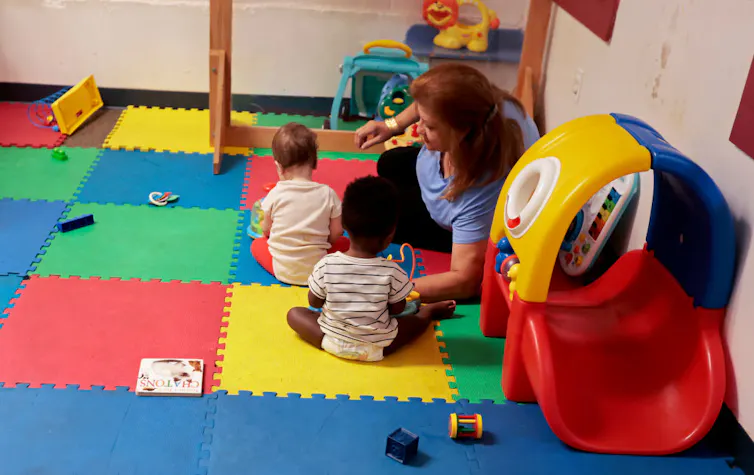
Meanwhile, the persistence of traditional gender roles ensures that many moms still go home to a second shift: Working women continue to disproportionately cook, clean and care for children. No matter how overworked or exhausted some parents are, they cannot afford to hire help as the inflation and cost-of-living crises hit historic highs.
Big Tech takes advantage of this crisis with a “solution” that ultimately treats children as products, manipulating their emotions and mining their data. As I argue in my book, “Attention and Alienation,” children’s dependency on screens is a key component of the attention economy.
The earlier a life is monetized, the longer it is profitable.
“Toy Story 5” and its critical take on the tablet may be helpful. But it will take more than a blockbuster movie to protect small kids from the harms of too much screen time. Instead, I think it will require strong parental leave policies, expansive and affordable childcare access, fair wages and shared household labor.
In other words, there needs to be a full rehabilitation of the village.
Aarushi Bhandari, Assistant Professor of Sociology, Davidson College
This article is republished from The Conversation under a Creative Commons license. Read the original article.
📰 Enjoying STM Daily News? Join the conversation!
💬 Leave a comment, share your thoughts, and subscribe to our newsletter for the latest stories, updates, and “News You Can Use This Moment!” delivered to your inbox.
Stay connected with STM Daily News!






