Caitlin Clark, Christine Brennan and how racial stereotypes persist in the media’s WNBA coverage
The “Caitlin Clark effect” has driven record growth in the WNBA, yet Clark’s rookie season ended prematurely, revealing racial tensions and media biases impacting Black athletes’ representation and coverage.
Indiana Fever guard Caitlin Clark, right, scrambles for a loose ball against Connecticut Sun guard DiJonai Carrington during a game on Aug. 28, 2024. Brian Spurlock/Icon Sportswire via Getty Images
Clark, however, didn’t get a chance to compete for a league title.
The Connecticut Sun eliminated Clark’s team, the Indiana Fever, in the first round of the playoffs with a two-game sweep, ending her record rookie-of-the-year campaign.
And it may be just the latest chapter in a complicated saga steeped in race.
During the next day’s media availability, USA Today columnist Christine Brennan recorded and posted an exchange between herself and Carrington.
In the brief clip, the veteran sports writer asks Carrington, who is Black, if she purposely hit Clark in the eye during the previous night’s game. Though Carrington insisted she didn’t intentionally hit Clark, Brennan persisted, asking the guard if she and a teammate had laughed about the incident. The questions sparked social media outrage, statements from the players union and the league, media personalities weighing in and more.
But Brennan’s questions were not asked in a vacuum. The emergence of a young, white superstar from the heartland has caused many new WNBA fans to pick sides that fall along racial lines. Brennan’s critics claim she was pushing a line of questioning that has dogged Black athletes for decades: that they are aggressive and undisciplined.
Because of that, her defense of her questions – and her unwillingness to acknowledge the complexities – has left this professor disappointed in one of her journalistic heroes.
Brennan and much of the mainstream sports media, particularly those who cover professional women’s basketball, still seem to have a racial blind spot.
The emergence of a Black, queer league
When the WNBA launched in 1997 in the wake of the success of the 1996 Olympic gold-medal-winning U.S. women’s basketball team, it did so under the watch of the NBA.
While the league experienced fits and starts in attendance and TV ratings over its lifetime, the demographic makeup of its players is undeniable: The WNBA is, by and large, a Black, queer league.
In 2020, the Women’s National Basketball Players Association reported that 83% of its members were people of color, with 67% self-reporting as “Black/African-American.” While gender and sexual identity hasn’t been officially reported, a “substantial proportion,” the WNBPA reported, identify as LBGTQ+.
In 2020, the league’s diversity was celebrated as players competed in a “bubble” in Bradenton, Florida, due to the COVID-19 pandemic. They protested racial injustice, helped unseat a U.S. senator who also owned Atlanta’s WNBA franchise, and urged voters to oust former President Donald Trump from the White House.
Racial tensions bubble to the surface
In the middle of it all, the WNBA has more eyeballs on it than ever before. And, without mincing words, the fan base has “gotten whiter” since Clark’s debut this past summer, as The Wall Street Journal pointed out in July. Those white viewers of college women’s basketball have emphatically turned their attention to the pro game, in large part due to Clark’s popularity at the University of Iowa.
While the rising tide following Clark’s transition to the WNBA is certainly lifting all boats, it is also bringing detritus to the surface in the form of racist jeers from the stands and on social media.
After the Sun dispatched the Fever, All-WNBA forward Alyssa Thomas, who seldom speaks beyond soundbites, said in a postgame news conference: “I think in my 11-year career I’ve never experienced the racial comments from the Indiana Fever fan base. … I’ve never been called the things that I’ve been called on social media, and there’s no place for it.”
Echoes of Bird and Magic
In “Manufacturing Consent,” a seminal work about the U.S. news business, Edward Herman and Noam Chomsky argued that media in capitalist environments do not exist to impartially report the news, but to reinforce dominant narratives of the time, even if they are false. Most journalists, they theorized, work to support the status quo.
In sports, you sometimes see that come to light through what media scholars call “the stereotypical narrative” – a style of reporting and writing that relies on old tropes.
In Brennan’s coverage of the Carrington-Clark incident, there appear to be echoes of the way the media covered Los Angeles Lakers point guard Magic Johnson and Boston Celtics forward Larry Bird in the 1980s.
The battles between two of the sport’s greatest players – one Black, the other white – was a windfall for the NBA, lifting the league into financial sustainability.
But to many reporters who leaned on the dominant narrative of the time, the two stars also served as stand-ins for the racial tensions of the post-civil rights era. During the 1980s, Bird and Magic didn’t simply hoop; they were the “embodiments of their races and living symbols of how blacks and whites lived in America,” as scholars Patrick Ferrucci and Earnest Perry wrote.
The media gatekeepers of the Magic-Bird era often relied on racial stereotypes that ultimately distorted both athletes.
For example, early in their careers, Bird and Johnson received different journalistic treatment. In Ferrucci and Perry’s article, they explain how coverage of Bird “fit the dominant narrative of the time perfectly … exhibiting a hardworking and intelligent game that succeeded despite a lack of athletic prowess.” When the “flashy” Lakers and Johnson won, they wrote, it was because of “superior skill.”
Advertisement
When they lost to Bird’s Celtics, they were “outworked.”
Framing matters
Let’s go back to Brennan.
Few have done more for young women in the sports media industry than Brennan. In time, energy and money, she has mentored and supported young women trying to break into the field. She has used her platform to expand the coverage of women’s sports.
“I think [critics are] missing the fact of what I’m trying to do, what I am doing, what I understand clearly as a journalist, asking questions and putting things out there so that athletes can then have an opportunity to answer issues that are being discussed or out there.”
I don’t think Brennan asking Carrington about the foul was problematic. Persisting with the narrative was.
Leaning into racial stereotypes is not simply about the language used anymore. Brennan’s video of her persistent line of questioning pitted Carrington against Clark. It could be argued that it used the stereotype of the overly physical, aggressive Black athlete, as well.
At best, Brennan has a blind spot to the strain racism is putting on Black athletes today – particularly in the WNBA. At worst, she is digging in on that tired trope.
A blind spot can be addressed and seen. An unacknowledged racist narrative, however, will persist.
The Bridge is a section of the STM Daily News Blog meant for diversity, offering real news stories about bona fide community efforts to perpetuate a greater good. The purpose of The Bridge is to connect the divides that separate us, fostering understanding and empathy among different groups. By highlighting positive initiatives and inspirational actions, The Bridge aims to create a sense of unity and shared purpose. This section brings to light stories of individuals and organizations working tirelessly to promote inclusivity, equality, and mutual respect. Through these narratives, readers are encouraged to appreciate the richness of diverse perspectives and to participate actively in building stronger, more cohesive communities.
Senior Assist Day Marks Four Years of Supporting Seniors in South Phoenix
Senior Assist Day celebrates four years of serving seniors at Tanner Gardens in South Phoenix, led by Assistory Outreach Services and founder Jon Taylor.
Senior Assist Day Marks Four Years of Supporting Seniors in South Phoenix
PHOENIX, AZ — Senior Assist Day reached a meaningful milestone this year, marking four years of service to seniors living at Tanner Gardens in South Phoenix. Hosted by Assistory Outreach Services, the annual event continues to provide dignity, connection, and practical support to an often-overlooked population.
A Personal Beginning
The origins of Senior Assist Day are deeply personal for Assistory Outreach Services founder and CEO Jon Taylor.
“The origin of me going to Tanner Gardens was when I was with the 100 Black Men of Phoenix. We used to do a luncheon for seniors around December.”
That early connection took on new meaning as Taylor’s mother began showing signs of dementia, inspiring him to create an event rooted in empathy and care.
“I got a great feeling from being around those senior citizens. Senior Assist Day is roughly based on my mother.”
An Event That Continues to Grow
What began as a small gathering has grown into a full community experience. Seniors now enjoy catered meals, live music, personal care services, and gifts tailored to their needs. This year’s event included authentic Mexican food, live holiday music, haircuts provided by AJ’s Barbershop, and the donation of new shoes — a moment that stood out for many attendees.
“Seeing the excitement and how they were reacting to the new shoes was incredible,” Taylor said.
Beyond a Single Day
Senior Assist Day also helps build trust between Assistory Outreach Services and the residents of Tanner Gardens, opening the door to additional programs throughout the year. Through initiatives like the Digital Access Program for Seniors (DAPs), the organization helps seniors develop basic phone and computer skills, empowering them to stay connected and informed.
Challenges and Purpose
Keeping the event going year after year requires dedication and resources. Taylor personally raises funds and helps purchase gifts for more than 130 residents annually. Despite the challenges, his motivation remains strong.
“I do feel as though this is my ministry. I’m providing services, and I’m being fulfilled at the same time.”
Looking Ahead
Looking to the future, Taylor envisions Senior Assist Day becoming an all-day celebration, offering expanded services, entertainment, and meals — all focused exclusively on the residents of Tanner Gardens. As the event enters its fifth year, Senior Assist Day stands as a testament to what consistent community engagement and compassion can achieve. About Assistory Outreach ServicesAssistory Outreach Services is a community-based nonprofit organization dedicated to empowering seniors, low-income residents, and individuals experiencing homelessness. Assistory helps senior citizens embrace technology by teaching basic cell phone and computer skills, using a formula rooted in education, love, and patience to remove fear and build confidence. In addition to senior programming, the organization focuses on serving low-income and homeless populations by providing food boxes, holiday meals, and homeless care packages known as Assist Packs. This year, Assistory Outreach Services is expanding its impact by partnering with other nonprofits and religious organizations to coordinate food distribution through its community food pantry. Coverage by STM Daily News.
STM Daily News is a multifaceted podcast that explores a wide range of topics, from life and consumer issues to the latest in food and beverage trends. Our discussions dive into the realms of science, covering everything from space and Earth to nature, artificial intelligence, and astronomy. We also celebrate the amateur sports scene, highlighting local athletes and events, including our special segment on senior Pickleball, where we report on the latest happenings in this exciting community. With our diverse content, STM Daily News aims to inform, entertain, and engage listeners, providing a comprehensive look at the issues that matter most in our daily lives. https://stories-this-moment.castos.com/
Rod: A creative force, blending words, images, and flavors. Blogger, writer, filmmaker, and photographer. Cooking enthusiast with a sci-fi vision. Passionate about his upcoming series and dedicated to TNC Network. Partnered with Rebecca Washington for a shared journey of love and art.
PG&E Donates $1 Million to Local Food Banks to Help Feed Families
PG&E donates $1 million to local food banks across Northern and Central California—equivalent to about 3 million meals—supporting 38 food banks serving 47 counties.
Just in time for the holidays, Pacific Gas and Electric Company (PG&E) announced a $1 million donation to local food banks across Northern and Central California—support aimed at meeting a surge in demand as more families and seniors struggle to put food on the table. According to PG&E, the contribution is expected to provide the equivalent of roughly 3 million meals and will support 38 food banks serving 47 counties within PG&E’s service territory.
A third major food-bank contribution since September
The $1 million gift marks the third food-bank-focused contribution since September from PG&E or The PG&E Corporation Foundation (the PG&E Foundation). Combined, those efforts bring PG&E’s total community food support in 2025 to $2.37 million. PG&E emphasized that the funding for these charitable contributions comes from PG&E shareholders—not customers.
Food banks facing record-breaking demand
Food banks across California are reporting pressure levels not seen since the pandemic. Officials with the California Association of Food Banks say demand has reached record highs, driven in part by an unexpected surge during the federal government shutdown this fall. “California food banks experienced an unexpected surge with the [federal government] shutdown this fall. So, we reached out for help on their behalf and PG&E responded,” said Stacia Levenfeld, Chief Executive Officer of the California Association of Food Banks. “Their $1 million gift to food banks throughout Northern and Central California will have a meaningful impact on the lives of millions of people this holiday season and help food banks continue their critical work in our communities.” PG&E leaders framed the donation as an extension of a longstanding partnership with food bank networks. “We are grateful to help local food banks fulfill their mission during this time of increasing demand, especially as more families and seniors are struggling through the holiday season,” said Carla Peterman, Executive Vice President, Corporate Affairs, PG&E Corporation and Chair of The PG&E Corporation Foundation Board. “Our longstanding partnership with the California Association of Food Banks supports the safety net that is our local food banks.”
Where the 2025 food support has gone
PG&E outlined additional contributions made earlier in the year:
September: The PG&E Foundation awarded $1.12 million to support local food banks, tribal food banks, and senior meal programs.
November: The PG&E Foundation donated $250,000 to the California Association of Food Banks’ Emergency Response Fund.
Equity-focused grant distribution
The California Association of Food Banks notes that while California produces nearly half of the nation’s fruits and vegetables, more than one in five residents still don’t know where their next meal will come from. Food insecurity rates are even higher in many communities of color. PG&E said grant amounts awarded to local organizations will account for county poverty and unemployment levels, using a formula from the California Department of Social Services. The goal: promote equity by directing more support to counties with higher need.
About the PG&E Corporation Foundation and PG&E
The PG&E Corporation Foundation is an independent 501(c)(3) nonprofit organization, separate from PG&E and sponsored by PG&E Corporation. PG&E is a combined natural gas and electric utility serving more than 16 million people across 70,000 square miles in Northern and Central California. More information is available at pge.com and pge.com/news.
Why this matters
As food banks brace for sustained demand beyond the holiday season, large-scale donations like PG&E’s can help stabilize local supply—especially when distributed with an equity lens that targets the counties facing the steepest economic pressures. For families, seniors, and individuals navigating rising costs, the impact is immediate: more meals available now, and stronger community support systems heading into the new year. Community links:
Educators Are Being Priced Out of Their Communities—These Cities Are Building Subsidized Teacher Housing to Bring Them Back
Teacher Housing: As housing costs rise and teacher pay stagnates, cities and school districts are building education workforce housing to attract and retain educators—cutting commutes and strengthening community ties.
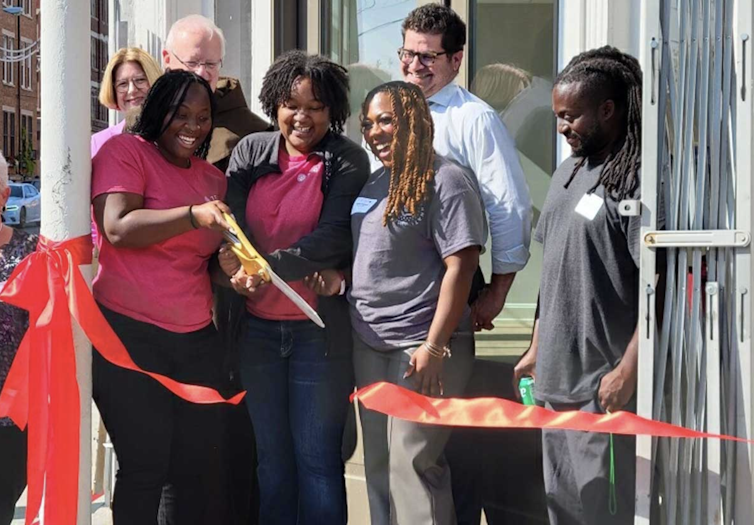
Developers of Wendy’s Village, an affordable housing complex planned for teachers in Colorado Springs, Colo., completed their first homes in July 2025. WeFortify
America’s educators are being priced out of their communities − these cities are building subsidized teacher housing to lure them back
Jeff Kruth, Miami University and Tammy Schwartz, Miami University For much of the 20th century, teaching was a stable, middle-class job in the U.S. Now it’s becoming a lot harder to survive on a teacher’s salary: Wages have been stagnant for decades, according to a study from the Economic Policy Institute, and teachers earn 5% less than they did a decade ago when adjusting for inflation. That’s one reason why there’s a widespread teacher shortage, with tens of thousands of positions going unfilled. At the same time, according to a 2022 report from the Annenberg Institute at Brown University, there are more than 160,000 underqualified teachers in the classroom, meaning they don’t meet full certification or credentialing standards. This issue has become particularly acute as housing costs have risen sharply across the country over the past decade. Why become a teacher if it means you’ll struggle to put a roof over your head? In response, many states and cities, from California to Cincinnati, are exploring ways to attract and retain teachers by developing education workforce housing – affordable housing built specifically for public school teachers and staff to make it easier for them to live near where they work. In doing so, they seek to address aspects of both the teacher shortage and housing crisis.
Fertile land for housing
As professors of architecture and education and as directors of an urban teaching program at Miami University in Ohio, we work to make it easier for students to pursue teaching careers – and that includes addressing affordable housing issues in communities where they work. A key element of this work involves collaborating with local education agencies to either build, subsidize or find housing for teachers. Local education agencies are tasked with the administrative functions of a school district, and they often own large tracts of land. This land can be used to build new school buildings or community health clinics. But it can also be used to build housing – a particularly attractive option in cities where land can be scarce and expensive. California has been at the forefront of these efforts. The state’s school districts own more than 75,000 acres of potentially developable land. Meanwhile, more than one-third of the state’s public school employees are rent-burdened, meaning they spend more than 30% of their income on housing costs. California’s Teacher Housing Act of 2016 set up a framework for local education agencies to build and develop housing on their land. Since then, education workforce housing complexes have been developed across the state, ranging from San Francisco’s Shirley Chisolm Village to 705 Serramonte in Daly City, California.The San Francisco Unified School District celebrated the opening of Shirley Chisolm Village, the city’s first educator housing development, in September 2025. The nuts and bolts of education workforce housing vary. It can be financed by traditional sources, such as private philanthropy and government funds. But it can also be funded through financial tools such as certificates of participation, which allow outside investors to provide funding up front and later receive a return on their investment through rental income. In some cases, teachers are offered reduced rents for just a few years as they start their careers. In others, they’re given the opportunity to purchase their home. Third party management companies often oversee the projects, since local education agencies usually aren’t interested in property management. This also reduces the potential for any direct disputes between employer and employee. Many programs require only that residents be employees of the school district when they enter the program, meaning if someone leaves their job, they will not be displaced. In April 2025, UCLA’s CITYLab and the Center for Cities and Schools published a study highlighting some of the benefits and challenges of nine educator workforce housing projects built in California. The complexes ranged in size, from 18 to 141 dwelling units, with heights that ranged from two to six stories. The researchers found that tenants were largely satisfied with their living situations: They paid rents at far below market rate, and they praised the apartment design. They also highlighted their shorter commutes.
Here in Cincinnati, our own graduates now working in schools also benefit from affordable housing options. Through a partnership between Miami University and St. Francis Seraph, early career teachers from our TEACh and Urban Cohort programs have access to affordable housing. In 2024, the Archdiocese of Cincinnati converted an old church property in Cincinnati’s Over-the-Rhine neighborhood into teacher apartments, which recent graduates can rent at a reduced rate. Most young teachers otherwise wouldn’t be able to afford living in this area.In 2024, the Archdiocese of Cincinnati collaborated with Miami University to convert the St. Francis Seraph Church building in the city’s Over-the-Rhine neighborhood into affordable housing for recent teaching graduates.Photo: Je’Von Calhoun, CC BY-SA “I wouldn’t be able to spend my beginning years as an educator in the community without access to affordable housing,” Nicholas Detzel, a graduate teacher now living in the converted space, told us in an interview. “Living in the community has been an amazing experience and helps you know your students on a completely different level,” he added. “It has also helped me relate to students about knowing what is going on in our community.” Teachers like Detzel who live in Over-the-Rhine can walk or take public transportation to the local schools where they work. Perhaps more importantly, they can better understand the world of their students. They can learn the streets that students avoid, the parks and community spaces that become popular after-school hangouts, and what community organizations offer summer programming. Ultimately, teachers grounded in the life of the community can build relationships outside of the walls of school that contribute to more trust in the classroom. Providing affordable housing for teachers and staff also helps retention rates, particularly as many younger teachers leave the profession due to low pay and burnout. Teacher housing programs are still in their infancy. There are roughly 3.2 million public school teachers nationwide, and there are probably fewer than 100 of these developments completed or in progress. Yet more andmore districtsare expressing interest, because they help alleviate two major concerns affecting so many American communities: affordable housing and a quality education. While the need for affordable housing spans both lower- and middle-class families, teachers or not, forging alliances between schools and affordable housing providers can serve as one path forward – and possibly serve as a model for other trades and professions.Jeff Kruth, Assistant Professor of Architecture, Miami University and Tammy Schwartz, Director of the Urban Cohort, Miami University This article is republished from The Conversation under a Creative Commons license. Read the original article.




 Jeff Kruth, Assistant Professor of Architecture, Miami University and Tammy Schwartz, Director of the Urban Cohort, Miami University This article is republished from The Conversation under a Creative Commons license. Read the original article.




