Connect with us

Food and Beverage

MAHA report on children’s health highlights harms of ultraprocessed foods – a food scientist explains the research

Published

on

Last Updated on June 4, 2025 by Rod Washington

ultraprocessed foods
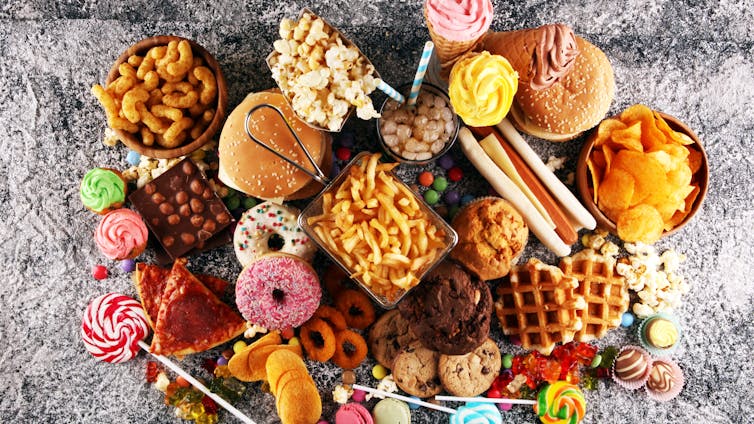
Ultraprocessed foods contain ingredients not found in a typical kitchen and are often designed to be extremely palatable. beats3/iStock viaGetty Images Plus
Paul Dawson, Clemson University On May 22, 2025, the White House released a new report highlighting what it claims are the causes of chronic disease in children. The report fleshes out many of the themes that have emerged as priorities for the Make America Healthy Again, or MAHA, movement promoted by Health and Human Services Secretary Robert F. Kennedy Jr. One major area of focus is the negative health effects of ultraprocessed foods. The report points to the prevalence of ultraprocessed foods in the American diet as a key contributor to chronic illness in children and cites research that finds that nearly 70% of children’s diets and 50% of pregnant and postpartum women’s diets in the U.S. consist of ultraprocessed foods. The Conversation U.S. asked Paul Dawson, a food scientist at Clemson University, to explain how the government’s stance on the harms of ultraprocessed foods squares with the science.

What are ultraprocessed foods?

Concerns that ingredients used by food manufacturers can contribute to chronic illness first emerged in the 1970s and 1980s, when research began linking processed food consumption to increasing rates of obesity, type 2 diabetes and cardiovascular disease. The term “ultraprocessed food” dates back to the 1980s and was used to describe convenience foods and snacks that contained high amounts of additives and had low nutritional value. As research on the health effects of ultraprocessed foods began to build, experts in public health and the food industry have debated the meaning of the term. Increasingly, researchers are settling on defining ultraprocessed foods based on a framework called the Nova Food Classification System, created in 2009 by nutrition researchers in Brazil. The framework assigns foods to one of four groups based on the level of processing they undergo:
  • Group 1 – Unprocessed or minimally processed foods: This category includes raw fruits, vegetables and meats that may be cleaned, frozen or fermented but remain close to their natural state.
  • Group 2 – Processed culinary ingredients: Think salt, sugar, oils and other ingredients extracted from nature and used to cook and flavor foods.
  • Group 3 – Processed foods: Foods in this category are made by adding ingredients like salt or sugar to Group 1 items — for example, canned vegetables or cheese.
  • Group 4 – Ultraprocessed foods: These are mostly foods that contain ingredients not found in a typical kitchen, such as hydrogenated oils, modified starches, flavor enhancers, color additives and preservatives. Examples include chips, sodas, candy bars and many frozen meals, which are designed to be hyper-palatable and often nutrient-poor.

What does research say about ultraprocessed foods?

A growing body of research links ultraprocessed foods with many negative health outcomes, including obesity, type 2 diabetes, cardiovascular disease, cancer and cognitive decline. One issue is that these products are typically high in added sugar, sodium, saturated fats and chemical additives, and low in fiber, vitamins and essential micronutrients.
Limiting ultraprocessed foods in the U.S. will be a challenge.
But some studies also suggest that what makes these foods harmful isn’t just the ingredients but also how they’re made. That’s because the industrial processing of fats and starches can produce harmful compounds. For example, a substance called acrolein, formed when oils are heated at high temperatures, has been linked to DNA damage. Studies are also finding that microparticles from packaging and plastics, now found in air, water and food, may disrupt the gut microbiome, a key player in immune and metabolic health. One drawback of nutrition studies is that they often rely on self-reported dietary data, which can be inaccurate. They can also have confounding factors that are difficult to account for, such as lifestyle patterns. However, the consistency of the findings across diverse populations gives credence to the growing concerns about ultraprocessed foods. An important caveat, however, is that not all ultraprocessed foods are created equal. They vary in how nutritious they are, and some ultraprocessed foods play an important role for vulnerable populations. For example, foods containing the slow-release carbohydrate sweetener sucromalt help people with diabetes prevent blood sugar spikes, and hypoallergenic infant formula can be lifesaving for infants that cannot digest milk at a young age.

How does the MAHA report fit with current dietary guidelines?

The report echoes key themes of the 2020–2025 Dietary Guidelines for Americans, a document jointly published by the Departments of Agriculture and Health and Human Services every five years. Both the MAHA report and the federal guidelines encourage the consumption of nutrient-dense, whole foods. One critical difference between them is that the 2020-2025 dietary guidelines make no mention of ultraprocessed foods. Some public health experts have noted that this omission may reflect food industry influence.

What happens next?

Kennedy has stated that a follow-up report outlining a strategy and potential policy reforms for addressing childhood chronic illness will be released in mid-August 2025. However, change is unlikely to be straightforward. Ultraprocessed foods represent a significant industry, and policies that challenge their prominence may encounter resistance from influential commercial interests. For decades, U.S. agricultural subsidies, food policy and consumers have supported the mass production and consumption of ultraprocessed foods. Reversing their overconsumption will require structural shifts in how food is produced, distributed and consumed in the U.S.The Conversation Paul Dawson, Professor of Food Science, Clemson University This article is republished from The Conversation under a Creative Commons license. Read the original article.

STM Daily News is a vibrant news blog dedicated to sharing the brighter side of human experiences. Emphasizing positive, uplifting stories, the site focuses on delivering inspiring, informative, and well-researched content. With a commitment to accurate, fair, and responsible journalism, STM Daily News aims to foster a community of readers passionate about positive change and engaged in meaningful conversations. Join the movement and explore stories that celebrate the positive impacts shaping our world.

https://stmdailynews.com/


Discover more from Daily News

Subscribe to get the latest posts sent to your email.

Continue Reading
Advertisement Sports Research

Food and Beverage

Papa Johns and Google Cloud Reimagine the Future of Food Ordering to Better Serve Customers

Papa Johns is partnering with Google Cloud to roll out an AI-powered omnichannel ordering system using Gemini Enterprise for Customer Experience, bringing voice and text ordering to apps, web, phone, kiosks and in-car systems.

Published

on

 
Papa Johns is partnering with Google Cloud to roll out an AI-powered omnichannel ordering system using Gemini Enterprise for Customer Experience, bringing voice and text ordering to apps, web, phone, kiosks and in-car systems.

american pepperoni pizza with chilli pepper and parmesan cheese

Papa Johns and Google Cloud Reimagine the Future of Food Ordering to Better Serve Customers

Papa Johns is betting big on AI-powered convenience.

At NRF 2026 in New York, the pizza chain announced a major transformation of its digital ordering experience—aimed at delivering faster ordering, improved accuracy, and real-time personalization for its 150 million-plus customers worldwide. The update is powered by Google Cloud’s newly expanded AI solution, the Food Ordering agent, part of Gemini Enterprise for Customer Experience. The key takeaway: Papa Johns is the first restaurant brand to bring these new omnichannel ordering capabilities to market—moving beyond basic chatbots and into what Google Cloud calls the era of agentic commerce, where AI doesn’t just answer questions, it actively completes tasks and improves outcomes.

From chatbot to “agentic” ordering

Food Ordering agent is designed to unify voice and text ordering across the places customers already interact with the brand—without forcing them to repeat themselves or start over when they switch channels. Instead of treating app ordering, phone ordering, kiosks, and in-car systems as separate experiences, the platform supports high-quality voice AI agents across:
  • Mobile apps
  • Websites
  • Telephones
  • Kiosks
  • In-car systems
This is a notable shift from earlier AI deployments that focused heavily on drive-thru automation. Here, the goal is a single, consistent ordering experience where customers can order how they want, where they want, with less friction.

What Papa Johns is building with Google Cloud

Papa Johns says the new system is designed to make ordering “faster, smarter, and more seamless than ever before.” The company’s Chief Digital and Technology Officer, Kevin Vasconi, framed it as more than a product refresh.
“Papa Johns is a digitally-driven business and, as such, one of our strategic priorities is investing in our technology to deliver a more seamless experience across our assets and owned channels, better connect with our customers, and support greater efficiency across our operations by leveraging data and AI,” Vasconi said. “We’re using Google Cloud’s Food Ordering agent to reimagine what’s possible for our customers. This isn’t just an app update; it’s a fundamental shift in how our customers interact with our brand digitally, making it faster, smarter, and more seamless than ever before.”
The new capabilities focus on three areas that tend to create the most friction in food ordering: deals, complex orders, and repeat purchases.

Intelligent Deal Wizard: fewer abandoned carts, more confidence

One of the most common reasons customers abandon carts is uncertainty—Did I pick the best deal? Is there a better promo code? Papa Johns’ Intelligent Deal Wizard is positioned as a personal concierge that automatically applies the best value combinations. The benefit is twofold:
  • Customers spend less time hunting for discounts
  • Papa Johns reduces cart abandonment and builds loyalty through instant value
In short: the system is designed to help customers feel like they’re getting the best price without extra steps.

Advanced Voice & Group Ordering: making complex orders easier

Group orders are where ordering systems often break down: multiple people, multiple changes, special instructions, and constant edits. Papa Johns’ Advanced Voice & Group Ordering is built to capture that revenue without requiring human intervention. By handling natural language nuances and real-time modifications, the system aims to improve order accuracy even when the request is complicated—exactly the kind of scenario where mistakes can lead to refunds, remakes, and lost customers.

No-tap reordering for Papa Rewards customers

Pizza ordering is often habitual. Many customers reorder the same items, especially loyal customers. With the new experience, the agent can identify returning Papa Rewards members and proactively ask if they want to reorder their most recent purchase. That no-tap flow matters because it shortens the distance between intent and checkout—turning a routine craving into a completed order in seconds.

Why it matters: omnichannel is now the expectation

Google Cloud’s Carrie Tharp, vice president of global solutions and industries, described the shift as a move beyond the chatbot era.
“The retail industry is entering the era of agentic commerce, where AI is an engine for business value,” Tharp said. “By being the first to deploy our omnichannel Food Ordering agent, Papa Johns is moving beyond the chatbot era to create a fluid, intelligent experience that meets hungry customers wherever they are, whether they are in their car, on an app, or at a kiosk.”
That’s the core point: customers don’t think in channels. They think in outcomes.
  • Ordering hands-free while driving
  • Reordering in one step from the couch
  • Using a kiosk quickly while picking up
If the experience is inconsistent, slow, or confusing, customers bounce. If it’s fast and accurate, they come back.

What’s next

Papa Johns will showcase the technology at the Google Cloud booth 5507 at NRF 2026: Retail’s Big Show in NYC, offering live demos to attendees. The company expects to roll out these capabilities to customers nationwide by the end of 2026.

About Papa Johns

Papa John’s International, Inc. (Nasdaq: PZZA) opened in 1984 with one goal: BETTER INGREDIENTS. BETTER PIZZA. Papa Johns says it uses high-quality ingredients, including fresh, never frozen original dough made with six ingredients, real mozzarella cheese, and vine-ripened tomato sauce. The company operates more than 6,000 restaurants across approximately 50 countries and territories.

About Google Cloud

Google Cloud provides AI, infrastructure, developer, data, security, and collaboration tools, offering an integrated AI stack built on planet-scale infrastructure and custom-built chips. Organizations in more than 200 countries and territories use Google Cloud as a technology partner.

Resources

STM Daily News is a vibrant news blog dedicated to sharing the brighter side of human experiences. Emphasizing positive, uplifting stories, the site focuses on delivering inspiring, informative, and well-researched content. With a commitment to accurate, fair, and responsible journalism, STM Daily News aims to foster a community of readers passionate about positive change and engaged in meaningful conversations. Join the movement and explore stories that celebrate the positive impacts shaping our world.

https://stmdailynews.com/


Discover more from Daily News

Subscribe to get the latest posts sent to your email.

Continue Reading

Food and Beverage

Put the Grill to Work In 2026

Transitioning from high-yield meals that serve a crowd to easy, homemade dinners can be a bit of a shock after the festivities are over. Save yourself the time and hassle of cooking after a season of gifts and gatherings with this Grilled Chicken Bundt recipe that lets the grill do the work for you.

Published

on

 homemade dinners can be a bit of a shock after the festivities are over. Save yourself the time and hassle of cooking after a season of gifts and gatherings with this Grilled Chicken Bundt recipe that lets the grill do the work for you.   (Family Features) Transitioning from high-yield meals that serve a crowd to easy, homemade dinners can be a bit of a shock after the festivities are over. Save yourself the time and hassle of cooking after a season of gifts and gatherings with this Grilled Chicken Bundt recipe that lets the grill do the work for you. For more time-saving family dinner ideas, visit Culinary.net.  homemade dinners can be a bit of a shock after the festivities are over. Save yourself the time and hassle of cooking after a season of gifts and gatherings with this Grilled Chicken Bundt recipe that lets the grill do the work for you.

Grilled Chicken Bundt

Recipe courtesy of “Cookin’ Savvy” Servings: 4-6
  • 4          potatoes
  • 2          carrots
  • 8          Brussel’s sprouts
  • oil
  • 2          tablespoons garlic powder, divided
  • 2          tablespoons onion powder, divided
  • 2          teaspoons salt, divided
  • 1          whole chicken (4-5 pounds)
  • 1/2       stick butter, softened
  1. Heat grill to 350 F with one burner off for indirect heat.
  2. Cut potatoes, carrots and Brussel’s sprouts into bite-sized pieces. Drizzle with oil and mix in 1 tablespoon garlic powder, 1 tablespoon onion powder and 1 teaspoon salt; set aside.
  3. Rub chicken with softened butter, remaining garlic powder, remaining onion powder and remaining salt.
  4. Place some veggies in bottom of bundt pan. Place chicken on top of chimney or tube of bundt pan. Fill pan with remaining veggies.
  5. Place pan over indirect heat and grill 1 hour, 30 minutes, or until chicken reaches internal temperature of 165 F.
collect?v=1&tid=UA 482330 7&cid=1955551e 1975 5e52 0cdb 8516071094cd&sc=start&t=pageview&dl=http%3A%2F%2Ftrack.familyfeatures SOURCE:

At our core, we at STM Daily News, strive to keep you informed and inspired with the freshest content on all things food and beverage. From mouthwatering recipes to intriguing articles, we’re here to satisfy your appetite for culinary knowledge.

Visit our Food & Drink section to get the latest on Foodie News and recipes, offering a delightful blend of culinary inspiration and gastronomic trends to elevate your dining experience. https://stmdailynews.com/food-and-drink/

Author


Discover more from Daily News

Subscribe to get the latest posts sent to your email.

Continue Reading

Food and Beverage

Mix a Little Luck into Your Big Game Menu

Picture this: Your team is down three points, but the taste of victory is just one field goal away. Sometimes, all you need is a little luck and a whole lot of guac. Dip into good fortune this football season with help from this Good Luck Guac recipe.

Published

on

Picture this: Your team is down three points, but the taste of victory is just one field goal away. Sometimes, all you need is a little luck and a whole lot of guac. Dip into good fortune this football season with help from this Good Luck Guac recipe.

Mix a Little Luck into Your Big Game Menu

(Family Features) Picture this: Your team is down three points, but the taste of victory is just one field goal away. Sometimes, all you need is a little luck and a whole lot of guac. After all, an estimated 250 million pounds of avocados are consumed during the Big Game each year, according to Hass Avocado Board Volume Data. That’s enough to fill 30 million football helmets with guac – but filling your belly instead is a win-win for good luck and great flavor. Dip into good fortune this football season with help from Avocado From Mexico’s Guac Guru, Rob Riggle, whose visionary Good Luck Guac recipe is ready to share just in time for the Big Game. Whether you’re in it for the football, the commercials or the snacks, this recipe can score major points with your entire crew. 17749 detail embed1Crafted for fans of every team, this bold, golden twist on a favorite football snack is infused with ingredients associated with good luck – edible gold flakes and pomegranate seeds – to get you through the most nail-biting moments of the game. The star ingredient is fresh, high-quality Avocados From Mexico that offer good taste, good nutrition, and good times. Beyond delicious dips, chips and lots of fun, hosting a watch party can also be a lot of work. Make sure your hosting duties don’t create interference or put you on the sidelines with these tips: Get a jumpstart on party prep. The day before the game, tidy up your space and prepare as much of the food as you can. For dishes best served fresh – like guac – take care of the ingredient prep, like chopping veggies. Create comfortable seating and viewing areas. For a watch party, you’ll want plenty of room for guests to sit comfortably where they can see the screen and have easy access to the guac. If there’s not enough space in the living room to fit everyone, consider bringing a TV to the kitchen so people can snack and watch at the same time. Know your guests. From non-alcoholic beverage options to additional entertainment like board games and kid-friendly activities, become a next-level party host by providing a setup tailored to your guests’ needs. One thing almost everyonecan agree on: Guac made with Avocados From Mexico can be the star of nearly any party’s snacking lineup. Make it your team’s lucky day with more game day recipes at AvocadosFromMexico.com/recipe.   17749 detail embed2

Good Luck Guac

Recipe courtesy of Rob Riggle on behalf of Avocados From Mexico
  • 4          Avocados From Mexico, halved, pitted and peeled
  • 1          tablespoon lime juice
  • 1          tablespoon onion, minced
  • 3          tablespoons pomegranate seeds
  • 1/4       teaspoon salt
  • 1          pinch edible gold leaf flakes
  1. In large bowl, mash avocados until chunky-smooth.
  2. Fold in lime juice, onion, pomegranate seeds and salt until well combined.
  3. Garnish with edible gold leaf flakes.
collect?v=1&tid=UA 482330 7&cid=1955551e 1975 5e52 0cdb 8516071094cd&sc=start&t=pageview&dl=http%3A%2F%2Ftrack.familyfeatures SOURCE:

At our core, we at STM Daily News, strive to keep you informed and inspired with the freshest content on all things food and beverage. From mouthwatering recipes to intriguing articles, we’re here to satisfy your appetite for culinary knowledge.

Visit our Food & Drink section to get the latest on Foodie News and recipes, offering a delightful blend of culinary inspiration and gastronomic trends to elevate your dining experience. https://stmdailynews.com/food-and-drink/


Discover more from Daily News

Subscribe to get the latest posts sent to your email.

Continue Reading

The Latest from Sleeve’s SPR: Sleeve's Senior Pickleball Report

Ace Pickleball Club Launches National Player Development Series

Ace Pickleball Club Launches National Player Development Series

Ace Pickleball Club launches a national Player Development Series with four training levels, plus free Intro to Pickleball clinics. Learn what’s included and how to sign up.

Trending