

The Bridge
The power of friendship: How a letter helped create an American bestseller about antisemitism
Laura Z. Hobson’s “Gentleman’s Agreement” explores antisemitism through reporter Phil Green’s experiences posing as Jewish, ultimately becoming a bestseller that sparked important conversations about prejudice in America.

Rachel Gordan, University of Florida
Eighty years ago, the Jewish American novelist Laura Z. Hobson was contemplating her next writerly move and was seeking a little help from her friends.
“Gentleman’s Agreement,” the story she was drafting, felt like a bold idea. Maybe too bold. In her vision for the novel, reporter Phil Green is assigned to write an article about antisemitism. He pretends to be Jewish so he can experience bigotry firsthand. Readers follow the character as he encounters the prejudice of supposedly good people and learns how to respond to the slights and jabs casually meted out even by Americans who consider themselves liberal.
It was 1944, three years after the United States joined World War II. What prompted Americans to finally fight, however, was the Japanese attack on Pearl Harbor, not Nazi persecution of Jews and other marginalized groups. Antisemitism in the U.S. remained rampant throughout the early and mid-1940s.
With so many fraught feelings about Jews, and about the war in which American soldiers were risking their lives, Hobson was unsure how a novel about domestic antisemitism would be received. She might have wondered if readers would dismiss the story as a Jewish writer’s “special pleading” on behalf of her own.
Should she move forward with the novel that was bubbling up inside of her? To find her way out of her writing quandary, Hobson did something she had never done before and would never do again in her four decades of writing more than a dozen books: She consulted several friends and colleagues, mailing them her proposal for the novel and a cover letter explaining her quandary.
She did not know it at the time, but Hobson was about to write her most important book – one that would help broaden conversation about prejudice by reaching many more readers than would ever hear a rabbi’s sermon or read a committee’s report on antisemitism.
The right words
When the responses started to come in, it became clear that not all the feedback was of the helpful variety.
Lee Wright, Hobson’s editor at Simon & Schuster, seemed not to have fully grasped that writing fiction was a matter of placing oneself in the shoes of someone else. The editor advised Hobson that she was ill-suited to write from a gentile’s perspective because Hobson herself was Jewish. Further, Wright cautioned, Hobson should not attempt to write from a man’s perspective.
Hobson’s publisher and friend, Richard Simon of Simon & Schuster, was also skeptical. He did not believe that novels were the way to fight antisemitism or bigotry. And then Simon did that worst thing an editor could do: He reminded Hobson that her last novel, “The Trespassers,” had been a commercial disappointment.
Hobson stewed over these replies, as evident from her autobiography and letters archived at Columbia University, which I found while researching my first book, “Postwar Stories: How Books Made Judaism American.” As Hobson later noted in her autobiography, her publisher’s less-than-enthusiastic reply sapped some of her confidence. She wasn’t entirely certain that she wanted to continue with her writing.
It was one of Hobson’s closest female friends, Louise Carroll Whedon, whose letter offered just the right words of encouragement. Known as Carroll to her friends, she was married to TV writer John Whedon – and the family’s writing success would continue with their grandson Joss Whedon, of “Buffy the Vampire Slayer” and “The Avengers” fame.
Familiar with the ups and downs of the writing life, as well as Hobson’s insecurities, Carroll replied with the enthusiasm that Hobson needed. “Let me say right away that I think the book ought to be written,” Whedon assured her, “and the sooner the better – not to highlight the plight of the Jew, but to examine the even more appalling plight of the non-Jew, and what the seeping poison of prejudice can mean to America.”
The Americans who really needed “Gentleman’s Agreement,” Whedon argued, weren’t the extreme antisemites, but the people hoping that “if you just pretend it isn’t there, maybe it will go away.” Otherwise, she warned, that willful ignorance and passivity could destroy the country – “at least the America that most people want to believe exists.”
Whedon did not deny the risks. But she wasn’t willing to watch her friend doubt her abilities – or her insights as a Jewish woman who had experienced antisemitism firsthand, and observed casual antisemitism from her non-Jewish friends. That Whedon was one of Hobson’s non-Jewish friends made her enthusiasm for a novel about antisemitism especially valuable to Hobson.
“It’s a controversial subject, Babe, and there’ll be arguments who should do it and when and how it should be done no matter what comes of it,” Whedon concluded. “For me, I think you’re in a singularly good spot to write it – in hot anger, sure – but in cold truth as well.”
Whedon had brought Hobson back to herself. Now, it was time to write.
Instant success
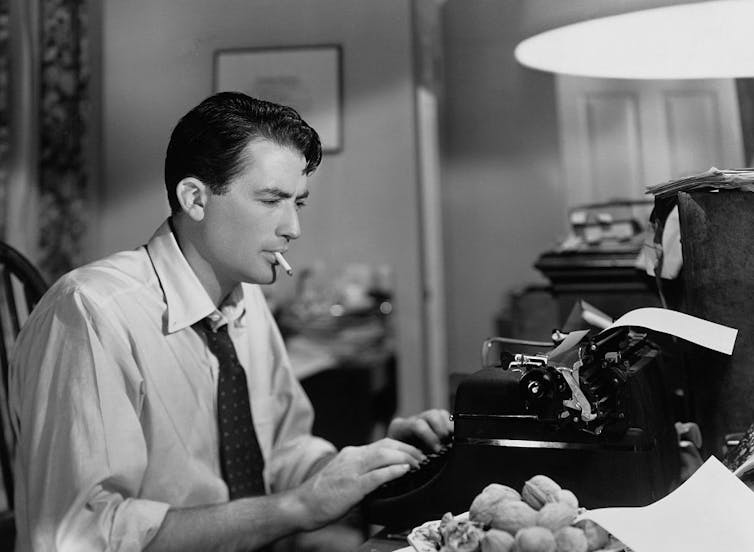
In a few years, the book stuck in Hobson’s mind would become a sensation. First published as a series in Cosmopolitan magazine, “Gentleman’s Agreement” was then printed by Simon & Schuster in 1947. It became a bestseller and later an Academy Award-winning film starring Gregory Peck.
“Required reading for every thoughtful citizen in this parlous century” was how The New York Times described the novel. Because of Hobson’s readable style and romance, the novel received attention from a wide range of publications, from the Saturday Review of Literature to Seventeen magazine. From books like Hobson’s, Americans were learning “how we could be humane, as well as human, beings,” Times reviewer Charles Poore wrote in a December 1947 roundup of the year’s top books.
“Gentleman’s Agreement” was never perceived as “just” a Jewish novel – mostly because readers mistakenly assumed an author named Hobson was not Jewish. Even for critics, the book broadcast a new openness toward discussing antisemitism. It was a story full of teachable moments.
Hobson’s novel was part of a wave of 1940s fiction against antisemitism. Some of these novels were written by Jewish authors who were beginning to form the nucleus of postwar American literature, such as Saul Bellow and Arthur Miller. Others were by writers who made their mark during the 1940s, but whose names have faded over the decades, such as Gwethalyn Graham and Jo Sinclair. But Hobson’s was the most popular of its time.
If it weren’t for Whedon’s encouragement, though, “Gentleman’s Agreement” might never have been finished. If every friend of a writer said just the right thing – offering the needed encouragement or tough love – it would not feel like such profound treasure to spy a pearl of encouragement. But nobody gets all the encouragement they need, and writers are no exception.
Rachel Gordan, Assistant Professor of Religion and Jewish Studies, University of Florida
This article is republished from The Conversation under a Creative Commons license. Read the original article.


5 Ways to Make a Difference in Your Community
(Feature Impact) Communities are strengthened every day by local organizations working to address challenges close to home, whether that’s helping families access food, supporting students, expanding opportunity or providing essential resources to those who need them most. Often operating with limited resources, these organizations are finding practical solutions that make a meaningful difference in neighborhoods and communities across the country.
Many of these efforts happen quietly, powered by people who volunteer their time, share their expertise, donate resources or simply help spread awareness of causes they care about.
For individuals looking to make a difference where they live, community involvement doesn’t have to start with a large commitment. Consider these five options to get involved.
Give Your Time
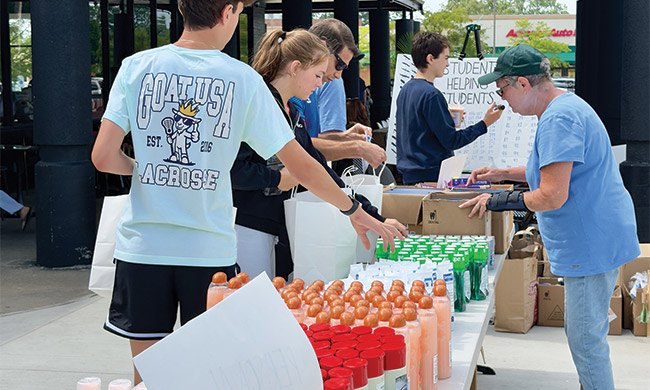
Giving your time is one of the most direct ways to support organizations serving your community. Whether it’s packing meals, mentoring young people or participating in neighborhood cleanups, volunteering allows people to contribute directly while gaining a deeper understanding of local needs.
 Share Your Skills
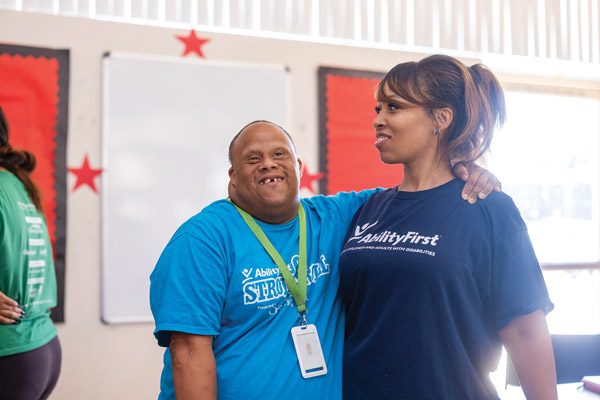
Nonprofits often need specialized skills in addition to hands-on volunteer support. Communications support, technology expertise, event planning, photography, financial guidance and other professional skills can help organizations expand their reach and strengthen their operations. Contributing the skills you’ve developed can often be just as valuable as donating time or resources.
Tap Into Your Workplace
Many employers offer opportunities to support causes that matter to their employees, such as volunteer programs, community grants or other charitable opportunities.
In communities across the country, local nonprofits can receive support through programs like the PepsiCo Foundation’s Community Impact Awards, where employees can nominate nonprofit organizations in their local communities for grant funding. Since 2022, the program has invested more than $3.7 million into organizations working on issues ranging from food access to education and community development.
“Across North America, there are organizations showing up every day for their communities, often without recognition and with limited resources,” said Monica Bauer, SVP of social impact, PepsiCo and president of the PepsiCo Foundation. “The Community Impact Awards help shine a light on organizations that are creating opportunities, solving local challenges and making a real difference in people’s lives. What makes this program special is that the recognition comes from PepsiCo associates who know these organizations firsthand and have seen their impact up close.”
This year, 100 organizations across the U.S. and Canada received $500,000 total in grants and teamed up with their respective nominating employees for volunteer activities supporting their missions, giving employees another opportunity to engage directly.
Give What You Can
Financial contributions are a valuable way to give back, but they aren’t the only option. Many organizations need non-monetary donations such as school supplies, canned goods, clothing, toys and technology. Before collecting items, check with organizations to learn what is most needed and how contributions can make the greatest impact.
Use Your Voice
One person can make a difference. When that person gets a friend or family member involved, more people can discover and support organizations doing important work. Sharing a nonprofit’s mission on social media, inviting others to volunteer or connecting people with causes you care about can help organizations reach new supporters and expand their impact.
Making a difference doesn’t require doing everything at once. Whether you contribute your time, skills, resources or advocacy, small actions can help make a big impact over time.
Across the U.S., nonprofit organizations are helping improve lives, create opportunities and respond to community needs every day. Their work is a reminder that meaningful change often starts locally with people willing to get involved.
Learn more about how individuals and organizations can help address some of the most pressing needs in their communities by visiting PepsiCo.com/about/social-impact.
SOURCE:
PepsiCo

Community
‘Give Like a Kid Again’ for Real-World Impact This Halloween
Costumes. Candy. Jack-o-lanterns glowing on porches. Halloween is filled with moments that spark children’s imaginations. This Halloween, children and families can “Give Like a Kid Again,” turning imagination into kindness and helping children around the world.

‘Give Like a Kid Again’ for Real-World Impact This Halloween
(Feature Impact)Costumes. Candy. Jack-o-lanterns glowing on porches. Halloween is filled with moments that spark children’s imaginations.
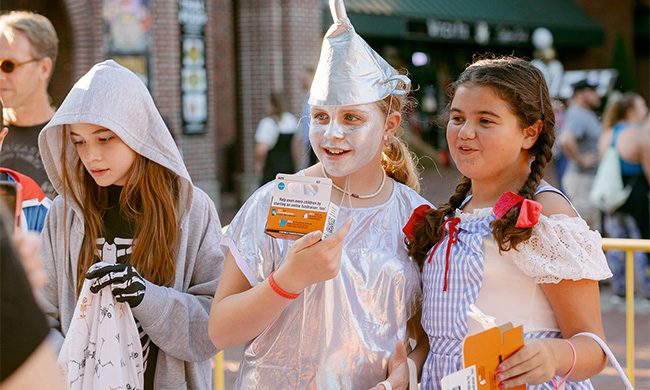
This Halloween, Trick-or-Treat for UNICEF is inviting children and families to “Give Like a Kid Again,” turning imagination into kindness and helping children around the world. For eight decades,the campaign has shown children that even the smallest act of kindness can travel farther than any front porch and shine brighter than any jack-o-lantern. As the longest-running youth engagement campaign in the United States, it has inspired generations of children to discover that when kids help kids, one Halloween tradition can turn into a lifetime of impact.
What started with just $17 in 1950, when a small group of children filled milk cartons with spare change to help children recovering from World War II, has grown into one of America’s most beloved Halloween traditions, raising nearly $200million to help the organization deliver lifesaving support for children around the world. Today, the iconic orange collection box reminds families that small acts of generosity can create lasting change.
“Each Halloween, Trick-or-Treat for UNICEF reminds us that even the smallest acts of generosity can grow into something extraordinary,” said Shelley Diamond, chief marketing officer, UNICEF USA. “For more than 75 years, this campaign has shown generations of children that you are never too young to make a difference and ‘Give Like a Kid Again’ is about passing that belief on to the next generation.”
Beyond supporting programs in more than 190 countries and territories, donations strengthen the organization’s global humanitarian supply network, delivering emergency essentials like therapeutic food, medicine, blankets and safe water to children impacted by conflict, disasters and disease.
- Be a mermaid and help make waves for clean water. Help provide safe water for a child for a year for $5.
- Be a vampire and help scare away preventable diseases. World Polio Day, just a week before Halloween, provides an opportunity to protect 200 children under age 5 from polio with a $43 donation.
- Be a scientist and help uncover lifesaving answers. Provide 25 malaria diagnostic tests for just $8, helping children receive timely treatment.
- Be a teacher and help children write their next chapter. Provide 1,000 pencils to help children put their ideas, lessons and dreams on paper for $30.
- Be a chef and help cook up a healthier future. Over a two-month period, $10 can treat 15 children by providing 450 packets of micronutrient powder.
- Be an astronaut and help a girl reach for the stars. To helpsix girls feel confident in school, $36 can provide reusable menstrual pads.
- Be a snowman and help bundle up a child against the cold. A donation of $50 could provide a child in an emergency setting with winter clothing, including a jacket, hat, scarf, mittens, socks, winter boots, a warm sweater and warm puffball trousers.
- Be a soccer player (or referee) and help kick off playtime. Provide up to four packages of soccer balls for a child-friendly space for $25 to help kids just be kids again.
This October, everyone can “Give Like a Kid Again” through the iconic orange collection box, online fundraising and family-friendly activities. Visit unicefusa.org/TOT2026 to join the tradition and help make a difference for children around the world.
SOURCE:
UNICEF
📰 Enjoying STM Daily News? Join the conversation!
💬 Leave a comment, share your thoughts, and subscribe to our newsletter for the latest stories, updates, and “News You Can Use This Moment!” delivered to your inbox.
Stay connected with STM Daily News!
Community
PenFed Foundation Raises Over $1.2M for Veterans and Military Families at 23rd Annual Military Heroes Golf Classic
The PenFed Foundation says it raised over $1.2 million for veterans and military families at its 23rd annual Military Heroes Golf Classic.

The PenFed Foundation for Military Heroes said it raised more than $1.2 million to support veterans and military families during its 23rd annual Military Heroes Golf Classic, held Monday, Aug. 31, according to a PRNewswire release. The nonprofit, based in the Washington, D.C. region, focuses on helping veterans transition “from service to success” through programs and grants aimed at military-connected communities.
“We are deeply grateful to our partners and supporters whose generosity and dedication make this event—and the Foundation’s work—possible,” said retired Air Force Lt. Gen. Bradford J. “B.J.” Shwedo, president of the PenFed Foundation, in a statement announcing the fundraising total.
At a dinner held the night before the Golf Classic, PenFed Credit Union President/CEO and PenFed Foundation CEO James Schenck recognized Ed Cody for 25 years of service on the foundation’s board of directors. Cody also serves as chairman of the PenFed Credit Union board and was credited with helping guide initiatives including Defender’s Lodge, the Afghan Rescue and Resettlement Program, the Veteran Entrepreneur Program, and grants supporting wounded, ill, and injured service members.
The foundation said it has provided more than $55 million in financial support to veterans, active-duty service members, and military families since it was founded in 2001. It also noted that PenFed Credit Union covers salaries and administrative costs, allowing more donations to go directly to programs.
What to watch for: How the foundation allocates the new $1.2M across its veteran transition and emergency support programs—and whether it announces new grant rounds tied to entrepreneurship and resettlement work.
SOURCE PenFed Foundation
Subscribe to our newsletter STM Morning Brief!





