

Community
Larry Krasner, Kensington, the scrapped Sixers arena − and other key concerns that will shape Philly politics in 2025


Richardson Dilworth, Drexel University
Campus protests. Homeless encampment clearings. Significant decreases in shootings, homicides and overdose deaths. Protests to “Save Chinatown.” A mass shooting at a SEPTA bus stop. Illegal car meetups. City workers called back to the office. A SEPTA strike averted.
These were just some of the headlines that dominated Philadelphia politics in 2024.
So, what does 2025 hold for the city?
I’m a politics professor at Drexel University and in 2023 I published a short book, “Reforming Philadelphia, 1682-2022,” that traced the city’s political development with an eye toward the future of its policy and politics.
Here are six key storylines that will shape Philly’s political landscape in 2025.
1. Partisan shifts
Philadelphia enters 2025 notably more politically diverse than five years ago.
Partisanship in Philadelphia is not so much captured by a Democratic-Republican split as it is by what local journalist Larry Platt once called “reformer vs. progressive,” referring to the division between more conservative Democrats on the one hand and more liberal Democrats and progressive third parties on the other.
Progressive candidates have had minor surges in recent years. Seven of the 17 members of the Philadelphia City Council are elected at large, but no party is allowed to nominate more than five members to run for these seats in the general election. This has meant that, as long as anyone can remember, there have been five Democratic and two Republican at-large council members.
Then, in 2019, Working Families Party candidate Kendra Brooks won one of the two at-large seats previously held by Republicans. One year later, two Democratic Socialists who ran as Democrats, Nikil Saval and Rick Krajewski, were elected to the state Senate and state House, respectively. And in 2023 another Working Families Party member, Nicolas O’Rourke, won the second at-large City Council seat reserved for minor parties, thereby completely replacing Republicans in those positions.
At the same time, the mayor elected in 2023, Cherelle Parker, is a reasonably conservative Democrat – at least in the sense that her focus has not been on social justice issues but rather the classic municipal issues of cleanliness and public safety.
And the 2024 elections saw the GOP vote go up in Philadelphia, as it did almost everywhere in the country. Republicans captured a state Senate seat in the city for the first time in two decades.
The most recent surge favoring Republicans would ostensibly threaten the two at-large Working Families Party members of the City Council, who are most vulnerable to electoral challenges that would bring back at-large Republicans. However, they’re safe until 2027, by which time another Democratic surge in Philadelphia is likely, as many voters will have most likely soured on the Trump administration by that time.
2. Will Krasner stay or go?
In 2025, the most high-profile city election will be for district attorney, and that does seem potentially ripe for change.
The incumbent is Larry Krasner, first elected in 2017 as part of the post-Trump progressive wave. He won again decisively in 2021, against a challenger in the Democratic primary whose main support was from the Fraternal Order of Police.
Yet as Parker’s election as mayor – and Trump’s as president – suggests, Krasner may face an electorate ready for a more law-and-order message in May 2025. The DA’s office in Philadelphia has historically been a bastion for conservative Democrats and even Republicans. Krasner may face more significant challengers this time around, especially in the primary.
3. Kensington at a crossroads
Parker has benefited from the sharp decline in crime and violence after its pandemic-driven spike. But she has also increased the police budget to provide for hiring 400 new officers; hired a police commissioner from within, Kevin Bethel, who previously received praise for his work on diversion and juvenile justice; and focused on quality-of-life issues such as cracking down on ATV gangs.
Parker has also focused in particular on the Kensington neighborhood and its notorious open-air drug markets. This is important, not least because Kensington has been a large contributor to the city’s unfortunate status of being a leader in drug overdose deaths.
The drug trade was also holding down development and property values – and therefore property tax revenues – in a neighborhood on the path of gentrification. From my perspective, cleaning up Kensington promises to be some of the best return on investment in the city.
4. Parker vs. Trump administration
Of course, another new thing that the city will have to grapple with in 2025 is the incoming Trump administration.
The previous Trump administration got into a fight with then-Mayor Jim Kenney in 2016 over the city’s sanctuary policy with respect to federal immigration enforcement. Basically, the Kenney administration won and got back federal grant money that had been withheld.
Parker may be in a tough spot if she plans to maintain some sort of sanctuary status for the city. The Trump administration – no friend of Philadelphia under the best of circumstances – will likely face less resistance and some acquiescence, as we’re seeing in Chicago, where some aldermen have suggested getting rid of that city’s sanctuary status.
The incoming president has also signaled repeatedly his willingness to use the military for mass deportations, thereby sidestepping necessary cooperation from local law enforcement. This is a critical issue because immigration is a key economic asset for Philadelphia. As the Pew Charitable Trusts have found, immigrants in Philadelphia tend to be younger, more likely to participate in the workforce, and more likely to start a business than native Philadelphians.
5. Market East in limbo
And then there was the proposed downtown 76ers arena, approved by the City Council in a 12-5 vote in December 2024 and then entirely scrapped in early January 2025. Was this entire project simply some sort of bargaining chip used by Sixers owners and management to get a better deal in South Philadelphia from Comcast Spectacor, the owner of the teams’ current home at the Wells Fargo Center?
Whatever the case, the entire project no doubt leaves a bad taste in the mouths of the Chinatown businesses and other interest groups who opposed the new stadium and felt sold out by the mayor and City Council. But with the next City Council and mayoral elections not happening until 2027, it seems likely that the entire thing will be forgotten by the time any elected official might be punished at the polls.
The fall of the downtown stadium deal throws open the future of the Market Street East corridor. The proposed arena was part of a reimagining of the Fashion District, a redevelopment project by the Pennsylvania Real Estate Investment Trust that opened in 2019. The pandemic and higher interest rates led to store closures and financial problems, and PREIT has since filed twice for bankruptcy. Add to that the fact that Macy’s, an anchor tenant on the corridor, announced it is closing its store in the historic Wanamaker Building next to City Hall.
Market East – essentially the front door of the city – doesn’t look so good for the 2026 celebrations planned as part of the 250th anniversary of the founding of the country. Indeed, the Constitution was drafted at Independence Hall, which is part of the Market East corridor. The chances that things will look much better in 2025 seem pretty dim, although there are plans to convert the space to apartments and smaller stores.
Other major infrastructure projects will likely work in the mayor’s favor, most notably a new park covering part of I-95 that will reconnect the Delaware riverfront to the Society Hill and Old City neighborhoods. This is set to be completed during Parker’s first term.
6. Inflation and housing
And finally, one of the bigger issues in the last presidential election was the housing affordability crisis. This crisis is slightly muted in Philadelphia compared with some other major cities, but it is real nonetheless.
Yet the city has to a certain extent inadvertently lucked out. As 2021 was the last year that developers could take full advantage of the city’s 10-year tax abatement for new construction, a record number of building permits were granted that year.
In 2022, the number of building permits plummeted to 2013 levels. Nevertheless, the permits from 2021 have led to a building boom, especially in residential construction, which may be keeping housing prices lower than they would otherwise be. We can expect this trend to continue into 2025, even if the volume of new permits drops even more.
Richardson Dilworth, Professor of Politics, Drexel University
This article is republished from The Conversation under a Creative Commons license. Read the original article.

Lifestyle
P.F. Chang’s Partners With Starlight Children’s Foundation for New “Spirit of the Zodiac” Giving Campaign
P.F. Chang’s launches Spirit of the Zodiac, a giving campaign supporting Starlight Children’s Foundation with Bao plush purchases and in-restaurant donations.


P.F. Chang’s Launches Spirit of the Zodiac Campaign to Support Starlight Children’s Foundation
P.F. Chang’s is launching a new annual charitable initiative designed to bring comfort to children during hospital stays. The Scottsdale-based restaurant brand announced Spirit of the Zodiac, a giving program inspired by the Chinese zodiac, with its inaugural campaign—Year of the Fire Horse: Spirit of Strength—benefiting Starlight Children’s Foundation.
What the campaign supports
Starlight Children’s Foundation serves more than 800 children’s hospitals nationwide, providing programs such as toy deliveries, hospital gowns, gaming stations, and other experiences intended to help kids feel more comfortable, connected, and supported during medical care.
How guests can participate (Sept. 2–Sept. 30)
From September 2 through September 30, 2026, guests can purchase Bao, a limited-edition horse plushie, for $10 through dine-in transactions at participating P.F. Chang’s restaurants (while supplies last). For each Bao purchased, P.F. Chang’s will donate an identical Bao plushie to Starlight for distribution through its hospital network—up to 20,000 donated plushies.
Guests can also support the campaign by rounding up their checks or making a direct donation in restaurant. The overall effort aims to raise $500,000 to support Starlight’s work with children and families.
Bonus offer for donors
P.F. Chang’s says guests who purchase Bao or make an in-restaurant donation of $10 or more to Starlight will receive an offer for a complimentary appetizer with the purchase of an entrée on a future dine-in visit, valid through October 31, 2026 (restrictions apply; participating locations only).
A story component for families
The campaign also includes a storytelling element: Bao’s journey will be featured in a digital story and an original children’s book by author Jenny Liao and illustrator Adriane Tsai, expected to publish later this month.
What to watch for
P.F. Chang’s and Starlight plan to continue the partnership beyond September, including in-hospital catering and plush deliveries in early October.
For more information, visit www.pfchangs.com/offers/spirit-of-the-zodiac. To learn more about the partnership, visit starlight.org/pfchangs.
💪 Your health journey starts here! Explore the latest health news, fitness tips, wellness trends, and healthy living advice. Share your thoughts in the comments and subscribe to the STM Daily News newsletter to stay informed and inspired every day.

Community
9/11 Day Awards $3 Million in Grants to Expand Volunteer Opportunities Nationwide Ahead of 25th Anniversary
9/11 Day announced $3 million in grants to nearly 200 groups across 40 states, expanding service projects for the 25th anniversary observance.

As the United States approaches the 25th anniversary of September 11, 2001, the nonprofit 9/11 Day is putting major resources behind a familiar idea with renewed urgency: remembrance through service. The organization—founded by 9/11 families and leaders and co-led by co-founders David Paine and Jay Winuk—announced $3 million in grants to roughly 200 nonprofits, schools, and community groups across 40 states to expand local volunteer projects tied to this year’s September 11 National Day of Service and Remembrance.
The funding is designed to dramatically increase the number of ways Americans can participate close to home, from food insecurity initiatives to neighborhood cleanups and support programs for veterans and first responders. Together, grant recipients are expected to engage more than 70,000 volunteers nationwide.
A major push toward youth-led service
More than 70% of the grant funding is going to youth organizations and educational institutions, including K–12 schools, universities, and other learning programs. The emphasis reflects a generational reality: millions of students today know 9/11 primarily through textbooks, family stories, and classroom lessons.
“For many students participating in the observance this year, 9/11 is something they’ve only encountered in textbooks or through stories from parents and grandparents,” said Jay Winuk, co-founder and executive vice president of 9/11 Day and a 9/11 family member. “By connecting history with hands-on service, we’re helping young people understand that the legacy of 9/11 isn’t defined only by tragedy. It’s also defined by compassion, resilience and the responsibility we all share to care for one another.”
Youth-focused projects supported by the grants include school-wide days of service, hunger-relief efforts, donation drives, community improvement work, and service-learning initiatives that connect the history of September 11 with practical ways to help others.
UNIITE for Good: turning an anniversary into a nationwide “doing good” moment
The grant program is a cornerstone of 9/11 Day’s nationwide UNIITE for Good campaign, scheduled to officially launch August 24. The campaign aims to transform the 25th anniversary into what organizers describe as America’s largest day of doing good—channeling remembrance into tangible community impact.
The program is administered in collaboration with AmeriCorps, with principal funding provided by AmeriCorps and the Popeyes Foundation. A special emphasis this year is addressing hunger—an issue described in the release as an “ever-growing hunger crisis across the nation.”
Meeting community needs where people live
Grant-funded projects span urban, suburban, and rural communities. Activities include assembling meals for individuals and families facing food insecurity, packing care kits for veterans and first responders, restoring community spaces, and strengthening schools and neighborhoods.
Beyond the service itself, the grants are also intended to help local groups recruit volunteers, purchase supplies, coordinate logistics, and expand the number of service opportunities available in their areas.
“As we mark the 25th anniversary of 9/11, we have a responsibility to preserve not only the memory of that day and those lost and injured, but also the extraordinary way Americans came together in the aftermath of the attacks,” said David Paine, president and co-founder of 9/11 Day. “These community-led projects are helping rekindle that spirit of unity, compassion and service by bringing neighbors together to help solve local challenges.”
AmeriCorps echoed that message, framing service as a way to honor those who responded in the immediate aftermath of the attacks.
“This year, we invite Americans to carry forward that enduring spirit of unity and service by becoming a hero for someone in need,” said Emily Stock, project manager for Volunteer Initiatives at AmeriCorps, noting that AmeriCorps-funded projects will include food drives, home repairs, neighborhood cleanups, and disaster preparedness activities.
The Popeyes Foundation also highlighted its community-focused mission and its role in supporting local projects.
Why this anniversary matters now
Organizers say the 25th anniversary arrives at a pivotal moment: more than 100 million Americans are now too young to have personal memories of September 11. That makes this milestone one of the last major opportunities to connect those who lived through the day with younger generations learning about it as history.
Examples of grant-supported efforts include:
- Marshall University, which plans to build on its existing 9/11 Days of Service tradition, including a Memorial Stair Challenge and volunteer projects supporting veterans, first responders, and families in need.
- Middlebury Elementary School, which will expand hands-on service activities that teach younger students about 9/11 through compassion and community action.
- University of South Dakota, where students will work alongside community partners to address local needs while learning how service can bridge backgrounds and perspectives.
How to get involved
A full list of 2026 9/11 Day Grant Program recipients is available through 9/11 Day. To learn more about the September 11 National Day of Service and Remembrance—and to find ways to participate—visit 911day.org.
STM Daily News will continue tracking community service initiatives and local observances tied to the 25th anniversary as September approaches
Community
Kia and its Dealers Expand Community Giving Nationwide
Expand Community Giving Nationwide: Kia announced its fifth annual “Accelerate the Good” dealer match program, which supports St. Jude Children’s Research Hospital. The program also donates to other organizations that make a positive impact in their communities.
Kia and its Dealers Expand Community Giving Nationwide
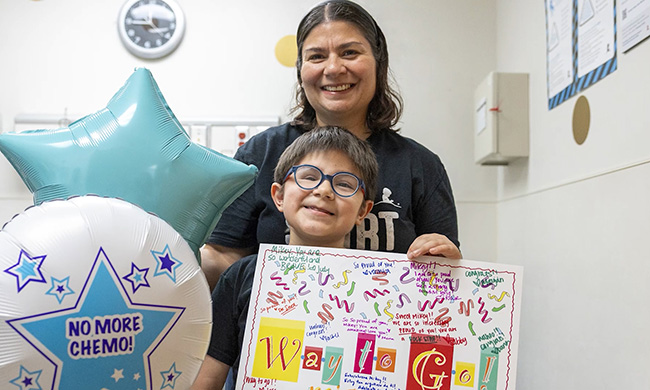
(Feature Impact) Families often arrive at St. Jude Children’s Research Hospital with a tough road ahead. Their child has been diagnosed with cancer, and they’re navigating a complex treatment plan. One thing that families don’t have to worry about is how they’ll pay for this upheaval to their lives. In 2026, Kia donated $2 million to St. Jude to help ensure families don’t receive a bill for medical costs, housing or food during treatment.
Watch this video to learn more
Kia announced its fifth annual “Accelerate the Good” dealer match program, which supports St. Jude Children’s Research Hospital. The program also donates to other organizations that make a positive impact in their communities.
Donations from a network of nearly 800 dealers support organizations such as No Kid Hungry, Toys for Tots, Operation Homefront and several other groups dedicated to children’s health, hunger relief, disaster response and veterans’ well-being. Kia employees also lead volunteer efforts to benefit community pantries, beach cleanups and clothing drives.
“The continued success of our ‘Accelerate the Good’ initiative reflects the shared commitment of Kia and our nationwide retailer network to invest in the communities we serve,” said SeungKyu (Sean) Yoon, president and CEO of Kia North America and Kia America. “Together, we are proud to support organizations that deliver lifesaving care, strengthen families, fight hunger and create meaningful opportunities for people across the country.”
Ahead of September’s Childhood Cancer Awareness Month, Kia and its dealers have reached an important milestone: more than $7.7 million donated to St. Jude Children’s Hospital in four years. The donations are part of Kia’s broader community giving initiatives.
To learn more about how Kia is accelerating good in their communities, visit kia.com.

SOURCE:





