

holidays
Why is Halloween starting so much earlier each year? A business professor explains

Last Updated on October 30, 2025 by Daily News Staff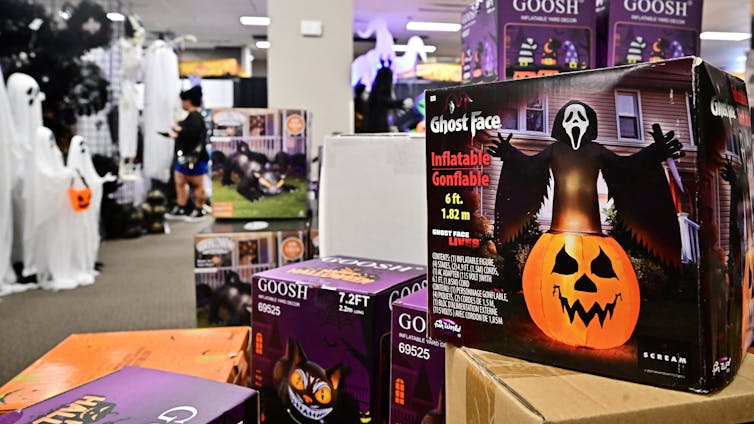
Jay L. Zagorsky, Boston University
Halloween is a fun, scary time for children and adults alike – but why does the holiday seem to start so much earlier every year? Decades ago, when I was young, Halloween was a much smaller affair, and people didn’t start preparing until mid-October. Today, in my neighborhood near where I grew up in Massachusetts, Halloween decorations start appearing in the middle of summer.
What’s changed isn’t just when we celebrate but how: Halloween has evolved from a simple folk tradition to a massive commercial event. As a business school professor who has studied the economics of holidays for years, I’m astounded by how the business of Halloween has grown. And understanding why it’s such big business may help explain why it’s creeping earlier and earlier.
The business of Halloween
Halloween’s roots lie in a Celtic holiday honoring the dead, later adapted by the Catholic Church as a time to remember saints. Today it’s largely a secular celebration – one that gives people from all backgrounds a chance to dress up, engage in fantasy and safely confront their fears.
That broad appeal has fueled explosive growth. The National Retail Federation has surveyed Americans about their Halloween plans each September since 2005. Back then, slightly more than half of Americans said they planned to celebrate. In 2025, nearly three-quarters said they would – a huge jump in 20 years.
And people are planning to shell out more money than ever. Total spending on Halloween is expected to reach a record US$13 billion this year, according to the federation – an almost fourfold increase over the past two decades. Adjusting for inflation and population growth, I found that the average American will spend an expected $38 on Halloween this year – up from just $18 per person back in 2005. That’s a lot of candy corn.
Candy imports show a similar trend. September has long been the key month for the candy trade, with imports about one-fifth higher than during the rest of the year. Back in September 2005, the U.S. imported about $250 million of the sweet stuff. In September 2024, that figure had tripled to about $750 million.
This is part of a larger trend of Halloween becoming a lot more professionalized. For example, when I was a kid, it wasn’t unusual for households to pass out brownies, candied apples and other homemade treats to trick-or-treaters. But because of safety concerns and food allergies, for decades Americans have been warned to stick to mass-produced, individually wrapped candies.
The same shift has happened with costumes. Years ago, many people made their own; today, store-bought costumes dominate — even for pets.
Why Halloween keeps creeping earlier
While there’s no definitive research establishing why Halloween seems to start earlier each year, the increase in spending is one major driver.
Halloween items are seasonal, which means no one wants to buy giant plastic skeletons on Nov. 1. As total spending grows, retailers order more inventory, and the cost of storing ever-larger amounts of unsold items until the next year becomes a bigger consideration.
Once a season’s commercial footprint becomes large enough, retailers begin ordering and displaying merchandise long before it’s actually needed. For example, winter coats start appearing in stores in early fall and are typically gone when the snow starts falling. It’s the same with Halloween: Retailers put out merchandise early to ensure they’re not stuck with unsold goods once the season is over.
They also often price strategically – charging full price when items first hit the shelves, appealing to eager early shoppers, and then marking down prices closer to the holiday. This clears shelves and warehouses, making room for the next upcoming shopping season.
Over the past two decades, Halloween has become an ever-bigger commercial holiday. The growth in people enjoying the holiday and the increase in spending has resulted in Halloween becoming one giant treat for businesses. The big trick for retailers is preventing this holiday from starting before the Fourth of July.
Jay L. Zagorsky, Associate Professor Questrom School of Business, Boston University
This article is republished from The Conversation under a Creative Commons license. Read the original article.
https://stmdailynews.com/%f0%9f%93%9c-who-created-blogging-a-look-back-at-the-birth-of-the-blog/


New hybrid event aims to give grieving audiences meaningful holiday viewing, with films from more than 25 countries and a mission centered on love, loss, and emotional truth.
A new film festival debuting in late 2026 is taking a different approach to holiday entertainment. Grief Fest™: The Grief Film Festival, created by My Grief Angels Inc., is being introduced as what organizers believe is the world’s first film festival dedicated entirely to grief, remembrance, resilience, and healing.
The hybrid festival will run in two segments: November 25–29, 2026, during Thanksgiving week, and December 24, 2026, through January 3, 2027, during Christmas and New Year’s. Top Honors films will be announced on December 31, 2026.
Organizers say the timing is intentional. Research cited in the announcement shows that grief and loneliness are major holiday stressors for many Americans, making the season especially difficult for people coping with loss. In that context, Grief Fest™ is positioning itself as an alternative to the flood of traditional feel-good holiday programming.
The festival is open to short films, features, documentaries, experimental work, AI-generated projects, and VR experiences. It is described as inclusive, non-religious, and LGBTQ+ friendly, with submissions already received from more than 25 countries. All films will be presented in English, either spoken or subtitled.
Grief Fest™ will be available both in person and virtually through Film Festival Plus, making it accessible to audiences worldwide. The launch of GriefFest.com also includes Lumen, a multilingual AI guide designed to help filmmakers and attendees navigate the festival in their preferred language.
Rather than focusing on industry prestige, organizers say the festival is centered on community and emotionally honest storytelling. For audiences who feel unseen during the holidays, Grief Fest™ is aiming to offer something rare on the seasonal screen: recognition.
Source: PR Newswire
Related Reading
- Grief Fest: Official festival site
- My Grief Angels Inc.: About the nonprofit behind the festival
- Film Festival Plus: Virtual access platform
Catch the latest in movies, TV, music, pop culture, and live events in STM Daily News’ Entertainment section.
Food and Beverage
Ferrero Survey Says Adults Are Reclaiming Easter Candy Traditions
A new Ferrero survey finds adults are embracing Easter candy traditions, from building their own baskets to buying premium treats and raiding the kids’ stash.


Easter Is for Adults Now, Too
Ferrero’s latest survey suggests the holiday candy aisle is no longer just about kids. It is also about nostalgia, self-indulgence, and adults openly claiming a place in traditions they were once expected to outgrow.
At some point, adults stopped pretending they were only buying Easter candy for the kids.
Ferrero North America’s latest Easter Candy Survey leans hard into that reality, arguing that the “Adultoween” energy the company has been tracking around Halloween has now fully crossed into spring. According to the survey, 66% of North American adults say they deserve an Easter basket just as much as children do. If that sounds less like a shocking revelation and more like a formal acknowledgment of what has already been happening in grocery store checkout lines for years, that is probably because it is.
The bigger story here is not just that adults like candy. Of course they do. It is that brands are becoming much more comfortable marketing nostalgia, ritual, and seasonal indulgence directly to grown-ups. Easter, once framed mostly as a family holiday centered on children, is increasingly being recast as a shared cultural event where adults are not just participating politely. They are fully in it.
The Easter Bunny Has Entered the Group Chat
Ferrero’s survey of 1,000 adults in the United States and Canada paints a picture of Easter as a holiday that now comes with brunch plans, premium baskets, personal candy stashes, and a surprising amount of competitive behavior. Seventy percent of respondents said Easter is the best time of year for both adults and kids to indulge in candy together. Nearly half said they are likely to host or attend an adult Easter brunch, party, or gathering.
Then there are the confessions, which are really the heart of the whole thing. More than one in three adults said they have eaten their children’s Easter candy without telling them. More than one in four said they have competed with their own kids to find Easter eggs first. Eighteen percent admitted to cheating to win.
None of this is exactly noble, but it is revealing. The modern holiday experience is less about adults facilitating magic from the sidelines and more about everyone wanting in on the fun. Ferrero is smart to recognize that. Seasonal candy marketing has traditionally leaned on childhood wonder. What it is leaning on now is something slightly different: the idea that adulthood is stressful, nostalgia sells, and nobody really wants to age out of joy.
Candy as Culture, Not Just Confection
The survey also suggests that adults are not treating Easter candy as an afterthought. More than half of respondents said they would pay extra for a premium Easter basket, spending an average of $23 on a chocolate bunny or specialty treat. Dark chocolate, peanut butter candy, and chocolate eggs topped the wish lists. More than half also said Easter candy tastes better than Halloween candy, which feels like the kind of claim that could start arguments at a family gathering.
What matters more than the specific rankings, though, is what they signal. Holidays are increasingly being marketed as lifestyle moments rather than fixed traditions. The basket is no longer just for children. It is a seasonal self-care package, a joke, a nostalgic ritual, and a low-stakes luxury purchase all at once.
That shift says something broader about consumer culture. Adults are being invited to reclaim the symbols of childhood not because society has become less serious, but because modern life often feels serious all the time. A chocolate bunny is cheap therapy. A private stash of mini eggs is a coping mechanism with pastel packaging.
Why This Trend Matters
It would be easy to dismiss all of this as clever branding wrapped around survey data, and to be fair, Ferrero clearly knows how to turn consumer behavior into a seasonal narrative. But the company is tapping into something real. The line between kids’ traditions and adult participation has been softening for a while, whether that shows up in Halloween, themed merchandise, collectibles, or holiday food culture.
Easter now appears to be joining that list. Not because adults suddenly discovered candy in 2026, but because they are increasingly willing to admit that these rituals still mean something to them. Not everything has to be optimized, productive, or age-appropriate in the most boring sense of the phrase. Sometimes people just want the basket.
Ferrero’s Easter lineup this year includes products from Butterfinger, CRUNCH, Ferrero Rocher, Kinder, Nutella, Mother’s Cookies, Keebler, and Tic Tac, among others. The survey was conducted by Golin in partnership with Dynata between January 13 and January 27, 2026, among 1,000 respondents in the United States and Canada, with a margin of error of plus or minus 3%.
External Related Links
- Ferrero North America
- Ferrero Rocher Easter Products
- Kinder Easter Candy Collection
- Nutella Products and Brand Information
- PRNewswire Consumer Lifestyle News
Source: Ferrero North America via PRNewswire
The Food and Drink section at STM Daily News delivers fresh coverage on dining, drinks, recipes, and the food stories bringing communities together.

Last Updated on April 3, 2026 by Daily News Staff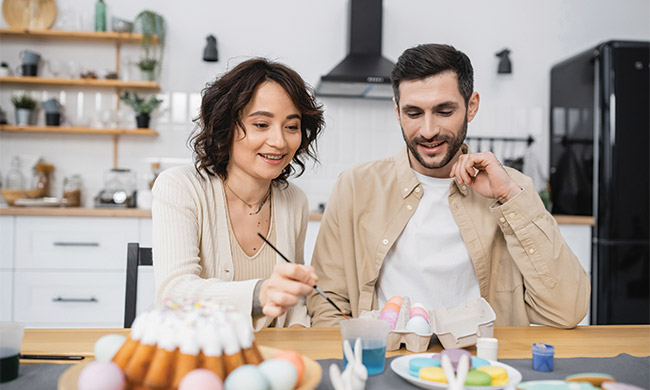
(Feature Impact) Easter celebrations don’t need to be elaborate to feel special. A few thoughtful touches – from elegant decor to sweet seasonal treats – can instantly elevate baskets, brunch tables and spring gatherings.
Darling Decor
Few things capture the spirit of spring like a welcoming table. Creating an Easter-ready setting can be simple: pastel eggs nestled in woven baskets, floral runners, ribbons, paper napkins, egg-shaped votives and whimsical bunny accents instantly brighten the scene. Layering soft colors and natural textures helps create a table that feels festive yet effortless.
 Brunching with Bunnies
Easter is the perfect excuse to refresh your brunch menu. A signature dish – whether it’s a savory quiche, fluffy pancakes or a fresh fruit board – paired with playful mocktails can instantly set a celebratory tone.
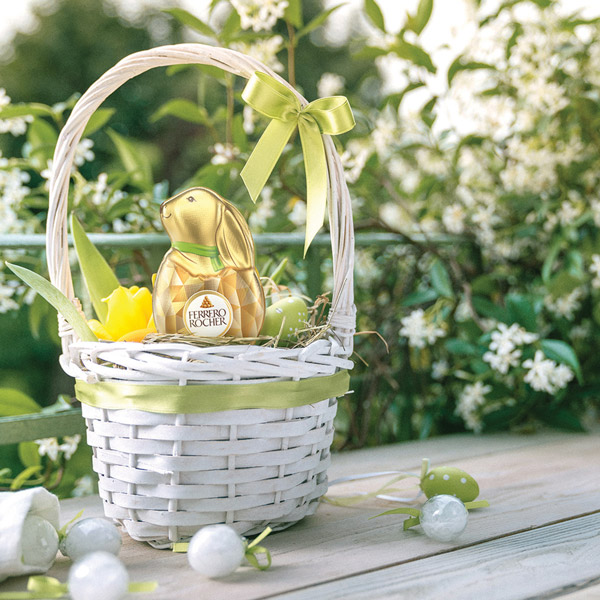
For a sweet finishing touch, add a bowl of Ferrero Rocher premium gold-wrapped chocolates to the table. They double as both a treat and eye-catching accent. Guests can also enjoy the brand’s first-ever hollow bunny candy, “Bunny and Egg,” a festive seasonal chocolate designed especially for Easter celebrations. These elegant treats work just as well tucked into Easter baskets as they do placed around the table for guests to enjoy.
Festive Florals
No spring table is complete without flowers. Seasonal favorites like tulips, daffodils, hyacinths and white lilies can brighten any gathering. Arrange them in rabbit-shaped planters or simple bud vases for a playful touch. For a creative twist, fill clear vases with colorful stones, craft gems or even jellybeans before adding blooms for a centerpiece that feels both festive and fresh.
Beyond Basic Baskets
Easter baskets have evolved beyond simple candy assortments. Today’s baskets often feature curated treats and small gifts for everyone at the table. For a premium addition, Ferrero Rocher Golden Eggs – individually wrapped white, milk and dark chocolates with a smooth, indulgent center – bring a touch of elegance to baskets, egg hunts or springtime place settings.
Sweet Moments to Share
Sometimes the most memorable Easter traditions are the simplest ones – sharing dessert after brunch, passing around chocolates at the table or sending guests home with a small sweet treat. Setting out a bowl of chocolates encourages everyone to pause, indulge and celebrate the moment together.
Find more elegant treat and decor ideas to elevate your Easter celebration at ferrerorocher.com.
Photo courtesy of Shutterstock (man and woman painting Easter eggs)

 SOURCE:
Our Lifestyle section on STM Daily News is a hub of inspiration and practical information, offering a range of articles that touch on various aspects of daily life. From tips on family finances to guides for maintaining health and wellness, we strive to empower our readers with knowledge and resources to enhance their lifestyles. Whether you’re seeking outdoor activity ideas, fashion trends, or travel recommendations, our lifestyle section has got you covered. Visit us today at https://stmdailynews.com/category/lifestyle/ and embark on a journey of discovery and self-improvement.





