

Lifestyle
Despite naysayers and rising costs, data shows that college still pays off for students – and society overall
College graduates earn significantly more than high school graduates, but rising costs and policy changes affect enrollment. The need for educated workers is increasing, necessitating reforms in higher education to align skills with job market demands and improve access.

Despite naysayers and rising costs, data shows that college still pays off for students – and society overall
Stanley S. Litow, Columbia University
No industry has perhaps felt the negative effect of a radical shift in federal policy under the second Trump administration more than higher education.
Many American colleges and universities, especially public institutions, have experienced swift and extensive federal cuts to grants, research and other programs in 2025.
Meanwhile, new restrictive immigration policies have prevented many international students from enrolling in public and private universities. Universities and colleges are also facing other various other challenges – like the threat to academic freedom.
These shifts coincide with the broader, increasingly amplified argument that getting a college degree does not matter, after all. A September 2025 Gallup poll shows that while 35% of people rated college as “very important,” another 40% said it is “fairly important,” and 24% said it is “not too important.”
By comparison, 75% of surveyed people in 2010 said that college was “very important,” while 21% said it was “fairly important” and 4% said it is “not too important.”
Still, as a scholar of education, economic development and social issues, I know that there is ample and growing evidence that a college degree is still very much worth it. Graduating from college is directly connected to higher entry-level wages and long-term career success.
A growing gap
Some people argue that a college degree does not matter, since there might not be enough jobs for college graduates and other workers, given the growth of artificial intelligence, for example. Some clear evidence shows otherwise.
An estimated 18.4 million workers with a college degree in the U.S. will retire from now through 2032, according to Georgetown University’s Center on Education and the Workforce. This is far greater than the 13.8 million workers who will enter the workforce with college degrees during this same time frame.
Meanwhile, an additional 685,000 new jobs that require college degrees – spanning from environmental positions to advanced manufacturing – will be created from now through 2032.
The gap between those expected to leave and enter the workforce with college degrees creates a serious problem. One major question is whether there will be enough people to fill the available jobs that require a college degree.
In 2023, foreign-born people made up 16% of registered nurses in the U.S., though that percentage is higher in certain states, like California. But restrictions on immigration could limit the number of potential nurses able to fill open positions.
Nursing and teaching are two fields expected to grow over the next few decades, and they will require more workers due to retirements.
Other fields, like accounting, engineering, law and many others, are also expected to have more college-educated workers retire than there are new workers to fill their positions.
Worth the cost
The average annual salary of a college graduate from the class of 2023 was US$64,291 in 2024, according to the National Association of Colleges and Employers.
The overall average salary for this graduation class one year after they left school marked an increase from the average $60,028 that the class of 2022 earned in 2023, equivalent to $63,850 today.
While there is not available data that offers a direct comparison, full-time, year-round workers ages 25 to 34 with a high school diploma earned $41,800 in median annual earnings in 2022, or $46,100 today.
Overall lifetime earnings for those with college degrees is about about $1.2 million more than people with a high school make, according to the recent Georgetown findings.
People who earn more generally have more money to support their families and contribute to their immediate communities. Their higher taxes also contribute to the U.S. economy, supporting needed services like education, public safety and health care.
People with college degrees are also more likely than those who are not college graduates to vote, volunteer and make charitable donations to help others in need.
College matters for individuals, but it clearly also helps improve the economy.
With 64 public colleges across the state, the State University of New York system is the largest post-secondary network of higher education schools in the country. For every $1 the state of New York invests in SUNY, the SUNY system returns $8.70 to the state in terms of economic growth, according to 2024 findings by the Rockefeller Institute, an independent public policy research organization affiliated with SUNY. And that is only one state.

A new way forward
It isn’t likely that the expected number of college-educated people who will soon retire will suddenly decrease, or that the anticipated number of people entering the workforce will unexpectedly increase.
There are practical reasons why some people do not want to go to college, or cannot attend. Indeed, the percentage of young people enrolled as college undergraduates fell almost 15% from 2010 through 2022.
For one, tuition and fees at private colleges have increased about 32% since 2006, after adjusting for inflation. And in-state tuition and fees at public universities have also grown about 29% since 2006.
The total of federal student loan debt for college has also tripled since 2007. It stood at about $1.84 trillion in 2024.
I believe that in order to ensure enough college-educated people can fill the anticipated work openings in the future, universities and the government should embrace needed changes to increase both enrollment and completion rates.
Artificial intelligence will transform work worldwide, for example, and that shift should be incorporated into higher education curriculum and degrees. Soft skills – like problem-solving, collaboration, presentation and writing skills – will become more important and should be prioritized in the learning process.
I believe that universities should also prioritize experiential education, including paid internships that offer students academic credit. This can help students gain experience that is both accredited and is connected to direct career pathways.
Universities and high schools could also expand how much they offer microcredentials – or short, focused learning programs that offer practical skills in a specific area – so students can connect their education with clear career pathways.
These reforms aren’t easy. They require a commitment to change, and all of this work will require deep partnerships with the government. While that might be a heavy lift currently at the federal level, it is both possible and achievable to make advances on these and other changes at the state level.
American universities and colleges have always been key to preparing the workforce for economic opportunity. At the end of World War II, for example, Columbia University and IBM worked together to help create the academic discipline now called computer science.
This action did more than help one university or one employer. It fueled change across higher education and across private companies and the government, leading to massive economic growth.
Universities have made countless other contributions to strengthen and expand the economy. Considering solutions to some of the challenges that stop students from going to college could help ensure that more students see the value in a college education – and a tangible way for them to connect it to a future career.
Stanley S. Litow, Adjunct Professor of International and Public Affairs, Columbia University
This article is republished from The Conversation under a Creative Commons license. Read the original article.
STM Daily News is a multifaceted podcast that explores a wide range of topics, from life and consumer issues to the latest in food and beverage trends. Our discussions dive into the realms of science, covering everything from space and Earth to nature, artificial intelligence, and astronomy. We also celebrate the amateur sports scene, highlighting local athletes and events, including our special segment on senior Pickleball, where we report on the latest happenings in this exciting community. With our diverse content, STM Daily News aims to inform, entertain, and engage listeners, providing a comprehensive look at the issues that matter most in our daily lives. https://stories-this-moment.castos.com/


Business and Finance
Handshake Launches Free AI Skills Studio to Help Job Seekers Prepare for an AI-Driven Workplace
Handshake has launched AI Skills Studio, a free project-based learning hub designed to help students and job seekers develop practical AI skills and demonstrate what they can do to prospective employers.

As artificial intelligence becomes a bigger part of everyday work, knowing how to actually use AI tools may become just as important as knowing what they can do.
Career platform Handshake is betting on that shift with the launch of AI Skills Studio, a free learning hub designed to give students and job seekers practical experience using AI through short, hands-on projects.
Handshake’s AI Skills Studio aims to help job seekers build practical, hands-on AI experience as artificial intelligence becomes increasingly important across the workplace. Image: Rod Washington and Firefly.
Announced September 22, AI Skills Studio offers project-based learning “missions” that generally take between 10 and 45 minutes to complete. Instead of focusing primarily on lectures or traditional coursework, participants work directly with AI and technology tools to create something tangible.
Projects can include automated workflows, software, interactive games, data dashboards, portfolios, and tools aimed at preparing users for jobs in areas such as sales and marketing.
The program was developed with a broad group of technology companies and educational partners, including Clay, Figma, Gamma, Google, Lovable, Notion, OpenAI, Replit, Salesforce, Southern New Hampshire University and Vercel.
Turning AI knowledge into something employers can see
One of the more notable aspects of AI Skills Studio is its emphasis on demonstrating skills rather than simply listing them on a résumé.
After completing a mission, learners can add their projects to their Handshake profiles and potentially feature them in the platform’s AI Showcase. Participants also receive verified skill badges intended to provide employers with evidence that they have applied particular AI skills.
That approach reflects a growing challenge for both applicants and businesses: simply saying someone is familiar with artificial intelligence doesn’t necessarily show an employer what that person can accomplish with it.
“Employers know they need people who can work effectively with AI, but a résumé can’t tell you what someone is truly capable of,” Handshake Chief Operating Officer Jon Stull said in announcing the program.
For job seekers, that could make small AI projects increasingly useful as part of a professional portfolio, particularly for people entering the workforce without years of experience.
Students see AI skills becoming increasingly important
Handshake says its own research indicates that many students recognize the importance of AI but don’t necessarily believe their education has kept pace.
According to the company’s 2026 Network Trends Report, 58% of graduating seniors surveyed said they would need a stronger understanding of AI to succeed in the workplace. Only 28%, however, said AI had been meaningfully integrated into their educational programs.
Those figures come from Handshake’s own research, but they highlight a broader issue confronting workers, schools and businesses as generative AI moves rapidly into professional environments.
Julia Stiglitz, Handshake’s Chief Education and Workforce Officer, said people shouldn’t necessarily wait for the technology—or the workplace—to stop changing before beginning to develop AI skills.
“The best thing people can do is start learning and start building,” Stiglitz said.
Learning with tools used in the workplace
Rather than teaching AI only as a theoretical subject, the Studio is designed around tools people could encounter professionally.
OpenAI, for example, is participating with projects involving ChatGPT and Codex. Google is contributing training involving its AI tools and workflows, while other partners bring experience in areas ranging from software development and design to productivity and enterprise technology.
An AI Skills Instructor provides learners with guidance and feedback while they complete projects.
Handshake says connecting those projects directly to a career profile could also give employers another way to evaluate applicants—allowing recruiters to look at what candidates have actually built instead of relying entirely on degrees, résumés or self-reported skills.
AI could change what “experience” means
The development is especially interesting for students, career changers and early-career workers.
Traditionally, gaining experience has often created a familiar problem: employers want applicants with experience, while applicants need employment opportunities to acquire that experience.
Project-based AI training doesn’t eliminate that problem, and completing a short AI exercise isn’t the same as performing a job professionally. But projects can provide another way for someone to demonstrate curiosity, technical familiarity and the ability to apply new tools to a specific task.
As AI becomes embedded in more occupations, portfolios demonstrating how someone uses the technology could become an increasingly useful complement to conventional credentials.
That doesn’t mean everyone needs to become an AI engineer. The more immediate workplace skill may simply be understanding how to use AI effectively within an existing profession—whether that’s marketing, design, software development, sales, research or business operations.
Handshake’s new program is another indication that career preparation is beginning to adjust to that reality.
AI Skills Studio is available free through Handshake’s website and mobile app.
Source: Handshake press release, September 22, 2026. Statistics regarding graduating seniors and AI education are attributed to Handshake’s 2026 Network Trends Report.
Source and Related Links
Handshake — Introducing AI Skills Studio: AI Skills Studio launch and overview — Details the program, project-based missions, participating partners and how completed projects can be displayed to employers.
Handshake — What is AI Skills Studio?: AI Skills Studio Help Center — Official information on how the program works, eligibility, missions and access.
Handshake — Class of 2026 Graduation Report: AI and the Workforce Ahead — Supports the article’s statistics that 58% of graduating seniors say they need stronger AI skills while only 28% say AI has been meaningfully integrated into their academic program. Handshake
Handshake — Workforce Outlook: Class of 2026 in the AI Economy — Additional research on AI adoption, employer demand and attitudes toward AI among graduating students.
Stay informed. Stay curious. From business and technology to lifestyle, entertainment, transportation, science and the stories shaping everyday life, STM Daily News brings you news, insight and useful information that matters.
Discover more stories at STM Daily News: https://stmdailynews.com


(Feature Impact) Dry eye is one of the most overlooked symptoms of perimenopause, the phase of fluctuating hormones leading up to a woman’s final period, and menopause, the point in a woman’s life when she’s gone a year without a period.
In fact, 79% of women1 recognize hot flashes as a symptom of menopause, but only 14% recognize dry eye as a menopause-related symptom, according to the 2026 Bausch + Lomb (Peri)Menopausal Survey. What’s more, 78% of women1 were surprised to learn that dry eye is a symptom of perimenopause or menopause.
“Dry eye is still widely overlooked as a symptom of menopause, and many women think it’s just a minor nuisance, but the truth is it can significantly affect your daily life,” said Neda Gioia, OD, CNS, IFMCP, FOWNS, founder, Integrative Vision. “Early symptoms are often misunderstood or self-treated but it’s very important for women who experience symptoms to see an eye doctor and get an accurate diagnosis and treatment.”
During perimenopause and menopause, declining hormone levels can impact tear production, tear quality and tear evaporation, contributing to dry eye symptoms including redness, fluctuating vision and a gritty or tired feeling in the eyes, all of which can impact day-to-day comfort and quality of life. If left untreated, dry eyes may worsen over time, potentially impacting eye health and vision. Among peri-, menopausal and post-menopausal women who experienced dry eye, 80% said the symptom came as a surprise.
Respondents reported their dry eye symptoms caused difficulty reading (58%), difficulty using screens (53%), difficulty driving (26%) and reduced productivity (17%), underscoring the often-overlooked impact dry eyes can have on everyday life.1
However, there are a variety of products and treatment approaches available to help manage dry eye symptoms. For example, Bausch + Lomb offers a range of options designed to address the main causes of dry eye.
A doctor-recommended, clinically proven once-daily soft gel supplement that targets the key root causes of dry eyes, Blink NutriTears supports healthy tear production and provides lasting, continuous relief.* § As part of a comprehensive approach to dry eye management, the supplement can be used with Blink Triple Care Preservative Free Lubricant Eye Drops, which are designed to directly address tear evaporation, one of the leading causes of dry eye, and provide instant and long-lasting symptom relief.
An eye care professional can help determine the approach that’s right for each individual. To learn more about dry eye and products to help combat it, visit JustBlink.com.*These statements have not been evaluated by the Food and Drug Administration. This product is not intended to diagnose, treat, cure or prevent any disease.
12026 Bausch & Lomb (Peri)Menopause Survey via Suzy, n=402; Women ages 30–80+ who are perimenopausal, menopausal, or post-menopausal
§Based on a clinical study
SOURCE:
Bausch + Lomn
child education
Where Curiosity Builds Trade Skills: 5 Ways to Help Kids Discover the Skilled Trades
Help Kids Discover the Skilled Trades: Parents, educators and mentors can encourage young people to broaden their horizons as they plan their futures and build awareness around careers in the skilled trades with these tips.
Where Curiosity Builds Trade Skills: 5 Ways to Help Kids Discover the Skilled Trades
(Feature Impact) Most students hear questions about what they want to be when they grow up. By the time their middle and high school years arrive, they’re often starting to consider their answers more in depth. Conversations with adults can help shape their awareness of and interest in various career paths, including skilled trades.
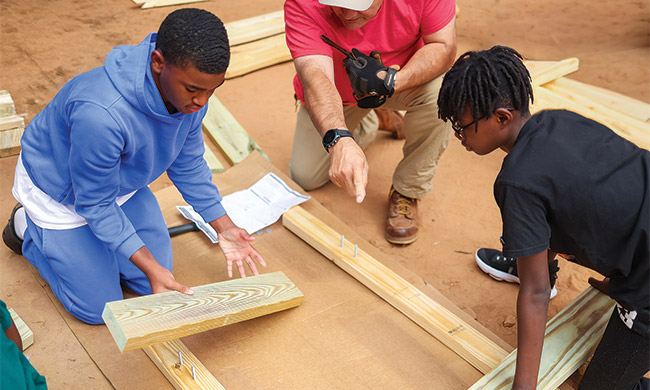
When they’re provided with opportunities to learn, build, experiment and solve problems, young people can discover whether their talents and passions are a good fit for a career in the trades. Programs likePath to Pro Skills Explorers, launched by The Home Depot in partnership with Scouting America and Boys & Girls Clubs of America, provide free, accessible ways to introduce students to options like the plumbing, construction and electrical fields, as well as content on leadership and soft skills.
Parents, educators and mentors can encourage young people to broaden their horizons as they plan their futures and build awareness around careers in the skilled trades with these tips.
Start Career Conversations Early
Choosing a career path doesn’t have to be one intimidating, life-changing moment. Parents and mentors can normalize career conversations by starting them early and keeping things casual. Opening the dialogue sparks curiosity about the activities kids enjoy and allows them to start connecting those interests to potential career paths. To get started, set kids up with access to online programs, videos and introductory courses so they can explore a variety of possibilities.
 Turn Curiosity Into Hands-On Learning
For many students, learning by doing is the most satisfying way to test, improve and build skills. Instead of only reading textbooks or listening to instructors, offer them the chance to follow a plan, work with different materials, troubleshoot problems and build something tangible. Young people considering hands-on careers need hands-on practice to develop confidence and adaptability. Take the first step by researching online resources and local opportunities for classes, job shadowing or even apprenticeships.
Recognize the Skills Kids Are Already Building
Skilled trades aren’t just about knowing which wires to connect or what tool to reach for. They also rely on a variety of soft skills like communication, patience, critical thinking, time management, attention to detail and more. When kids demonstrate these traits, point them out and encourage them. Take opportunities to let them experiment with hands-on projects, whether they want to try building a treehouse, repairing a bike or tinkering with technology.
Expand Views of Career Pathways and Success
The road to success is more like an intersection. Let young people know there are many pathways to fulfilling careers and futures, and while the traditional college-to-career plan can still be a viable option, it isn’t the only one. Skilled trades offer competitive salaries, job security and the opportunity to learn hands-on skills that will always be in demand. Even in a world where technology is rapidly changing many career fields, it takes skilled workers to replace roofs, repair electrical systems, fix sewer lines and lead disaster recovery efforts.
Find Programs That Make Skilled Trades Exploration Accessible
There is a gap between labor supply and demand in the trades, and it’s only widening as older generations approach retirement age. Programs like The Home Depot’s Skills Explorers are designed to empower young people to step into these roles by providing a mix of online resources and hands-on activities to explore viable career paths. As a key part of a commitment by The Home Depot and The Home Depot Foundation to deliver 15 million introductions to the skilled trades by 2032, the program offers an accessible, no-cost curriculum for youth education groups to learn what it’s like to work in these important fields.
“For years, The Home Depot and The Home Depot Foundation’s Path to Pro program have helped separating military, career changers and others build pathways to the trades,” said Michael Rowe, executive vice president of Pro for The Home Depot. “We know that closing the skilled labor gap starts much earlier. We need more young people to see what’s possible and understand the lucrative opportunities these careers provide.”
Visit pathtopro.com/skills-explorers to access the free curriculum and discover how to bring hands-on skilled trade exploration to students.
SOURCE:
🔧 Curiosity today can become a skill for tomorrow. Giving kids opportunities to build, fix, create, and explore trades at an early age can turn natural curiosity into confidence, practical skills, and even inspiration for a future career. Whether it’s woodworking, automotive repair, cooking, electronics, or construction, hands-on learning shows kids that there’s more than one path to success. Visit: https://stmdailynews.com/lifestyle/





