

Food
Consumer Trust in Responsible Seafood Drives New “Seafood You Can Trust” Campaign
New GlobeScan research shows two-thirds of consumers trust the BAP seafood certification label, prompting the Global Seafood Alliance to launch a 2026 “Seafood You Can Trust” consumer campaign focused on transparency and responsible seafood sourcing.

Last Updated on December 9, 2025 by Daily News Staff

Consumer Trust in Responsible Seafood Drives New “Seafood You Can Trust” Campaign
When two-thirds of consumers say they trust a certification label, that’s not just a marketing win—it’s a mandate for action.
New research from GlobeScan, conducted for the Global Seafood Alliance (GSA), reveals that consumers across five countries are actively seeking responsible seafood options and relying on credible certifications to guide their purchasing decisions. The findings have prompted GSA to launch a new consumer-facing campaign in 2026 centered on a simple but powerful message: “Seafood You Can Trust.”
What Seafood Consumers Really Care About
The survey, which polled at least 1,000 consumers in Canada, France, Spain, the United Kingdom, and the United States, focused on people who had purchased seafood in the last six months or consumed fish in the past year. The goal was to understand what drives seafood purchasing decisions and how certification labels like Best Aquaculture Practices (BAP) influence consumer behavior.
The results paint a clear picture: consumers want seafood that tastes good, is safe to eat, supports their health, and fits their budget. Nearly half of respondents identified safety as a critical factor when choosing farmed seafood, while more than half (53%) said they actively want to avoid products from irresponsible companies.
“It’s encouraging to see consumers recognizing the value of responsible seafood,” said Gayle Chong, principal at GlobeScan. “Credible certification plays a vital role in guiding purchasing decisions and sends a powerful signal to the industry that integrity matters.”
The Trust Factor: Why BAP Certification Resonates
One of the most significant findings from the survey is the level of trust consumers place in the BAP label. Two-thirds of respondents expressed confidence in BAP certification, with Spanish consumers showing the highest trust levels. More than half (53%) said the BAP label would directly influence their decision to buy or eat a seafood product.
This matters because trust is the currency of modern food systems. In an era of supply chain complexity and competing claims about sustainability, consumers need reliable signals to help them make informed choices. When a certification label earns that trust, it becomes more than a marketing tool—it becomes a bridge between responsible producers and conscious consumers.
More than four in ten consumers reported intentionally purchasing eco-labeled fish and seafood products, demonstrating that responsible sourcing isn’t just a niche concern—it’s a mainstream expectation.
Who Do Consumers Trust for Seafood Information?
The survey also explored which sources of information consumers find most credible when it comes to responsible seafood. The top trusted sources were:
- Fishers and fishmongers
- Certification organizations
- Scientists
- Chefs
This ranking reveals something important: consumers value expertise and direct connection. They trust the people who catch and sell seafood, the scientists who study it, the organizations that certify it, and the chefs who prepare it. These are voices with skin in the game—people whose livelihoods and reputations depend on getting it right.
When it comes to reaching consumers with responsible seafood messaging, the research shows that product packaging is the most effective channel. This makes sense—purchasing decisions happen at the point of sale, and clear, trustworthy labeling on the package itself provides information exactly when and where consumers need it.
Introducing the 2026 “Seafood You Can Trust” Campaign
Armed with these insights, GSA is launching a new consumer-facing marketing campaign in 2026 built around the tagline “Seafood You Can Trust.” The phrase was one of the top-chosen taglines by consumers across all surveyed countries—a testament to its clarity and resonance.
“Our chosen campaign tagline, Seafood You Can Trust, was one of the top chosen taglines by consumers across all countries—a simple yet effective message,” said Elise Avallon, GSA’s marketing director. “We look forward to working with retail and food service partners, as well as BAP-certified producers, to bring this campaign to life.”
The campaign will leverage the survey’s findings to meet consumers where they are—on product packaging, through trusted voices, and with straightforward messaging that cuts through the noise. By emphasizing safety, responsibility, and credibility, the campaign aims to make it easier for consumers to choose seafood that aligns with their values.
Why This Matters Beyond Marketing
The GlobeScan survey and the resulting campaign represent more than a branding exercise. They reflect a broader shift in how consumers think about food—not just as fuel or pleasure, but as a choice with consequences.
When consumers say they want to avoid irresponsible companies, they’re expressing a desire for accountability. When they trust certification labels, they’re signaling that third-party verification matters. And when they actively seek out eco-labeled products, they’re voting with their wallets for a food system that prioritizes sustainability alongside taste and affordability.
For producers, retailers, and food service operators, this research offers a roadmap. Consumers are ready to support responsible seafood—they just need clear, credible information to guide their choices. Certifications like BAP provide that clarity, and campaigns like “Seafood You Can Trust” amplify the message.
Getting Involved
GSA recently hosted a webinar providing an overview of the key findings from the GlobeScan study, which is available to view online. The organization is also inviting retail and food service partners, as well as BAP-certified producers, to get involved in the 2026 marketing campaign.
As the seafood industry continues to navigate challenges around sustainability, traceability, and consumer trust, initiatives like this demonstrate that transparency and credibility aren’t just good ethics—they’re good business.
About the Global Seafood Alliance
The Global Seafood Alliance is an international nonprofit organization dedicated to advancing responsible seafood practices through education, advocacy, and third-party assurance. The Best Aquaculture Practices (BAP) certification program is one of the most comprehensive and widely recognized aquaculture certification programs in the world.
Sources:
For more stories about the latest Food and Beverage news, whether it’s locally or globally, visit our Food & Drink section.
Interested in learning more about responsible seafood sourcing? Look for the BAP certification label next time you’re shopping for fish or seafood.


Food and Beverage
ALDI Rolls Out Its First-Ever Line of Ready-Made Meals
ALDI is entering the ready-made meal market with seven fresh, refrigerated dishes priced under $15. The rollout begins in October, with nationwide availability expected by January 2027.

Busy shoppers looking for a quick dinner option will soon have something new waiting in the refrigerated section at ALDI.
ALDI is launching its first-ever collection of fresh, ready-made meals, introducing seven single-serve and family-size dishes designed to combine convenience, affordability and familiar comfort-food flavors.
The new meals begin rolling out at select ALDI stores in early October, with additional markets receiving them throughout the fall. ALDI expects the entire collection to be available nationwide by January 2027.
Seven New Meals — Ready to Heat and Eat
Unlike frozen dinners, ALDI says its new meals are delivered fresh and sold refrigerated in easy-to-heat trays.
The initial lineup includes five single-serve meals priced under $8:
- Beef Bolognese Spaghetti
- Beef Brisket with White Mac & Cheese
- Butter Chicken & Rice
- Chicken Burrito Bowl
- Chicken Fettuccine Alfredo
Two larger family-size meals will be available for under $15:
- Chicken and Bacon Mac n’ Cheese
- Meat Lovers Pizza Bake
ALDI says the recipes were developed around ingredients including chicken breast, smoked beef brisket, real cheeses and made-from-scratch sauces.
The single-serve meals contain between 30 and 46 grams of protein per serving, according to the company. Family-size offerings provide between 16 and 22 grams per serving.
Convenience Without the Restaurant Bill
The move puts ALDI more directly into the growing market for prepared refrigerated meals — an increasingly attractive option for consumers who want something more substantial than a frozen dinner but don’t necessarily have the time or desire to cook from scratch.
ALDI cited the 2026 International Food Information Council Food & Health Survey, which found that 61% of Americans consider convenience an important factor when purchasing food.
“Our shoppers are looking for meals that fit into busy lives without sacrificing quality or stretching their budgets,” Joan Kavanaugh, Vice President of National Buying for ALDI U.S., said in the company’s announcement.
ALDI supplier Kitchen Food Company said hundreds of recipes were tested while developing the new collection.
Dinner in Just a Few Minutes
Convenience is a major part of the concept.
Depending on the variety, ALDI’s single-serve meals require roughly 3½ to 4½ minutes in the microwave. The company instructs consumers to heat the meals until they reach an internal temperature of 165 degrees Fahrenheit.
The larger family meals can be prepared in a conventional oven at 350 degrees, with approximately 40 minutes of total cooking time.
Shoppers will find the meals in the refrigerated meals section near the front of participating ALDI stores.
More Meals Are Coming
The seven dishes are only the beginning.
ALDI says it plans to introduce additional ready-made meals through its rotating ALDI Finds selection every month during the next year. That could allow the retailer to experiment with additional recipes, flavors and seasonal offerings while expanding its presence in prepared foods.
The timing also makes the rollout noteworthy. With restaurant meals and takeout competing for household food dollars, prepared grocery-store meals occupy a middle ground: more convenient than cooking from scratch while potentially costing considerably less than feeding a family through restaurant delivery or takeout.
For ALDI shoppers, that means the familiar question of “What’s for dinner?” may soon have a few more answers — and they could be waiting just inside the front door.
Source: ALDI, September 22, 2026
Sources & Related Links
- ALDI — Official Announcement: ALDI Launches First-Ever Collection of Ready-Made Meals
- Original Press Release: ALDI Ready-Made Meals — PR Newswire
- Consumer Research: 2026 IFIC Food & Health Survey — Convenience Outranks Healthfulness
- More ALDI News: ALDI U.S. Newsroom
- More Food & Drink Coverage: STM Daily News Food & Drink
Hungry for More?
Looking for more easy dinner ideas, meal-planning inspiration, and affordable meals? Explore STM Daily News Food & Drink for the latest recipes, food news, restaurant stories, culinary trends and more.

recipes
Fiber is Trending: Sorghum Makes it Simple
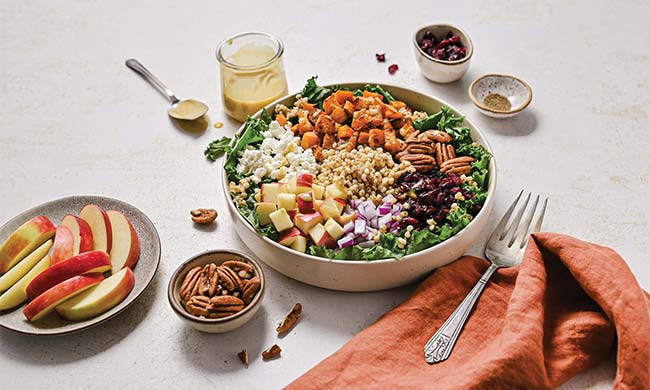
One whole grain quietly gaining recognition for its impressive nutritional profile and versatility in the kitchen is sorghum. This Sorghum Fall Harvest Salad makes it easy to add more fiber to your plate, pairing whole-grain sorghum with seasonal produce like kale, butternut squash and apples.
Fiber is Trending: Sorghum Makes it Simple
(Feature Impact) Protein has long dominated nutrition headlines. Now, dietitians encourage people to pay close attention to another important nutrient: fiber.
One whole grain quietly gaining recognition for its impressive nutritional profile and versatility in the kitchen is sorghum. It’s a naturally gluten-free whole grain that provides both fiber and protein, contains naturally occurring antioxidants and supplies essential nutrients including magnesium, iron and B vitamins.
One reason sorghum is attracting attention is its fiber content. Whole-grain sorghum contains a type of fiber called resistant starch, which research has shown can contribute to healthy body weight and improved insulin resistance.
Unlike many refined gluten-free products that are lower in fiber, sorghum delivers the benefits of a whole grain while remaining naturally gluten-free. Whether you have celiac disease, gluten sensitivity or simply want to enjoy a wider variety of whole grains, sorghum is an easy addition to your menu.
 Another reason nutrition experts are taking a closer look at sorghum is its antioxidant content, specifically its health-promoting polyphenols.
Perhaps the biggest surprise is how easy sorghum is to cook with. Whole-grain sorghum offers a mild, slightly nutty flavor and pleasantly chewy texture, making it a delicious alternative for brown rice, quinoa or farro in grain bowls, soups and salads.
Pearled sorghum cooks faster, making it ideal for busy weeknights. Sorghum flour can replace wheat flour in pancakes, muffins and quick breads, while popped sorghum creates bite-sized crunchy kernels for a fun snack or topping for yogurt, soups and salads. For example, this Sorghum Fall Harvest Salad makes it easy to add more fiber to your plate, pairing whole-grain sorghum with seasonal produce like kale, butternut squash and apples.
Healthy eating doesn’t have to mean following the latest trend. Sometimes it simply means rediscovering nutritious foods that have stood the test of time. With its combination of fiber, protein, antioxidants and naturally gluten-free, whole-grain goodness, sorghum is an ancient grain worth adding to your pantry.
You can find dozens of recipes, cooking tips and meal ideas at SorghumCheckoff.com/recipes.
Easy Sorghum Swaps for Everyday Dishes
If you’re looking for ways to add more sorghum to your meals, these easy swaps make it simple to enjoy this versatile grain in recipes you already love.
- Replace rice. Use cooked whole-grain or pearled sorghum instead of white or brown rice in grain bowls, stir fries, burrito bowls and side dishes.
- Swap for pasta. Stir cooked sorghum into pasta salads or use it in place of small pasta shapes in soups for a hearty twist.
- Mix into salads. Add cooked sorghum to green salads, grain salads or vegetable salads for extra texture and whole-grain nutrition.
- Boost your breakfast. Stir cooked sorghum into oatmeal, yogurt parfaits or breakfast bowls then top with fruit, nuts or cinnamon.
- Bake with sorghum flour. Replace wheat flour in pancakes, muffins, cookies, waffles or quick breads with sorghum flour for a mild, slightly sweet flavor.
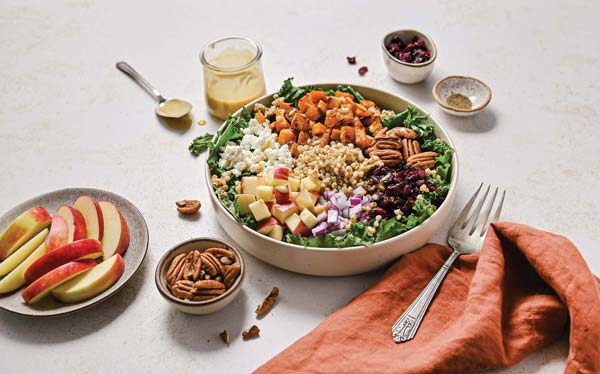
Sorghum Fall Harvest Salad
Recipe courtesy of Sorghum Checkoff
- 1 cup roasted butternut squash, cubed
- 1/4 cup olive oil, plus additional for drizzling, divided
- salt, to taste
- pepper, to taste
- 2 tablespoons apple cider vinegar
- 1 tablespoon sorghum syrup
- 1 teaspoon Dijon mustard
- 4 cups kale, chopped
- 1 cup cooked whole-grain sorghum
- 1 small apple, diced
- 1/2 cup pecan halves, toasted
- 1/4 cup dried cranberries
- 1/4 cup red onions, diced
- 1/3 cup feta cheese, crumbled
- Preheat oven to 400 F. Toss cubed butternut squash with a drizzle of olive oil and salt and pepper, to taste.
- Spread on a baking sheet and roast for 20-25 minutes, flipping halfway, until tender and golden.
- In a jar or small bowl, whisk 1/4 cup olive oil, apple cider vinegar, sorghum syrup, Dijon mustard and salt and pepper, to taste, until emulsified.
- Add chopped kale to a large bowl. Massage with a drizzle of olive oil 1-2 minutes until tender.
- Arrange precooked sorghum, roasted squash, apple, pecans, dried cranberries, red onion and feta cheese on top of kale.
- Drizzle with sorghum syrup dressing just before serving. Toss lightly to combine or serve dressing on the side.

SOURCE:
🍴 What’s your favorite food, recipe, or dining spot? Tell us in the comments! Then subscribe to the STM Daily News newsletter for fresh recipes, restaurant news, food trends, and delicious stories delivered straight to your inbox. Join our growing community of food lovers today!
Food and Beverage
Enjoy Tangy, Spicy Buffalo Chicken with a Superfood Swap
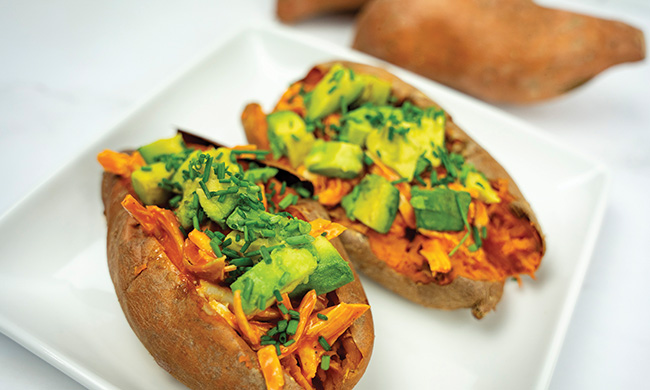
Enjoy Tangy, Spicy Buffalo Chicken: When you’re craving a specific comfort food, other flavors just aren’t going to hit the spot the same way. The good news: It only takes one or two simple ingredient changes to satisfy your taste buds while leveling up the nutrition of a meal like these Buffalo Chicken Stuffed Sweetpotatoes.
Enjoy Tangy, Spicy Buffalo Chicken with a Superfood Swap
(Feature Impact) When you’re craving a specific comfort food, other flavors just aren’t going to hit the spot the same way. The good news: It only takes one or two simple ingredient changes to satisfy your taste buds while leveling up the nutrition of a meal.
Watch video to see how to make this recipe!
For instance, if you’re jonesing for the zesty kick of buffalo sauce, your mind might initially go to pizza and wings. This Buffalo Chicken Stuffed Sweetpotatoes recipe featuring North Carolina Sweetpotatoes invites you to rethink that takeout order and enjoy the same bold, satisfying flavors in a more nutritious way. They’re a little sweet and a little spicy with savory chicken and creamy avocado stuffed jacket-style inside a nutrient-dense baked sweetpotato.
Sweetpotatoes – deliberately spelled as one word to better differentiate this unique root vegetable from traditional potatoes – are an excellent source of vitamins, minerals, antioxidants and fiber. The American Diabetes Association even calls them a “diabetes superfood,” as they raise blood sugar more slowly than other starchy foods while allowing you to savor some natural sweetness. They’re also a great choice for athletes, thanks to complex carbohydrates that boost energy and nutrients that support endurance and recovery.
Find more ways to level up your favorite flavors at ncsweetpotatoes.com.
Buffalo Chicken Stuffed Sweetpotatoes
Recipe courtesy of the North Carolina Sweetpotato Commission
Prep time: 10 minutes
Cook time: 45 minutes
Servings: 4
- 4 sweetpotatoes
- 1 rotisserie chicken, shredded
- 1 1/2 cups buffalo sauce
- 1 avocado, diced
- 2 tablespoons diced chives
- Preheat oven to 400 F. Place sweetpotatoes on lined baking sheet and use fork to pierce each one for venting. Bake 45 minutes, or until tender.
- Let sweetpotatoes cool slightly then use knife to gently cut each open lengthwise and crosswise. Use fork to lightly mash inside sweetpotatoes.
- In large bowl, combine shredded rotisserie chicken with buffalo sauce until evenly coated.
- Spoon buffalo chicken mixture into each sweetpotato. Top with diced avocado and chives.

SOURCE:
North Carolina Sweetpotato Commission





