Connect with us

Blog

Latin America’s Religious Shift: More Say ‘Yes’ to God but ‘No’ to Church

New research on 220,000 Latin Americans reveals a paradox: church affiliation dropped from 93% to 82% and attendance is declining, yet personal faith remains strong. Discover why Latin America’s religious decline differs dramatically from Europe and the US.

Published

on

Latin America's Religious Shift: More Say 'Yes' to God but 'No' to Church
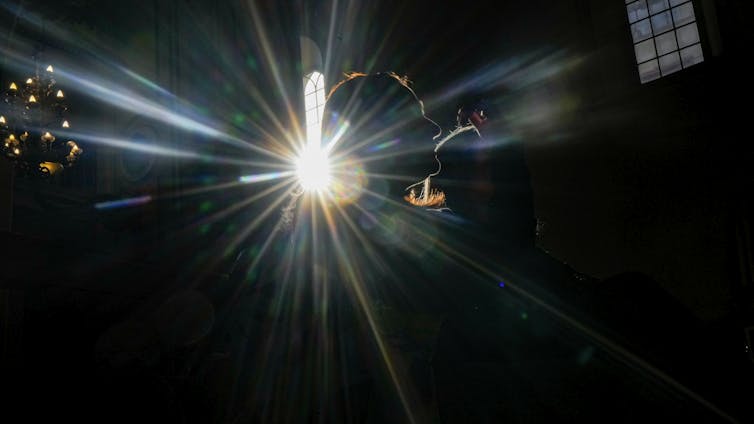
A woman takes part in a Christ of May procession in Santiago, Chile, parading a relic from a destroyed church’s crucifix through the city.
AP Photo/Esteban Felix

Latin America’s Religious Shift: More Say ‘Yes’ to God but ‘No’ to Church

Matthew Blanton, The University of Texas at Austin

In a region known for its tumultuous change, one idea remained remarkably consistent for centuries: Latin America is Catholic.

The region’s 500-year transformation into a Catholic stronghold seemed capped in 2013, when Jorge Mario Bergoglio of Argentina was elected as the first Latin American pope. Once a missionary outpost, Latin America is now the heart of the Catholic Church. It is home to over 575 million adherents – over 40% of all Catholics worldwide. The next-largest regions are Europe and Africa, each home to 20% of the world’s Catholics.

Yet beneath this Catholic dominance, the region’s religious landscape is changing.

First, Protestant and Pentecostal groups have experienced dramatic growth. In 1970, only 4% of Latin Americans identified as Protestant; by 2014, the share had climbed to almost 20%.

But even as Protestant ranks swelled, another trend was quietly gaining ground: a growing share of Latin Americans abandoning institutional faith altogether. And, as my research shows, the region’s religious decline shows a surprising difference from patterns elsewhere. While fewer Latin Americans are identifying with a religion or attending services, personal faith remains strong.

Three women in white robes and caps stand outdoors at nighttime by a large wooden cross.
Women known as ‘animeras,’ who pray for the souls of the deceased, walk to a church for Day of the Dead festivities in Telembi, Ecuador.
AP Photo/Carlos Noriega

Religious decline

In 2014, 8% of Latin Americans claimed no religion at all. This number is twice as high as the percentage of people who were raised without a religion, indicating that the growth is recent, coming from people who left the church as adults.

However, there had been no comprehensive study of religious change in Latin America since then. My new research, published in September 2025, draws on two decades of survey data from over 220,000 respondents in 17 Latin American countries. This data comes from the AmericasBarometer, a large, region-wide survey conducted every two years by Vanderbilt University that focuses on democracy, governance and other social issues. Because it asks the same religion questions across countries and over time, it offers an unusually clear view of changing patterns.

Overall, the number of Latin Americans reporting no religious affiliation surged from 7% in 2004 to over 18% in 2023. The share of people who say they are religiously unaffiliated grew in 15 of the 17 countries, and more than doubled in seven.

On average, 21% of people in South America say they do not have a religious affiliation, compared with 13% in Mexico and Central America. Uruguay, Chile and Argentina are the three least religious countries in the region. Guatemala, Peru and Paraguay are the most traditionally religious, with fewer than 9% who identify as unaffiliated.

Another question scholars typically use to measure religious decline is how often people go to church. From 2008 to 2023, the share of Latin Americans attending church at least once a month decreased from 67% to 60%. The percentage who never attend, meanwhile, grew from 18% to 25%.

Advertisement
Get More From A Face Cleanser And Spa-like Massage

The generational pattern is stark. Among people born in the 1940s, just over half say they attend church regularly. Each subsequent generation shows a steeper decline, dropping to just 35% for those born in the 1990s. Religious affiliation shows a similar trajectory – each generation is less affiliated than the one before.

Personal religiosity

However, in my study, I also examined a lesser-used measure of religiosity – one that tells a different story.

That measure is “religious importance”: how important people say that religion is in their daily lives. We might think of this as “personal” religiosity, as opposed to the “institutional” religiosity tied to formal congregations and denominations.

A spotlight shines on a zigzag row of people wearing jackets, with the rest of the crowd hidden in the dark.
People attend a Mass marking the International Day against Drug Abuse and Illicit Trafficking in Buenos Aires, Argentina, on June 26, 2024.
AP Photo/Rodrigo Abd

Like church attendance, overall religious importance is high in Latin America. In 2010, roughly 85% of Latin Americans in the 17 countries whose data I analyzed said religion was important in their daily lives. Sixty percent said “very,” and 25% said “somewhat.”

By 2023, the “somewhat important” group declined to 19%, while the “very important” group grew to 64%. Personal religious importance was growing, even as affiliation and church attendance were falling.

Religious importance shows the same generational pattern as affiliation and attendance: Older people tend to report higher levels than younger ones. In 2023, 68% of people born in the 1970s said religion was “very important,” compared with 60% of those born in the 1990s.

Yet when you compare people at the same age, the pattern reverses. At age 30, 55% of those born in the 1970s rated religion as very important. Compare that with 59% among Latin Americans born in the 1980s, and 62% among those born in the 1990s. If this trend continues, younger generations could eventually show greater personal religious commitment than their elders.

Affiliation vs. belief

What we are seeing in Latin America, I’d argue, is a fragmented pattern of religious decline. The authority of religious institutions is waning – fewer people claim a faith; fewer attend services. But personal belief isn’t eroding. Religious importance is holding steady, even growing.

This pattern is quite different from Europe and the United States, where institutional decline and personal belief tend to move together.

Eighty-six percent of unaffiliated people in Latin America say they believe in God or a higher power. That compares with only 30% in Europe and 69% in the United States.

Sizable proportions of unaffiliated Latin Americans also believe in angels, miracles and even that Jesus will return to Earth in their lifetime.

Advertisement
Get More From A Face Cleanser And Spa-like Massage

In other words, for many Latin Americans, leaving behind a religious label or skipping church does not mean leaving faith behind.

A man in a colorful knit hat and bright sweater or jacket holds up a small doll in a white robe that is surrounded by wisps of smoke.
An Aymara Indigenous spiritual guide blesses a statue of baby Jesus with incense after an Epiphany Mass at a Catholic church in La Paz, Bolivia, on Jan. 6, 2025.
AP Photo/Juan Karita

This distinctive pattern reflects Latin America’s unique history and culture. Since the colonial period, the region has been shaped by a mix of religious traditions. People often combine elements of Indigenous beliefs, Catholic practices and newer Protestant movements, creating personal forms of faith that don’t always fit neatly into any one church or institution.

Because priests were often scarce in rural areas, Catholicism developed in many communities with little direct oversight from the church. Home rituals, local saints’ festivals and lay leaders helped shape religious life in more independent ways.

This reality challenges how scholars typically measure religious change. Traditional frameworks for measuring religious decline, developed from Western European data, rely heavily on religious affiliation and church attendance. But this approach overlooks vibrant religiosity outside formal structures – and can lead scholars to mistaken conclusions.

In short, Latin America reminds us that faith can thrive even as institutions fade.

Matthew Blanton, PhD Candidate, Sociology and Demography, The University of Texas at Austin

This article is republished from The Conversation under a Creative Commons license. Read the original article.

STM Daily News is a vibrant news blog dedicated to sharing the brighter side of human experiences. Emphasizing positive, uplifting stories, the site focuses on delivering inspiring, informative, and well-researched content. With a commitment to accurate, fair, and responsible journalism, STM Daily News aims to foster a community of readers passionate about positive change and engaged in meaningful conversations. Join the movement and explore stories that celebrate the positive impacts shaping our world.

https://stmdailynews.com/

Advertisement
Get More From A Face Cleanser And Spa-like Massage

Discover more from Daily News

Subscribe to get the latest posts sent to your email.

Continue Reading
Advertisement Sports Research
Click to comment

Leave a Reply

Your email address will not be published. Required fields are marked *

Community

PG&E Donates $1 Million to Local Food Banks to Help Feed Families

PG&E donates $1 million to local food banks across Northern and Central California—equivalent to about 3 million meals—supporting 38 food banks serving 47 counties.

Published

on

 PG&E donates $1 million to local food banks across Northern and Central California—enough for about 3 million meals—supporting 38 food banks serving 47 counties.

Just in time for the holidays, Pacific Gas and Electric Company (PG&E) announced a $1 million donation to local food banks across Northern and Central California—support aimed at meeting a surge in demand as more families and seniors struggle to put food on the table. According to PG&E, the contribution is expected to provide the equivalent of roughly 3 million meals and will support 38 food banks serving 47 counties within PG&E’s service territory.

A third major food-bank contribution since September

The $1 million gift marks the third food-bank-focused contribution since September from PG&E or The PG&E Corporation Foundation (the PG&E Foundation). Combined, those efforts bring PG&E’s total community food support in 2025 to $2.37 million. PG&E emphasized that the funding for these charitable contributions comes from PG&E shareholders—not customers.

Food banks facing record-breaking demand

Food banks across California are reporting pressure levels not seen since the pandemic. Officials with the California Association of Food Banks say demand has reached record highs, driven in part by an unexpected surge during the federal government shutdown this fall. “California food banks experienced an unexpected surge with the [federal government] shutdown this fall. So, we reached out for help on their behalf and PG&E responded,” said Stacia Levenfeld, Chief Executive Officer of the California Association of Food Banks. “Their $1 million gift to food banks throughout Northern and Central California will have a meaningful impact on the lives of millions of people this holiday season and help food banks continue their critical work in our communities.” PG&E leaders framed the donation as an extension of a longstanding partnership with food bank networks. “We are grateful to help local food banks fulfill their mission during this time of increasing demand, especially as more families and seniors are struggling through the holiday season,” said Carla Peterman, Executive Vice President, Corporate Affairs, PG&E Corporation and Chair of The PG&E Corporation Foundation Board. “Our longstanding partnership with the California Association of Food Banks supports the safety net that is our local food banks.”

Where the 2025 food support has gone

PG&E outlined additional contributions made earlier in the year:
  • September: The PG&E Foundation awarded $1.12 million to support local food banks, tribal food banks, and senior meal programs.
  • November: The PG&E Foundation donated $250,000 to the California Association of Food Banks’ Emergency Response Fund.

Equity-focused grant distribution

The California Association of Food Banks notes that while California produces nearly half of the nation’s fruits and vegetables, more than one in five residents still don’t know where their next meal will come from. Food insecurity rates are even higher in many communities of color. PG&E said grant amounts awarded to local organizations will account for county poverty and unemployment levels, using a formula from the California Department of Social Services. The goal: promote equity by directing more support to counties with higher need.

About the PG&E Corporation Foundation and PG&E

The PG&E Corporation Foundation is an independent 501(c)(3) nonprofit organization, separate from PG&E and sponsored by PG&E Corporation. PG&E is a combined natural gas and electric utility serving more than 16 million people across 70,000 square miles in Northern and Central California. More information is available at pge.com and pge.com/news.

Why this matters

As food banks brace for sustained demand beyond the holiday season, large-scale donations like PG&E’s can help stabilize local supply—especially when distributed with an equity lens that targets the counties facing the steepest economic pressures. For families, seniors, and individuals navigating rising costs, the impact is immediate: more meals available now, and stronger community support systems heading into the new year. Community links:
High Demand Marks “Veggies for Veterans” Event Amid SNAP Delays
Link: https://stmdailynews.com/high-demand-marks-veggies-for-veterans-event-amid-snap-delays/

Author


Discover more from Daily News

Subscribe to get the latest posts sent to your email.

Continue Reading

Blog

The Empty Promise: Lynwood’s Lost Downtown Dream

In the 1970s, Lynwood, CA, dreamed of a downtown mall anchored by Montgomery Ward. Decades later, the empty lots told a story of ambition, delay, and renewal.

Published

on

In the 1970s, Lynwood, CA, dreamed of a downtown mall anchored by Montgomery Ward. Decades later, the empty lots told a story of ambition, delay, and renewal.

Artistic Image: R Washington and AI

In the early 1970s, Lynwood, California, dreamed big.

City leaders envisioned a new, modern downtown — a sprawling shopping and auto mall that would bring jobs, shoppers, and a sense of pride back to this small but growing city in the southeast corner of Los Angeles County. At the heart of the plan stood a gleaming new Montgomery Ward department store, which opened around 1973 and promised to anchor a larger commercial center that never fully came.

But for those of us who grew up in Lynwood during that time, the promise never quite materialized.

Instead, we remember acres of empty lots, chain-link fences, and faded “Coming Soon” signs that sat for decades — silent witnesses to a dream deferred.

The Vision That Stalled

In 1973, Lynwood’s Redevelopment Agency launched what it called Project Area A — an ambitious plan to clear and rebuild much of the city’s downtown core. Small businesses and homes were bought out, land was assembled, and the city floated bonds to support new construction.

For a brief moment, it looked as if the plan might work. Montgomery Ward opened its doors, serving as a retail beacon for the area. Yet the rest of the mall — the shops, restaurants, and auto dealerships — never came.

By the mid-1970s, much of downtown had been bulldozed, but little replaced it. And by the time Ward closed its Lynwood location in 1986, the vast lots surrounding it had become symbols of frustration and unfulfilled potential.

What Happened?

Some longtime residents whispered about corruption or backroom deals — the kind of speculation that grows when visible progress stalls.

But newspaper archives and redevelopment records tell a more complex story.

Lynwood’s plans collided with a series of hard realities:

The construction of the Century Freeway (I-105) disrupted neighborhoods and depressed land values. Environmental cleanup and ownership disputes slowed development. Economic shifts in retail — as malls in nearby Downey, South Gate, and Paramount attracted anchor stores — drained the local market. And later, political infighting among city officials made sustained redevelopment almost impossible.

Advertisement
Get More From A Face Cleanser And Spa-like Massage

To this day, there’s no public record of proven corruption directly tied to the 1970s mall plan. What did exist was a tangle of bureaucracy, economic change, and missed opportunity — a perfect storm that left Lynwood’s heart half-built and half-forgotten.

Growing Up Among the Vacant Lots

For those of us who were kids in Lynwood during that era, the story is more personal.

We remember the sight of the Montgomery Ward building — modern and hopeful at first, then shuttered and fading by the mid-1980s.

We remember riding bikes past the empty dirt fields that were supposed to become shopping plazas. And we remember the quiet frustration of adults who had believed the city’s promises.

Those empty blocks became our playgrounds — but they also became symbols of the gap between what Lynwood was and what it wanted to be.

A New Chapter: Plaza México and Beyond

By the late 1990s and early 2000s, the dream finally resurfaced in a new form.

Developers transformed the long-idle site into Plaza México, a vibrant commercial and cultural hub that celebrates Mexican and Latin American heritage.

It took nearly 30 years for Lynwood’s downtown to come alive again.

The result is beautiful — but it’s also bittersweet for those who remember how long the land sat empty, and how many local businesses and residents were displaced in pursuit of a dream that took a generation to fulfill.

Advertisement
Get More From A Face Cleanser And Spa-like Massage

Looking Back

The story of Lynwood’s lost mall isn’t just about urban planning.

It’s about hope, change, and resilience. It’s about how a community tried to reinvent itself — and how the children who grew up watching that effort still carry its memory.

Sometimes, when I drive through that stretch of Imperial Highway and Long Beach Boulevard, I still imagine what might have been: the bustling mall that never was, and the voices of a neighborhood caught between ambition and uncertainty.

📚 Further Reading

  • Montgomery Ward will close its Lynwood store. (Jan 3 1986) — Los Angeles Times. 

    Read it here

  • Montgomery Ward Won’t Confirm Deal: Lynwood Council Says Retailer to Stay Open. (Jan 16 1986) — Los Angeles Times. 

    Read it here

  • “Las Plazas of South LA” — academic paper by J.N. Leal (2012), discussing retail and redevelopment challenges in the region including Lynwood. 

    Read the PDF

  • Proposed Lynwood Development Draws Support and Criticism. (2007) — Los Angeles Sentinel. 

    Read it here

  • Wikipedia page: Lynwood, California — overview of the city including mention of Plaza México redevelopment. 

    Read it here

Dive into “The Knowledge,” where curiosity meets clarity. This playlist, in collaboration with STMDailyNews.com, is designed for viewers who value historical accuracy and insightful learning. Our short videos, ranging from 30 seconds to a minute and a half, make complex subjects easy to grasp in no time. Covering everything from historical events to contemporary processes and entertainment, “The Knowledge” bridges the past with the present. In a world where information is abundant yet often misused, our series aims to guide you through the noise, preserving vital knowledge and truths that shape our lives today. Perfect for curious minds eager to discover the ‘why’ and ‘how’ of everything around us. Subscribe and join in as we explore the facts that matter.  https://stmdailynews.com/the-knowledge/


Advertisement
Get More From A Face Cleanser And Spa-like Massage
View recent photos

Unlock fun facts & lost history—get The Knowledge in your inbox!

We don’t spam! Read our privacy policy for more info.


Discover more from Daily News

Subscribe to get the latest posts sent to your email.

Continue Reading

The Knowledge

Population Density: How Los Angeles Compares to New York and Chicago

How dense are America’s biggest cities? A clear breakdown of population density in Los Angeles, New York City, and Chicago—city limits vs metro areas—and why it matters.

Published

on

image gen

Population Density: How Los Angeles Compares to New York and Chicago

When people think of crowded American cities, New York City usually comes to mind first. Los Angeles, by contrast, is often labeled as “sprawling,” while Chicago is seen as a middle ground. But population density tells a more nuanced story—especially when comparing city proper numbers versus metro-area density.

City Proper: How Dense Are the Cities Themselves?

Looking only at official city boundaries, the differences are stark:

  • New York City averages about 27,000–28,000 people per square mile, making it by far the most densely populated major city in the United States.

  • Chicago comes in at roughly 12,000 people per square mile, dense but far more spread out than New York.

  • Los Angeles, despite being the nation’s second-largest city by population, averages just 8,400–8,500 people per square mile.

This gap reflects development patterns. New York grew upward with dense apartment buildings and extensive transit. Los Angeles expanded outward with single-family neighborhoods and car-oriented planning.

Metro Areas Tell a Different Story

When the lens widens to include surrounding suburbs and commuter communities, the rankings shift:

  • Los Angeles Metro Area: ~7,000 people per square mile

  • New York Metro Area: ~5,300 people per square mile

  • Chicago Metro Area: ~3,500 people per square mile

This surprises many readers. While New York’s core is extremely dense, its metro region stretches across a vast, lower-density area spanning parts of New York, New Jersey, and Pennsylvania. Los Angeles, on the other hand, has a metro region that is more consistently built-up, with fewer truly rural gaps.

Why Density Feels Different in Each City

Population density doesn’t always match perception:

  • New York feels crowded because density is concentrated vertically and transit funnels millions into compact areas.

  • Los Angeles feels congested not because of extreme density, but because people are spread out and heavily reliant on cars.

  • Chicago balances both, with dense neighborhoods near the core and more traditional suburban sprawl outward.

Hollywood vs. Reality: How LA’s Wilshire Subway Was Really Built

Why This Matters

Density shapes:

  • Transportation planning

  • Housing affordability

  • Infrastructure costs

  • Environmental impact

For cities like Los Angeles—now reinvesting in rail, buses, and transit-oriented development—understanding density is critical. As coverage on LA Metro and urban revival continues, these numbers explain why transit challenges in Southern California differ so sharply from those in New York or Chicago.

The Big Picture

  • Most dense city: New York City

  • Most dense metro area: Los Angeles

  • Most balanced: Chicago

Density isn’t just about how many people live in a place—it’s about how they live, move, and interact with the city around them.

Further Reading: Population Density & Urban Development

Dive into “The Knowledge,” where curiosity meets clarity. This playlist, in collaboration with STMDailyNews.com, is designed for viewers who value historical accuracy and insightful learning. Our short videos, ranging from 30 seconds to a minute and a half, make complex subjects easy to grasp in no time. Covering everything from historical events to contemporary processes and entertainment, “The Knowledge” bridges the past with the present. In a world where information is abundant yet often misused, our series aims to guide you through the noise, preserving vital knowledge and truths that shape our lives today. Perfect for curious minds eager to discover the ‘why’ and ‘how’ of everything around us. Subscribe and join in as we explore the facts that matter.  https://stmdailynews.com/the-knowledge/


Discover more from Daily News

Subscribe to get the latest posts sent to your email.

Continue Reading

Trending


