

Consumer Corner
5 Ways to be Environmentally Conscious at Home


5 Ways to Be Environmentally Conscious at Home
(Family Features) Being environmentally conscious doesn’t have to be complicated or expensive. In fact, by making simple changes to your daily routine, you can make a positive impact on the planet while also saving money and living a more sustainable lifestyle.
Consider these practical ways to reduce your carbon footprint and protect the planet for future generations right from the comforts of your own home.
Reduce, Reuse, Recycle: This classic mantra is still relevant today. By reducing the amount of waste you produce, reusing items whenever possible and recycling materials like paper, plastic and glass, you can help minimize the amount of trash that ends up in landfills and oceans. Composting food scraps and avoiding single-use plastic items like water bottles and shopping bags can also help reduce your impact on the environment.
Conserve Energy: One of the biggest contributors to climate change is the burning of fossil fuels for energy. Simple steps like turning off lights when you leave a room, unplugging electronics when they’re not in use, adjusting your thermostat to save on heating and cooling costs and using energy-efficient lightbulbs and appliances can help reduce your carbon footprint and save you money in the long run.
Save Water: Water is a precious resource, and it’s important to use it wisely. Simple actions like fixing leaky faucets, taking shorter showers, using the dishwasher or washing machine only when full and watering your garden in the early morning or late evening can help conserve water and protect the water supply. You can also install low-flow showerheads and toilets to further reduce water usage.
Choose Sustainable Products: When shopping for household items, look for products made from sustainable materials that are biodegradable or recyclable. Choosing products with minimal packaging or opting for eco-friendly alternatives can help reduce waste.
Grow Your Own Food: If you have the space, consider starting a small garden at home. Growing your own fruits, vegetables and herbs allows you to enjoy fresh, organic produce while also reducing the carbon footprint of your food by cutting out the transportation and packaging involved in store-bought produce.
Find more tips for going green at home at eLivingtoday.com.
Photo courtesy of Unsplash
Watch video to find out how!
SOURCE:
eLivingToday.com
Our Lifestyle section on STM Daily News is a hub of inspiration and practical information, offering a range of articles that touch on various aspects of daily life. From tips on family finances to guides for maintaining health and wellness, we strive to empower our readers with knowledge and resources to enhance their lifestyles. Whether you’re seeking outdoor activity ideas, fashion trends, or travel recommendations, our lifestyle section has got you covered. Visit us today at https://stmdailynews.com/category/lifestyle/ and embark on a journey of discovery and self-improvement.


Consumer Corner
What Shoppers Should Know Before Switching to a Hybrid Vehicle
Switching to a Hybrid Vehicle: With gas prices rising, fuel efficiency is an important consideration for car shoppers. Hybrid vehicles are an increasingly attractive solution for Americans navigating a challenging economy and those fluctuating fuel costs.

What Shoppers Should Know Before Switching to a Hybrid Vehicle
(Feature Impact) With gas prices rising, fuel efficiency is an important consideration for car shoppers. Hybrid vehicles are an increasingly attractive solution for Americans navigating a challenging economy and those fluctuating fuel costs.
For drivers who aren’t ready to make the transition to a fully electric vehicle, hybrids provide an easy middle ground for a smart alternative to gas-powered cars. They deliver improved fuel efficiency without major lifestyle changes, evolving significantly from earlier models to offer the styling and performance drivers expect from modern vehicles while reducing time at the pump.
Watch this to find out more:
//www.youtube.com/embed/ZheYI3sacZU
Consider the hybrid lineup from Kia, spanning multiple vehicle classes including the flagship, three-row Telluride, mid-size SUVs and minivans. That variety gives drivers more flexibility when choosing the best vehicle for their lifestyle.
Hybrid electric vehicles combine a gasoline engine with a self-charging electric motor to improve fuel economy. Since no plug-in is required, turbo hybrid models are a practical option for drivers looking for both maximum fuel efficiency and passing power.
“Start by considering your true budget, actual driving habits and cargo space you really need,” said James Bell, head of corporate communications and public relations at Kia America. “Shoppers should also compare a hybrid’s fuel economy and purchase price with similar gas-powered models to highlight expected savings.”
Hybrid vehicles have come a long way with more options for drivers looking for the right fit. Learn what you should consider before making the switch at Kia.com.

SOURCE:
Kia
Consumer Corner
5 Ways Homeowners Can Put Their Equity to Use
For many homeowners, their home represents their largest financial asset. When facing competing financial priorities, homeowners have several options for accessing equity and gaining financial flexibility. Consider these ways homeowners can then leverage that equity.

5 Ways Homeowners Can Put Their Equity to Use
(Feature Impact) For many homeowners, their home represents their largest financial asset. In fact, Americans are sitting on more than $35 trillion in total home equity – an average of $310,000 per mortgaged home – but many aren’t clear on how it could work for them to address today’s needs.
While 60% of homeowners in a survey conducted by Unlock said having the option to leverage home equity provides an extra level of financial security, nearly half (46%) don’t know how much equity they have. Equity can fluctuate over time, but you can calculate your current amount by determining your home’s worth and subtracting what you owe on your mortgage and any other loans. As your home’s value increases and you pay down your loans, equity rises.
When facing competing financial priorities, homeowners have several options for accessing equity and gaining financial flexibility – such as a home equity loan, home equity line of credit or cash-out refinance – each with different costs, requirements and trade-offs. A home equity agreement (HEA), sometimes referred to as a home equity investment, is an option that doesn’t require refinancing or giving up favorable interest rates – as is the case with the 57% of mortgaged U.S. homeowners who currently have a rate below 4%.
Offered by companies like Unlock, an HEA allows you to trade a portion of your home’s value at the end of the agreement in exchange for cash now. It lets you stay in your home, keep your current mortgage rate and have no monthly payments during the term. At the end of the term – which can last 10-30 years, depending on the provider – you’ll owe a single payment based on a percentage of your home’s value at that time, plus applicable fees and closing costs. Homeowners often settle by selling their home or using another form of financing to buy out the HEA provider’s share. The agreement is secured with a property lien, so a solid repayment plan can help minimize risks.
For homeowners who feel the squeeze of rising daily costs, an HEA allows them to use equity in smart, strategic ways by providing liquid funds for big expenses or everyday needs. Consider these ways homeowners can leverage their equity.
 Funding Home Improvements and Repairs
You can use the current value of your home to improve its future value. Whether you need a new roof, plumbing upgrades or a kitchen renovation, home improvements can be expensive. Receiving a lump sum from home equity can help you pay for important repairs, maintenance, upgrades and more.
Cover Unexpected Expenses
Life can be unpredictable. Cars break down, appliances go on the fritz, pets need a trip to the vet or family emergencies leave you wondering how you’ll afford the bill. If you have value tied up in your home, cashing in that equity can help provide a financial cushion.
Manage High-Interest Debt
If you’re caught in a cycle of debt where interest keeps piling up and you can barely make a dent in the original amount, your home’s equity could help you clear that slate. High-interest debt may include credit cards, payday loans, certain personal loans or other types of debt – especially any with double-digit interest rates. For homeowners who feel crushed by debt even though they have a positive net worth thanks to equity, tapping into home value can be a way to break that cycle.
Pay for Major Life Expenses
Some life expenses are unexpected, but there are others you can see coming in advance. Whether you’re planning a wedding, starting a business, paying college tuition or acquiring a rental property, home equity may enable you to cover the costs without stretching yourself thin.
Create Financial Flexibility
An HEA could make sense for homeowners who need extra financial flexibility. Since you don’t have to make monthly payments and have a decade or more to plan for settlement, this structure can free up cash flow for everyday essentials like daycare, insurance, groceries and more, along with future needs and goals.
Visit Unlock.com to learn more and find out how much equity you may have access to.
Photos courtesy of Shutterstock
SOURCE:
Unlock
home improvement
4 Ways to Make Room for Better Living
Make Room for Better Living: Oftentimes, making your home better suited for your needs starts with rethinking how the doors open. Whether you’re remodeling or building a new home, understanding the options can help you choose doors – and the installation hardware behind them – that make rooms more comfortable and convenient.
Last Updated on November 16, 2026 by Daily News Staff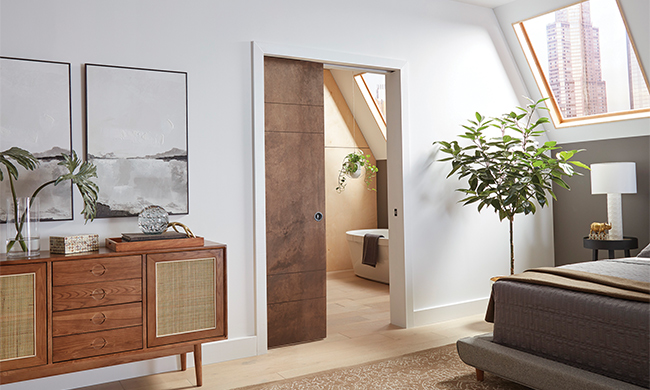
4 Ways to Make Room for Better Living
A bathroom door that bumps into the vanity. A closet interior that’s awkward to reach. A home office that needs a little separation from family activity. Oftentimes, making your home better suited for your needs starts with rethinking how the doors open.
Sliding, folding and pocket doors offer practical ways to improve everyday spaces without adding square footage. Whether you’re remodeling or building a new home, understanding the options can help you choose doors – and the installation hardware behind them – that make rooms more comfortable and convenient.
Consider these four ways to put your doors to work from the experts at Johnson Hardware, who make easy-to-install hardware systems in the U.S.:
Free Up Floor Space with Pocket Doors
In bathrooms, kitchen pantries and laundry rooms, a swinging door can compete with storage, taking up to 14 square feet of floor space and interrupting traffic flow. Pocket doors slide into the wall, freeing the area a hinged door needs to swing open.
Made for single pocket doors in compact rooms or two converging doors for larger openings between adjoining spaces, pocket door hardware with its soft-close feature helps doors glide gently into the open and closed positions, reducing slamming. Discuss pocket doors early in your project so your building professional can plan for the space needed inside the wall.
 Keep Essentials Handy with Bypass and Multi-Pass Doors
A frequently used mudroom, hallway or bedroom closet can look more organized with sliding bypass or multi-pass doors. The panels travel on separate tracks and slide past one another, letting you reach different sections without doors swinging into the room.
Options like Johnson’s bypass and multi-pass hardware systems help keep walkways clear while concealing storage or everyday clutter. Ask your designer or remodeler about panel arrangements and soft-close options that suit the opening based on how you’ll use the space.
Add Flexibility with Wall-Mount Sliding Doors
If you want the space-saving benefits of a sliding door but a pocket door isn’t practical, wall-mount doors travel along a track outside the wall. With easy-to-install hardware systems, making the switch from a swinging door can be a quick, practical room upgrade.
Often called barn doors, they can complement many decorating styles, from traditional painted wood to contemporary glass designs. Wall-mount sliding doors work well in home offices, bedrooms, laundry rooms and pantries, where soft-close and soft-open hardware can help reduce noise. Plan for clear wall space beside the opening so the door has room to slide.
Open Up Storage with Full-Access Bifold Doors
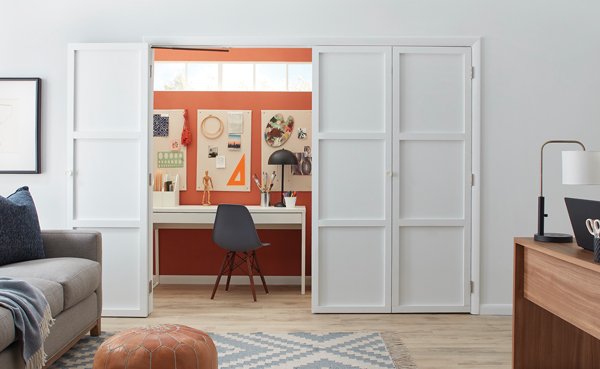
A closet can hold more than clothes. It might become a craft station, compact workspace or convenient place for laundry supplies.
Bifold doors use hinged panels that fold together as they open. Unique 1601 Full-Access Bifold Door Hardware goes a step further, allowing panels to fold flat against adjacent walls for full access across the opening. That makes it easier to reach shelves, organize supplies and use the space inside.
Thoughtful door hardware choices can make everyday routines easier, from reaching pantry shelves to creating a quiet place to work. As you plan your project, ask your designer, architect, remodeler or building contractor how pocket, sliding and folding door hardware systems can help make better use of your space.
For more ideas, visit johnsonhardware.com.
SOURCE:




