

Lifestyle
GMOs Explained

Last Updated on June 26, 2024 by Daily News Staff
(Family Features) Many consumers are curious to learn more about the purpose and safety of GMOs.
“GMO” is a common term used to describe foods made from organisms (plants, microorganisms and animals) that have been created using technology called genetic engineering. Genetic engineering allows scientists to copy a gene with a desired trait from one organism and put it into another.
Purpose of GMOs
Humans have modified crops and animals to suit their needs and tastes for thousands of years. Crossbreeding, selective breeding and mutation breeding are examples of traditional ways to make these genetic changes, and they have been used to create crops like modern corn varieties and seedless watermelon. These methods often involve mixing all the genes from two different sources. For example, today’s strawberries are a cross between a strawberry species native to North America and a strawberry species native to South America.
Modern technology allows scientists to use genetic engineering to take a specific beneficial gene, like insect resistance or drought tolerance, and transfer it into a plant without also transferring undesirable genes, which sometimes occurs in traditional plant breeding. The reasons for genetic modification today are similar to what they were thousands of years ago: higher crop yields, less crop loss, longer storage life, better appearance, better nutrition or a combination of these traits.
Some GMO plants have been modified to improve their nutritional value. An example is GMO soybeans with healthier oils – higher oleic acid – that can be used to replace oils containing trans fats. Scientists are continuing to look for new ways to develop foods with increased nutritional value and other useful traits.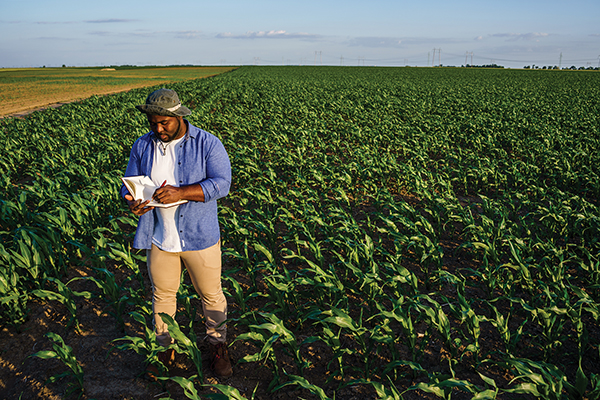
Safety of GMOs
Multiple agencies within the United States government work to regulate GMOs, including the U.S. Food and Drug Administration (FDA), the U.S. Environmental Protection Agency and the Animal and Plant Health Inspection Service in the U.S. Department of Agriculture. Each agency plays a part in ensuring GMOs are safe for human, plant and animal health. For example, the FDA makes sure foods from the GMOs it regulates meet the same safety standards as the non-GMO version. The three agencies also monitor the impact of GMOs on the environment.
Research shows GMO foods currently on the market are no more likely to cause allergic reactions than non-GMO versions of the same foods. Most food allergies are caused by allergens found in just nine foods: peanuts, tree nuts, milk, eggs, wheat, soy, sesame, shellfish and fish.
The way GMOs are created allows scientists to know precisely which new proteins are produced in a plant. Scientists perform tests to make sure these new proteins are not allergens. This type of testing, called allergenicity testing, is always part of the process for developing GMOs. As part of this testing, developers consider whether any substances added to the food have characteristics of allergens, such as whether they come from an allergenic source.
Learn more about GMOs and their impact on your health at fda.gov/feedyourmind.
Updated Food Labeling
Certain types of GMOs have a disclosure that lets you know if the food is a bioengineered food. Bioengineered food is the term that Congress used to describe certain types of GMOs when they passed the National Bioengineered Food Disclosure Standard.
The Standard establishes requirements for labeling foods that humans eat that are or may be bioengineered and defines bioengineered foods as those that contain detectable genetic material that has been modified through certain lab techniques and cannot be created through conventional breeding or found in nature.
Photos courtesy of Getty Images
SOURCE:
U.S. Food and Drug Administration
https://stmdailynews.com/category/lifestyle
The Bridge is a section of the STM Daily News Blog meant for diversity, offering real news stories about bona fide community efforts to perpetuate a greater good. The purpose of The Bridge is to connect the divides that separate us, fostering understanding and empathy among different groups. By highlighting positive initiatives and inspirational actions, The Bridge aims to create a sense of unity and shared purpose. This section brings to light stories of individuals and organizations working tirelessly to promote inclusivity, equality, and mutual respect. Through these narratives, readers are encouraged to appreciate the richness of diverse perspectives and to participate actively in building stronger, more cohesive communities.
https://stmdailynews.com/category/the-bridge


Food and Beverage
A Lesson in Kindness, Inclusion and How Kids Eat Differently
Kids Eat Differently: The school year brings new classmates, routines and opportunities for children to learn about people whose experiences may be different from their own. They could include friends who use a wheelchair, carry an inhaler or even receive nutrition through a feeding tube.


A Lesson in Kindness, Inclusion and How Kids Eat Differently
(Feature Impact) The school year brings new classmates, routines and opportunities for children to learn about people whose experiences may be different from their own. They could include friends who use a wheelchair, carry an inhaler or even receive nutrition through a feeding tube.
Watch this video to learn more
For families who rely on tube feeding, it is an essential part of daily life but is often understood only by those who experience it. That limited awareness can leave children who are tube fed and their families feeling isolated or unseen, according to Gerard Minor, a pediatric gastroenterology and hepatology specialist.
Parents can use everyday questions as opportunities to help children understand there are many ways people receive nourishment. Teachers, classmates, caregivers and communities can also help make tube feeding part of the everyday conversation around childhood rather than something that separates children from it.
“Helping children understand those differences early can encourage curiosity, kindness and inclusion,” Minor said.
To help bring greater awareness, understanding and representation to children and families who experience tube feeding every day, Compleat, a leader in tube feeding formulas, launched “What Is Better Than How,” featuring “Sesame Street’s” Elmo and his signature warmth and curiosity. The original song celebrates the many ways people eat. Some people eat with a fork, some use a spoon and some use a tube, reinforcing a simple message: What matters is not how you eat. What matters is that you are nourished, loved and included.
To hear the song, create a personalized version and learn more about the campaign, visit Compleat.com/WhatIsBetterThanHow.

SOURCE:

Consumer Corner
5 Hidden Ways to Save on Home Insurance Costs
Lowering Home Insurance Costs? Many home improvements offer an added bonus of unlocking insurance discounts, but these savings opportunities can easily fly under the radar when you aren’t actively on the lookout for them.

5 Hidden Ways to Save on Home Insurance Costs
(Feature Impact) When you’re planning home improvements, you’re often thinking about improving the comfort, safety, aesthetic or value of your home. Many changes and renovations have the added bonus of unlocking insurance discounts, but these savings opportunities can easily fly under the radar when you aren’t actively on the lookout for them.
“Homeowners tend to think about their insurance when they buy the house or when they have a claim, but a lot can change in between,” said Larry Anderson, director of underwriting operations at Mercury Insurance. “Something as simple as reviewing your policy with your agent once a year can help make sure your coverage still reflects your home today and identify improvements or other factors that may qualify you for additional savings.”
The experts at Mercury Insurance, a multiple-line insurance carrier emphasizing competitive rates and excellent customer service, encourage homeowners to consider these five ways to save on home insurance costs.
Updating Older Parts of the Home
As a home ages, it’s wise to look at what parts and systems may be deteriorating and need upgrades for modernity or safety reasons. Replacing older electrical, plumbing or other major systems can protect your home from emergencies and loss risks. Depending on the state you live in, your specific policy and the improvements you made, it can also qualify your property for an updated-home insurance discount.
Keep records of major improvements – including receipts, work permits and information about when the work was completed – and plan to discuss the upgrades during your next insurance review.
 Adding Protective Technology
Beyond replacing the batteries in your smoke detectors, you can outfit your home with a variety of protective devices that make a difference to insurers. Consider options like monitored burglar and fire alarms, smart water sensors and automatic water shutoff systems designed to detect problems before they become major losses. Remember, while security upgrades can make your home less risky to insure, they won’t save you money if your insurer doesn’t know you’ve installed them.
Improving Resilience to Damage
If you live in an area prone to extreme weather or other hazards, resilience upgrades could both safeguard your home and access insurance savings. Depending on your location, qualifying improvements could include a stronger roof, wildfire mitigation measures or flood defense options. Local insurance agents can provide more specific guidance on ways to make your home less vulnerable to damage – or whether you’re eligible for discounts because of work you’ve already completed.
Qualifying for Community Programs
Even if you haven’t personally made renovations to your home, certain changes in your community could help you save on insurance. That could include local wildfire mitigation measures, membership in a qualifying homeowners association or other neighborhood characteristics that affect coverage options, but specific programs vary by location.
Reviewing Insurance Products and Discounts
Whether something significant has changed in your home or community or not, it’s always valuable to review your insurance coverage on a regular basis. For instance, there may be new products or discounts that simply didn’t exist when you originally purchased your policy. Beyond savings considerations alone, ask your agent questions to make sure your coverage still reflects your circumstances and goals.
“Finding savings is always welcome, but the bigger goal of a policy review is making sure your insurance keeps pace with your life and your home,” Anderson said. “A house isn’t static. We improve it, maintain it and protect it in new ways over time. Your insurance should keep up with those changes.”
For more information on homeowner coverage and discount eligibility, visit MercuryInsurance.com.
Questions to Consider During Your Annual Insurance Checkup
An annual insurance review is an opportunity to look for savings and update coverage. Use these questions as a jumping-off point for discussions with your agent:
- What has changed about my home?
- What has changed about my property or community?
- Have my circumstances changed?
- Are discounts available today that weren’t when I purchased my policy?
- Does my coverage still reflect what it would cost to repair or rebuild my home today?
Photos courtesy of Shuttersotck

SOURCE:
📰 Enjoying STM Daily News? Join the conversation!
💬 Leave a comment, share your thoughts, and subscribe to our newsletter for the latest stories, updates, and “News You Can Use This Moment!” delivered to your inbox.
Stay connected with STM Daily News!
Health and Life Insurance
Lessons in Life Insurance: 4 Reasons Getting It May Be Easier Than You Think
Life is the most valuable thing you have – and like all valuable things, it should be insured. Even thinking about life insurance can be stressful, so it’s one of those things that’s easy to put off and tell yourself you’ll do another day. Consider these four ways to make getting life insurance simpler than you thought.

Lessons in Life Insurance: 4 Reasons Getting It May Be Easier Than You Think
(Feature Impact) Life is the most valuable thing you have – and like all valuable things, it should be insured. Even thinking about life insurance can be stressful, so it’s one of those things that’s easy to put off and tell yourself you’ll do another day.
If that’s how you feel, you aren’t alone. According to the 2026 Life Happens Life Insurance Survey, nearly half (46%) of U.S. adults have getting life insurance on their to-do list but plan to deal with it later or not at all. Confusion, procrastination and cost concerns are among the main reasons people kick this can down the road, according to 45% of respondents.
Yet the survey also uncovered an interesting disconnect: 69% of Americans said they personally know someone who had life insurance or whose family used a life insurance policy, most often a parent or parent figure (33%), but still haven’t made getting coverage a priority.
“Life insurance isn’t unfamiliar to most Americans,” Life Happens Executive Director Brian Steiner said. “The challenge is turning that awareness into action. People may think life insurance is something they can deal with later, but waiting can leave the people they love financially vulnerable. Getting started doesn’t have to be complicated, and professional guidance can help you find protection that fits your needs and budget.”
Consider these four ways to make getting life insurance simpler than you thought.
Watch this video to learn more
1. Find a policy that’s a fit.
Roughly 4 in 10 survey respondents reported feeling overwhelmed, anxious or some combination of both about planning for life insurance, with 12% citing thinking it’ll be too expensive as a reason they’ve delayed looking into, buying or updating life insurance.
The good news: There’s a policy that’s right for your current needs. It may be term life insurance, which provides protection for a specific period of time, like to cover a mortgage or tuition for children. There’s also permanent life insurance, which offers lifelong protection, as long as you pay the premiums.
2. Take advantage of digital tools
One-quarter of respondents said they’d be more likely to look into life insurance if they learned it was easier to get than they thought, and digital tools can help make that demand a reality.
It can take as little as two minutes to find out how much you need, for example, with the life insurance needs calculator from the nonprofit Life Happens. Just answer a few simple questions to estimate the amount of life insurance coverage you may need to take care of your family.
3. It’s about protection, not perfection.
Part of the anxiety around life insurance may be the perception that it should be perfect. For more than 1 in 5 survey participants, the plan is to seriously look at it when they feel more financially stable, and another 12% simply said they’ll do it when they’re older.
However, life insurance doesn’t have to check all the boxes for every stage of your life – you can find what works for your family right now then adjust as things change over time.
4. Professional help is available.
Perhaps the biggest hurdle to tackling life insurance is the feeling that you’re in it alone. Overall, 55% of respondents said if they learned life insurance may be easier to get than they expected, they’d be more likely to start the process.
With professional help only a few clicks away, you can rest assured you’re on the path to a life insurance fit that’s right for you by visiting findapro.lifehappens.org.
Photo courtesy of Shutterstock

SOURCE:





