

Health
What Enables Herpes Simplex Virus To Become Impervious to Drugs?

Research pinpoints key to the cold sore virus’s ability to evade treatment, offering broader clues on antiviral drug resistance

Newswise — All organisms — from fungi to mammals — have the capacity to evolve and adapt to their environments. But viruses are master shapeshifters with an ability to mutate greater than any other organism. As a result, they can evade treatments or acquire resistance to once-effective antiviral medications.
Is the Herpes Simplex Virus Becoming Impervious to Drugs?
Working with herpes simplex virus (HSV), a new study led by Harvard Medical School researchers sheds light on one of the ways in which the virus becomes resistant to treatment, a problem that could be particularly challenging among people with compromised immune function, including those receiving immune-suppressive treatment and those born with immune deficiencies.
Using a sophisticated imaging technique called cryogenic electron microscopy (cryo-EM), the researchers found that how parts of a protein responsible for viral replication move into different positions can alter the virus’s susceptibility to medicines.
The findings, published Aug. 27 in Cell, answer long-standing questions about why certain viruses, but not others, are susceptible to antiviral medications and how viruses become impervious to drugs. The results could inform new approaches that impede viruses’ capacity to outpace effective therapies.
Counterintuitive results
Researchers have long known changes that occur on the parts of a virus where antiviral drugs bind to it can render it resistant to therapy. However, the HMS researchers found that, much to their surprise, this was often not the case with HSV.
Instead, the investigators discovered that protein mutations linked to drug resistance often arise far from the drug’s target location. These mutations involve alterations that change the movements of a viral protein, or enzyme, that allows the virus to replicate itself. This raises the possibility that using drugs to block or freeze the conformational changes of these viral proteins could be a successful strategy for overcoming drug resistance.
“Our findings show that we have to think beyond targeting the typical drug-binding sites,” said the study’s senior author, Jonathan Abraham, associate professor of microbiology in the Blavatnik Institute at HMS and infectious disease specialist at Brigham and Women’s Hospital. “This really helps us see drug resistance in a new light.”
The new findings propel the understanding of how alterations in the conformation of a viral protein — or changes in how the different parts within that protein move when it carries out its function — fuel drug resistance and may be relevant for understanding drug effectiveness and drug resistance in other viruses, the researchers noted.
HSV, estimated to affect billions of people worldwide, is most commonly known as the cause of cold sores and fever blisters, but it can also lead to serious eye infections, brain inflammation, and liver damage in people with compromised immunity. Additionally, HSV can be transmitted from mother to baby via the birth canal during delivery and cause life-threatening neonatal infections.
Clues on resistance rooted in structure and movement
A virus can’t replicate on its own. To do so, viruses must enter a host cell, where they unleash their replication tools — proteins called polymerases — to make copies of themselves.
The current study focused on one such protein — a viral DNA polymerase — crucial for HSV’s ability to reproduce and propagate itself. The ability to carry out its function is rooted in the DNA polymerase’s structure, often likened to a hand with three parts: the palm, the thumb, and the fingers, each carrying out critical functions.
Given their role in enabling replication, these polymerases are critical targets of antiviral drugs, which aim to stop the virus from reproducing itself and halt the spread of infection. The HSV polymerase is the target of acyclovir, the leading antiviral drug for treating HSV infection, and of foscarnet, a second-line drug used for drug-resistant infections. Both drugs work by targeting the viral polymerase but do so in different ways.
Scientists have long struggled to fully understand how alterations in the polymerase render the virus impervious to normal doses of antiviral drugs and, more broadly, why acyclovir and foscarnet are not always effective against the altered forms of the HSV polymerase.
“Over the years, the structures of many polymerases from various organisms have been determined, but we still don’t fully understand what makes some polymerases, but not others, susceptible to certain drugs,” Abraham said. “Our study reveals that how the different parts of the polymerases move, known as their conformational dynamics, is a critical component of their relative susceptibility to drugs.”
Proteins, including polymerases, are not rigid, motionless objects. Instead, they are flexible and dynamic.Composed of amino acids, they initially fold into a steady, three‐dimensional shape known as the native conformation — their baseline structure. But as a result of various bonding and dispersing forces, the different parts of proteins can move when they come into contact with other cellular components as well as through external influences, such as changes in pH or temperature. For example, the fingers of a polymerase protein can open and close, as would the fingers of a hand.
Conformational dynamics — the ability of different parts of a protein to move — allow them to efficiently administer many essential functions with a limited number of ingredients. A better understanding of polymerase conformational dynamics is the missing link between structures and functions, including whether a protein responds to a drug and whether it could become resistant to it down the road.
Unraveling the mystery
Many structural studies have captured DNA polymerases in various distinct conformations. However, a detailed understanding of the impact of polymerase conformational dynamics on drug resistance is lacking. To solve the puzzle, the researchers carried out a series of experiments, focusing on two common polymerase conformations — an open one and a closed one — to determine how each affects drug susceptibility.
First, using cryo-EM, they conducted structural analysis to get high-resolution visualizations of the atomic structures of HSV polymerase in multiple conformations, as well as when bound to the antiviral drugs acyclovir and foscarnet. The drug-bound structures revealed how the two drugs selectively bind polymerases that more readily adopt one conformation versus another. One of the drugs, foscarnet, works by trapping the fingers of the DNA polymerase so that they are stuck in a so-called closed configuration.
Further, structural analysis paired with computational simulations suggested that several mutations that are distant from the sites of drug binding confer antiviral resistance by altering the position of the polymerase fingers responsible for closing onto the drug to halt DNA replication.
The finding was an unexpected twist. Up until now, scientists have believed that polymerases closed partially only when they attached to DNA and closed fully only when they added a DNA building block, a deoxynucleotide. It turns out, however, that HSV polymerase can fully close just by being near DNA. This makes it easier for acyclovir and foscarnet to latch on and stop the polymerase from working, thus halting viral replication.
“I’ve worked on HSV polymerase and acyclovir resistance for 45 years. Back then I thought that resistance mutations would help us understand how the polymerase recognizes features of the natural molecules that the drugs mimic,” said study co-author Donald Coen, professor of biological chemistry and molecular pharmacology at HMS. “I’m delighted that this work shows that I was wrong and finally gives us at least one clear reason why HSV polymerase is selectively inhibited by the drug.”
Authorship, funding, disclosures
Additional authors included Sundaresh Shankar, Junhua Pan, Pan Yang, Yuemin Bian, Gábor Oroszlán, Zishuo Yu, Purba Mukherjee, David J. Filman, James M. Hogle, Mrinal Shekhar.
This work was supported by the National Institutes of Health (awards R21 AI141940 and R01 AI19838), with additional funding from a Centers for Integrated Solutions in Infectious Diseases grant.
What Enables Herpes Simplex Virus To Become Impervious to Drugs?
Source: Harvard Medical School
Our Lifestyle section on STM Daily News is a hub of inspiration and practical information, offering a range of articles that touch on various aspects of daily life. From tips on family finances to guides for maintaining health and wellness, we strive to empower our readers with knowledge and resources to enhance their lifestyles. Whether you’re seeking outdoor activity ideas, fashion trends, or travel recommendations, our lifestyle section has got you covered. Visit us today at https://stmdailynews.com/category/lifestyle/ and embark on a journey of discovery and self-improvement.
The science section of our news blog STM Daily News provides readers with captivating and up-to-date information on the latest scientific discoveries, breakthroughs, and innovations across various fields. We offer engaging and accessible content, ensuring that readers with different levels of scientific knowledge can stay informed. Whether it’s exploring advancements in medicine, astronomy, technology, or environmental sciences, our science section strives to shed light on the intriguing world of scientific exploration and its profound impact on our daily lives. From thought-provoking articles to informative interviews with experts in the field, STM Daily News Science offers a harmonious blend of factual reporting, analysis, and exploration, making it a go-to source for science enthusiasts and curious minds alike. https://stmdailynews.com/category/science/


Child Health
Changing the Landscape of Childhood Cancer Survivorship
Childhood Cancer: hile “cancer” is a term no family wants to hear, especially when it comes to their children, there is reason for hope. Today, 85% of children diagnosed with cancer survive at least five years. Survival is only part of the journey, however.

Changing the Landscape of Childhood Cancer Survivorship
(Feature Impact) While “cancer” is a term no family wants to hear, especially when it comes to their children, there is reason for hope. Today, 85% of children diagnosed with cancer survive at least five years, according to the National Cancer Institute, up from 75% three decades ago.
Watch this video to learn more
“This progress is driven in large part by dedicated research,” Hyundai Hope on Wheels Board Member Kevin Reilly said. “Over the last 28 years, Hyundai Hope on Wheels has committed over $300 million in pediatric cancer research and program grants, awarding more than 1,600 grants to 210 medical institutions nationwide, impacting thousands of young lives each year.”
Survival is only part of the journey, however. Nearly half (46%) of U.S. adults believe a child ringing the hospital bell after cancer treatment means the child is cancer-free and their medical journey is largely over, according to a survey conducted by Atomik Research on behalf of Hyundai Hope on Wheels. For the children and families living through a diagnosis, the reality is far more complex.
“The reality is that healing continues long after treatment, which is why sustained investment in survivorship care is a priority for us,” said John Guastaferro, executive director of Hyundai Hope on Wheels.
Isabella Franco-Capps, 11, understands that journey firsthand. Diagnosed with B-cell acute lymphoblastic leukemia at age 5, her journey took two years before she could say she’s “a cancer survivor.”
“I was diagnosed with b-cell acute lymphoblastic leukemia,” she said. “This began my two-year-long journey of scans, pokes, chemotherapy and hospital stays. And now I’m a cancer survivor.”
Fellow Hyundai Hope on Wheels National Youth Ambassador, Jackson Trihn, 12, is using his voice to call for continued research and to bring hope to others.
“The role … is being able to share my story,” he said. “Not just to spread awareness but to spread hope to kids that need it. And awareness is so important because people don’t understand how hard pediatric cancer can be.”
Continued progress can help ensure more children ring the bell and receive the care and support they need long after they’ve had the opportunity to do so. To learn more about these efforts and how you can help, visit HyundaiHopeOnWheels.org.

SOURCE:
💪 Your health journey starts here! Explore the latest health news, fitness tips, wellness trends, and healthy living advice. Share your thoughts in the comments and subscribe to the STM Daily News newsletter to stay informed and inspired every day.

(Feature Impact) Driven by rising rates of obesity, diabetes, high blood pressure and other risk factors,cardiovascular disease has surpassed cancer as the leading cause of death among Hispanic adults in the United States.
Hispanic people represent nearly 1 in 5 of the U.S. population and are the nation’s largest ethnic minority group, yet many continue to face barriers to achieving heart health and accessing high-quality healthcare. A new scientific statement published in the American Heart Association’s flagship journal, “Circulation,” revealed how social, economic, cultural and environmental factors contribute to persistent disparities in cardiovascular health, calling for culturally tailored prevention strategies, equitable access to care and greater representation of Hispanic populations in cardiovascular research.
“Hispanic populations in the U.S. are incredibly diverse even within their own communities with differences in genetic ancestry, language, cultural traditions and social experiences that can significantly influence cardiovascular health,” said Johanna Contreras, M.D., M.Sc., FAHA, director of the Division of Heart Failure and medical director of the Hispanic Heart Center within the Mount Sinai Health System. “Yet Hispanic people remain underrepresented overall in the research that guides prevention and treatment strategies… Without better representation and more detailed data, we risk overlooking important differences that can help us improve care and save lives.”
Hispanic Cardiovascular Health by the Numbers
Cardiovascular risk factors – obesity (nearly 46%), type 2 diabetes (15.5%) and high blood pressure (approximately 44%) – are prevalent among Hispanic adults and often emerge at younger ages and occur more frequently among Hispanic adults compared with white adults.
According to the report, only about 1 in 5 Hispanic adults achieves ideal cardiovascular health as defined by the American Heart Association’s original Life’s Simple 7 metrics. Updated analyses using the Life’s Essential 8 framework demonstrated persistent disparities for heart and brain health, as well as suboptimal dietary quality, sleep patterns and levels of physical activity.
Social and Economic Barriers Matter
Biology alone does not explain cardiovascular health disparities. The environments where people live, work and age, along with social and economic challenges, impact heart health. In fact, approximately 17% of Hispanics live below the federal poverty threshold, compared with 8.2% of white adults.
“Many Hispanic adults face obstacles that extend far beyond the doctor’s office,” Contreras said. “Limited health insurance coverage, language differences, food insecurity, environmental exposures and concerns related to immigration status can make it more difficult to prevent disease, manage chronic conditions and receive timely treatment.”
Contreras emphasized the cultural values and practices of Hispanic people also influence how they perceive their health and healthcare options.
“Family plays a central role in many Hispanic communities and can be an extraordinary source of strength, support and resilience,” Contreras said. “At the same time, family members are often called upon to translate medical information, navigate health systems and help make healthcare decisions for loved ones. Those responsibilities can shape how health information is understood and acted upon.”
An Action Plan for Improving Hispanic Health
There are practical opportunities to achieve equitable cardiovascular health and reduce disparities through community engagement, culturally responsive care, inclusive research and policies that address the underlying drivers of health.
“Reducing cardiovascular disease among Hispanic populations demands action at every level,” Contreras said, “from improving access to culturally responsive care and expanding research participation to addressing the social and environmental conditions that shape health.”
By addressing both medical risk factors and the social conditions that shape health, experts believe there is an important opportunity to reduce disparities and help more people live longer, healthier lives. Learn more at Heart.org.
Photo courtesy of Shutterstock

SOURCE:
Subscribe to our news letter STM Daily News
Food and Beverage
Beyond Protein: 2 Nutrients Your Plate Might Be Missing
Nutrients: Everyone is talking about protein these days whether watching their weight or managing a disease like type 2 diabetes. However, fiber and healthy fats are nutrients many people are overlooking. One food that makes it easier to invest in your health, according to nutrition experts: avocados.
Beyond Protein: 2 Nutrients Your Plate Might Be Missing
(Feature Impact) Everyone is talking about protein these days whether watching their weight or managing a disease like type 2 diabetes. However, fiber and healthy fats are nutrients many people are overlooking. The latest reports show most Americans already meet or exceed recommendations for protein while nearly all (about 95%) do not eat enough fiber, and many people consume too much saturated fat versus unsaturated fat, according to the 2025 Dietary Guidelines Advisory Committee. Prioritizing ways to get more fiber and healthy fats on your plate could be key to managing weight and type 2 diabetes goals this summer.
One food that makes it easier to invest in your health, according to nutrition experts: avocados.
A growing body of research and materials from Avocados – Love One Today, a science-based resource, suggests fresh avocados offer weight management benefits, help with type 2 diabetes management and are good for blood sugar management.
 According to a study* of more than 27,000 adults published in the journal “Internal Medicine Review,” people who ate just over half of an avocado per day weighed 7.5 pounds less, had smaller waist sizes and tended to have healthier overall eating habits, including higher intakes of fiber and healthy fats, compared to people who didn’t eat avocados. Among the list of benefits, this delicious and healthy fruit uniquely contains fiber and healthy fats in each nutrient-dense bite which slows digestion, helping you feel satisfied and fuller longer which can help you consume fewer calories overall. In fact, if you’re using a GLP-1, avocados are one of the foods to add to your menu to make small meals feel more filling and satisfying while supporting nutrient needs.
Scientists also recently took a second look at the largest study* about avocado consumption to-date involving close to 1,000 adults, per the journal “Current Developments in Nutrition,” and found that consistently eating one avocado every day for six months (no other diet changes required) significantly reduced dietary glycemic load (GL) by nearly 14 points, a metric that evaluates how what you are eating is affecting your blood sugar levels. GL may be an important consideration in the management of chronic diseases like type 2 diabetes. By slowing digestion, fiber and healthy fats also support stable blood sugar levels.
There are many ways to enjoy avocados, including chopped, sliced, mashed, blended, in baked goods or even frozen. Avocados add flavor, variety and nutrition across the day.
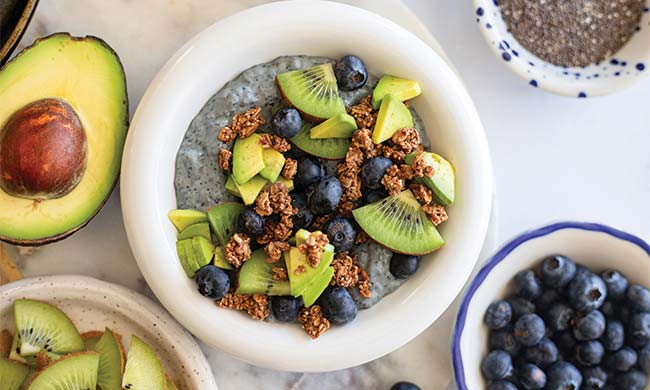
Try these recipes for Avocado and Blueberry Chia Pudding, Avocado Breakfast Bowl with Leafy Greens for your next breakfast or snack.
*Remember: Small, consistent food choices can add up over time. Research suggests regularly eating avocados may support weight management and blood sugar targets while providing the fiber and healthy fats that many Americans are overlooking. These studies were supported by the Avocado Nutrition Center. While these findings are encouraging, the studies highlighted show an association, not cause and effect, and thus more research is needed to confirm these findings in other populations.
To explore evidence-based avocado nutrition information, along with practical tips and easy recipes, visit Avocados – Love One Today, a leading resource for avocado nutrition information.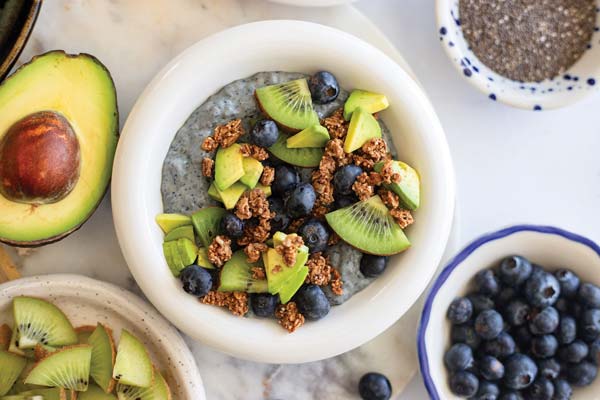
Avocado and Blueberry Chia Pudding
- 1 1/2 cups plain, unsweetened soy milk (or milk of choice)
- 1 ripe, fresh avocado, halved, pitted and peeled
- 3/4 cup frozen blueberries
- 1/2 cup unsweetened vanilla Greek yogurt
- 1 tablespoon maple syrup
- 1/3 cup chia seeds
To Serve:
- 1/3 cup granola
- 1/3 cup fresh blueberries
- 1 kiwi, chopped
- 1/2 fresh, ripe avocado, halved, pitted, peeled and chopped
- In blender, puree soy milk, avocado, blueberries, yogurt and maple syrup until smooth. Pour mixture into storage container or bowl and add chia seeds. Whisk well to combine. Cover with lid or plastic wrap and refrigerate 4 hours or overnight, until thickened.
- To serve, divide into bowls and top with granola, fresh blueberries, kiwi and avocado.
- Notes: Use any milk (dairy or non-dairy) that you prefer in pudding. Use fresh blueberries or conventional frozen blueberries. Other topping options include: nuts, seeds, hemp hearts, sliced banana or strawberries, or nut butter.
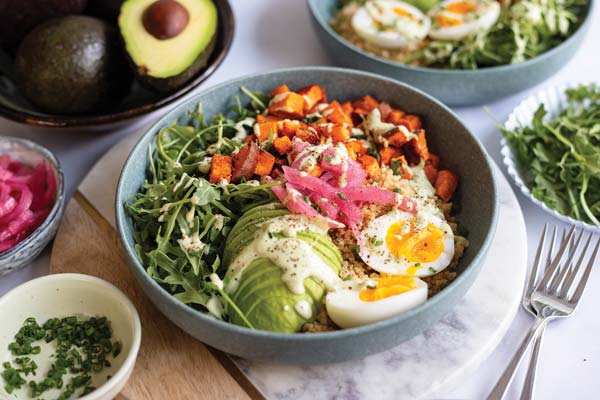
Avocado Breakfast Bowl with Leafy Greens
Bowl:
- 1 medium sweet potato, chopped (about 1 3/4 cup)
- nonstick cooking spray
- 1/4 teaspoon smoked paprika
- 1/4 teaspoon garlic powder
- 1/4 teaspoon salt
- 1/2 cup quinoa
- 1 cup water, plus additional for boiling eggs, divided
- 2 eggs
- 2 cups arugula
- 1 ripe, fresh avocado, halved, pitted, peeled and chopped
- 1/4 cup pickled red onions
Avocado Tahini Dressing:
- 1/2 large avocado
- 1/4 cup tahini
- 1 lemon, juice only (2 tablespoons)
- 3/4 cup water
- 1 tablespoon fresh chives
- salt, to taste
- pepper, to taste
- Preheat oven to 400 F. Add chopped sweet potato to baking sheet. Spray with cooking oil then add smoked paprika, garlic powder and salt. Toss to coat in spices. Bake 22-25 minutes, or until tender.
- In medium saucepan, add quinoa and water. Bring to simmer and cover, cooking 12-15 minutes, or until quinoa is tender and fluffy.
- Fill small saucepan with water and bring to boil. Use slotted spoon to lower eggs into water. Cook 8 minutes then transfer eggs to bowl of ice water to cool before peeling.
- To make dressing: In small blender, puree avocado, tahini, lemon juice, water and fresh chives until smooth. Add more water, 1 tablespoon at a time, if needed, to thin until pourable. Season with salt and pepper, to taste.
- Assemble bowls, each with 1/2 sweet potato, 1/2 cup quinoa, 1 egg, 1 cup arugula, 1/2 avocado, 2 tablespoons pickled red onion and 3 tablespoons dressing. Reserve remaining dressing in refrigerator.
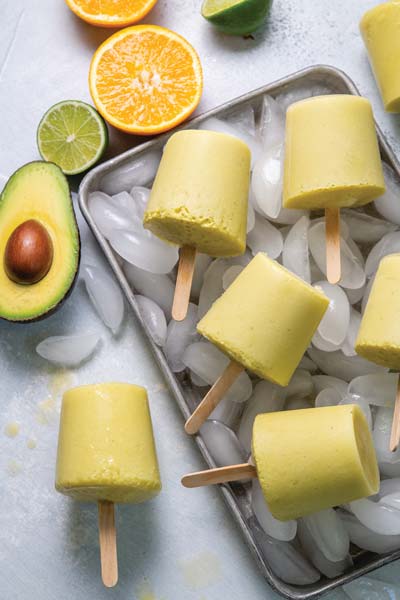
Heart-Healthy Frozen Avocado Banana Paleta
- 1 ripe, fresh avocado, halved, pitted, peeled and diced
- 4 cups orange juice
- 2 medium bananas, peeled and sliced
- 1 tablespoon lime juice
- 8 paper cups (5 ounces)
- 8 wooden craft sticks
- In blender, blend avocado, orange juice, bananas and lime juice on high until smooth. Divide into paper cups. Cover cups with aluminum foil. Insert one stick through center of each foil. Freeze 4 hours until firm.

SOURCE:
🍴 What’s your favorite food, recipe, or dining spot? Tell us in the comments! Then subscribe to the STM Daily News newsletter for fresh recipes, restaurant news, food trends, and delicious stories delivered straight to your inbox. Join our growing community of food lovers today!





