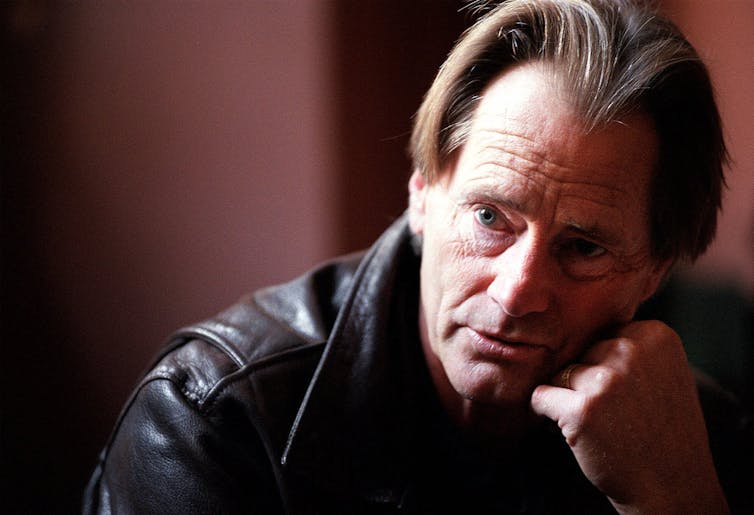
Sam Shepard, a Pulitzer Prize-winning playwright, depicted the struggles of American families and their connection to land. He passed away on July 27, 2017.
When Sam Shepard died on July 27, 2017, the world lost one of the greatest playwrights of the past half-century. He was an artist renowned for bravely plumbing his own life for material, spinning much of his own pain into theatrical gold. His best work revealed the hollowness behind the idea of the happy family and its corollary, the American dream. Subversive and funny, Shepard had the soul of a poet and an experimental streak that never faded.
The American family was, no doubt, Shepard’s great subject. His quintet of family plays that premiered between 1978 and 1985 – “Curse of the Starving Class,” the Pulitzer Prize-winning “Buried Child,” “Fool for Love,” “True West” (both nominated for Pulitzers) and “A Lie of the Mind” – form the foundation of Shepard’s lofty reputation.
While researching my recent biography of Shepard, I found that most critics and scholars focused on the playwright’s relationship with his father. Rightly so: Samuel Shepard Rogers suffered from alcoholism and his only son grew up bearing the brunt of his abuse. Shepard’s family plays turn on the collateral damage of the fathers.
Less frequently examined is the playwright’s fixation on the land, and the ways in which this plays out in his work. Both as a writer and in his personal outlook, Shepard drew deeply from the old trope that nature and innocence are intertwined. And according to critic Harold Bloom, Shepard saw doom in the “materialistic and technological obsessions of modern society.”
Throughout his work, Shepard decried so-called progress, especially the rampant development of open space. Whether it was the forced sale of a family farm (“Curse of the Starving Class”) or Native Americans being driven off their reservation (“Operation Sidewinder”), it all came to no good.
To Shepard, a relationship with the land was nothing short of existential. As the playwright told an interviewer in 1988:
“What’s most frightening to me right now is this estrangement from life. People and things are becoming more and more removed from the actual. We are becoming more and more removed from the earth to the point that people just don’t know themselves or each other or anything.”
Shepard arrived at this impulse naturally. When he was in elementary school, his family settled in a small house on Lemon Street in Bradbury, California. An orchard of 80 avocado trees attached to the house meant that Shepard – then known by his birth name, Steve Rogers – was kept busy irrigating and harvesting the crop. He also raised dogs and sheep, and when he had free time he worked the fields belonging to his neighbors. During high school, he was an eager member of the 4-H Club and Future Farmers of America, and spent his summers tending to the thoroughbreds at nearby Santa Anita Park.To Shepard, the creep of development threatened the innocence and vitality of the natural world. Mike Lewinski, CC BY
In college, Shepard’s major wasn’t theater but education. As he once wrote to a friend, back then he wanted to become a “veterinarian with a flashy station wagon, and a flashy blond wife, raising German shepherds in some fancy suburb.” He never finished college nor became a vet. Instead, Shepard left home and made his way across the country to New York City and the East Village, where he would quickly transform himself into the brightest light of the nascent off-off-Broadway scene.
But even as his reputation grew, he never left his agricultural roots behind. In fact, one of Shepard’s early one-act plays was titled “4-H Club” (1965).
Other plays from the 1960s combine his old life with his new one. Rural scenes are full of characters who talk in the hip argot of the Village streets, characters caught in an absurdist situation go “fishing” off the edge of the stage, and Native Americans, by their very presence onstage in plays like 1970’s “Operation Sidewinder,” stake a claim to the land that’s been stolen from them.
With time, the playwright would more directly address the scourge of overdevelopment that he saw happening around him. It would become a running theme of sorts, as Shepard saw the nation growing and changing – but not for the better.
Advertisement
“One of the biggest tragedies about this country was moving from an agricultural society to an urban, industrial society. We’ve been wiped out,” he told Playboy in 1984.
Shepard’s characters embody this loss. In “Geography of a Horse Dreamer” (1974), one character is a gambler who can predict tomorrow’s winners at the racetrack, but loses that power once he’s physically forced from his usual haunts to a new, strange locale. In “Buried Child” (1979), the land holds the answer to the play’s central mystery: At play’s end, the fallow backyard gives up a baby from a shallow grave, shining a light on the incestuous relationship that has led to the ruination of this family – as if the purity of nature had been offended by a terrible transgression. And in Shepard’s late masterpiece, “Ages of the Moon,” two old friends finally find solace by communing with nature at a small, remote campsite.
Nowhere in Shepard’s oeuvre does land play a bigger role than in 1978’s “Curse of the Starving Class.” The Tate family’s farm stands between husband and wife: He wants to unload it to pay off his gambling and drinking debts; she wants to sell it and use the money to escape her marriage and take the children to Europe. The culminating scene features the husband, Weston, coming to his senses after sobering up and walking around his property. Reconnecting with his land, Weston turns his life around, “like peeling off a whole person.”
Shepard’s love of the country and its open spaces would mark all aspects of his career. Also a celebrated actor, he favored “rural” dramas, those set on farms, racetracks or some windswept piece of desert. In his screen debut, Shepard starred as the doomed farmer in Terrence Malick’s “Days of Heaven” (1978). In his screenplay for the cult classic film, “Paris, Texas,” (1984) Shepard mirrored the desolation of the South Texas desert in the soul of his protagonist, Travis, a man suffering from a malady that Shepard often said he himself felt: “lostness.”
Shepard felt most at home traversing what one western historian called this “strange land full of mystery.” He took pride in being a western writer.
“I was never interested in the mythological cowboy. I was interested in the real thing,” he once said.
“He would call me late in the night,” Patti Smith wrote in a loving tribute, “from somewhere on the road, a ghost town in Texas, a rest stop near Pittsburgh, or from Santa Fe, where he was parked in the desert, listening to the coyotes howling. But most often he would call from his place in Kentucky, on a cold, still night, when one could hear the stars breathing…”
She knew, better than anyone, that such places constituted Shepard’s emotional and physical territory. He adored the vastness of the plains, the green of loping pasturelands; he cherished his time running the highways and byways in his pickup, or sitting next to the campfire on a real-life cattle drive, and reveled in the grit of this country’s less-traveled corners.
Shepard loved America for its beauty, its danger and its promise, forever transforming her in our imaginations.
Looking for an entertainment experience that transcends the ordinary? Look no further than STM Daily News Blog’s vibrant Entertainment section. Immerse yourself in the captivating world of indie films, streaming and podcasts, movie reviews, music, expos, venues, and theme and amusement parks. Discover hidden cinematic gems, binge-worthy series and addictive podcasts, gain insights into the latest releases with our movie reviews, explore the latest trends in music, dive into the vibrant atmosphere of expos, and embark on thrilling adventures in breathtaking venues and theme parks. Join us at STM Entertainment and let your entertainment journey begin! https://stmdailynews.com/category/entertainment/
Pat Finn: Remembering the Familiar Face Who Made Us Laugh
Pat Finn, the familiar face from The Middle, Seinfeld, Friends, and Toyota commercials, has passed away at 60. We remember his career, legacy, and lasting impact.
Pat Finn: Remembering the Familiar Face Who Made Us Laugh
Many people may not have known his name right away, but they knew his face. Pat Finn was one of those rare actors who quietly became part of America’s shared television experience—popping up in beloved sitcoms, memorable commercials, and scene-stealing guest roles for more than three decades.
In December 2025, Finn passed away at the age of 60 after a battle with bladder cancer, leaving behind a body of work that continues to resonate with audiences who grew up watching network television’s golden era of sitcoms.
A Career Built on Consistency and Craft
Pat Finn wasn’t a headline-chasing star. Instead, he was the definition of a working actor—someone whose talent and reliability kept him in steady demand across generations of television.
He appeared in some of the most recognizable shows in TV history, including Seinfeld, Friends, Murphy Brown, 3rd Rock from the Sun, That ’70s Show, The King of Queens, Curb Your Enthusiasm, and The Goldbergs. To many fans, he was especially memorable as Bill Norwood, the occasionally awkward and often hilarious boss on ABC’s long-running sitcom The Middle.
These weren’t flashy roles—but they were essential ones. Finn had a gift for grounding comedy in reality, playing characters who felt like people you actually knew: coworkers, neighbors, or that guy you’d see at the store every week.
From Chicago Improv to National Screens
Born in Evanston, Illinois, Pat Finn came out of Chicago’s legendary improv scene, training and performing with The Second City and the iO Theater. That background gave him sharp comedic instincts and impeccable timing—skills that translated effortlessly to television.
He was also a contemporary and friend of Chris Farley, and like many performers from that era, Finn carried the Chicago improv tradition of generosity, collaboration, and humility throughout his career.
The Toyota Commercials—and Being “That Guy”
In later years, a new generation came to recognize Finn from Toyota commercials, particularly regional dealership ads. Once again, he became “that guy” everyone recognized but couldn’t quite place—a testament to just how deeply embedded he was in pop culture.
Commercial work is often overlooked, but Finn approached it with the same professionalism and charm as his television roles, making even short appearances feel authentic and memorable.
A Teacher, Mentor, and Family Man
Beyond acting, Pat Finn was also a teacher and mentor, sharing his experience with aspiring performers and encouraging young actors to respect the craft rather than chase fame.
Advertisement
He was married to his wife, Donna, for more than three decades, and together they raised three children. In tributes following his passing, family and colleagues alike emphasized not just his talent, but his kindness, humor, and generosity.
A Quiet Legacy That Lasts
Pat Finn’s passing is a reminder that television history isn’t shaped only by superstars. It’s built by dependable, talented performers who show up, deliver, and elevate every project they touch.
If you’ve ever laughed at a scene and later realized, “Hey, I’ve seen that guy before,” there’s a good chance it was Pat Finn.
His work lives on—in reruns, streaming libraries, commercials, and the memories of audiences who didn’t always know his name, but never forgot his presence.
Rest in peace, Pat Finn. And thank you for the laughs.
Looking for an entertainment experience that transcends the ordinary? Look no further than STM Daily News Blog’s vibrant Entertainment section. Immerse yourself in the captivating world of indie films, streaming and podcasts, movie reviews, music, expos, venues, and theme and amusement parks. Discover hidden cinematic gems, binge-worthy series and addictive podcasts, gain insights into the latest releases with our movie reviews, explore the latest trends in music, dive into the vibrant atmosphere of expos, and embark on thrilling adventures in breathtaking venues and theme parks. Join us at STM Entertainment and let your entertainment journey begin! https://stmdailynews.com/category/entertainment/
The Viral Backlash: How a Chef, a TikTok Influencer, and One Moment Changed a San Francisco Restaurant
TikTok Influencer vs Chef: A viral TikTok confrontation between Chef Luke Sung and a food influencer led to backlash, a restaurant closure, and a major rebrand in San Francisco.
The Viral Backlash: How a Chef, a TikTok Influencer, and One Moment Changed a San Francisco Restaurant
In mid-2025, a San Francisco restaurant found itself at the center of a viral controversy—not because of its food, but because of an interaction between a well-known chef and a TikTok food influencer. The incident sparked a broader conversation about power, professionalism, and the growing influence of social media in the hospitality industry.
What Happened at Kis Cafe
The incident involved Chef Luke Sung, a respected name in the Bay Area culinary scene, and a TikTok micro-influencer known online as @itskarlabb. The influencer had been invited to Kis Cafe for a planned promotional collaboration. According to the influencer, during her visit the chef questioned her follower count—around 15,000 at the time—and allegedly implied that her audience was not the “type of people” who would dine at his restaurant. She later described the exchange as humiliating and dismissive. After leaving the restaurant, she shared her experience in a TikTok video. The post quickly went viral, gaining millions of views and triggering a wave of online backlash.
The Internet Reacts
Although the influencer initially did not name the restaurant or the chef, internet users quickly identified Kis Cafe. The restaurant’s review pages were flooded with criticism, and the incident became a flashpoint in online discussions about elitism, influencer culture, and accountability. Within days, Kis Cafe issued a public apology and announced that Luke Sung was no longer affiliated with the restaurant in any capacity.
Chef Luke Sung Responds
Chef Sung later released a public apology, acknowledging that his behavior was condescending and inappropriate. He stated that there were no excuses for the way he treated the influencer and accepted responsibility for the incident. The apology, however, did little to slow the momentum of public reaction.
The Restaurant Closes — and Reopens
Not long after the controversy, Kis Cafe announced it would close. In the months that followed, the space reopened under a new name, Bosque, with new leadership and no involvement from Sung. The rebrand was seen as a clear attempt to move forward and distance the business from the viral episode.
The Influencer Effect
Meanwhile, the influencer at the center of the controversy saw her follower count surge dramatically, growing from a modest audience into hundreds of thousands of followers almost overnight. The incident highlighted the real-world impact that even “micro-influencers” can have—and how a single moment, captured and shared, can reshape careers and businesses.
Why This Story Matters
This controversy underscored a major cultural shift: social media is no longer separate from real-world industries like dining and hospitality. Online platforms can amplify personal experiences into powerful narratives with lasting consequences. As of early 2026, the restaurant operates under a new identity, the chef has stepped away from the project entirely, and the influencer continues to grow her platform. The episode remains a cautionary tale about professionalism, respect, and the power of digital voices. Get The Knowledge. More stories like this are available at STM Daily News.
Dive into “The Knowledge,” where curiosity meets clarity. This playlist, in collaboration with STMDailyNews.com, is designed for viewers who value historical accuracy and insightful learning. Our short videos, ranging from 30 seconds to a minute and a half, make complex subjects easy to grasp in no time. Covering everything from historical events to contemporary processes and entertainment, “The Knowledge” bridges the past with the present. In a world where information is abundant yet often misused, our series aims to guide you through the noise, preserving vital knowledge and truths that shape our lives today. Perfect for curious minds eager to discover the ‘why’ and ‘how’ of everything around us. Subscribe and join in as we explore the facts that matter. https://stmdailynews.com/the-knowledge/
Hal Machina is a passionate writer, blogger, and self-proclaimed journalist who explores the intersection of science, tech, and futurism. Join him on a journey into innovative ideas and groundbreaking discoveries!
Brigitte Bardot defined the modern woman and defied social norms
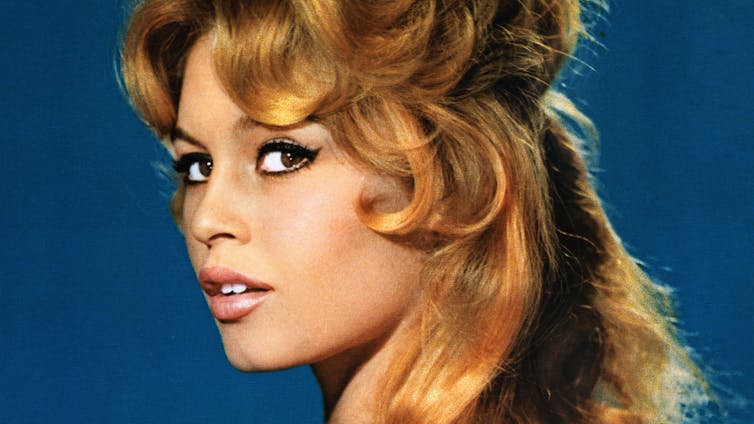
Ben McCann, University of Adelaide Brigitte Bardot’s death, at the age of 91, brings to a close one of the most extraordinary careers in post-war French cultural life. Best known as an actress, she was also a singer, a fashion icon, an animal rights activist and a symbol of France’s sexual liberation. Famous enough to be known by her initials, B.B. symbolised a certain vision of French femininity – rebellious and sensual, yet vulnerable. Her impact on beauty standards and French national identity was profound. At her peak, she rivalled Marilyn Monroe in global fame and recognition. Simone de Beauvoir, France’s leading feminist writer, famously wrote in 1959 that Bardot “appears as a force of nature, dangerous so long as she remains untamed”.
A star is born
Bardot was born in 1934 to a well-off Parisian family. Raised in a strict Catholic household, she studied ballet at the Conservatoire de Paris with hopes of becoming a professional dancer.Brigitte Bardot, pictured here in 1946, studied ballet as a child.Roger Viollet via Getty Images Her striking looks led her to modelling. By 14, she was appearing in Elle magazine, catching the eye of director Roger Vadim, whom she married in 1952. She began acting in the early 1950s and her appearance as Juliette in Vadim’s And God Created Woman (Et Dieu… créa la femme, 1956) put her on the map. Bardot was instantly catapulted to international stardom. Vadim presented his wife as the ultimate expression of youthful, erotic freedom that both shocked and captivated French audiences. Watching this relatively tame film today, it’s difficult to imagine just how taboo-breaking Bardot’s performance was. But in sleepy Catholic, conservative 1950s France, it set new norms for on-screen sexuality. The film became a global phenomenon. Critics loved it, but censors and religious groups grew nervous.
An 60s icon
Bardot’s lack of formal training as an actress paradoxically became part of her appeal: she adopted a spontaneous acting approach, as much physical as verbal. She was stunning in Contempt (Le Mépris, 1963), Jean-Luc Godard’s masterpiece about a crumbling marriage. Godard used her beauty and fame both as spectacle and critique. The film’s most famous sequence was a 31-minute conversation between Bardot and her co-star Michel Piccoli. Bardot was never better. In Henri-Georges Clouzot’s intense courtroom drama The Truth (La Vérité, 1960), she showcased her dramatic range playing a young woman on trial for the murder of her lover.Bardot in a poster for The Truth, 1960.LMPC via Getty Images In 1965, she co-starred with Jeanne Moreau in Louis Malle’s Long Live Maria (Viva Maria), a rare female buddy film that blended comedy and political satire. Bardot’s anarchic energy remains a dazzling feat. A Very Private Affair (Vie privée, 1962) saw her portray a woman consumed by fame and chased by the media. The plotline was eerily predictive of Bardot’s own future. She popularised fashion trends like the choucroute hairstyle and ballet flats. The Bardot neckline – off-the-shoulder tops and dresses – was named after her. She even wore pink gingham at her 1959 wedding.
Allure and provocation
Bardot’s star appeal lay in her contradictions. She appeared simultaneously natural and provocative, spontaneous and calculated. Her dishevelled glamour and effortless sexuality helped construct the archetype of the modern “sex kitten”. She famously said “it is better to be unfaithful than to be faithful without wanting to be”. Throwing off the shackles of bourgeois morality, Bardot epitomised a commitment to emotional and sexual freedom. Her turbulent love life was a case in point. She was married four times, with dozens of stormy relationships and extra-marital affairs along the way. Forever immortalised as a free-spirited ingénue, Bardot was a muse for filmmakers, artists and musicians, from Andy Warhol to Serge Gainsbourg. Later on, Kate Moss, Amy Winehouse and Elle Fanning mentioned Bardot as an inspiration. Famously, Bardot never succumbed to cosmetic surgery. As she once noted:
Women should embrace ageing because, at the end of the day, it’s much more beautiful to have a grandmother with white hair who looks like an elderly lady than to have a grandmother who’s bleached, dyed, and […] who looks much older but also really unhappy.
Life after the movies
Bardot retired from acting in 1973, aged only 39, citing disillusionment with fame. “It suffocated and destroyed me”, she said, about the film industry. She shifted her attention to animal rights, founding the Brigitte Bardot Foundation in 1986. She became an uncompromising, vocal activist, campaigning against animal cruelty, fur farming, whaling and bullfighting. But Bardot courted controversy from the mid-1990s for her far-right political views, remarks about Islam and immigration and repeated convictions for inciting racial hatred. She publicly defended disgraced actor Gérard Depardieu and pushed back on the #MeToo movement in France. Such statements damaged her reputation, especially outside France, and created a troubling image: the once-liberating sex symbol now associated with nationalist conservatism. While she never identified as a feminist, her unapologetic autonomy, early retirement and outspoken views led some to re-evaluate her as a figure of proto-feminist rebellion. France gradually began to turn against Bardot, bothered by her outspoken views. But some applauded her couldn’t-care-less attitude and unwillingness to play by the rules. Ultimately, by rejecting fame on her own terms, she parlayed her 50s free-spiritedness into a bold stand against conformity and societal norms. Late in life, she told Danièle Thompson, the writer-director of the 2023 mini-series about her career, “I don’t understand why the whole world is still talking about me”. The answer is simple – Bardot continues to fascinate us, flaws and all. Ben McCann, Associate Professor of French Studies, University of Adelaide This article is republished from The Conversation under a Creative Commons license. Read the original article.