

amusement and theme parks
Inside the collapse of Disney’s America, the US history-themed park that almost was
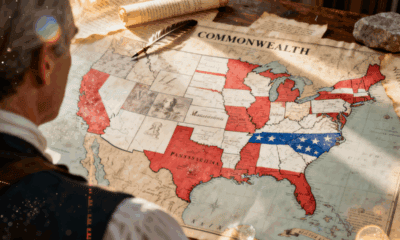
Disney faced criticism from both liberals and conservatives over cultural portrayals, leading to the cancellation of a controversial U.S. history-themed park near D.C.

Last Updated on March 6, 2026 by Daily News Staff
Jared Bahir Browsh, University of Colorado Boulder
As a top producer of children’s entertainment, Disney is no stranger to America’s culture wars.
Liberals have long criticized the company for its products’ promotion of gender stereotypes and racist tropes. Meanwhile, conservatives have excoriated the company for being “too woke,” whether it was casting actresses of color in live action remakes of the “The Little Mermaid” and “Snow White” or coming out against a Florida statute that curtails discussion of gender and sexuality in public schools.
As Disney CEO Bob Iger grapples with the unenviable task of navigating criticism from all sides, I can’t help but recall how executives decided to table an effort to “Disneyfy” American history 30 years ago.
My research and teaching investigates how media companies such as Disney construct historical narratives for popular consumption. I can only imagine how today’s culture wars would have expressed themselves at Disney’s proposed theme park, which would have featured everything from Civil War forts to Native American villages.
Disney eyes the outskirts of DC
From his early days as an animator, Walt Disney presented a sanitized and nostalgic view of America.
Mickey Mouse represented the “everyman,” while the company’s animators drew a largely optimistic portrait of America, first in the studio’s animated films and later in their theme parks. Anyone who has walked down Disneyland’s Main Street, U.S.A., witnessed Magic Kingdom’s Hall of Presidents or visited Epcot’s American Adventure can see how Disney strives to present an uncomplicated, uncritical view of the nation and its leaders.
In 1984, Michael Eisner became the company’s CEO. He was credited with revitalizing Disney’s brand through producing hit animated features such as “Beauty and the Beast” and “The Little Mermaid,” and spearheading theme parks such as Disney–MGM Studios – now known as Hollywood Studios – and Disneyland Paris.
A visit to Colonial Williamsburg inspired Eisner’s next venture: a theme park based on U.S. history that would be built outside of Washington, D.C.
Beginning in 1993, the company quietly started purchasing real estate in northern Virginia using shell companies. The land acquisitions became public knowledge only a few days before the announcement of the theme park, aptly named Disney’s America.
The news was largely welcomed by politicians. Eisner had already gained the support of the state’s outgoing and incoming governors, along with the Virginia Commission on Population Growth and Development. The plan was to build the park in Haymarket, Virginia, a small, wealthy area southwest of Washington, D.C., a few miles from Manassas, the site of two major Civil War battles.
History isn’t so simple
Although Disney had diligently worked to consolidate support ahead of the announcement, signs of conflict emerged during the first press conference, which featured Bob Weis, a Disney vice president who had helped oversee the planning of several theme parks.
“This is not a Pollyanna view of America,” he told the group of assembled reporters. “We want to make you a Civil War soldier. We want to make you feel what it was like to be a slave or what it was like to escape through the underground railroad.”
Questions over how Disney would tell the complex – often discriminatory – history of the nation spurred a group of historians, led by David McCullough, to lodge their concerns: How would Disney construct its narrative of the United States? And how would the park affect Manassas, one of the most important Civil War battle sites?
According to the original plans and brochures, Disney’s America would contain nine sections: a Colonial-era Presidents Square, an Indigenous village, Ellis Island, a factory town from the Industrial Revolution, a Civil War fort, a county fair, an early 19th-century port, a World War II-era battlefield and a Depression-era family farm.
On the surface, these themed areas seemed fitting. You could easily see them as exhibits at the Smithsonian. But issues emerged when people took into account that this was still a Disney theme park, with entertaining guests and making money likely taking precedence over historical accuracy and contemporary sensitivities and sensibilities.
The story of immigration, for example, would have been told through the musical-comedy stylings of Kermit the Frog and the other Muppets.
There were also concerns over how Disney would handle the exploitative and violent history of the treatment of a number of groups.
This included the enslavement of Africans and the genocide of Indigenous populations, the latter of which was also connected to the forthcoming 1995 release of “Pocahontas.” Historians later highlighted the film’s distorted history, and it isn’t far-fetched to imagine rides or attractions based on those misrepresentations at Disney’s America.
Mickey Mouse goes to Washington
Even as plans came together for Disney, criticism began to mount.
Disney issued an ultimatum to the Virginia legislature to improve infrastructure surrounding the site, threatening to abandon the project if the US$150 million for infrastructure improvements were not passed on the last day of the Virginia General Assembly’s legislative session in March 1994.
In June, the U.S. House of Representatives introduced a resolution opposing the park, and the U.S. Senate Committee on Energy and Natural Resources held a hearing regarding the proposed project’s environmental impact.
The now-infamous hearing featured discussions regarding sewage, traffic and lodging, and even saw U.S. Sen. Ben Nighthorse Campbell of Colorado, who at the time was a registered Democrat, place a Mickey Mouse hat on the lectern in a show of support.
As criticism mounted, Disney decided to shift its approach. In the summer of 1994, it renamed the project Disney’s American Celebration.
Rather than highlight periods or events in American history, the new concept would focus more on themes: Democracy, Work, Family, Generations, Streets of America and the Land.
Many of the attractions featured in these lands would have resembled attractions already in Disney parks. For example, Generations would have been similar to the Magic Kingdom’s Carousel of Progress, while the Land was already a pavilion at Epcot.
This would have also opened more opportunities for sponsorship. The Work section of the park would have included virtual factory tours of popular brands such as Apple or Crayola, while Streets of America would have featured cuisine from around the country, similar to Downtown Disney, which opened in 1997 in Disney World and in 2001 at Disneyland.
It all falls apart
Disney abruptly announced on Sept. 28, 1994, that it would abandon these plans.
Although the criticism from historians was a factor, there were also concerns about the park’s profitability in colder months. The company faced mounting debt from its Paris theme park and uncertain leadership after the death of senior executive Frank Wells in a helicopter crash in April 1994. Eisner, meanwhile, had undergone bypass surgery in July 1994.
Many of the attractions that were planned for the Virginia site found their way into Disney parks, particularly in Disney’s California Adventure in Anaheim.
Disney, both under Walt’s leadership and after his death, has long leveraged patriotism for the sake of its media content and park experiences. From Mickey Mouse to the Hall of Presidents, Disney’s nostalgic, linear and uncomplicated view of American progress has been foundational to the Disney experience.
However, an entire park dedicated to this approach – just down the road from a real battlefield integral to the bloodiest war in U.S. history – was too much for historians and other critics to ignore.
Disney’s failure to profit from an uncritical celebration of America may have been a blessing in disguise, as it avoided constructing yet another battlefield in the culture wars.
Jared Bahir Browsh, Assistant Teaching Professor of Critical Sports Studies, University of Colorado Boulder
This article is republished from The Conversation under a Creative Commons license. Read the original article.
Looking for an entertainment experience that transcends the ordinary? Look no further than STM Daily News Blog’s vibrant Entertainment section. Immerse yourself in the captivating world of indie films, streaming and podcasts, movie reviews, music, expos, venues, and theme and amusement parks. Discover hidden cinematic gems, binge-worthy series and addictive podcasts, gain insights into the latest releases with our movie reviews, explore the latest trends in music, dive into the vibrant atmosphere of expos, and embark on thrilling adventures in breathtaking venues and theme parks. Join us at STM Entertainment and let your entertainment journey begin! https://stmdailynews.com/category/entertainment/
and let your entertainment journey begin!



amusement and theme parks
Six Flags Magic Mountain Unveils Record-Setting ‘Thrill Glider’ Coaster for 2027
Six Flags Magic Mountain is taking flight in 2027 with Thrill Glider, a first-of-its-kind coaster combining flying, motorbike and suspended ride technology with multiple launches, five inversions and speeds up to 50 mph.

Last Updated on September 27, 2026 by Daily News Staff
VALENCIA, Calif. — Six Flags Magic Mountain is preparing to add another major attraction to its coaster lineup with Thrill Glider, a first-of-its-kind roller coaster scheduled to open in 2027.
The Southern California theme park announced Sept. 10 that the new attraction will combine elements of flying, motorbike and suspended roller coasters to create what the park is calling an entirely new category: the “Thrillglider.”
Developed by coaster manufacturer Vekoma, Thrill Glider will place riders aboard specially designed “hovercycles.” Instead of sitting upright, riders will be positioned face-forward and prone beneath the track, creating the sensation of flying through the terrain.
The approximately 80-second ride will feature multiple launches reaching speeds of 50 mph, along with 12 airtime moments, five inversions and 20 track elements spread across nearly 3.5 acres. Onboard audio and lighting effects will add to the experience.
A Record-Setting New Coaster
According to Six Flags, Thrill Glider will stretch 3,380 feet — more than half a mile — and reach a maximum height of 107 feet. The company says the attraction will establish several records within the newly created Thrillglider category, including world’s longest, fastest and tallest Thrillglider.
The ride will also feature an elaborate science-fiction storyline centered on the fictional QuantumPulse Propulsion Systems and its discovery of an energy source called PSR B417. Guests will encounter futuristic displays, holographic presentations and other themed elements before boarding their hovercycles.
“Thrill Glider is more than a new attraction. It is the latest milestone in Six Flags Magic Mountain’s renaissance and a reflection of the park’s enduring role as an industry innovator,” park president Brian Oerding said in the announcement.
Where Will Thrill Glider Be Located?
Thrill Glider will occupy the former Golden Bear Theatre site, positioned between Full Throttle and LEX LUTHOR: Drop of Doom and next to the recently reimagined Looney Tunes Land.
Construction is already underway, with Six Flags planning to open the attraction sometime in 2027. A specific opening date has not yet been announced. The minimum rider height will be 48 inches.
The addition continues Magic Mountain’s long-running emphasis on ambitious roller coasters and introduces a substantially different ride experience: part flying coaster, part launched coaster and part futuristic motorcycle adventure.
Source/ Related Links
Six Flags Magic Mountain — Official Site
Source: Six Flags Magic Mountain press release, Sept. 10, 2026.
More Thrills, More Entertainment 🎢
Love roller coasters, theme parks and the latest attractions? STM Daily News Entertainment keeps you connected to amusement and theme park news, new rides, park updates and entertainment destinations. Explore our Entertainment section and discover what’s coming next!
Entertainment
Mattel Adventure Park and VAI Resort: What’s the Latest in Glendale?
Mattel Adventure Park and VAI Resort still have no announced opening date. VAI says construction continues and expects to share more about the park in late 2026.


GLENDALE, Ariz. — The wait continues for Mattel Adventure Park and VAI Resort near State Farm Stadium. Both remain under development, and neither has announced an opening date.
There has, however, been a change in how the park is being described. In August, Axios Phoenix reported that Epic Resort Destinations, the park’s original developer, appears to be out of the Glendale project. Asked about Epic’s involvement, a VAI spokesperson told Axios that VAI is the park’s owner and operator, but did not directly answer whether Epic still has any role. Another VAI spokesperson said the park and resort are now considered part of the same project and that construction continues on both.
VAI also told Axios it is redefining the park’s guest experience and creative vision and expects to share more in the fourth quarter of 2026. That is a promise of a project update, not an opening announcement.
The VAI Resort FAQ currently says it will announce an opening date approximately nine months in advance. Mattel Adventure Park’s Glendale page continues to promote planned attractions, including the Barbie Beach House and two Hot Wheels roller coasters, without listing an opening date.
For families hoping to visit, the practical answer is that there is still no date to put on the calendar. The next meaningful development to watch is VAI’s promised fourth-quarter update: it may clarify the park’s plans, but visitors will need an official opening announcement before they can plan a trip.
Source links: VAI Resort FAQ · Mattel Adventure Park Glendale page · Axios Phoenix’s August report
🎬🍿 Lights, camera, entertainment! From must-see movies and TV to music, celebrities, events, and the latest pop culture buzz, STM Daily News keeps you in the know. 💬 Join the conversation, share your take in the comments, and 📬 subscribe to our newsletter so you never miss the next big story!
Sports
Chili’s Takes the ‘19th Hole’ Literally With Golf Course Pop-Up
Chili’s took the 19th-hole tradition to a new level with a limited-time golf course pop-up in Burbank featuring food, specialty margaritas and exclusive golf apparel.


BURBANK, Calif. — Chili’s Grill & Bar took its casual-dining game onto the golf course with a limited-time experience celebrating one of golf’s favorite traditions: the 19th hole.
The restaurant chain transformed the clubhouse at DeBell Golf Club in Burbank, California, into the Chili’s Golf Club, a two-day pop-up held Aug. 28–29. The event welcomed golfers and fans to enjoy Chili’s favorites, specialty drinks and a golf-inspired apparel collaboration.
The concept played off the traditional “19th hole” — the post-round gathering spot where golfers grab food and drinks, talk about the day’s round and, perhaps, make those missed putts sound a little closer than they actually were.
Chili’s Meets the Golf Course
Guests at DeBell could stop by after playing 18 holes — or simply visit the clubhouse — for Chili’s menu favorites such as the Triple Dipper. The pop-up also featured golf-themed drinks including the Transfusion Marg and Tee Time Marg, created specifically for the Chili’s Golf Club experience.
The promotion also teamed Chili’s with active-lifestyle apparel brand Rhoback for a limited-edition Rhoback X Chili’scollection featuring the Chili’s Golf Club crest. The lineup included performance polos, hoodies, quarter-zips, crewnecks and golf hats.
“Chili’s is the people’s clubhouse, so it only made sense to bring that spirit to the course,” George Felix, chief marketing officer and executive vice president of Brinker International, said in announcing the campaign.
Food, Golf and Entertainment Collide
Chili’s extended the promotion beyond the course with a campaign film celebrating everyday golfers — particularly those whose enthusiasm for the game may be considerably stronger than their scorecards.
The film featured appearances by Wesley Bryan, Caleb Pressley, Jena Sims Koepka, Chaz Bowker, Josh Kelley and JaNa Craig, bringing together golf, entertainment, food and lifestyle culture around the familiar 19th-hole tradition.
Although the Burbank pop-up lasted only two days, the campaign offers another example of restaurant brands looking beyond the dining room to connect food with sports, entertainment and fan culture.
For Chili’s, that meant finding a place where burgers, margaritas, golf stories and questionable scorecards already seemed like a natural fit.
Source
- Chili’s — “Chili’s is Fulfilling Every Golfer’s Dream by Opening on a Golf Course. Yes, Really.” — Original Aug. 26, 2026 press release announcing the Chili’s Golf Club promotion.
Related Links
- Chili’s Golf Club — Official Event Page — Details about the DeBell Golf Club takeover, food, specialty margaritas and Rhoback collaboration.
- DeBell Golf Club — Official Website — Information about the Burbank public golf course that hosted the Chili’s Golf Club.
- DeBell Golf Club — Golf Course Information — Background on the 18-hole, par-71 municipal course in the Verdugo Mountains.
- Rhoback X Chili’s Golf Club Collaboration — Rhoback’s official page covering the limited-edition golf apparel collaboration.
- Rhoback Official Website — More from the active-lifestyle apparel company involved in the Chili’s Golf Club campaign.
🍴 What’s your favorite food, recipe, or dining spot? Tell us in the comments! Then subscribe to the STM Daily News newsletter for fresh recipes, restaurant news, food trends, and delicious stories delivered straight to your inbox. Join our growing community of food lovers today!







