

Food and Beverage
Seed oils are toxic, says Robert F. Kennedy Jr. – but it’s not so simple


Mary J. Scourboutakos, University of Toronto
Robert F. Kennedy Jr., who is expected to clear the final hurdles in his confirmation as President Donald Trump’s health secretary, and a host of health influencers have proclaimed that widely used cooking oils such as canola oil and soybean oil are toxic.
T-shirts sold by his “Make America Healthy Again” campaign now include the slogan, “make frying oil tallow again” – a reference to the traditional use of rendered beef fat for cooking.
Seed oils have become a mainstay of the American diet because unlike beef tallow, which is comprised of saturated fats that increase cholesterol levels, seed oils contain unsaturated fats that can decrease cholesterol levels. In theory, that means they should reduce the risk of heart disease.
But research shows that different seed oils have varying effects on risk for heart disease. Furthermore, seed oils have also been shown to increase risk for migraines. This is likely due to their high levels of omega-6 fatty acids. These fats can increase inflammation, a heightened and potentially harmful state of immune system activation.
As a family physician with a Ph.D. in nutrition, I translate the latest nutrition science into dietary recommendations for my patients. When it comes to seed oils, the research shows that their health effects are more nuanced than headlines and social media posts suggest.
How seed oils infiltrated the American diet
Seed oils — often confusingly referred to as “vegetable oils” — are, as the name implies, oils extracted from the seeds of plants. This is unlike olive oil and coconut oil, which are derived from fruits. People decrying their widespread use often refer to the “hateful eight” top seed oil offenders: canola, corn, soybean, cottonseed, grapeseed, sunflower, safflower and rice bran oil.
These oils entered the human diet at unprecedented levels after the invention of the mechanical screw press in 1888 enabled the extraction of oil from seeds in quantities that were never before possible.
Between 1909 and 1999, U.S. consumption of soybean oil increased 1,000 times. This shift fundamentally changed our biological makeup. Due to increased seed oil intake, in the past 50 years the concentration of omega-6 fatty acids that Americans carry around in their fatty tissue has increased by 136%
https://datawrapper.dwcdn.net/rFwW9/1
Evaluating the omega-6 to omega-3 fatty acid ratio
Omega-6 and omega-3 fatty acids are essential nutrients that control inflammation. While omega-6s tend to produce molecules that boost it, omega-3s tend to produce molecules that tone it down. Until recently, people generally ate equal amounts of omega-6 and omega-3 fatty acids. However, over the past century, this ratio has changed. Today, people consume 15 times more omega-6s than omega-3s, partly due to increased consumption of seed oils.
In theory, seed oils can cause health problems because they contain a high absolute amount of omega-6 fatty acids, as well as a high omega-6 to omega-3 ratio. Studies have linked an increased omega-6 to omega-3 ratio to a wide range of conditions, including mood disorders, knee pain, back pain, menstrual pain and even preterm birth. Omega-6 fatty acids have also been implicated in the processes that drive colon cancer.
However, the absolute omega-6 level and the omega-6 to omega-3 ratio in different seed oils vary tremendously. For example, safflower oil and sunflower oil have ratios of 125:1 and 91:1. Corn oil’s ratio is 50:1. Meanwhile, soybean oil and canola oil have lower ratios, at 8:1 and 2:1, respectively.
Scientists have used genetic modification to create seed oils like high oleic acid canola oil that have a lower omega-6 to 3 ratio. However, the health benefit of these bioengineered oils is still being studied.
The upshot on inflammation and health risks
Part of the controversy surrounding seed oils is that studies investigating their inflammatory effect have yielded mixed results. One meta-analysis synthesizing the effects of seed oils on 11 inflammatory markers largely showed no effects – with the exception of one inflammatory signal, which was significantly elevated in people with the highest omega-6 intakes.
To complicate things further, genetics also plays a role in seed oils’ inflammatory potential. People of African, Indigenous and Latino descent tend to metabolize omega-6 fatty acids faster, which can increase the inflammatory effect of consuming seed oils. Scientists still don’t fully understand how genetics and other factors may influence the health effects of these oils.
The effect of different seed oils on cardiovascular risk
A review of seven randomized controlled trials showed that the effect of seed oils on risk of heart attacks varies depending on the type of seed oil.
This was corroborated by data resurrected from tapes dug up in the basement of a researcher who in the 1970s conducted the largest and most rigorously executed dietary trial to date investigating the replacement of saturated fat with seed oils. In that work, replacing saturated fats such as beef tallow with seed oils always lowers cholesterol, but it does not always lower risk of death from heart disease.
Taken together, these studies show that when saturated fats such as beef tallow are replaced with seed oils that have lower omega-6 to omega-3 ratios, such as soybean oil, the risk of heart attacks and death from heart disease falls. However, when saturated fats are replaced with seed oils with a higher omega-6 to omega-3 ratio, such as corn oil, risk of death from heart disease rises.
Interestingly, the most highly purchased seed oil in the United States is soybean oil, which has a more favorable omega-6 to 3 ratio of 8:1 – and studies show that it does lower the risk of heart disease.
However, seed oils with less favorable ratios, such as corn oil and safflower oil, can be found in countless processed foods, including potato chips, frozen dinners and packaged desserts. Nevertheless, other aspects of these foods, in addition to their seed oil content, also make them unhealthy.
The case for migraines – and beyond
A rigorous randomized controlled trial – the gold standard for clinical evidence – showed that diets high in omega-3 fatty acids and low in omega-6 fatty acids, hence low in seed oils, significantly reduced the risk of migraines
In the study, people who stepped up their consumption of omega-3 fatty acids by eating fatty fish such as salmon experienced an average of two fewer migraines per month than usual, even if they did not change their omega-6 consumption. However, if they reduced their omega-6 intake by switching out corn oil for olive oil, while simultaneously increasing their omega-3 intake, they experienced four fewer migraines per month.
That’s a noteworthy difference, considering that the latest migraine medications reduce migraine frequency by approximately two days per month, compared to a placebo. Thus, for migraine sufferers — 1 in 6 Americans — decreasing seed oils, along with increasing omega-3 intake, may be even more effective than currently available medications.
Overall, the drastic way in which omega-6 fatty acids have entered the food supply and fundamentally changed our biological composition makes this an important area of study. But the question of whether seed oils are good or bad is not black and white. There is no basis to conclude that Americans would be healthier if we started frying everything in beef tallow again, but there is an argument for a more careful consideration of the nuance surrounding these oils and their potential effects.
Mary J. Scourboutakos, Adjunct Lecturer in Family and Community Medicine, University of Toronto
This article is republished from The Conversation under a Creative Commons license. Read the original article.


Child Health
How One Sweet Fruit Packs a Powerful Nutritional Punch
As conversations around nutrient-dense eating continue to grow, fresh fruit has become one of the simplest ways to add naturally occurring vitamins and minerals to everyday routines. One easy place to start is this Nut Butter and Kiwifruit Toast, which combines wholesome ingredients with the sweet tropical flavor of kiwifruit (sweet fruit) for a satisfying breakfast, snack or light meal.


How One Sweet Fruit Packs a Powerful Nutritional Punch
(Feature Impact) Consumers today are looking for foods that do more than simply taste good; they want foods that deliver nutrition in every bite. As conversations around nutrient-dense eating continue to grow, fresh fruit has become one of the simplest ways to add naturally occurring vitamins and minerals to everyday routines.
Kiwifruit is a standout example. According to the International Fresh Produce Association, kiwifruit climbed to No. 14 among the nation’s top-selling fresh fruits with household purchasing increasing 20%. What’s more, it’s now the fastest-growing fruit in the fruit bowl as more shoppers discover its unique combination of exceptional nutrition and naturally sweet flavor.
That success story has been more than a century in the making.
From Ancient Origins to Modern Favorite
Although many people associate kiwifruit with New Zealand, its story began in China’s Yangtze River Valley. In 1904, New Zealand educator Isabel Fraser returned home from China with green kiwifruit seeds, which she passed along to horticulturist Alexander Allison. Over the following decades, growers cultivated and refined the fruit, helping establish New Zealand as the world’s leading kiwifruit producer.
By the 1990s, years of natural breeding and cross-pollination led to the development of the first commercially successful yellow-fleshed kiwifruit, offering consumers a sweeter flavor and vibrant golden flesh. When a devastating vine disease threatened orchards worldwide in 2010, continued breeding innovation led to the development of Zespri SunGold Kiwifruit – a resilient variety with smooth skin, juicy golden flesh and a tropical-sweet flavor that helped revitalize the category.
Jam-Packed With Nutrition
Today, kiwifruit is recognized as one of the most nutrient-dense fruits available, making it an easy choice for people looking to get more nutritional value from the foods they eat. They provide more than 10 vitamins and minerals in every serving, including vitamin C to contribute to the normal function of the immune system, folate to support healthy cell growth and development and vitamin E to help protect cells from everyday damage.
“When people think about eating healthier, they often assume it has to be complicated,” registered dietitian Nisha Melvani said. “I encourage people to start with simple, whole foods that naturally deliver a variety of nutrients. Zespri SunGold Kiwifruit is an easy choice because it provides more than 10 vitamins and minerals, including 100% of your daily vitamin C needs, in one delicious fruit that fits seamlessly into breakfast, snacks or even dessert.”
From Orchard to Everyday Favorite
As more consumers embrace whole foods over complicated nutrition trends, kiwis are finding their way into everyday routines – and pop culture. Creators including Emma Chamberlain and musician Josh Conway have highlighted the fruit as part of their daily snacking habits, while “Good Housekeeping” featured golden kiwifruit in its 2025 Best Produce Snacks of the Year, highlighting its naturally sweet flavor, juicy texture and broad appeal.
Whether enjoyed on its own, added to smoothies, layered onto yogurt or incorporated into savory dishes, kiwifruit offers a simple, delicious way to enjoy more nutrition throughout the day. One easy place to start is this Nut Butter and Kiwifruit Toast, which combines wholesome ingredients with the sweet tropical flavor of Zespri SunGold Kiwifruit for a satisfying breakfast, snack or light meal.
Discover more fresh recipes, nutrition insights and delicious ways to enjoy kiwifruit at Zespri.com and see why one of today’s fastest-growing fruits is earning a permanent place in more fruit bowls.
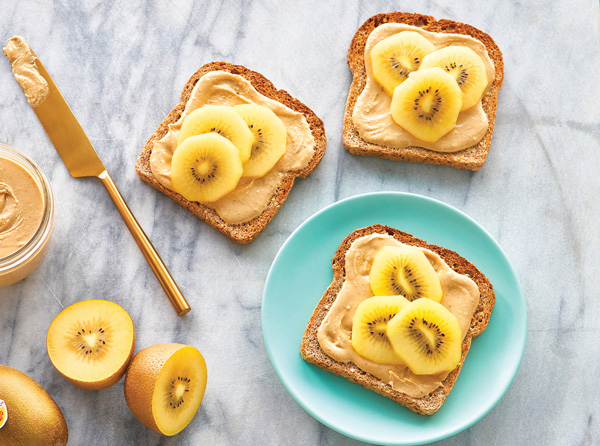
Nut Butter and Kiwifruit Toast
Nut Butter:
- 1 cup roasted nuts (almonds, cashews, hazelnuts or pecans)
- sunflower oil
- 1/4 teaspoon salt
- 1 tablespoon seeds (chia, sunflower or hemp)
- 2 slices sprouted grain bread, toasted
- 1 Zespri SunGold Kiwifruit, sliced
- To make nut butter: In food processor, blend nuts at high speed until finely ground. Scrape sides of blender. Add few drizzles of sunflower oil, salt and seeds; blend until creamy. Transfer to jar and store up to 1 week in refrigerator.
- Spread nut butter onto toasted bread and top with slices of kiwi.

SOURCE:
Zespri
💪 Your health journey starts here! Explore the latest health news, fitness tips, wellness trends, and healthy living advice. Share your thoughts in the comments and subscribe to the STM Daily News newsletter to stay informed and inspired every day.


(Family Features) From kickoff to the final whistle, taking your game day party to the next level starts with serving an all-star lineup of menu items. From starting-caliber appetizers to MVP-level main courses and a supporting cast of side dishes, dips like salsa and hummus can play the role of superstar when it comes to serving up game day grub.
One of the benefits of cheering on your favorite teams from the couch and bringing the tailgate to your literal home field is the availability of appliances you may not otherwise have access to at the stadium like the oven or air fryer. However, that doesn’t mean missing out on the action and being sidelined in the kitchen all game or that these recipes won’t travel to a tailgate.
With a flavor-packed, vibrant recipe, the lineup of Fresh Cravings Salsa offers a homemade-tasting alternative to softer, duller blends of jarred salsa. Made with high-quality ingredients like vine-ripened tomatoes, crisp vegetables, zesty peppers and spices, the salsas make a perfect addition to these recipes from celebrity chef and entertainer George Duran, author of “Take This Dish and Twist It” and host of Food Network’s “Ham on the Street” and TLC’s “Ultimate Cake Off.”
Kickoff your menu with an app like these Jalapeno Bacon and Salsa Biscuit Bites that meld together traditional tailgate tastes. Then put a Tex-Mex twist on a traditional favorite with this Enchilada Lasagna, perfect for feeding a crowd of hungry fans.
To round out the playbook, this Layered Mediterranean Hummus Salad can make for an accompaniment to a variety of main courses. The cucumbers, olives, cherry tomatoes and other veggies are balanced by the savory taste of Fresh Cravings Hummus. Made with a short list of high-quality ingredients like chickpeas, tahini and Chilean extra-virgin olive oil, it has a smooth, creamy mouthfeel.
Find more game-winning recipes made for homegating and tailgating at FreshCravings.com.
Layered Mediterranean Hummus Salad
Recipe courtesy of chef George Duran
Servings: 4-6
- 2 containers (10 ounces each) Fresh Cravings Hummus, any flavor
- 1 cup sliced cucumbers
- 1/2 cup Kalamata olives, seeded and roughly chopped
- 1/2 cup canned garbanzo beans, drained
- 1/4 cup crumbled feta cheese
- 3/4 cup cherry tomatoes, quartered
- 1/4 red onion, finely chopped
- 2 tablespoons finely chopped fresh parsley
- 1/2 lemon, juice only
- extra-virgin olive oil
- zaatar, for sprinkling (optional)
- pita bread or tortilla chips
- On bottom of large, flat serving dish or platter, use spoon to evenly spread hummus.
- Layer cucumbers, olives, garbanzo beans, feta cheese, cherry tomatoes, red onion and parsley throughout hummus. Squeeze lemon juice over top.
- Drizzle with olive oil and sprinkle with Zaatar, if desired. Serve immediately with pita bread or tortilla chips.
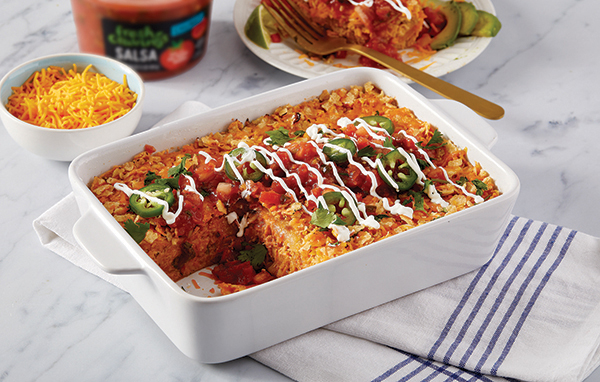
Enchilada Lasagna
Recipe courtesy of chef George Duran
Servings: 4-6
- 2 tablespoons olive oil
- 1 large onion, chopped (1 cup)
- 1 deli roasted chicken, skin and bones removed, shredded
- 2 tablespoons taco seasoning
- 1 cup chicken stock or broth
- 8 ounces cream cheese, at room temperature
- 2 cups shredded Tex-Mex cheese blend
- 16 ounces Fresh Cravings Chunky Salsa, plus additional for serving
- 1 cup fresh cilantro, chopped
- nonstick cooking spray
- 6 flour tortillas (9 inches each)
- 1 cup tortilla chips, crushed
- 1 cup shredded cheddar cheese
- Preheat oven to 350 F.
- In large skillet over medium-high heat, add olive oil. Add onions and cook until soft and translucent, 4-5 minutes.
- Add shredded chicken and stir in taco seasoning. Add chicken broth and bring to simmer, about 5 minutes.
- Add cream cheese, Tex-Mex cheese, salsa and cilantro. Stir until cream cheese is melted and simmer 3-4 minutes until slightly thickened.
- Spray square baking dish with nonstick cooking spray. Place two tortillas in bottom of pan, folding over or trimming sides of tortillas to fit.
- Spoon half chicken mixture over tortillas. Repeat then place remaining tortillas over top. Mix crushed tortilla chips with cheddar cheese and sprinkle over top. Bake 30 minutes, or until lasagna is bubbling and lightly browned.
- Let stand 10 minutes then top with additional salsa before serving.
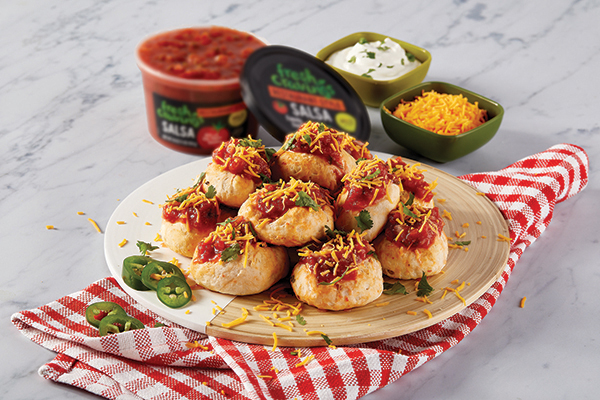
Jalapeno Bacon and Salsa Biscuit Bites
Recipe courtesy of chef George Duran
Yield: 16 biscuit bites
- 1 tube biscuit dough (8 biscuits total)
- 7 ounces grated mozzarella cheese
- 1/4 cup jarred jalapenos, chopped
- 8 slices cooked bacon, chopped
- 1 cup Fresh Cravings Restaurant Style Salsa
- nonstick cooking spray
- Preheat air fryer to 350-360 F.
- Divide each biscuit in half by pulling apart in centers. Use hands to flatten each biscuit into circles. Set aside.
- In bowl, mix mozzarella cheese with chopped jalapenos, bacon and salsa.
- Add heaping spoonful into each flattened biscuit and pinch each together tightly to form balls. Top each with small amount of salsa mixture.
- Spray nonstick cooking spray in air fryer and, working in batches, cook biscuit bites 6-9 minutes until golden brown.
- Serve warm.
- Note: If air fryer access is unavailable, biscuit bites can be baked 8-10 minutes at 400 F in oven, or until golden brown.
SOURCE:
Fresh Cravings
https://stmdailynews.com/category/food-and-beverage

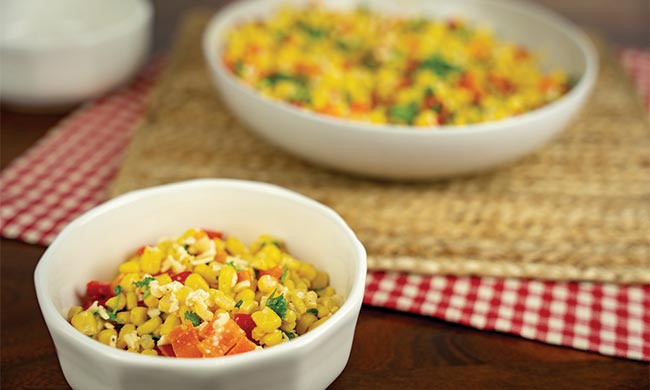
(Family Features) If you’re in a tight spot for a last-minute potluck barbecue, don’t just throw together any salad. This Queso Cheese Corn Salad features a zesty homemade dressing and a salad base with a bit of heat (if you dare). Discover more cookout recipes by visiting Culinary.net.
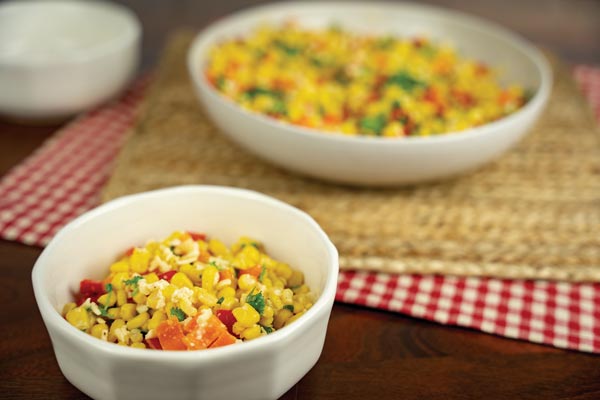
Queso Cheese Corn Salad
Recipe courtesy of “Cookin’ Savvy”
Servings: 4-6
Dressing:
- 2 limes, juice only
- 1/4 cup mayo
- 1 pinch salt
- 1 tablespoon sugar
- 2 cans whole corn, drained
- 1 cup chopped bell pepper
- 1/4 cup chopped red onion (optional)
- 1 hot pepper (optional)
- 1 cup shredded queso cheese
- freshly chopped cilantro, for garnish
- To make dressing: In bowl, mix lime juice, mayo, salt and sugar.
- In separate large bowl, mix corn; bell pepper; onion, if desired; hot pepper, if desired; and queso cheese.
- Pour dressing over corn mixture and mix well. Top with cilantro.
SOURCE:
Culinary.net
 What’s your favorite food, recipe, or dining spot? Tell us in the comments! Then subscribe to the STM Daily News Food and Drink newsletter for fresh recipes, restaurant news, food trends, and delicious stories delivered straight to your inbox. Join our growing community of food lovers today!





