

Entertainment
Hollywood vs. Reality: How LA’s Wilshire Subway Was Really Built
Wilshire Subway: Did LA blast subway tunnels under Wilshire Boulevard? Hollywood says yes — engineers say no. Here’s how Metro safely tunneled beneath Miracle Mile.


When the 1997 disaster film Volcano depicted lava erupting along Wilshire Boulevard and referenced blasting during Red Line subway construction, it delivered gripping cinema — but not accurate engineering.
In reality, Los Angeles Metro did not rely on large-scale blasting to construct subway tunnels beneath Wilshire Boulevard and the Miracle Mile. Instead, engineers used tunnel boring machines (TBMs) specifically to avoid the very risks Hollywood dramatized.
Why Blasting Was Avoided
The Wilshire Corridor sits atop historic oil fields, making methane gas pockets a known and serious concern. A deadly methane explosion near Fairfax Avenue in 1985 led to heightened scrutiny of underground construction in the area. Blasting in such conditions could have caused unpredictable gas releases, ground instability, or damage to surface structures.
As a result, Metro engineers chose pressurized, closed-face tunnel boring machines, which allow for:
Controlled excavation in dense urban environments
Continuous ground support to prevent settlement
Integrated gas detection and ventilation systems
These machines grind slowly through soil and rock while installing precast concrete tunnel linings, creating a sealed, gas-resistant structure as they advance.

The Real Engineering Feat
Although Volcano took creative liberties for dramatic effect, the true story of tunneling under Wilshire is no less impressive. Advances in TBM technology and methane mitigation ultimately allowed the Metro D Line (formerly the Red Line/Purple Line) to safely pass through one of Los Angeles’ most geologically complex corridors — without explosions, collapsing streets, or cinematic chaos.
Bottom Line
Volcano remains a memorable piece of 1990s disaster cinema, but its portrayal of subway construction is fiction. The real achievement lies in decades of careful planning, modern tunneling technology, and engineering solutions that quietly reshaped Los Angeles beneath its busiest boulevard.
Related Links:
- LA Metro – D Line (Purple Line) Extension Project
- Engineering News-Record: Tunneling Through Gas and Tar in LA
- Los Angeles Times Archive: Methane Risk and Subway Construction
Dreambreaker: A Pickleball Story — A Closer Look at the Documentary and Its Uncredited Voice


Last Updated on November 7, 2026 by Daily News Staff
New hybrid event aims to give grieving audiences meaningful holiday viewing, with films from more than 25 countries and a mission centered on love, loss, and emotional truth.
A new film festival debuting in late 2026 is taking a different approach to holiday entertainment. Grief Fest™: The Grief Film Festival, created by My Grief Angels Inc., is being introduced as what organizers believe is the world’s first film festival dedicated entirely to grief, remembrance, resilience, and healing.
The hybrid festival will run in two segments: November 25–29, 2026, during Thanksgiving week, and December 24, 2026, through January 3, 2027, during Christmas and New Year’s. Top Honors films will be announced on December 31, 2026.
Organizers say the timing is intentional. Research cited in the announcement shows that grief and loneliness are major holiday stressors for many Americans, making the season especially difficult for people coping with loss. In that context, Grief Fest™ is positioning itself as an alternative to the flood of traditional feel-good holiday programming.
The festival is open to short films, features, documentaries, experimental work, AI-generated projects, and VR experiences. It is described as inclusive, non-religious, and LGBTQ+ friendly, with submissions already received from more than 25 countries. All films will be presented in English, either spoken or subtitled.
Grief Fest™ will be available both in person and virtually through Film Festival Plus, making it accessible to audiences worldwide. The launch of GriefFest.com also includes Lumen, a multilingual AI guide designed to help filmmakers and attendees navigate the festival in their preferred language.
Rather than focusing on industry prestige, organizers say the festival is centered on community and emotionally honest storytelling. For audiences who feel unseen during the holidays, Grief Fest™ is aiming to offer something rare on the seasonal screen: recognition.
Source: PR Newswire
Related Reading
- Grief Fest: Official festival site
- My Grief Angels Inc.: About the nonprofit behind the festival
- Film Festival Plus: Virtual access platform
Catch the latest in movies, TV, music, pop culture, and live events in STM Daily News’ Entertainment section.
Entertainment
Bring History to Life with Experiences That Feel Real
Bring History to Life: Reading books and watching documentaries can be good ways to learn about history, but there’s something particularly meaningful about immersive experiences that allow you to step inside the stories that shaped the world.

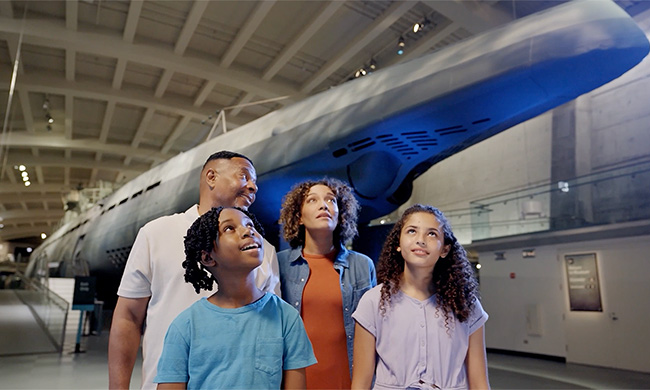
Bring History to Life with Experiences That Feel Real
(Feature Impact) Reading books and watching documentaries can be good ways to learn about history, but there’s something particularly meaningful about immersive experiences that allow you to step inside the stories that shaped the world.
During a visit to the U-505 Submarine exhibit at the Griffin Museum of Science and Industry (Griffin MSI), guests can literally step inside a historic German U-boat captured during World War II. In 1944, the U.S. Navy underwent a top-secret mission to disarm and take over one of the German submarines that wreaked havoc on the high seas, attacking not just military vessels but merchant ships and supply ships as well.
Watch this video to see more:
“The mission was a dangerous one, as U-boat captains were under strict orders to sink their own subs if they were in danger of capture,” said Dr. Voula Saridakis, head curator at Griffin MSI, “but the U.S. Navy managed to take over the vessel and keep it afloat long enough to reach American shores. There, they studied it to gather German military secrets and other intelligence items, like the codebreaking Enigma Machine now on display at Griffin MSI.”
As you tour the submarine, you’ll experience firsthand what life was really like on board. Climb through the hatch, picture yourself bunking for the night in the cramped sleeping quarters, take a turn trying to maneuver the submarine while dodging torpedoes and imagine the bravery of the American soldiers who risked themselves on a perilous mission to capture the vessel and help turn the tide of the war.
There are many important lessons to glean from history, and they’re often easier to understand when presented in a tangible way. Planning visits to museum exhibits and historical sites allows you to stand where others have stood, see what they’ve seen and connect your human experience with theirs. Parents, children, educators, students and people of all ages can find something to inspire them in these stories.
Learn more about bringing history and science to life at GriffinMSI.org.

SOURCE:
Griffin Museum of Science and Industry

Entertainment
Patrick Stewart, Beloved Star of Star Trek and X-Men, Dies at 86
Sir Patrick Stewart, beloved for his performances as Captain Jean-Luc Picard and Professor Charles Xavier, has died at 86, leaving a lasting legacy across television, film and theater.
Entertainment News Brief

Sir Patrick Stewart, the acclaimed actor best known as Captain Jean-Luc Picard in Star Trek and Professor Charles Xavier in the X-Men films, has died at 86.
Stewart died October 28 at his home in Los Angeles, according to a statement from his spokesperson reported by Reuters. The announcement said he had been living with Alzheimer’s disease and Lewy body dementia and was with his wife, Sunny Ozell.
Stewart brought a commanding presence and a thoughtful approach to leadership to Star Trek: The Next Generation, which aired from 1987 to 1994. He later continued Picard’s story in feature films and returned for Star Trek: Picard.
His career also encompassed Shakespearean theater, including work with the Royal Shakespeare Company. He was knighted in 2010 for his contributions to drama.
For generations of viewers, Stewart helped make science fiction a place to explore questions of responsibility, compassion and humanity.
Sources
● Reuters: Patrick Stewart, Shakespearean actor turned Star Trek and X-Men star, dies at 86
● ABC News: Patrick Stewart dies at 86




