

Consumer Corner
Stopping Cold Spots: 4 Tips to Improve Home Comfort

Last Updated on March 3, 2026 by Daily News Staff
(Feature Impact) Cold spots are a common challenge for homeowners, especially during the winter months. They not only reduce overall comfort but can also drive up energy costs. These problem areas often appear in rooms over garages, spaces farthest from the HVAC unit, finished basements, and home additions.
Caused by uneven airflow, poor insulation, or systems that struggle to adapt to varying room conditions throughout the day, cold spots can lead to uncomfortable living spaces, extra strain on your HVAC system, and higher heating bills due to overcompensation.
Fixing these problems can involve several approaches. One option is upgrading from a single, whole-home HVAC system controlled by one thermostat to a zoned solution that lets you fine-tune comfort in each room. Another is improving ductwork by replacing long runs, undersized ducts, or leaky connections that restrict airflow. You can also add smart controls that automatically adjust to changing conditions.
Consider these tips recommended by the experts at Mitsubishi Electric Trane HVAC US (METUS) to improve your home’s comfort:
- Evaluate Your Current System
Have a qualified technician inspect your HVAC system, checking ductwork for leaks, blockages or damage that could be preventing air from reaching specific rooms. Also confirm filters, coils and existing thermostats are properly located and in good working order to ensure they’re correctly reading temperatures.
- Consider a Zoned HVAC System Upgrade
Zoning divides your home into separate areas, each with its own temperature control. Options like Zoned Comfort Solutions® from Mitsubishi Electric allow you to treat individual rooms or spaces differently, conditioning only the areas you use for consistent comfort and reduced energy waste.
In larger homes with central ducted systems, adding motorized zoning dampers to open and close inside the ductwork and multiple thermostats can help redirect air where it’s needed most. For additions, bonus rooms or spaces with unique needs, ductless mini‑splits provide independent control for precise comfort without requiring an overhaul of the entire existing system.
- Add a Smart Thermostat and Sensors
Pairing zoning with smart sensors and controls allows each zone to fine‑tune comfort automatically for maximum efficiency. These sensors and advanced controls serve as the system’s intelligence, responding in real time to conditions in each room and monitoring both temperature and occupancy to adjust when a room deviates from the desired temperature.
Easy to integrate with many popular smart home platforms, the system learns your household schedule and habits to automatically optimize comfort and efficiency based on when and where people actually spend time. Plus, access through connected apps via your phone allows you to monitor cold‑prone rooms and make adjustments, even when you are away.
- Schedule Seasonal Maintenance
At least semi-annually, if not at the change of each season, have filters, coils and sensors cleaned and calibrated by a professional. Staying up to date on maintenance can help ensure your system is delivering the right amount of air where and when you need it.
Modern, connected energy‑efficient systems are attractive to buyers and can help lower a home’s carbon footprint. Learn more about fixing cold spots with zoned solutions at mitsubishicomfort.com.
Photo courtesy of Getty Images
https://erp.featureimpact.com/api/v1/tracking/17781/10233/track.js
(function () {
var image = new Image(1, 1);
image.src = ‘https://erp.featureimpact.com/api/v1/tracking/17781/10233/track.gif?referrer=’ + window.location.href;
image.id = ‘feature-impact-content-tracking-pixel’;
image.style.position = ‘absolute’;
image.style.top = 0;
image.style.left = 0;
document.body.appendChild(image);
})();
SOURCE:
Mitsubishi Electric Trane HVAC US
Welcome to the Consumer Corner section of STM Daily News, your ultimate destination for savvy shopping and informed decision-making! Dive into a treasure trove of insights and reviews covering everything from the hottest toys that spark joy in your little ones to the latest electronic gadgets that simplify your life. Explore our comprehensive guides on stylish home furnishings, discover smart tips for buying a home or enhancing your living space with creative improvement ideas, and get the lowdown on the best cars through our detailed auto reviews. Whether you’re making a major purchase or simply seeking inspiration, the Consumer Corner is here to empower you every step of the way—unlock the keys to becoming a smarter consumer today!
https://stmdailynews.com/category/consumer-corner


Consumer Corner
What Shoppers Should Know Before Switching to a Hybrid Vehicle
Switching to a Hybrid Vehicle: With gas prices rising, fuel efficiency is an important consideration for car shoppers. Hybrid vehicles are an increasingly attractive solution for Americans navigating a challenging economy and those fluctuating fuel costs.

What Shoppers Should Know Before Switching to a Hybrid Vehicle
(Feature Impact) With gas prices rising, fuel efficiency is an important consideration for car shoppers. Hybrid vehicles are an increasingly attractive solution for Americans navigating a challenging economy and those fluctuating fuel costs.
For drivers who aren’t ready to make the transition to a fully electric vehicle, hybrids provide an easy middle ground for a smart alternative to gas-powered cars. They deliver improved fuel efficiency without major lifestyle changes, evolving significantly from earlier models to offer the styling and performance drivers expect from modern vehicles while reducing time at the pump.
Watch this to find out more:
//www.youtube.com/embed/ZheYI3sacZU
Consider the hybrid lineup from Kia, spanning multiple vehicle classes including the flagship, three-row Telluride, mid-size SUVs and minivans. That variety gives drivers more flexibility when choosing the best vehicle for their lifestyle.
Hybrid electric vehicles combine a gasoline engine with a self-charging electric motor to improve fuel economy. Since no plug-in is required, turbo hybrid models are a practical option for drivers looking for both maximum fuel efficiency and passing power.
“Start by considering your true budget, actual driving habits and cargo space you really need,” said James Bell, head of corporate communications and public relations at Kia America. “Shoppers should also compare a hybrid’s fuel economy and purchase price with similar gas-powered models to highlight expected savings.”
Hybrid vehicles have come a long way with more options for drivers looking for the right fit. Learn what you should consider before making the switch at Kia.com.

SOURCE:
Kia
Consumer Corner
5 Ways Homeowners Can Put Their Equity to Use
For many homeowners, their home represents their largest financial asset. When facing competing financial priorities, homeowners have several options for accessing equity and gaining financial flexibility. Consider these ways homeowners can then leverage that equity.

5 Ways Homeowners Can Put Their Equity to Use
(Feature Impact) For many homeowners, their home represents their largest financial asset. In fact, Americans are sitting on more than $35 trillion in total home equity – an average of $310,000 per mortgaged home – but many aren’t clear on how it could work for them to address today’s needs.
While 60% of homeowners in a survey conducted by Unlock said having the option to leverage home equity provides an extra level of financial security, nearly half (46%) don’t know how much equity they have. Equity can fluctuate over time, but you can calculate your current amount by determining your home’s worth and subtracting what you owe on your mortgage and any other loans. As your home’s value increases and you pay down your loans, equity rises.
When facing competing financial priorities, homeowners have several options for accessing equity and gaining financial flexibility – such as a home equity loan, home equity line of credit or cash-out refinance – each with different costs, requirements and trade-offs. A home equity agreement (HEA), sometimes referred to as a home equity investment, is an option that doesn’t require refinancing or giving up favorable interest rates – as is the case with the 57% of mortgaged U.S. homeowners who currently have a rate below 4%.
Offered by companies like Unlock, an HEA allows you to trade a portion of your home’s value at the end of the agreement in exchange for cash now. It lets you stay in your home, keep your current mortgage rate and have no monthly payments during the term. At the end of the term – which can last 10-30 years, depending on the provider – you’ll owe a single payment based on a percentage of your home’s value at that time, plus applicable fees and closing costs. Homeowners often settle by selling their home or using another form of financing to buy out the HEA provider’s share. The agreement is secured with a property lien, so a solid repayment plan can help minimize risks.
For homeowners who feel the squeeze of rising daily costs, an HEA allows them to use equity in smart, strategic ways by providing liquid funds for big expenses or everyday needs. Consider these ways homeowners can leverage their equity.
 Funding Home Improvements and Repairs
You can use the current value of your home to improve its future value. Whether you need a new roof, plumbing upgrades or a kitchen renovation, home improvements can be expensive. Receiving a lump sum from home equity can help you pay for important repairs, maintenance, upgrades and more.
Cover Unexpected Expenses
Life can be unpredictable. Cars break down, appliances go on the fritz, pets need a trip to the vet or family emergencies leave you wondering how you’ll afford the bill. If you have value tied up in your home, cashing in that equity can help provide a financial cushion.
Manage High-Interest Debt
If you’re caught in a cycle of debt where interest keeps piling up and you can barely make a dent in the original amount, your home’s equity could help you clear that slate. High-interest debt may include credit cards, payday loans, certain personal loans or other types of debt – especially any with double-digit interest rates. For homeowners who feel crushed by debt even though they have a positive net worth thanks to equity, tapping into home value can be a way to break that cycle.
Pay for Major Life Expenses
Some life expenses are unexpected, but there are others you can see coming in advance. Whether you’re planning a wedding, starting a business, paying college tuition or acquiring a rental property, home equity may enable you to cover the costs without stretching yourself thin.
Create Financial Flexibility
An HEA could make sense for homeowners who need extra financial flexibility. Since you don’t have to make monthly payments and have a decade or more to plan for settlement, this structure can free up cash flow for everyday essentials like daycare, insurance, groceries and more, along with future needs and goals.
Visit Unlock.com to learn more and find out how much equity you may have access to.
Photos courtesy of Shutterstock
SOURCE:
Unlock

home improvement
4 Ways to Make Room for Better Living
Make Room for Better Living: Oftentimes, making your home better suited for your needs starts with rethinking how the doors open. Whether you’re remodeling or building a new home, understanding the options can help you choose doors – and the installation hardware behind them – that make rooms more comfortable and convenient.
Last Updated on November 16, 2026 by Daily News Staff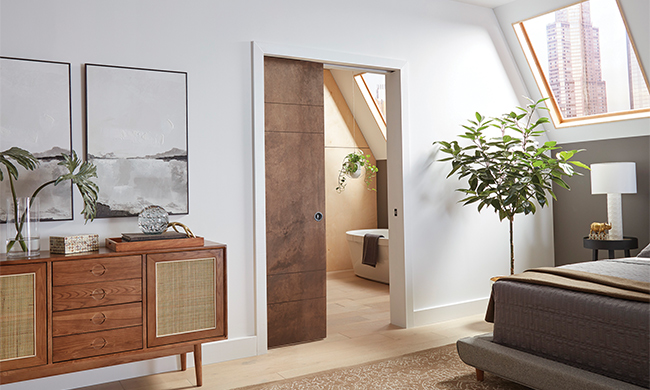
4 Ways to Make Room for Better Living
A bathroom door that bumps into the vanity. A closet interior that’s awkward to reach. A home office that needs a little separation from family activity. Oftentimes, making your home better suited for your needs starts with rethinking how the doors open.
Sliding, folding and pocket doors offer practical ways to improve everyday spaces without adding square footage. Whether you’re remodeling or building a new home, understanding the options can help you choose doors – and the installation hardware behind them – that make rooms more comfortable and convenient.
Consider these four ways to put your doors to work from the experts at Johnson Hardware, who make easy-to-install hardware systems in the U.S.:
Free Up Floor Space with Pocket Doors
In bathrooms, kitchen pantries and laundry rooms, a swinging door can compete with storage, taking up to 14 square feet of floor space and interrupting traffic flow. Pocket doors slide into the wall, freeing the area a hinged door needs to swing open.
Made for single pocket doors in compact rooms or two converging doors for larger openings between adjoining spaces, pocket door hardware with its soft-close feature helps doors glide gently into the open and closed positions, reducing slamming. Discuss pocket doors early in your project so your building professional can plan for the space needed inside the wall.
 Keep Essentials Handy with Bypass and Multi-Pass Doors
A frequently used mudroom, hallway or bedroom closet can look more organized with sliding bypass or multi-pass doors. The panels travel on separate tracks and slide past one another, letting you reach different sections without doors swinging into the room.
Options like Johnson’s bypass and multi-pass hardware systems help keep walkways clear while concealing storage or everyday clutter. Ask your designer or remodeler about panel arrangements and soft-close options that suit the opening based on how you’ll use the space.
Add Flexibility with Wall-Mount Sliding Doors
If you want the space-saving benefits of a sliding door but a pocket door isn’t practical, wall-mount doors travel along a track outside the wall. With easy-to-install hardware systems, making the switch from a swinging door can be a quick, practical room upgrade.
Often called barn doors, they can complement many decorating styles, from traditional painted wood to contemporary glass designs. Wall-mount sliding doors work well in home offices, bedrooms, laundry rooms and pantries, where soft-close and soft-open hardware can help reduce noise. Plan for clear wall space beside the opening so the door has room to slide.
Open Up Storage with Full-Access Bifold Doors
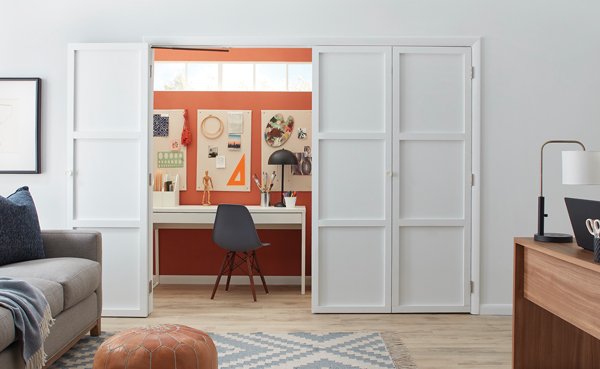
A closet can hold more than clothes. It might become a craft station, compact workspace or convenient place for laundry supplies.
Bifold doors use hinged panels that fold together as they open. Unique 1601 Full-Access Bifold Door Hardware goes a step further, allowing panels to fold flat against adjacent walls for full access across the opening. That makes it easier to reach shelves, organize supplies and use the space inside.
Thoughtful door hardware choices can make everyday routines easier, from reaching pantry shelves to creating a quiet place to work. As you plan your project, ask your designer, architect, remodeler or building contractor how pocket, sliding and folding door hardware systems can help make better use of your space.
For more ideas, visit johnsonhardware.com.
SOURCE:




