

child education
When School’s Out, Community Steps In
Community: The joy of being a kid on summer vacation offers a time to explore with your friends, discover new things about the world and yourself and recharge for a few months before heading back to school in the fall. However, for millions of families, the end of the school year also marks the beginning of a stressful season filled with tough choices, as children can fall behind in the months away from the classroom.

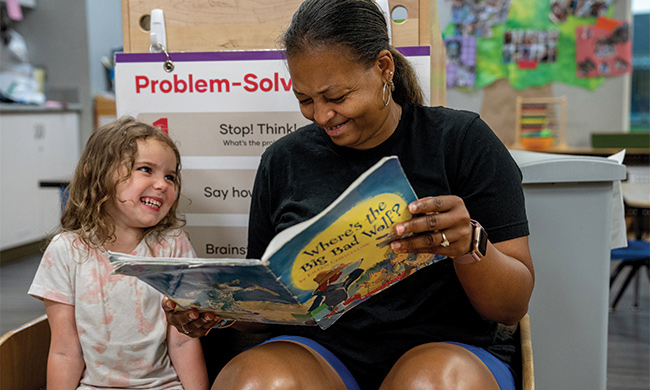
(Feature Impact) The joy of being a kid on summer vacation offers a time to explore with your friends, discover new things about the world and yourself and recharge for a few months before heading back to school in the fall. However, for millions of families, the end of the school year also marks the beginning of a stressful season filled with tough choices, as children can fall behind in the months away from the classroom.
The summer gap begins when the school doors close and many children lose access to the daily routines, educational support and dependable nutrition that help them thrive. For families already juggling tight budgets and demanding schedules, summer can quickly become a season of added pressure and stress.
Summer learning loss – or the decline in academic skills and learning during the school break – can have a lasting impact on academic outcomes. Studies show over the summer, students can forget 20-30% of what they learned during the school year. Without the right support, students often start the new school year playing catchup, which can cause them to fall further behind.
 Summer can also intensify food insecurity. Of the more than 22 million kids who rely on free or reduced-priced school meals, many lose access to these vital programs over the summer. When those meals disappear, families must stretch already limited budgets to cover up to 10 additional meals a week per child. In fact, recent United Way Worldwide data from 211 – the free 24/7 helpline that connects people with local resources – identified food access as one of the most pressing needs facing millions of families nationwide.
These overlapping pressures fall especially hard on millions of working families living paycheck to paycheck, including ALICE (Asset Limited, Income Constrained, Employed) households. They earn above the federal poverty level but still struggle to afford basic expenses like housing, medicine, food and transportation.
Addressing the summer gap requires a community-wide approach and solutions that meet hardworking families where they are. For example, United Way Community Schools are community-based hubs that bring together schools, social services agencies, volunteers and other community partners to provide students and families with essential support like tutoring, food access and health and wellness resources.
Families also need easy, practical, daily tips and local resources to make ends meet and help their kids stay on track.
Learning that Fits Your Day
For busy families, low- or no-cost learning moments that fit into packed schedules can make a real difference. Many communities and nonprofits offer dedicated programs to keep children active and learning during the summer, such as:
- Summer art classes, creative writing workshops and digital literacy tutoring at local libraries
- Free monthly book deliveries and reading challenges through Dolly Parton’s Imagination Library – a United Way partner – or book exchanges at Little Free Libraries in high-traffic areas
- Gardening classes, nature appreciation classes and swim lessons through local parks and recreation departments
- Free weekly youth workshops offered by many public museums, zoos and botanical gardens
- Free virtual museum field trips through institutions like the Smithsonian and NASA Glenn Research Center
- Free online courses in topics ranging from coding to art or language learning
Accessing Your Community’s Food Network
Families shouldn’t have to choose between nutritious food and other essentials. Help is available to ensure kids have the nutrition needed to thrive over the summer. While resources vary by community, examples include:
- Youth-serving organizations serving as open summer meal sites, offering free breakfast and lunch to kids and teens
- City parks departments offering daily meal stations
- School districts offering summer meal programs; food delivery may be an option
- Local places of worship hosting open-door meal programs or distributing weekend grocery bags for families
For those looking to make a difference this summer, consider lending a hand to help children and families. Volunteering is a rewarding way to give back to your community. Whether it’s mentoring, serving meals, reading with students or supporting local programs, even a small time investment can make a lasting impact. After all, when families thrive, communities thrive.
To learn more about childhood summer learning programs, food initiatives and ways to support your community, visit unitedway.org.

SOURCE:
The Bridge is a section of the STM Daily News Blog meant for diversity, offering real news stories about bona fide community efforts to perpetuate a greater good. The purpose of The Bridge is to connect the divides that separate us, fostering understanding and empathy among different groups. By highlighting positive initiatives and inspirational actions, The Bridge aims to create a sense of unity and shared purpose. This section brings to light stories of individuals and organizations working tirelessly to promote inclusivity, equality, and mutual respect. Through these narratives, readers are encouraged to appreciate the richness of diverse perspectives and to participate actively in building stronger, more cohesive communities.
https://stmdailynews.com/the-bridge


Lifestyle
Beyond the Piggy Bank: How to Build Your Child’s Financial Future
Your Child’s Financial Future: When money is tight, saving for the future can feel out of reach. Rent, groceries and bills come first, but building something for your kids doesn’t have to start with your paycheck. For millions of families, there’s already money waiting.

Beyond the Piggy Bank: How to Build Your Child’s Financial Future
(Feature Impact) When money is tight, saving for the future can feel out of reach. Rent, groceries and bills come first, but building something for your kids doesn’t have to start with your paycheck. For millions of families, there’s already money waiting.
Michael and Susan Dell put $250 into the 530A (Trump) Accounts of 25 million children across the United States. Children born between 2016-2024 who live in eligible ZIP codes received the money. Families didn’t have to apply, and they don’t have to pay anything back.
“Every American child now has their own investment account,” said Matt Lira, executive director at Invest America, a nonprofit that helps families understand investing. “It’s in your child’s name, it’s built to grow and it’s theirs from the very start. That’s a real stake in America’s future. Claiming it takes a few minutes, and your child begins life as an owner.”
U.S. children under 18 with valid Social Security numbers already have accounts in their names, and any money in it is invested so it can grow over time. You just need to claim it. Download the official app, available on iOS or Android, or go to the official website then sign in as a parent or guardian to access your child’s account. You can choose to add money if you want, but it’s not required. Claiming the account also lets friends, family, employers and others contribute.
“Parents and grandparents, please claim your child’s account,” said Susan Dell, co-founder of the Michael & Susan Dell Foundation. “These accounts are ready. They’re waiting for you, and they have money in them. Claim your child’s account and start adding money to their account and preparing a wonderful future for them.”
Money Lessons That Don’t Cost a Thing

Claiming the account is the first step. Helping your child understand it is the next. When kids know they own something that can grow, money lessons stop feeling abstract. These everyday habits can help them make the most of it:
- Let them see how you make choices. You probably already compare prices, stretch a grocery budget and decide what can wait. Talk through those choices out loud. When kids hear why you picked the store brand or skipped something this week, they can learn how to tell needs from wants.
- Give them a little to manage. Birthday money, a few dollars for chores or earnings from mowing lawns or babysitting are all chances to practice. Let kids decide how much to spend and how much to save then talk about how it went.
- Explain saving vs. investing. Saving is putting money aside for something you want soon, like a bike. Investing is letting money grow over many years. For example, 530A (Trump) Accounts are a real-life example of investing that kids can check a few times a month to see how money grows.
- Talk about what they dream of.Ask your kids what they want someday, like a car, college, a trade, their own business or a home. Knowing they have money saved or invested can help them dream bigger, because those goals start to feel possible instead of out of reach.
Small Amounts Still Count
If you’re ever able to add something to an investment account, even a few dollars now and then, it has years to grow. Relatives can help, too. A small amount on a birthday or holiday adds up over a childhood. However, if adding money isn’t possible right now, that’s OK.
“In America, small beginnings can become extraordinary things,” Michael Dell said. “When we invest in children’s futures, we invest in America’s future. We are so excited to see what they build.”
Claim your child’s account today through the official app or at TrumpAccounts.gov.
Common Questions About 530A (Trump) Accounts
What is a 530A (Trump) Account?
It’s a free investment account for U.S. children under 18 powered by the U.S. Treasury. It’s in your child’s name. The money in the account is invested in hundreds of America’s biggest companies at once, so it has the chance to grow over time without you having to pick anything. The account also has tax benefits. The money can grow for years without being taxed along the way, which helps it grow faster.
Does my child have one?
U.S. children under 18 with valid Social Security numbers were signed up automatically, and nearly 70 million children already have accounts. You just need to claim your child’s account to track its value over time and help it grow. You just need to claim your child’s account to track its value over time and help it grow.
How do I claim it?
Download the official app on your smartphone or visit the official website. You’ll confirm some information and claim the account. It only takes a few minutes, and it’s free.
Do I have to put money in?
No. Adding money is always possible, but claiming an account allows other people to contribute, even if you don’t.
Can other people add money?
Yes. Parents, grandparents, other family members, friends and even employers can add money. The total limit is $5,000 per child per year. Other government or charity programs may add money in the future, too.
How were children chosen for the $250 from Michael and Susan Dell?
Families did not apply, and children were not picked one by one. The foundation started with the lowest-income ZIP codes, based on U.S. Census data, and kept adding ZIP codes until it reached 25 million children. Learn more about eligibility at investamerica.org/dell.
My ZIP code wasn’t included. Does my child still have an account?
All U.S. children with a Social Security number have an account. The ZIP codes only decided who got the extra $250.
When can my child use the money?
At 18, your child can decide what to do with it. They can keep it growing for retirement or use it for things like school or buying a first home.
Photos courtesy of Shutterstock
SOURCE:
Michael and Susan Dell Foundation

Entertainment
Bring History to Life with Experiences That Feel Real
Bring History to Life: Reading books and watching documentaries can be good ways to learn about history, but there’s something particularly meaningful about immersive experiences that allow you to step inside the stories that shaped the world.
Bring History to Life with Experiences That Feel Real
(Feature Impact) Reading books and watching documentaries can be good ways to learn about history, but there’s something particularly meaningful about immersive experiences that allow you to step inside the stories that shaped the world.
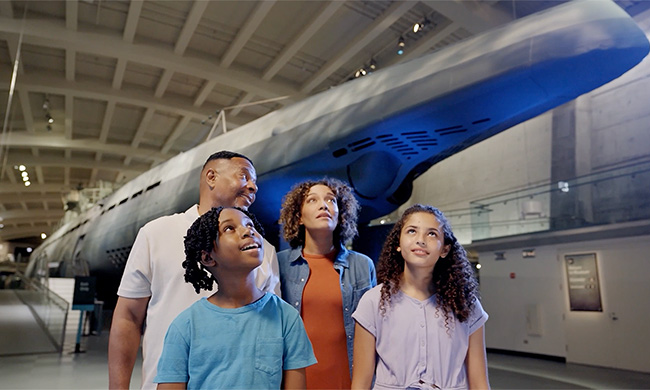
During a visit to the U-505 Submarine exhibit at the Griffin Museum of Science and Industry (Griffin MSI), guests can literally step inside a historic German U-boat captured during World War II. In 1944, the U.S. Navy underwent a top-secret mission to disarm and take over one of the German submarines that wreaked havoc on the high seas, attacking not just military vessels but merchant ships and supply ships as well.
Watch this video to see more:
“The mission was a dangerous one, as U-boat captains were under strict orders to sink their own subs if they were in danger of capture,” said Dr. Voula Saridakis, head curator at Griffin MSI, “but the U.S. Navy managed to take over the vessel and keep it afloat long enough to reach American shores. There, they studied it to gather German military secrets and other intelligence items, like the codebreaking Enigma Machine now on display at Griffin MSI.”
As you tour the submarine, you’ll experience firsthand what life was really like on board. Climb through the hatch, picture yourself bunking for the night in the cramped sleeping quarters, take a turn trying to maneuver the submarine while dodging torpedoes and imagine the bravery of the American soldiers who risked themselves on a perilous mission to capture the vessel and help turn the tide of the war.
There are many important lessons to glean from history, and they’re often easier to understand when presented in a tangible way. Planning visits to museum exhibits and historical sites allows you to stand where others have stood, see what they’ve seen and connect your human experience with theirs. Parents, children, educators, students and people of all ages can find something to inspire them in these stories.
Learn more about bringing history and science to life at GriffinMSI.org.
SOURCE:
Griffin Museum of Science and Industry
child education
Preparing the Next Generation for Economic Mobility in an AI-Driven World
AI-Driven World: Within only a few years, AI has already changed many things about the world and workforce. Entry-level jobs, particularly the ones relying on routine and predictable tasks, are increasingly disappearing to automation, leaving young people wondering how to launch their careers and futures. To learn what preparing students for the future may look like in practice, consider these tips.

Preparing the Next Generation for Economic Mobility in an AI-Driven World
(Feature Impact) Within only a few years, AI has already changed many things about the world and workforce. Entry-level jobs, particularly the ones relying on routine and predictable tasks, are increasingly disappearing to automation, leaving young people wondering how to launch their careers and futures.
Access to economic mobility – the ability to change your income or wealth – doesn’t just rely on technical knowledge and skills but on leaning into humanity. Being able to think outside the box, collaborate, solve problems and grow as a person can open doors in life and at work. AI may be changing the world, but in change lies opportunity. The students who can adapt quickly are more likely to prosper as the economy continues to reshape itself.
To learn what preparing students for the future may look like in practice, consider these tips from the economic and career experts at Junior Achievement.
Build the Kinds of Skills AI Can’t Replace
Young people facing AI as their competition can get a boost from cultivating the uniquely human skills technology can’t replicate. Educators, parents and other adults in kids’ lives can help them develop increasingly important soft skills like critical thinking, communication, teamwork and leadership, which can translate to many different careers. Hands-on skills can fit into this category as well, like the kinds required in entrepreneurship and the trades.
Provide Real-World Experiences
When young people have the chance to test themselves in a real-world setting, it lets them hone their interests, skills and confidence before the time comes to make major decisions about their futures. As early as elementary school, experiential learning activities like Junior Achievement’s Biztown allow students to operate businesses, work with others, manage finances and solve problems, combining in-class learning with hands-on simulations. As kids grow up, other options can include job shadowing, internships and entrepreneurship experiments – all ways to build durable social and professional skills that can help them succeed.
Teach Foundational Financial Literacy
Earning money is only part of the equation for a healthy financial future; equally important is understanding how to manage it. As kids prepare to earn their first sources of income, make sure they’re also equipped with practical financial skills like budgeting, saving, investing, using credit wisely and planning for future goals. Giving them these tools early helps them make informed decisions about their long-term economic advancement.
Connect Students with Employers and Opportunities
Sometimes, all a student needs to succeed is someone who’s willing to give them a chance. Young people in a position to meet business professionals in (and beyond) their communities may be able to turn those connections into future opportunities. This can happen naturally as they seek real-world experiences through apprenticeships, mentorship programs, career fairs and more.
Programs like Junior Achievement’s 3DE puts students in authentic business challenges, connecting them with educators, business partners and volunteers as they work in teams to complete case experiences. This not only gives young people the opportunity to meet potential employers or mentors, it also lets them demonstrate critical thinking, social skills and real-world competence.
Visit jausa.ja.org for more ideas to help young people gain the confidence and connections needed to achieve economic mobility in a changing world.
Photo courtesy of Shutterstock
SOURCE:




