

Health
First-line immune defences against COVID-19 are short-lived and may explain reinfection
A new study finds that antibodies produced in the nose decline nine months after COVID-19 infection, while antibodies found in the blood last at least a year.

Newswise — A new study finds that antibodies produced in the nose decline nine months after COVID-19 infection, while antibodies found in the blood last at least a year.
Antibodies in the nasal fluid (known as immunoglobulin A, or IgA) provide first-line defence against COVID-19 by blocking SARS-CoV-2 virus when it first enters the respiratory tract. These antibodies are very effective at preventing the virus from entering cells and causing infection.
However, the investigators found that the nasal antibodies were only present in those recently infected and were particularly short-lived against the Omicron variant, compared to earlier variants.
These new findings – which are published in eBioMedicine – may explain why people who have recovered from COVID are at risk of reinfection, and especially with Omicron and its subvariants.
The study also found that vaccination is very effective in creating and boosting antibodies in the blood, which prevent severe disease, but had very little effect on nasal IgA levels.
First author of the study, Dr Felicity Liew, from the National Heart and Lung Institute at Imperial College London, said: “Before our study, it was unclear how long these important nasal antibodies lasted. Our study found durable immune responses after infection and vaccination, but these key nasal antibodies were shorter-lived than those in the blood. While blood antibodies help to protect against disease, nasal antibodies can prevent infection altogether. This might be an important factor behind repeat infections with the SARS-CoV-2 virus and its new variants.”
The researchers note that studies that directly study these nasal antibodies and reinfections are needed to confirm their results.
The research was led by teams from Imperial College London and the University of Liverpool. It studied almost 450 people who had been hospitalised with COVID-19 between February 2020 and March 2021, before the emergence of Omicron variant and prior to vaccine rollout.
The study also found that whilst current vaccines are effective at boosting blood antibody which can prevent serious illness and death, they do not significantly boost nasal IgA antibodies.
The researchers call for the next generation of vaccines to include nasal spray or inhaled vaccines that target these antibodies more effectively. They say that vaccines capable of boosting these antibodies could potentially reduce infections more effectively and prevent transmission.
Co-senior author of the study, Professor Peter Openshaw, from the National Heart and Lung Institute at Imperial College London, said: “Our results highlight a need for nasal spray vaccines that can boost these local antibodies in the nose and lungs. Such vaccines might be able to prevent people from getting infected with the SARS-CoV-2 virus and reduce transmission of the virus between people. This could help us to better control the pandemic and stop new variants emerging.”
He continues: “Our current vaccines are designed to reduce severe disease and death and are dramatically effective in this aim. It’s now essential to also develop nasal spray vaccines that can provide better protection against infection. It’s brilliant that current vaccines mean fewer people are becoming seriously ill, but it would be even better if we could prevent them from getting infected and transmitting the virus.”
The study analysed antibodies of the participants to understand how long nasal antibodies lasted, compared with antibodies found in the blood. They also studied the effect of subsequent COVID-19 vaccines on antibodies in the nose and blood.
Samples were taken when people were hospitalised and at six months and one year after. Since most people were vaccinated during the study, many samples were also taken before and after vaccination.
They measured how well the antibodies neutralised the original SARS-CoV-2 virus, and the Delta and Omicron variants to see how long the antibodies were effective for after infection or vaccination.
The study included 446 people admitted to hospital in the early phase of the pandemic, including 141 who provided samples at the start of the study and six and 12 months later. For participants who only had one sample taken during the 12-month period of study, the researchers used modelling to estimate how the average antibody responses changed over time.
Of those who confirmed whether they had been vaccinated (323 people), 95% (307 people) received their first vaccination during the study follow-up period. This led to increases in all nasal and blood antibodies, but the change in the first-line defence nasal antibodies (IgA) was small and temporary. The researchers found that the participants’ sex, disease severity and age did not impact how long their nasal immunity lasted, but caution that their study was only in people with severe disease that required hospitalisation.
They also found that blood antibody from participants continued to bind the original SARS-CoV-2 virus, and the Delta and Omicron variants a year after infection, but found that booster vaccines are needed to maintain this immunity.
Co-senior author of the study, Dr Lance Turtle, Senior Clinical Lecturer at the University of Liverpool and Consultant in Infectious Diseases at Liverpool University Hospitals, said: “Our study suggests that this first-line defence immunity is separate from other immune responses, and although it is increased by vaccination and infection, it only lasts for about nine months. Nonetheless, booster vaccines can increase it slightly and otherwise have a significant impact on other areas of immunity, protecting against severe disease and death very effectively, so remain very important.”
The researchers note that their study did not screen participants for reinfection, but that this was unlikely to have occurred since the study took place during periods of national restrictions and lockdowns when COVID-19 incidence was low and people were not mixing. In a preliminary analysis, they found only two cases of reinfection in their study, suggesting that the overall trends seen are accurate.
The study was supported by the ISARIC4C, UKCIC and PHOSP-COVID consortia. It was jointly funded by the National Institute for Health and Care Research, UK Research and Innovation and the Medical Research Council.
–
This press release uses a labelling system developed by the Academy of Medical Sciences to improve the communication of evidence. For more information, please see: http://www.sciencemediacentre.org/wp-content/uploads/2018/01/AMS-press-release-labelling-system-GUIDANCE.pdf
About Imperial College London
Imperial College London is a global top ten university with a world-class reputation. The College’s 22,000 students and 8,000 staff are working to solve the biggest challenges in science, medicine, engineering and business.
The Research Excellence Framework (REF) 2021 found that it has a greater proportion of world-leading research than any other UK university, it was named University of the Year 2022 according to The Times and Sunday Times Good University Guide, University of the Year for Student Experience 2022 by the Good University Guide, and awarded a Queen’s Anniversary Prize for its COVID-19 response. https://www.imperial.ac.uk/
The National Institute for Health and Care Research (NIHR)
The mission of the National Institute for Health and Care Research (NIHR) is to improve the health and wealth of the nation through research. We do this by:
– Funding high quality, timely research that benefits the NHS, public health and social care;
– Investing in world-class expertise, facilities and a skilled delivery workforce to translate discoveries into improved treatments and services;
– Partnering with patients, service users, carers and communities, improving the relevance, quality and impact of our research;
– Attracting, training and supporting the best researchers to tackle complex health and social care challenges;
– Collaborating with other public funders, charities and industry to help shape a cohesive and globally competitive research system;
– Funding applied global health research and training to meet the needs of the poorest people in low and middle income countries.
NIHR is funded by the Department of Health and Social Care. Its work in low and middle income countries is principally funded through UK Aid from the UK government.
LinkL:
Source: Imperial College London


Health
3 Steps to Support Mental Health for Rural Youth
Mental Health for Rural Youth Young people face a growing number of pressures, including academic expectations, social responsibilities, complex family situations and uncertainty about their own futures. Mental health support is important for all – but in many rural areas, those pressures are even greater. If the rural mental health crisis affects you or a loved one, consider these ways to help.

3 Steps to Support Mental Health for Rural Youth
(Feature Impact) Young people face a growing number of pressures, including academic expectations, social responsibilities, complex family situations and uncertainty about their own futures. Mental health support is important for all – but in many rural areas, those pressures are even greater.
According to the Centers for Disease Control and Prevention, the suicide rate for rural youth ages 15-19 is 74% higher than their urban counterparts. Barriers like limited insurance coverage, unreliable internet for telehealth, scarce providers, long drive times and lack of public transportation make it harder to get mental healthcare when it’s needed. Plus, asking for help can feel like opening oneself up to judgment and stigmatization.
That’s why Rural Minds, the only nonprofit focused on mental health for rural communities, created the Rural Youth Mental Wellness pilot program supported by Boehringer Ingelheim. It was developed by an advisory committee made up of rural youth to provide their peers with practical, free, accessible mental health resources. Incorporating feedback on the pilot, the updated program sponsored by the Sompo Foundation is now launching its national rollout.
“A young person’s ZIP code should never determine whether they can access meaningful mental health support where and when they need it,” said Jessica L. Schleider, Ph.D., director, Lab for Scalable Mental Health, Northwestern University. “Our lab is thrilled to partner with Rural Minds as they champion evidence-based, anonymous, freely available support tools designed to overcome barriers to help-seeking faced by rural youth across the country.”
If the rural mental health crisis affects you or a loved one, consider these ways to help.
Break the Stigma Surrounding Mental Health
In communities where self-reliance is valued, asking for help can sometimes be viewed as a sign of weakness. Young people who feel unheard and unsupported often struggle with being vulnerable, so they continue carrying their increasingly heavy burdens alone.
Parents, educators, healthcare providers, community leaders and peers can work to change that culture by normalizing mental health conversations. This includes helping teenagers feel seen and accepted by educating them on mental health issues and coping strategies, listening to their experiences without judgment, sharing your own stories and reminding them it’s courageous to seek support.
 Consider Single-Session Interventions
The first step is always the hardest when it comes to seeking mental health support, and not every struggling young person is ready or able to see a therapist. With access to free, confidential, self-guided materials to begin building mental wellness skills, the first step may be less scary.
Single-Session Interventions (SSIs) are brief, structured online courses designed to teach youth practical skills for handling stress, low mood, self-image and more. The Rural Youth Mental Wellness Program offers SSIs in partnership with Project YES (Youth Empowerment and Support), a free digital resource developed with Northwestern University’s Lab for Scalable Mental Health at the Feinberg School of Medicine.
Anonymous access to SSIs through the partnership provides strategies for:
- Improving mood
- Rethinking body image
- Reframing negative thoughts
- Knowing your power to change
- Taking steps toward goals
- Protecting LGBTQ+ pride
- Handling self-harm urges
- Staying safe amid dark thoughts
Each SSI typically takes 5-10 minutes. Although SSIs are not a replacement for therapy, they provide a research-backed source of support for young people experiencing bouts of stress or low-to-moderate distress.
Know When to Seek Professional Help
Self-guided resources and supportive conversations are a valuable starting point, but sometimes young people need qualified professional help. Look for symptoms like worsening mood or behavior, substance use, self-harm or difficulty managing everyday tasks, and take teens seriously when they express dark feelings.
Doctors and counselors can provide personalized support for youth in crisis, and the 988 Suicide and Crisis Lifeline offers free, confidential 24/7 support for mental health by dialing 9-8-8.
“I grew up in a small town where mental health was almost taboo,” said committee member Asheton Medlin. “Being part of the committee that built this program let me help make sure rural youth today have the support I didn’t. I’m excited to help bring these resources to them because this generation deserves the chance to grow up and change the world.”
Find more information at RuralMinds.org.
Photos courtesy of Shutterstock

SOURCE:
📰 Enjoying STM Daily News? Join the conversation!
💬 Leave a comment, share your thoughts, and subscribe to our newsletter for the latest stories, updates, and “News You Can Use This Moment!” delivered to your inbox.
Stay connected with STM Daily News!
recipes
Build Heart-Healthy Habits That Last with 4 Simple, Everyday Steps
Build Heart Healthy Habits: Small, consistent lifestyle changes and healthy habits, including staying active and making smart food choices, can help support cardiovascular health. This Warm Lentil, California Grape and Arugula Salad includes a quick homemade rosemary lemon vinaigrette to pack in the flavor and complement black lentils and sweet grapes.

(Feature Impact) Your heart works around the clock, making heart health one of the most important parts of your overall well-being. The good news is improving heart health doesn’t require an overnight transformation. Small, consistent lifestyle changes and healthy habits, including staying active and making smart food choices, can help support cardiovascular health.
Sit Less Throughout the Day
If you work in an office setting, spending long periods sitting may be the norm. Even if you exercise regularly, those long-seated hours may affect heart health. Look for opportunities to move more by taking short walking breaks, standing while on the phone, stretching between meetings or taking the stairs instead of an elevator.
Prioritize Foods That Support Heart Health
A heart-healthy eating pattern can begin with foods that are low in saturated fat and sodium, and provide beneficial vitamins and plant compounds, like fresh, juicy grapes. They contain 7% of the daily recommended intake of potassium per serving, are a good source of vitamin K and deliver beneficial antioxidants and other polyphenols, including flavonoids, that can help relax blood vessels and promote healthy circulation.
Some studies also suggest grapes have a beneficial impact on blood lipids and more. In fact, one study found women who consumed 1 1/4 cups of grapes every day benefited from reduced blood triglyceride levels, LDL cholesterol levels, inflammatory proteins and other markers of heart disease.
Whether enjoyed as a snack, added to salads or blended into smoothies, Grapes from California make it easy to add more heart-smart nutrition throughout the day. For example, this Warm Lentil, California Grape and Arugula Salad includes a quick homemade rosemary lemon vinaigrette to pack in the flavor and complement black lentils and sweet grapes.
Cut Back on Added Sodium
Adding heart-healthy foods like grapes to your menu is a good place to start, but caring for your cardiovascular system is also about what you’re not eating. Many packaged and restaurant foods contain more sodium than some people realize, making it important to read nutrition labels, prepare more meals at home and flavor foods with herbs, spices, citrus or vinegar instead of extra salt to support healthy blood pressure.
Make Good Sleep a Priority
Quality sleep affects many aspects of health, including cardiovascular. Adults should aim for 7-9 hours of sleep each night in a cool, comfortable environment. To get a good night’s rest, try limiting screen time before bed, blocking out light and avoiding alcohol or caffeine in the evenings.
To learn more about the heart-health benefits of grapes and find additional health-supporting recipes, visit GrapesFromCalifornia.com.
Warm Lentil, California Grape and Arugula Salad
Servings: 6
- 1 pouch (8 ounces) precooked black lentils
- 1 1/2 cups Grapes from California, halved
- 1 cup radicchio, torn
- 1 cup arugula
- chopped toasted walnuts
Rosemary Lemon Vinaigrette:
- 1/4 cup extra-virgin olive oil
- 3 tablespoons lemon juice
- 2 tablespoons fresh rosemary leaves
- 2 teaspoons honey
- 1/2 teaspoon sea salt
- 1 clove garlic
- freshly ground pepper, to taste
- To make rosemary lemon vinaigrette: In small blender or food processor, process olive oil, lemon juice, rosemary, honey, salt, garlic and pepper, to taste, until rosemary is finely chopped; set aside until ready to use. May be made 2 days in advance and refrigerated in covered container until ready to serve. Bring to room temperature before using.
- In large glass bowl, microwave lentils 45 seconds, or until warm. Add grapes, radicchio, arugula and dressing to bowl and toss lightly to coat. Sprinkle with walnuts.
Nutritional information per serving: 160 calories; 4 g protein; 18 g carbohydrates; 9 g fat (51% calories from fat); 1.5 g saturated fat (8% calories from saturated fat); 0 mg cholesterol; 200 mg sodium; 4 g fiber.

SOURCE:
California Table Grape Commission
🍽️ Love discovering great food and drink? Join the conversation! Share your thoughts in the comments and subscribe to the STM Daily News newsletter for the latest recipes, restaurant news, food trends, and culinary stories delivered straight to your inbox.
Health
Gen Z is least likely to believe cancer can be prevented. Many don’t know basic screenings exist.

(Sheeka Sanahori) Gen Z adults are at the stage when lifelong habits start to take shape. They’re launching careers, reflecting on their values, and building relationships and routines. They’re also navigating messages about beauty standards that sometimes oppose the needs of their long-term health. Case in point: the “tanmaxxing” trend found on social media.
“Ain’t no way I’m letting my job stop me from soaking in the 8 UV,” one Instagram user wrote while tanning from a car with the convertible roof down. The video is one of hundreds by “tanfluencers” documenting the ways they take tanning to the extreme, including skipping sunscreen or tanning in the middle of the day, when the sun’s ultraviolet (UV) rays are at their most harmful.
This risky trend is one example of a growing generational gap in beliefs about cancer prevention. According to the 2026 Early Detection Survey from the Prevent Cancer Foundation, Gen Z adults (ages 21-29) are less likely than their parents and grandparents to fully consider that cancer risk can be reduced through prevention and early detection.
Gen Z faces a cancer prevention awareness gap
Across every generation, most adults believe cancer risk can be reduced, but Gen Z is the least convinced. While 73% of Baby Boomers agree, only 64% of Gen Z adults do.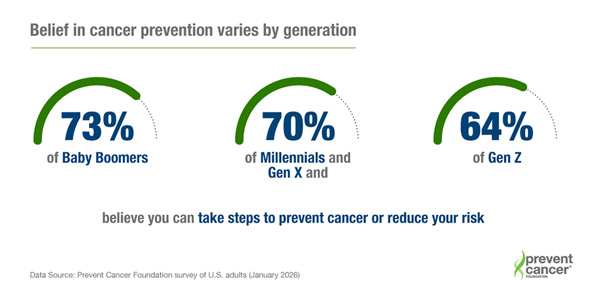
That same pattern continues when focusing specifically on skin cancer. Nearly half of Gen Z respondents believe sunscreen and sun-protective clothing can help reduce their skin cancer risk, compared to 53% of Millennials and 64% of Gen X.
Only 37% of Gen Z respondents have had a routine medical appointment or cancer screening in the last year, the lowest of any generation. Although certain cancer screenings, including breast and colorectal cancer, begin in middle age, some are also recommended for young adults. Cervical cancer is highly preventable, with screening beginning for people with a cervix and of average risk at the age of 21. Forty-six percent of Gen Z adults who are eligible said they were not up to date.
Systemic barriers prevent healthier lifestyles
For some Gen Z adults, the health care system itself is part of the problem. Nearly a third report experiencing discrimination or bias from a health care provider, and 44% believe the system prioritizes profit over patient care. Those experiences could be enough to make someone skip a future health appointment.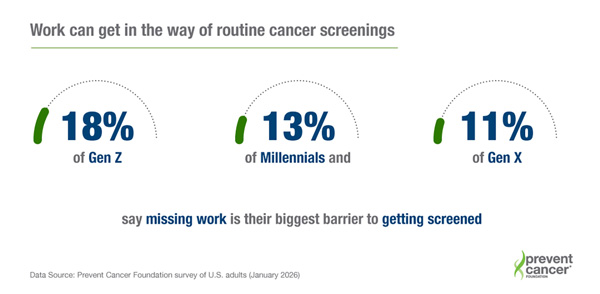
The most common barrier for Gen Z isn’t what you might expect. Three in 5 respondents say they simply lack motivation, a higher rate than Millennials or Gen X. Among the three youngest surveyed generations, Gen Z is the only group that doesn’t rank cost as its primary obstacle. The bigger challenge is making preventive care feel urgent and relevant now.
Better communication and education could help more get screened
Data suggests that practical guidance and clearer communication could make a difference. More than half of Gen Z adults say having a provider to help them navigate the system would increase trust in health care and make it easier for them to get their recommended cancer screenings. Affordable, predictable costs would help 52% of respondents.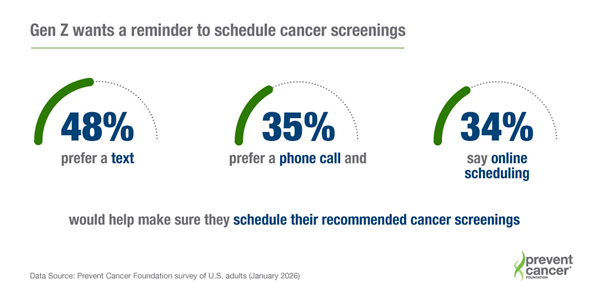
Sixty-five percent of Gen Z adults say they’re motivated to schedule cancer screenings because they want to live a long, healthy life. Colorectal cancer is now the leading cause of cancer death in people under 50, and skin cancer is one of the most common cancers in people younger than 30. The motivation is there. Reaching them with the right information at the right time may be what it takes.
Methodology
The Prevent Cancer Foundation commissioned Atomik Research to conduct the Foundation’s 4th annual Pan-Cancer Early Detection Survey of U.S. adults ages 21 or older. The margin of error of the overall sample is +/- 1 percentage point with a confidence level of 95%. Fieldwork took place between Jan. 10 and Jan. 30 of 2026. The cancer screenings studied in this survey were for breast cancer, cervical cancer, colorectal cancer, lung cancer, oral cancer, prostate cancer, skin cancer and testicular cancer.
Atomik Research is an independent market research agency.
Photo courtesy of Shutterstock

SOURCE:
💪 Your health journey starts here! Explore the latest health news, fitness tips, wellness trends, and healthy living advice. Share your thoughts in the comments and subscribe to the STM Daily News newsletter to stay informed and inspired every day.





