

Lifestyle
A Legacy of Service: How family stories shape service
Legacy of Service: Discover how military service creates lasting family legacies across generations. Explore powerful veteran stories from the Veterans History Project, including Pearl Harbor survivors and Code Talkers, and learn how to preserve your family’s service history.

Last Updated on February 6, 2026 by Daily News Staff

A Legacy of Service: How family stories shape service
(Family Features) Major historical events like war or military service make a lasting impact on family identity, values and traditions, often reverberating across multiple generations.
Veterans frequently speak about their military units as if they were family, given the unbreakable bonds that develop between comrades. However, for some veterans, “brothers in arms” is more than a figurative turn of phrase.
Throughout the 20th century, entire families felt the firsthand effects of war, with multiple generations serving. Brothers enlisted together. A father’s military legacy inspired his children to join up. Sweethearts met and married while in uniform. These stories not only illustrate the experiences of individual veterans but also provide an intimate glimpse into family legacies of military service.
Consider the Veterans History Project, a program overseen by the Library of Congress, which collects and preserves the firsthand remembrances of U.S. military veterans and makes them accessible for future generations to better understand veterans’ service and sacrifice. These personal stories encompass original correspondence, memoirs, diaries, photographs and oral history interviews, all offering deeper insight into the long-term impact of military service.
Veterans’ narratives are collected by volunteers, and anyone who served from World War I to today can submit their personal story, regardless of whether or not they saw combat. The collections frequently shed light on the importance of family in military experiences. Whether expressed through heartfelt letters home, enduring family legacies of service or the experience of serving alongside loved ones, these stories reflect profound connections.
 Family Identity
During the Cold War, Jennifer McNeill rose from Army Dental Assistant to Command Sergeant Major at the Army Eisenhower Medical Center in Fort Gordon, Georgia. Her collection includes a poignant photograph of her mother sharing images of her four military daughters in uniform, underscoring how family identity and military service are closely connected.
Values
Military service makes a lasting impression on veterans, shaping the experiences and the values that guide them through life. Ray Chavez is one such example. He was the oldest known Pearl Harbor survivor before his passing in 2018. For most of his life, he remained silent about his experiences, but in 1991, his daughter, Kathleen Chavez, who served in the U.S. Navy during Desert Storm, convinced him to return to Pearl Harbor. That trip marked the first time he spoke openly about his service. Kathleen shared their family’s deep military legacy in her oral history for the Veterans History Project.
Traditions Across Generations
Serving in the military is a deeply personal journey, but for many veterans, it’s an experience that transcends generations. Bill Toledo enlisted in the Marine Corps in October 1942 at the age of 18. Along with his uncle, Frank Toledo, and cousin, Preston Toledo, he served as a Code Talker transmitting military messages through secret codes. In his oral history, Bill vividly recalled both the challenges of combat during the invasion of Iwo Jima in February 1945, and the treasured moments spent with his uncle.
These and many other family stories of military service and remembrance are available to the public at loc.gov/vets.
Photo courtesy of Shutterstock (men looking at scrapbook)
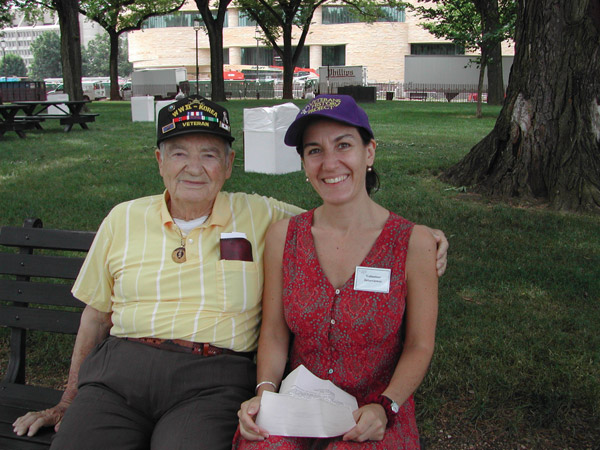
Photo courtesy of the Library of Congress (man and woman on park bench)
SOURCE:
Library of Congress


Food and Beverage
Jack-o’-Lantern Stuffed Peppers Prove Fun Isn’t Just for Pumpkins
These Jack-o’-Lantern Stuffed Peppers give you a Halloween-themed, kid-approved way to put vegetables on the dinner table.
Recipes:
Jack-o’-Lantern Stuffed Peppers

Jack-o’-Lantern Stuffed Peppers Prove Fun Isn’t Just for Pumpkins
(Feature Impact) Jack-o’-lantern carving is a cherished fall tradition – but pumpkins aren’t the only vegetables you can decorate with fun, spooky or scary faces. These Jack-o’-Lantern Stuffed Peppers give you a Halloween-themed, kid-approved way to put vegetables on the dinner table.
Filled with savory ground turkey, brown rice, melty cheese and warm, savory spices, these peppers taste as autumnal as they look. It’s simple to customize the filling to your family’s tastes, and you can even make the meal interactive by inviting kids to choose their own pepper colors and carve their own expressions.
Find more Halloween and seasonal recipes at Culinary.net.
Jack-o’-Lantern Stuffed Peppers
Recipe adapted from AllRecipes
Prep time: 15 minutes
Cook time: 45 minutes
Servings: 4
- 1 teaspoon olive oil
- 1 pound ground turkey
- 3 cloves garlic, minced
- 1/2 medium onion, diced
- 1 teaspoon garlic powder
- 1 teaspoon cumin
- 4 large orange bell peppers
- 1 cup cooked brown rice
- 1 cup grated sharp cheddar cheese
- 2 teaspoons kosher salt
- 1/2 teaspoon ground black pepper
- cayenne pepper, to taste
- cups seasoned tomato sauce, warmed
- Preheat oven to 400 F and coat 9-by-13-inch baking dish with olive oil.
- In skillet, brown ground turkey with minced garlic, onion, garlic powder and cumin until meat is cooked, 4-5 minutes.
- With small knife, cut eyes, nose and mouth into flattest side of each pepper to resemble jack-o’-lantern. Cut around seed pods and remove pepper tops, trimming and discarding any seeds from under stems then setting tops aside. Trim white membranes from inside each pepper and shake out seeds. Place peppers in prepared baking dish.
- In bowl, combine turkey mixture with cooked rice, cheddar cheese, salt, black pepper and cayenne pepper, to taste.
- Divide and stuff mixture into peppers; cover with reserved pepper tops.
- Wrap baking dish loosely with aluminum foil and bake until peppers are tender, about 45 minutes.
- Spoon about 3 tablespoons warm tomato sauce onto each plate; place stuffed peppers on top. Serve remaining sauce on side.
Photo courtesy of Shutterstock
SOURCE:
Lifestyle
How to Manage Symptoms of Heart Failure
Symptoms of Heart Failure: Managing heart failure is a significant expense to the U.S. healthcare system, costing the nation approximately $40 billion in 2020 and expected to increase to approximately $142 billion a year by 2050. If you (or a loved one) are living with the condition, consider these tips to help manage it.

How to Manage Symptoms of Heart Failure
(Feature Impact) Americans are facing a growing health challenge, with 1 in 4 adults at risk of heart failure, according to the Heart Failure Society of America. Additionally, approximately 6.7 million U.S. adults who are 20 years old or older are currently living with heart failure, and that number is projected to reach 8.7 million by 2030.
Managing heart failure is a significant expense to the U.S. healthcare system, costing the nation approximately $40 billion in 2020 and expected to increase to approximately $142 billion a year by 2050.
If you (or a loved one) are living with the condition, consider these tips to help manage it.
Adhere to the Treatment and Follow-Up Plan
Ongoing outpatient care is important when managing heart failure. Understand the treatment plan provided by your healthcare team, make diet and lifestyle changes, take medications as directed and keep recommended follow-up appointments.
Pay attention to changes in symptoms and communicate with your healthcare provider if treatment does not seem to be working as expected. If their conditions are left unmanaged, patients can experience a range of heart-failure-related symptoms such as shortness of breath, fatigue, buildup of fluid and more.
Understand Challenges with Diuretic Treatment
Diuretics help the body remove excess fluid and are commonly used to treat swelling, or edema, associated with heart failure. Your provider may try different diuretics, sometimes referred to as “water pills,” to manage your heart failure symptoms. However, intravenous (IV) diuretic therapy may be required for some patients if symptoms continue.
Ask About Treatment Options Before IV Care Is Needed
For some adults, a healthcare provider may consider recommending an at-home, non-oral diuretic option prior to escalating to IV therapy.
For example, ENBUMYST™ (bumetanide nasal spray) is a prescription diuretic used in adults to treat edema associated with congestive heart failure. It’s administered as a nasal spray for short-term use to manage excess fluid with the goal of transitioning to oral diuretic therapy when appropriate.
Talk with your healthcare provider to learn more and visit enbumyst.com. Read the full Prescribing Information and Patient Information.
Photo courtesy of Shutterstock
Important Safety Information
What is ENBUMYST?
ENBUMYST is a prescription medicine used in adults to treat swelling caused by excess fluid in the body (edema) from congestive heart failure, liver disease, and kidney disease.
What is the most important information I should know about ENBUMYST?
- ENBUMYST is a diuretic that helps your body remove fluid. Losing too much fluid can cause dehydration, low blood volume, and increase the risk of blood clots. Blood abnormalities may include decreased salts (electrolytes), and increased nitrogen, glucose and uric acid. The risk of these abnormalities is higher in elderly people, those using higher doses, or those who do not get enough electrolytes by mouth.
- You should not use ENBUMYST if you have severe electrolyte loss. Tell your healthcare provider if you experience unusual thirst; dizziness or lightheadedness; weakness or tiredness; fast heart rate; dry mouth or tongue; sudden pain; redness or swelling in your joints; pain, swelling, redness, or warmth in your leg; shortness of breath or fast breathing; high blood sugar; dark urine; pale, tight, cool or clammy skin; muscle cramps; confusion.
Do not use ENBUMYST if youhave low or no urine production or are allergic to bumetanide or to any of the ingredients in ENBUMYST.
Before using ENBUMYST, tell your healthcare provider if you have low electrolytes, are on a low-salt diet, have diarrhea, diabetes, nasal problems such as a runny or stuffy nose or polyps, a history of nasal injury or surgery, are or plan to become pregnant, are or plan to breastfeed.
Tell your healthcare provider about all the medicines you take, including prescriptions, over-the-counter medicines, vitamins, and herbal supplements.
ENBUMYST may cause serious side effects, such as worsening kidney function and ringing in the ears or hearing loss.
The most common side effects of ENBUMYST include dehydration, headache, muscle cramps, dizziness, low blood pressure, nausea, and abnormal brain functioning with certain liver problems.
These are not all the possible side effects of ENBUMYST. Talk to your healthcare provider for more information.
Call your healthcare provider for medical advice about side effects. You may report side effects to FDA at 1-800-FDA-1088.
US-ENBU-2600110

SOURCE:
Esperion
financial wellness
Investing in Education: 5 Ways to Prepare Students for the Jobs of Tomorrow
Jobs of Tomorrow: A diploma is still an important milestone, but what matters more than the piece of paper is whether graduates have the knowledge, skills and confidence to take meaningful next steps in pursuing further education or building careers. Students, families, educators, employers and policymakers all have a role to play in cultivating these opportunities.

Investing in Education: 5 Ways to Prepare Students for the Jobs of Tomorrow
(Feature Impact) The landscape of modern work is changing rapidly, leaving many uncertain about whether they’re adequately equipped to face the future. Even though America invests roughly $1 trillion in education every year, it’s difficult to know whether that investment is truly preparing young people for what comes next.
“Our education system isn’t evolving quickly enough to prepare our students for the jobs of tomorrow,” said Amit Sevak, CEO of ETS, a global education and talent solutions organization working with more than 30 million students a year to measure learning success and power human progress at every stage of life. “Students only get one chance at an education, and we have a responsibility to understand what’s working, what’s not and where additional support is needed.”
A diploma is still an important milestone, but what matters more than the piece of paper is whether graduates have the knowledge, skills and confidence to take meaningful next steps in pursuing further education or building careers. Students, families, educators, employers and policymakers all have a role to play in cultivating these opportunities.
Start the Conversation Early
Success isn’t a single path anymore, so young people may benefit from thinking outside the traditional pipeline of high school to college to a good job to retirement. By prompting early conversations, parents can help their children begin sorting through their options well in advance. Encourage dinner table talks about favorite school subjects, what kind of work seems interesting and alternative pathways to build careers. The goal isn’t necessarily to choose a life track immediately – just to start exploring ideas before the time arrives to lock in a decision.
Learn to Work with AI
In the age of AI, there’s a balance to be found between fully embracing or avoiding it. Parents and educators can encourage thoughtful, responsible use of the AI tools reshaping modern workplaces – without sanctioning them as a way to get out of doing homework. Students should think critically about both the uses and limitations of AI, learning how these systems work but still recognizing when human judgment matters.
Get Real-World Experience Before Graduation
Textbooks and classrooms can teach a lot, but some of the most valuable lessons come from the real world. Summer jobs, internships, volunteering, co-op programs, job shadowing or small-scale forays into entrepreneurship can help kids discover where their talents and passions fit. It’s also a chance to develop the soft skills that make great employees, like being punctual, working well with others and adapting to new situations.
Build Human Skills
There are certain abilities technology just can’t replace, making them vital pieces of future-proof training. Strong communication, teamwork mindsets, critical thinking skills, civic reasoning and empathy translate well to many careers. Rather than focusing strictly on academics, teachers can shift lesson plans to encourage growth in these areas. Specialized hands-on talents and trades are also more insulated from technological disruptions.
Measure Progress Beyond Grades
Grades and test scores don’t tell the whole story about career readiness, yet they’re often treated as the only metric that matters in educational success. Policymakers have the opportunity to change how schools measure student progress, including by trading the one-size-fits-all rubrics for more personalized assessments that demonstrate proficiency in more comprehensive ways. Education is on the ballot this election season, so ask your local and state elected leaders about whether today’s graduates are ready to face the future.
For information about a system that gives students, educators and employers clear evidence that learning is leading to opportunity, visit ETS.org.
Photos courtesy of Shutterstock
SOURCE:
ETS




