Connect with us

Lifestyle

Engineering students explore how to ethically design and locate nuclear facilities in this college course

Published

on

Last Updated on June 19, 2025 by Daily News Staff

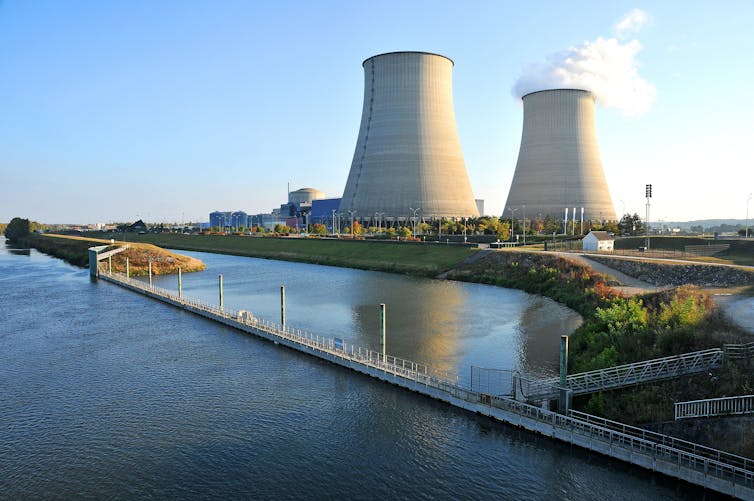
nuclear plant
While nuclear power can reap enormous benefits, it also comes with some risks.
Michel Gounot/GODONG/Stone via Getty Images

Aditi Verma, University of Michigan and Katie Snyder, University of Michigan

Uncommon Courses is an occasional series from The Conversation U.S. highlighting unconventional approaches to teaching.

Title of course:

Socially Engaged Design of Nuclear Energy Technologies

What prompted the idea for the course?

The two of us had some experience with participatory design coming into this course, and we had a shared interest in bringing virtual reality into a first-year design class at the University of Michigan.

It seemed like a good fit to help students learn about nuclear technologies, given that hands-on experience can be difficult to provide in that context. We both wanted to teach students about the social and environmental implications of engineering work, too.

Aditi is a nuclear engineer and had been using participatory design in her research, and Katie had been teaching ethics and design to engineering students for many years.

What does the course explore?

Broadly, the course explores engineering design. We introduce our students to the principles of nuclear engineering and energy systems design, and we go through ethical concerns. They also learn communication strategies – like writing for different audiences.

Students learn to design the exterior features of nuclear energy facilities in collaboration with local communities. The course focuses on a different nuclear energy technology each year.

In the first year, the focus was on fusion energy systems. In fall 2024, we looked at locating nuclear microreactors near local communities.

The main project was to collaboratively decide where a microreactor might be sited, what it might look like, and what outcomes the community would like to see versus which would cause concern.

Advertisement
Get More From A Face Cleanser And Spa-like Massage

Students also think about designing nuclear systems with both future generations and a shared common good in mind.

The class explores engineering as a sociotechnical practice – meaning that technologies are not neutral. They shape and affect social life, for better and for worse. To us, a sociotechnical engineer is someone who adheres to scientific and engineering fundamentals, communicates ethically and designs in collaboration with the people who are likely to be affected by their work.

In class, we help our students reflect on these challenges and responsibilities.

Why is this course relevant now?

Nuclear energy system design is advancing quickly, allowing engineers to rethink how they approach design. Fusion energy systems and fission microreactors are two areas of rapidly evolving innovation.

Microreactors are smaller than traditional nuclear energy systems, so planners can place them closer to communities. These smaller reactors will likely be safer to run and operate, and may be a good fit for rural communities looking to transition to carbon-neutral energy systems.

But for the needs, concerns and knowledge of local people to shape the design process, local communities need to be involved in these reactor siting and design conversations.

A woman wearing a black VR headset, which looks like a large, bulky pair of glasses with no lenses.
Students in the course explore nuclear facilities in virtual reality.
Thomas Barwick/DigitalVision via Getty Images

What materials does the course feature?

We use virtual reality models of both fission and fusion reactors, along with models of energy system facilities. AI image generators are helpful for rapid prototyping – we have used these in class with students and in workshops.

This year, we are also inviting students to do some hands-on prototyping with scrap materials for a project on nuclear energy systems.

What will the course prepare students to do?

Students leave the course understanding that community engagement is an essential – not optional – component of good design. We equip students to approach technology use and development with users’ needs and concerns in mind.

Specifically, they learn how to engage with and observe communities using ethical, respectful methods that align with the university’s engineering research standards.

What’s a critical lesson from the course?

As instructors, we have an opportunity – and probably also an obligation – to learn from students as much as we are teaching them course content. Gen Z students have grown up with environmental and social concerns as centerpieces of their media diets, and we’ve noticed that they tend to be more strongly invested in these topics than previous generations of engineering students.

Advertisement
Get More From A Face Cleanser And Spa-like Massage

Aditi Verma, Assistant Professor of Nuclear Engineering and Radiological Sciences, University of Michigan and Katie Snyder, Lecturer III in Technical Communication, College of Engineering, University of Michigan

This article is republished from The Conversation under a Creative Commons license. Read the original article.

Continue Reading
Advertisement SodaStream USA, inc

Lifestyle

Vacation Hangover: The Financial Stress Travelers Feel After the Trip

Published

on

17954 detail intro

(Feature Impact) Weekend getaways and cross-country trips are supposed to offer a break from daily routines and financial stress. Yet for many travelers, the return home comes with an uncomfortable reality: the trip cost far more than expected. From luxurious dinners and spontaneous excursions to airport snacks and daily coffees, vacation spending is becoming increasingly difficult to control in an era of rising prices and experience-driven travel.

According to a survey conducted by TopCashback, a cash back site serving more than 20 million members worldwide to help people save as much money as possible on everyday spending, overspending while traveling is now the norm rather than the exception. Nearly 94% of respondents said they have spent more on vacation than originally planned, with more than 65% reporting they typically overspend by at least $250.

“Vacations should create memories, not money stress,” said Elisabella Ricca, personal finance and consumer analyst at TopCashback. “Giving yourself a spending plan before you travel can make it easier to enjoy the experience in the moment and avoid feeling guilty about the cost afterward.”

These findings reflect a growing disconnect between travel budgets and actual spending as vacationers navigate higher costs and pressure to make their trips feel worthwhile.

Inflation’s Impact On Travel Behaviors

Airfare, hotel rates, dining and entertainment costs are all climbing, forcing many households to rethink how often they take trips and what those trips look like. In fact, nearly 78% of respondents said rising travel costs have changed the way they vacation. Meanwhile, nearly 83% said they’re traveling less often altogether due to rising costs.

Travelers are Turning to Financing

Vacation Hangover: The Financial Stress Travelers Feel After the Trip

These changing behaviors may also explain why financing vacations is becoming more common. The survey found 67% of respondents have used credit cards, financing plans or “buy now, pay later” services to pay for a vacation. While these tools can help make trips more accessible in the short term, they may also extend the financial impact of a vacation long after travelers return home.

Financial Stress After the Fun

For some travelers, that long-term effect is already being felt. More than 58% of survey respondents said they feel guilty at least sometimes about how much they spend on vacation, a feeling that often emerges after returning home and assessing purchases that seemed easier to justify while away from normal routines.

Small Purchases are Adding Up to Big Overspending

Vacation overspending rarely happens through one large purchase alone. Instead, smaller expenses accumulate steadily throughout the trip. For example, 53% of respondents said they’re most likely to spend more on coffee or drinks while traveling than they would at home, and another 53% said snacks are the common overspending culprit. These purchases may seem insignificant individually, but multiple small transactions each day can quickly add up.

Experiences Outweigh Luxury When Justifying Expenses

Even as travelers look for ways to cut costs, most remain willing to spend on experiences they view as meaningful. The survey found the top vacation splurges respondents are most likely to justify are fancy dinners (56%) and excursions or tours (48%). This suggests travelers are placing greater value on memorable moments rather than luxury, such as high-end accommodations.

Careful planning isn’t enough for most travelers to stay within a budget, as 59% of respondents said they set a vacation budget beforehand, signaling that overspending is often less about a lack of preparation and more about the realities of modern travel costs.

Nearly 90% of survey respondents said earning cash back or rewards on travel purchases would influence their spending decisions at least slightly. As people look for a better way to manage expenses and offset costs, many are turning to programs such as TopCashback, which offers travel-related cash back on airfare and last-minute flights, vacation packages, hotels and lodging, transportation and parking, car rentals, travel insurance, cruises, resorts and more.

To learn how cash back programs could help you stay within your next vacation budget, visit topcashback.com.

Advertisement
Get More From A Face Cleanser And Spa-like Massage

Photos courtesy of Shutterstock collect?v=1&tid=UA 482330 7&cid=1955551e 1975 5e52 0cdb 8516071094cd&sc=start&t=pageview&dl=http%3A%2F%2Ftrack.familyfeatures track

SOURCE:
TopCashback

📰 Enjoying STM Daily News? Join the conversation!

💬 Leave a comment, share your thoughts, and subscribe to our newsletter for the latest stories, updates, and “News You Can Use This Moment!” delivered to your inbox.

Stay connected with STM Daily News!

Continue Reading

Naturist Blog

Embrace Liberation: Celebrating National Nude Day

Celebrate freedom and body positivity on National Nude Day, an empowering reminder to embrace our natural beauty. #NationalNudeDay #BodyPositivity

Published

on

Last Updated on July 12, 2026 by Daily News Staff

National Nude Day

Embrace Liberation: Celebrating National Nude Day


In a world where societal norms often dictate how we present ourselves, National Nude Day offers a unique opportunity to break free from conventions and embrace our natural state of being. Observed on July 14th, this day encourages body positivity, self-acceptance, and the celebration of individuality. Join us as we explore the significance of National Nude Day and the empowering message it conveys.


What is Nude Day about?

  1. Embracing Body Positivity:
    National Nude Day serves as a powerful reminder that our bodies are beautiful in their natural form. It challenges the unrealistic beauty standards perpetuated by media and encourages us to appreciate ourselves and others without judgment. It’s a day to celebrate the diversity of bodies and foster a culture of acceptance.
  2. Empowerment and Self-Acceptance:
    Shedding our clothes on this day can be liberating, symbolizing the acceptance of our bodies and embracing our flaws as part of our unique identity. By embracing our natural state, we break free from the pressures of conformity, nurturing a positive relationship with ourselves and boosting our self-esteem.
  3. Connection with Nature:
    National Nude Day also provides an opportunity to connect with nature in a profound way. By being in our natural state outdoors, we can experience a sense of freedom and harmony with the environment. It’s a chance to feel the sun’s warmth on our skin, the breeze caressing our bodies, and to appreciate the beauty of nature without barriers.
  4. Breaking Taboos and Challenging Stigma:
    National Nude Day challenges societal taboos surrounding nudity and fosters a more open and inclusive conversation about body image. It encourages discussions about body positivity, consent, and the importance of respecting personal boundaries. By engaging in these conversations, we can challenge the stigma associated with nudity and promote a healthier mindset.
AdobeStock 190215434
Handsome young man on the beach with sunscreen lotion


National Nude Day is not just about shedding our clothes; it’s about embracing our bodies, fostering self-acceptance, and challenging societal norms. It’s a day to celebrate diversity, promote body positivity, and encourage conversations that lead to greater understanding and acceptance. So, on this day, let us shed our inhibitions, embrace liberation, and celebrate the beauty of our natural selves. Happy National Nude Day! https://nationaldaycalendar.com/national-nude-day-july-14/

What is Nude Recreation Week?

Read the article: https://stmdailynews.com/what-is-nude-recreation-week-2/

A Footnote

National Nude Day, celebrated each year in July, is an informal observance embraced primarily by nudist and naturist communities around the world. While the event’s lighthearted name may invite misconceptions, its core purpose is far removed from sexuality or eroticism. Instead, National Nude Day promotes body positivity, personal freedom, and the celebration of the human form in its natural state. For many participants, the day serves as a reminder of the importance of accepting one’s own body and appreciating the diversity of shapes, sizes, and appearances that define humanity.

The practice of social nudity has a long and varied history, with roots in cultural, philosophical, and recreational traditions. Naturism, in particular, emphasizes living in harmony with nature, fostering a sense of equality and community by removing clothing—a social equalizer that diminishes visible markers of status, fashion, and material wealth. National Nude Day aligns with these principles by encouraging people to embrace comfort with their own bodies and reduce the stigma and shame that society often imposes regarding nudity.

Participants in National Nude Day may engage in various activities depending on their comfort level and local regulations. Some may visit designated naturist resorts or beaches, where social norms and legal protections allow for clothing-free recreation. Others might observe the day privately, enjoying solitude at home, practicing mindfulness, or meditating in the nude to connect with their body and surroundings. The observance is often framed as an opportunity to cultivate self-confidence and challenge internalized body insecurities, promoting mental and emotional well-being.

Importantly, National Nude Day is about consent, respect, and the normalization of nudity in appropriate contexts. Advocates stress that the celebration is non-sexual and not an invitation for voyeurism or sexual behavior. Its aim is educational and philosophical, emphasizing that nudity is a natural human state rather than a moral or social transgression. By recognizing and participating in this day, individuals can explore freedom from societal pressures, experience heightened self-acceptance, and foster a broader cultural understanding of the human body.

In essence, National Nude Day is a celebration of liberation, self-expression, and respect for human diversity. It encourages people to rethink preconceived notions of the body, embrace naturalism, and promote inclusivity. While it remains a niche observance, its message of body positivity, acceptance, and personal freedom resonates across cultural boundaries, reminding participants that the human body, in all its forms, deserves acknowledgment and respect.

For more information and related resources:


Naturism vs Nudism.00 01 30 05.Still002

Get more Naturist News and Information!

Sign up to receive awesome and current content in your inbox.

We don’t spam! Read our privacy policy for more info.

Advertisement
Get More From A Face Cleanser And Spa-like Massage
Continue Reading

health and wellness

Heat waves can leave homes dangerously hot – even for young, healthy adults

Heat waves can turn homes into dangerous heat traps—especially during blackouts or in houses without AC—pushing indoor temperatures and humidity into lethal territory even for young, healthy adults, not just the elderly.

Published

on

A family sits outside in the shade on a hot day. Heat waves.
When temperature soar inside homes, being outside even on very hot days can feel less uncomfortable than being indoors. Brandon Bell/Getty Images

Heat waves can leave homes dangerously hot – even for young, healthy adults

Zoltan Nagy, Eindhoven University of Technology

Most people know that heat waves can be dangerous, but what they may not realize is that the heat indoors can be much worse than outdoors.

When the power goes out and air conditioning stops, or in homes without cooling, a house starts to function like a greenhouse during a heat wave. Heat enters through windows and walls and has nowhere to go. Air stagnates.

Within hours, indoor temperatures can climb well above what the thermometer shows outside, especially on upper floors and in rooms with south-facing windows. Over longer periods, especially if temperatures don’t cool off overnight, conditions can become lethal.

Most heat-related deaths occur indoors. When a heat dome sent temperatures soaring in the Pacific Northwest in 2021, 98% of the more than 600 deaths in British Columbia happened inside homes. Washington and Oregon also saw high numbers of deaths in homes that lacked air conditioning.

In Europe, where only 1 in 10 households have air conditioning, heat waves killed an estimated 60,000 people in 2022 and 47,000 in 2023, largely inside buildings never designed for these temperatures.

Heat waves can turn homes dangerously hot, leaving not just the elderly at risk, but also younger, healthy adults as well.

People of all ages are at risk in heat waves like these. I spent eight years at the University of Texas at Austin studying how buildings respond to extreme heat. In a recent study, my team assessed the heat risk in every single-family home in Austin.

We found that even younger, healthy adults face far more risk than they realize.

How hot is too hot for a human body?

Your body maintains a core temperature of about 98.6 degrees Fahrenheit (37 degrees Celsius). To cool down, it pushes blood to the skin and sweats. But when air temperature is high, that convective cooling weakens. When humidity is also high, sweat cannot evaporate.

If the body has no way to release heat, core temperature rises. If the core temperature increases past about 104 F (40 C), the body’s thermoregulation starts to fail. Past 109 F (42.8 C), death becomes likely.

Advertisement
Get More From A Face Cleanser And Spa-like Massage
Four charts show heat and humidity risks for different ages and indoors vs outdoors.
Heat risk increases with humidity. This chart translates air temperature and relative humidity into general limits of survivability for six hours of exposure depending on whether a person is indoors or outdoors and their age. The black line is considered the edge of survivability. Zones 3-5 are considered not survivable for extended periods of time due to high humidity that prevents sweat from evaporating to release heat (Zone 3), limits on the body’s ability to sweat (Zone 4), or both (Zone 5). Tw is wet bulb temperature. A temperature of 35 C = 95 F; 50 C = 122 F. Jennifer Vanos, et al., 2023

What makes indoor heat especially dangerous is that it does not let up at night in homes that lack air conditioning. Outdoor temperatures typically drop after sunset, and someone outside can get a few hours of recovery. But a poorly insulated home that has been absorbing heat all day releases that heat slowly, keeping indoor temperatures elevated through the night. A person inside the home never gets a break.

After two or three nights of this, even healthy people start to be at serious risk for heat-related illnesses.

Why homes heat up more than people expect

People tend to underestimate indoor heat for a few reasons.

One is that the thermostat typically sits on one wall in one room. It does not tell what the temperature is in an upstairs bedroom or near a sun-facing window. In older, underinsulated homes, the actual felt temperature can exceed 90 F (32.2 C) even when a thermostat reads 75 F (23.9 C). The hot walls, ceilings and windows can radiate heat directly onto your body.

Another reason is that people assume all homes respond to heat the same way. However, a newer home with double-pane windows and good insulation acts like a thermos, keeping heat out for a longer time. An older home with single-pane windows and cracks in the walls heats up fast.

An illustration of a person sitting with their head in their hand in an older home with the ceiling temperature at 101 F, the windows 122 F and the walls and floor in the 90s F.
An illustration of how an older home in Arizona heats up on a hot day shows how underinsulated homes can feel much hotter inside than the air temperature and thermostat suggest. Jonathan Bean, CC BY-ND

Two houses on the same street, exposed to the same outdoor conditions, can have completely different temperatures inside. And in a blackout, where neither home has cooling, those differences can become a matter of life and death.

What we found in Austin

Our study combined two datasets. From Austin’s tax appraisal records, we pulled basic property information, such as the year the home was built, the size and the number of stories for each of the city’s 213,000 single-family homes. We then matched each home to the most similar energy simulation models in a U.S. Department of Energy database that contains thousands of detailed, physics-based building energy models representing the U.S. residential building stock.

Using those models, we simulated each building’s indoor temperatures over time during a three-day heat wave and power outage with outdoor temperatures above 110 F (43 C).

A map of homes in a neighborhood shows how low and high risk homes are mixed together
The average daily heat risk in a suburban Austin neighborhood, with dark red signifying higher risk and yellow lower risk, shows how risk can vary house to house. Calvin Lin

We found that 85% of homes got hot enough to pose a significant risk of death for an elderly occupant. But what surprised us was the risk to younger people.

Under today’s climate conditions in Austin, about 15% of homes already have the potential to get hot enough without air conditioning to pose serious heat risks to healthy adults. Under future warming scenarios, that number jumps to as high as 65% if average summer highs reach 104 F (40 C). Further, climate projections for Austin show that heat waves will double in frequency by the end of the century.

We found three types of buildings and accompanying risks:

  • Resilient homes, which are newer and well insulated, tended to have temperature and humidity conditions that would be survivable for an elderly occupant throughout the simulated heat wave with blackout.
  • Critical-risk buildings, which are mostly older homes, became dangerous almost immediately.
  • And then there was the middle group – homes where temperatures rose slowly during the simulated blackout, day by day, possibly giving occupants a false sense of security until it was too late.

Texas has already seen conditions like our case study’s – a heat wave paired with a power outage. In 2024, a derecho knocked out power for nearly 900,000 Houston households while the heat index climbed to 100 F (37.8 C). Seven weeks later, Hurricane Beryl cut power to 2.6 million homes, leaving them without power for over three days, with temperatures over 90 F (32.2 C).

What you can do to stay safe

If you can’t get cooling at home, there are steps you can take that can help.

Move to the lowest floor of your home, where it will be coolest. Close the blinds and curtains on sun-facing windows. Drink water constantly to stay hydrated, which is essential for regulating body temperature.

Advertisement
Get More From A Face Cleanser And Spa-like Massage

If you’re facing a blackout, be sure to also check on elderly neighbors, especially those living alone. You can also try to find a public cooling center; many cities now open them during heat emergencies.

Longer term, upgrades such as reflective window film, attic insulation and lighter-colored roofing can reduce how much a home heats up. After the 2021 heat dome, British Columbia’s coroner recommended updating building codes to address heat.

Our own findings point in the same direction: We propose that new homes should be required by building codes to maintain conditions in which at least light physical activity remains possible for all occupants for at least 72 hours during a power outage.

As summers get hotter with climate change and blackouts become more frequent, the risks of people suffering heat illnesses will only continue to rise.

Zoltan Nagy, Professor of Building Services, Eindhoven University of Technology

Heat waves can leave homes dangerously hot – even for young, healthy adults

This article is republished from The Conversation under a Creative Commons license. Read the original article.

💪 Your health journey starts here! Explore the latest health news, fitness tips, wellness trends, and healthy living advice. Share your thoughts in the comments and subscribe to the STM Daily News newsletter to stay informed and inspired every day.

Continue Reading

Trending