

Lifestyle
How to Prepare Your Body for Daylight Saving Time

Last Updated on November 14, 2024 by Daily News Staff
(Family Features) Millions of Americans will soon get extra sunlight in the evenings when daylight saving time (DST) – observed by every state except Arizona and Hawaii – begins on the second Sunday in March and clocks are set ahead by one hour at 2 a.m.
Daylight Saving Time
While the extra daylight is a welcome change for most, failing to prepare for DST can have consequences. In fact, research from the Sleep Foundation has found a lack of sleep caused by the time change can affect thinking, decision-making and productivity. The change can alter your circadian rhythm, the body’s internal clock that helps control sleep and other biological processes, which may cause mood fluctuations, and the transition has been associated with short-term risk of heart attack, stroke and traffic accidents.
However, making small adjustments ahead of DST can help reduce its impact on your sleep and minimize negative effects. Consider these tips to help navigate the time change.
Reset Your Internal Clock
As you get ready to “spring forward,” gradually adjust your sleep schedule throughout the week leading up to the time change, which can help prevent unnecessary shock to your system. The American Academy of Sleep recommends going to bed 15-20 minutes earlier each day than normal, and other daily activities like mealtimes and exercise can also be moved up slightly to help acclimate to the change. Awakening earlier and getting extra light exposure in the morning can also help adjust your circadian rhythm.
Upgrade Your Sleep Environment
Creating a bedroom environment that is conducive to sleep can help ensure you get a good night’s rest, which is especially important leading up to the time change when you effectively lose an hour of sleep. Start optimizing your sleep space comfort by choosing a supportive mattress and comfortable bedding then block out unwanted light with blackout curtains and dampen unwanted noises using a fan or soothing white noise machine.
To help regulate temperature, set the thermostat to 60-70 F – a cooler thermostat setting helps maintain a lower core temperature – then adjust if too hot or too cold by adding or removing blankets or changing your pajamas. Lavender essential oils, or another fragrance like peppermint or heliotropin, can also help improve relaxation and sleep quality.
Avoid Screens Before Bed
In the days leading up to DST, experts recommend turning off electronics, including televisions, computers, smartphones and tablets, at least 1 hour before bedtime as the blue light from screens can suppress production of melatonin, the substance that signals the body it’s time for bed. If necessary, cut back on screentime in smaller increments leading up to the time change or swap evening screen usage for other activities like crossword puzzles, meditation or reading a book.
Phase Out Caffeine in the Evenings
While avoiding caffeine later in the day can help you fall asleep easier at night, experts suggest limiting and slowly reducing your caffeine intake in the days prior to DST. Choosing half-caffeinated coffee, mixing regular and decaf or cutting out 1-2 caffeinated drinks during the week can help sleep patterns ahead of the change. However, be wary that giving up caffeine “cold turkey” can sometimes lead to headaches.
Find more tips for healthy living all year at eLivingtoday.com.
Photo courtesy of Unsplash
SOURCE:
eLivingtoday.com
Our Lifestyle section on STM Daily News is a hub of inspiration and practical information, offering a range of articles that touch on various aspects of daily life. From tips on family finances to guides for maintaining health and wellness, we strive to empower our readers with knowledge and resources to enhance their lifestyles. Whether you’re seeking outdoor activity ideas, fashion trends, or travel recommendations, our lifestyle section has got you covered. Visit us today at https://stmdailynews.com/category/lifestyle/ and embark on a journey of discovery and self-improvement.


Lifestyle
Some people love to scare themselves in an already scary world − here’s the psychology of why
Experiencing controlled fear can enhance social bonds, increase resilience, and offer psychological benefits, making horror entertainment a healthy distraction from scary real-life terrors.

Last Updated on October 28, 2026 by Daily News Staff

Fall for me as a teenager meant football games, homecoming dresses – and haunted houses. My friends organized group trips to the local fairground, where barn sheds were turned into halls of horror, and masked men nipped at our ankles with (chainless) chain saws as we waited in line, anticipating deeper frights to come once we were inside.
I’m not the only one who loves a good scare. Halloween attractions company America Haunts estimates Americans are spending upward of US$500 million annually on haunted house entrance fees simply for the privilege of being frightened. And lots of fright fans don’t limit their horror entertainment to spooky season, gorging horror movies, shows and books all year long.
To some people, this preoccupation with horror can seem tone deaf. School shootings, child abuse, war – the list of real-life horrors is endless. Why seek manufactured fear for entertainment when the world offers real terror in such large quantities?
As a developmental psychologist who writes dark thrillers on the side, I find the intersection of psychology and fear intriguing. To explain what drives this fascination with fear, I point to the theory that emotions evolved as a universal experience in humans because they help us survive. Creating fear in otherwise safe lives can be enjoyable – and is a way for people to practice and prepare for real-life dangers.
Fear can feel good
Controlled fear experiences – where you can click your remote, close the book, or walk out of the haunted house whenever you want – offer the physiological high that fear triggers, without any real risk.
When you perceive yourself under threat, adrenaline surges in your body and the evolutionary fight-or-flight response is activated. Your heart rate increases, you breathe deeper and faster, and your blood pressure goes up. Your body is preparing to defend itself against the danger or get away as fast as possible.
This physical reaction is crucial when facing a real threat. When experiencing controlled fear – like jump scares in a zombie TV show – you get to enjoy this energized sensation, similar to a runner’s high, without any risks. And then, once the threat is dealt with, your body releases the neurotransmitter dopamine, which provides sensations of pleasure and relief.
In one study, researchers found that people who visited a high-intensity haunted house as a controlled fear experience displayed less brain activity in response to stimuli and less anxiety post-exposure. This finding suggests that exposing yourself to horror films, scary stories or suspenseful video games can actually calm you afterward. The effect might also explain why my husband and I choose to relax by watching zombie shows after a busy day at work.
The ties that bind
An essential motivation for human beings is the sense of belonging to a social group. According to the surgeon general, Americans who miss those connections are caught up in an epidemic of loneliness, which leaves people at risk for mental and physical health issues.
Going through intense fear experiences together strengthens the bonds between individuals. Good examples include veterans who served together in combat, survivors of natural disasters, and the “families” created in groups of first responders.
I’m a volunteer firefighter, and the unique connection created through sharing intense threats, such as entering a burning building together, manifests in deep emotional bonds with my colleagues. After a significant fire call, we often note the improved morale and camaraderie of the firehouse. I feel a flood of positive emotions anytime I think of my firefighting partners, even when the events occurred months or years ago.
Controlled fear experiences artificially create similar opportunities for bonding. Exposure to stress triggers not only the fight-or-flight response, but in many situations it also initiates what psychologists call the “tend-and-befriend” system. A perceived threat prompts humans to tend to offspring and create social-emotional bonds for protection and comfort. This system is largely regulated by the so-called “love hormone” oxytocin.
The tend-and-befriend reaction is particularly likely when you experience stress around others with whom you have already established positive social connections. When you encounter stressors within your social network, your oxytocin levels rise to initiate social coping strategies. As a result, when you navigate a recreational fear experience like a haunted house with friends, you are setting the emotional stage to feel bonded with the people beside you.
Sitting in the dark with friends while you watch a scary movie or navigating a haunted corn maze with a date is good for your health, in that it helps you strengthen those social connections.
An ounce of prevention = a pound of cure
Controlled fear experiences can also be a way for you to prepare for the worst. Think of the early days of the COVID-19 pandemic, when the films “Contagion” and “Outbreak” trended on streaming platforms as people around the world sheltered at home. By watching threat scenarios play out in controlled ways through media, you can learn about your fears and emotionally prepare for future threats.
For example, researchers at Aarhus University’s Recreational Fear Lab in Denmark demonstrated in one study that people who regularly consumed horror media were more psychologically resilient during the COVID-19 pandemic than nonhorror fans. The scientists suggest that this resilience might be a result of a kind of training these fans went through – they practiced coping with the fear and anxiety provoked by their preferred form of entertainment. As a result, they were better prepared to manage the real fear triggered by the pandemic.
When I’m not teaching, I’m an avid reader of crime fiction. I also write psychological thrillers under the pen name Sarah K. Stephens. As both a reader and writer, I notice similar themes in the books I am drawn to, all of which tie into my own deep-rooted fears: mothers who fail their children somehow, women manipulated into subservience, lots of misogynist antagonists.
I enjoy writing and reading about my fears – and seeing the bad guys get their just desserts in the end – because it offers a way for me to control the story. Consuming these narratives lets me mentally rehearse how I would handle these kinds of circumstances if any were to manifest in my real life.
Survive and thrive
In the case of controlled fear experiences, scaring yourself is a pivotal technique to help you survive and adapt in a frightening world. By eliciting powerful, positive emotions, strengthening social networks and preparing you for your worst fears, you’re better able to embrace each day to its fullest.
So the next time you’re choosing between an upbeat comedy and a creepy thriller for your movie night, pick the dark side – it’s good for your health.
Sarah Kollat, Teaching Professor of Psychology, Penn State
This article is republished from The Conversation under a Creative Commons license. Read the original article.
Our Lifestyle section on STM Daily News is a hub of inspiration and practical information, offering a range of articles that touch on various aspects of daily life. From tips on family finances to guides for maintaining health and wellness, we strive to empower our readers with knowledge and resources to enhance their lifestyles. Whether you’re seeking outdoor activity ideas, fashion trends, or travel recommendations, our lifestyle section has got you covered. Visit us today at https://stmdailynews.com/category/lifestyle/ and embark on a journey of discovery and self-improvement.
small business
Navigating the American Dream: How Integrated Financial Tools, Credit and Rewards Can Help Small Businesses Succeed

(Feature Impact) Owning a small business has been a cornerstone of the “American Dream” for generations. It represents the chance to transform a passion into a livelihood and legacy. However, turning dreams into reality is rarely a smooth or easy process and requires more than ambition alone. Today’s business owners need support and access to tools that enable them to overcome challenges and keep growing.
Recent research conducted by the Capital One Insights Center shows 75% of more than 1,000 surveyed small business owners with more than one employee and annual revenues of up to $20 million are confident about the future, and 69% believe their business is actively primed for growth.
While this optimism is promising, 47% of business owners still said their operations either stayed the same or became less efficient over the past year, citing issues like back-office friction and fragmented financial systems that make it difficult to get a clear picture of the health of their businesses.
If you’re a small business owner eager to grow but not sure how to get there, start with this advice from real small business owners and experts at Capital One.
//www.youtube.com/embed/VX48mqEaSnE
Identify Sources of Friction
Before you can pour effort into growth, you must understand what barriers are holding you back. Take time to look under the hood of your business to identify where time and energy is being lost.
For example, you may be among the 78% of small business owners who feel stressed and uncertain about expense management – think hours spent hunting for receipts, manually entering numbers into software and reconciling accounts. Operational challenges aren’t just a hassle; they also pull attention away from important priorities like serving your customers and planning for growth.
“We were focused on making as many candles as possible, especially during the busy season,” said Katie Roering, co-owner of Fontana Candle Co. “A lot of the back-office tasks like procurement, raw material purchasing, forecasting – all the really important things – were done at 3 a.m., 8 p.m. or on Saturday and Sunday, and there really just was not enough time in the day to get everything done that we needed to. We just knew as we continued to grow, we needed to streamline our processes, build out our team and keep moving forward.”
 Use Integrated Tools to Manage Finances
Instead of balancing 10 different tracking and analysis tools, you can turn to one-stop solutions to improve efficiency. Time gets lost when you’re forced to manually gather and interpret relevant data before you’re able to act. You need a platform that handles the busywork for you.
Integrated, or “all-in-one,” financial tools – like accounting and bookkeeping platforms with automation capabilities or business credit cards featuring built-in analytical tools – allow you to easily stay on top of cash flow and day-to-day operations. For small businesses where every hour and dollar makes a difference, consolidating and automating systems can have an immediate impact. In fact, 51% of survey respondents said integrated tools have already fueled their growth.
Leverage Credit Access and Rewards Wisely
Growth requires capital, so access to credit is a game-changer for many business owners, with 77% describing it as a key factor in achieving business resilience. Having funds accessible when you need them makes your business more capable of weathering storms such as equipment failures and seasonal slowdowns. It also puts the power in your hands to act when an exciting opportunity presents itself, like an inventory flash sale or the chance to advertise in a new market.
Access to credit comes with another advantage: rewards. By using credit cards for your daily business expenses, you can earn cash back, points or travel rewards. Whether you redeem these to cover everyday expenses, book business trips or reinvest in the business, they can act as a bonus source of income. Learn to maximize rewards like the 84% of small business cardholders surveyed so you aren’t leaving money on the table.
To learn more about how small business owners can identify obstacles, employ integrated financial tools and use credit as a tool for growth, read the full report at capitalone.com/about/insights-center.
Photos courtesy of Shutterstock
SOURCE:

Food and Beverage
Jack-o’-Lantern Stuffed Peppers Prove Fun Isn’t Just for Pumpkins
These Jack-o’-Lantern Stuffed Peppers give you a Halloween-themed, kid-approved way to put vegetables on the dinner table.
Recipes:
Jack-o’-Lantern Stuffed Peppers
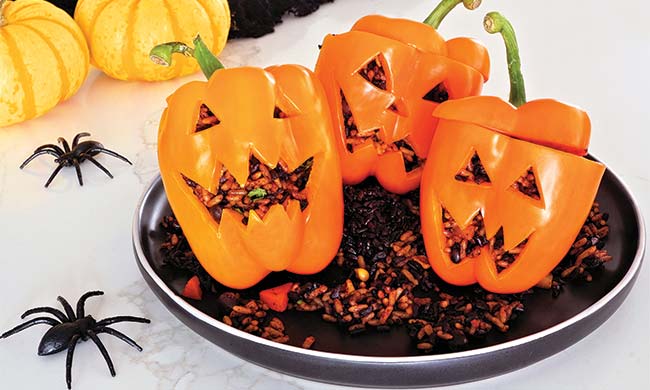
Jack-o’-Lantern Stuffed Peppers Prove Fun Isn’t Just for Pumpkins
(Feature Impact) Jack-o’-lantern carving is a cherished fall tradition – but pumpkins aren’t the only vegetables you can decorate with fun, spooky or scary faces. These Jack-o’-Lantern Stuffed Peppers give you a Halloween-themed, kid-approved way to put vegetables on the dinner table.
Filled with savory ground turkey, brown rice, melty cheese and warm, savory spices, these peppers taste as autumnal as they look. It’s simple to customize the filling to your family’s tastes, and you can even make the meal interactive by inviting kids to choose their own pepper colors and carve their own expressions.
Find more Halloween and seasonal recipes at Culinary.net.

Jack-o’-Lantern Stuffed Peppers
Recipe adapted from AllRecipes
Prep time: 15 minutes
Cook time: 45 minutes
Servings: 4
- 1 teaspoon olive oil
- 1 pound ground turkey
- 3 cloves garlic, minced
- 1/2 medium onion, diced
- 1 teaspoon garlic powder
- 1 teaspoon cumin
- 4 large orange bell peppers
- 1 cup cooked brown rice
- 1 cup grated sharp cheddar cheese
- 2 teaspoons kosher salt
- 1/2 teaspoon ground black pepper
- cayenne pepper, to taste
- cups seasoned tomato sauce, warmed
- Preheat oven to 400 F and coat 9-by-13-inch baking dish with olive oil.
- In skillet, brown ground turkey with minced garlic, onion, garlic powder and cumin until meat is cooked, 4-5 minutes.
- With small knife, cut eyes, nose and mouth into flattest side of each pepper to resemble jack-o’-lantern. Cut around seed pods and remove pepper tops, trimming and discarding any seeds from under stems then setting tops aside. Trim white membranes from inside each pepper and shake out seeds. Place peppers in prepared baking dish.
- In bowl, combine turkey mixture with cooked rice, cheddar cheese, salt, black pepper and cayenne pepper, to taste.
- Divide and stuff mixture into peppers; cover with reserved pepper tops.
- Wrap baking dish loosely with aluminum foil and bake until peppers are tender, about 45 minutes.
- Spoon about 3 tablespoons warm tomato sauce onto each plate; place stuffed peppers on top. Serve remaining sauce on side.
Photo courtesy of Shutterstock

SOURCE:




