

gaming
LIGHTSPEED STUDIOS Expands Original IP Push With New AAA Framework at GDC 2026


LIGHTSPEED STUDIOS used GDC 2026 to spotlight the next phase of its “Original IP Initiative,” outlining a proprietary development framework aimed at building high-end, original AAA games for a global audience. The studio said the initiative, first introduced at GDC 2025, now includes active development of a new globally driven blockbuster title and a more formalized system for shaping future intellectual property.
A major part of that strategy came from newly appointed Creative Director Feng Zhu, who described a structured approach to original game creation centered on strong visual identity, disciplined worldbuilding, and repeatable production methods. During his GDC session, Zhu introduced the studio’s “90:10 Balance” philosophy, where 90% of a game is grounded in real-world references like authentic locations, historical context, and realistic proportions, while the remaining 10% is used to deliver the creative hooks, tension, and storytelling elements that define the title’s identity.
LIGHTSPEED also emphasized its investment in production infrastructure, including a purpose-built in-house motion capture facility in Los Angeles. Led by Motion Capture Studio Manager Kristin Gallagher, the studio says the facility is designed to handle complex performance capture with greater efficiency, supported by a custom API and advanced technical pipeline developed jointly by teams in LA and across the company’s global network.

The announcement reinforces LIGHTSPEED STUDIOS’ broader ambition to grow beyond service and co-development work into a stronger portfolio of original blockbuster properties. Best known as a co-developer of PUBG MOBILE and the developer of the upcoming Last Sentinel, the company says its long-term focus is on delivering cinematic, culturally resonant game experiences built for players worldwide.
Related Links
Source
Visit the Entertainment section on STM Daily News for the latest entertainment news, movie updates, TV coverage, music stories, pop culture trends, and event highlights.


Tech
Professional gaming is brutal on the body – inside the growing field of treating esports injuries
Professional gaming can cause serious physical and mental strain, including wrist injuries, back pain, vision problems and sleep disturbances. As esports grows, specialists are developing new prevention and rehabilitation strategies to protect players.

Erica D. Henn, Temple University
Chinese esports player Jian “Uzi” Zi-hao was more than a star “League of Legends” player: He was so talented that his team structured its entire strategy around his abilities, funneling resources to him and another teammate, Shi “Ming” Sen-Ming, so the duo could lead the team to victory. Over the course of his career, he earned more than US$500,000 in tournament prize money.
And yet in 2020, Jian announced his retirement, his storied career cut short by chronic wrist and arm injuries.
He was 25 years old.
Video games have a reputation for keeping people glued to the couch. But for those who compete against the best players in the world, gaming can be surprisingly physically and mentally taxing.
The strain of ‘climbing the ladder’
The best esports players often have grinding schedules. They’re expected to regularly practice, participate in scrimmages and compete in official matches. Even at the recreational level, esports players cite the mental toll: playing for hours a day, every day, to hone their skills so they can “climb the ladder.”
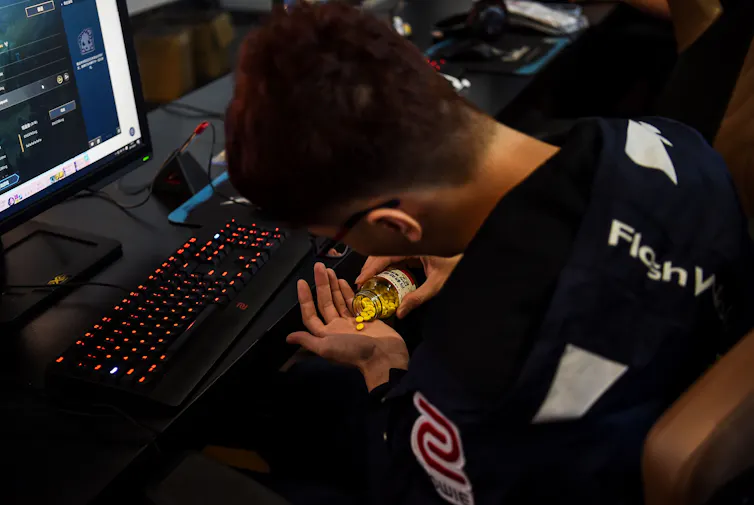
A 2021 study of Portuguese esports players found that 37% experienced anxiety and depression, and 45% experienced sleep disturbances. The most common physical injuries in esports generally fall under eye problems and musculoskeletal issues.
Prolonged screen time leads to many types of vision problems in gamers, from the more common eye fatigue to a decreased ability to focus. Furthermore, the light emitted from screens appears to contribute to sleep disturbances by disrupting the release of melatonin, the hormone that helps regulate your sleep-wake cycle.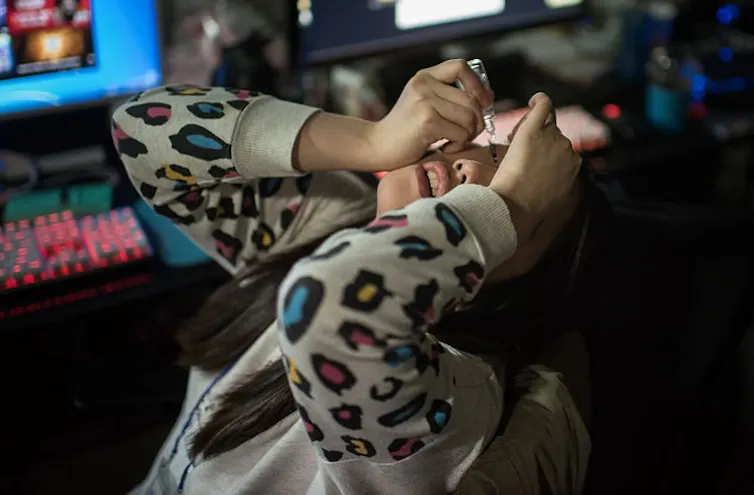
Many esport players – professional or otherwise – also battle hand and wrist pain, with repetitive button-smashing causing injuries such as carpal tunnel syndrome, tendonitis and “gamer’s thumb,” which arises from overuse or irritation of the tendons around the thumb and wrist. Many of the overuse injuries seen among video game players are also familiar to assembly-line workers, whose jobs can involve similarly repetitive movements.
Then there are the back injuries. Players can remain seated for three or more hours without a break, and this prolonged sitting can take a toll on the lower back and spine.
The sedentary nature of esports has also led to a lesser-known – sometimes fatal – injury called deep vein thrombosis: a blood clot, often in the leg, that can become life-threatening if it travels to the lungs. In 2011, British gamer Chris Staniforth – who would play for as long as 12 hours at a time – died of the condition.
Preventative measures
As more esports injury research has been published, more treatment and prevention strategies have emerged.
Top esports teams now have physical therapists, performance psychologists, athletic trainers and even massage therapists on staff to optimize the performance and recovery of their players.
Teams often incorporate group exercise activities to both build rapport among players and reduce the risk of injuries. During competition, proper positioning of the spine and limbs has become an essential injury prevention strategy. For example, selecting a chair that encourages an upright posture can reduce pain and injury risk, especially when gamers couple ergonomics with an exercise program that centers on functional strength, mobility and stretching of the upper limbs.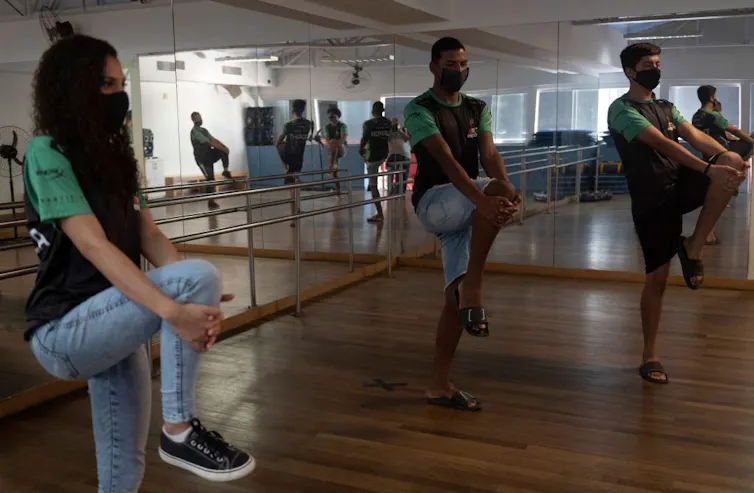
Looking to the stage
When esports began gaining mainstream popularity in the 1990s and early 2000s, its proponents were eager to draw comparisons to traditional sports and athletic competition. The parallels helped establish esports’ legitimacy and gave non-gamers a familiar framework for understanding the competition.
As esports became a big business and a lucrative career path, players and teams hired a web of support staff – trainers, coaches and therapists – that mirrored the structure of professional sports. In this vein, a lot of esports injury research has pulled from the training methods of traditional sports.
However, as a scholar of exercise science, I think injury treatment and prevention strategies could be further improved by seeing esports competitors as more like musicians and dancers than football players and basketball players.
Performance optimization and injury research on professional performing artists has existed for centuries, and I think it represents a valuable, untapped resource. That’s because the physical and mental stresses experienced during musical performance have a lot in common with esports competition: long stretches of sitting; small, dexterous hand movements; and performing without the real-time input of a coach.
For example, biomechanics research has found similar patterns of forearm muscle fatigue among esports players and piano players. However, no studies to date have directly compared the two groups.
And what if the interest in joint hypermobility or hand size among performing artists were translated to esport populations? Could popular piano warm-up exercises be effective for esports athletes who use keyboards?
Even research on sports like car racing might offer valuable insights. As with gamers, many people overlook how physically demanding car racing can be – and yes, that includes sitting for extended periods of time.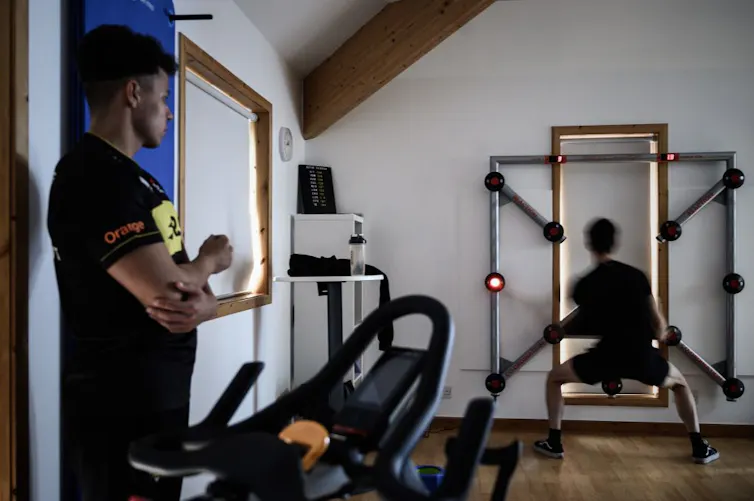
Prevention and rehabilitation techniques continue to improve. Even Jian, the player who retired in 2020, returned to play for a few splits, or partial seasons, in 2022 and 2023.
In July 2023, “League of Legends” star Lee “Faker” Sang-hyeok was relegated to the bench due to cubital tunnel syndrome, an injury that emerges from arm and hand overuse.
Through a treatment plan that included changing his gaming posture and intensive physical therapy, Lee was able to return to play just a month later. He went on to win three consecutive world championships, with his support team helping prevent recurrence of injury throughout each season.
Thanks to his rehabilitation, Lee’s fans will be able to follow his hunt for his fourth “League of Legends” World Championship, which kicks off in October 2026 in the United States.
Sienna Cinti assisted with the research and writing of this article.
Erica D. Henn, Assistant Professor of Kinesiology and Exercise Science, Temple University
This article is republished from The Conversation under a Creative Commons license. Read the original article.
📰 Enjoying STM Daily News? Join the conversation!
💬 Leave a comment, share your thoughts, and subscribe to our newsletter for the latest stories, updates, and “News You Can Use This Moment!” delivered to your inbox.
Stay connected with STM Daily News!
health and wellness
Millions of mobile gamers prize stress relief over winning
Mobile Gamers Prize Stress: In the school’s car pickup line, five minutes before it starts moving. In the doctor’s office waiting room for an appointment that you’ve been heavily anticipating. In bed, just before going to sleep. In these transitional moments, many people reach for their phones — not to scroll, but to play.


Millions of mobile gamers prize stress relief over winning
(Sheeka Sanahori) In the school’s car pickup line, five minutes before it starts moving. In the doctor’s office waiting room for an appointment that you’ve been heavily anticipating. In bed, just before going to sleep. In these transitional moments, many people reach for their phones — not to scroll, but to play.
According to a June 2026 survey of more than 128,000 KashKick mobile gamers, playing a mobile game is more than a way to pass the time. Stress relief and relaxation are the top reasons respondents play, beating out entertainment and fun. As KashKick reports, for many people, this means mobile games are less a simple distraction and more a coping mechanism for the daily stress of life.
A quick reset for life’s transitional moments
Most respondents identify as women, and 60% live in households that earn less than $50,000 per year. In the ranking of their reasons for playing, stress relief and relaxation topped the list, with boredom relief, entertainment and fun close behind.
The ranking reads less like a profile of a gaming hobby and more like a profile of a coping behavior.
More than half of the respondents play games daily or multiple times a day. When they reach for a mobile game, about 53% of the time it’s for a short session—usually 30 minutes or less. Where and when people play tells its own story: 58% play in bed before going to sleep and 40% play in the bathroom. These are private, solitary moments, not the times people typically plan entertainment into their day.
Coping with stress by gaming
To understand why respondents play games for stress relief more than for fun, it helps to look at who they are. Among those surveyed, 19% say they’re unemployed or looking for work, and 60% live in lower-income households. There are likely some areas of their life where they must make every dollar stretch to cover the things they need.
The survey findings coincide with research from the American Psychological Association’s 2025 Stress in America report. According to the report, 18% of men and 22% of women under age 65 rate their stress level at eight or higher on a scale of one to 10. Although the KashKick survey didn’t measure stress, respondents are mostly women and fall within the age and income groups the APA found to carry the most stress.
The APA’s report also describes loneliness as a major strain for Americans. The KashKick survey didn’t measure feelings of isolation, but 55% prefer to play alone, and 60% rarely or never discuss their gameplay with friends or family.
Overall, the survey identifies a group of people who have found a routine, low-cost approach to cope with stress. They’re not necessarily there to get the highest score. They’re playing a mobile game to help them navigate a day that, with all of life’s to-dos and challenges, could quickly feel overwhelming.
Methodology
The KashKick Gaming Habits Survey was fielded from June 8, 2026, through Aug. 10, 2026, among KashKick members in the United States who play mobile games. The Gaming Habits Survey was available to all members on KashKick’s Surveys page post-profile completion. The survey received 128,218 total responses, with question-level response counts ranging from approximately 109,793 to 128,218 depending on attrition. All findings describe KashKick mobile gamers and should not be interpreted as representative of U.S. mobile gamers overall. Industry and stress context references publicly available data from the American Psychological Association, Statista, and Newzoo.
Photo courtesy of Shutterstock

SOURCE:
KashKick
📰 Enjoying STM Daily News? Join the conversation!
💬 Leave a comment, share your thoughts, and subscribe to our newsletter for the latest stories, updates, and “News You Can Use This Moment!” delivered to your inbox.
Stay connected with STM Daily News!
video games
Basic Fun! Unveils Category-Defining Home Arcade Collection for Fall 2026
Basic Fun! is launching a new Arcade1Up home arcade collection for Fall 2026, featuring PAC-MAN and Ms. PAC-MAN cabinets, alongside the first-ever SONIC THE HEDGEHOG cabinet marking a partnership with SEGA. The lineup aims to deliver authentic arcade experiences without quarters, appealing to both nostalgic fans and new players.
Last Updated on March 16, 2026 by Daily News Staff
Basic Fun! is hitting “start” on a new chapter for home arcade.

In a Feb. 14, 2026 announcement, the Boca Raton-based toy and consumer products company revealed its first new Arcade1Up home arcade collection since acquiring select assets of the brand in 2025. The Fall 2026 lineup is anchored by two heavy hitters: PAC-MAN (including Ms. PAC-MAN) and the first-ever SONIC THE HEDGEHOG home arcade cabinet.
Basic Fun! says the new cabinets are built to deliver the authentic arcade feel fans expect—powered by iconic franchises, premium features, and classic arcade attitude—no quarters required.
What’s in the Fall 2026 Arcade1Up lineup
PAC-MAN and Ms. PAC-MAN cabinets
Basic Fun! is leaning into the foundation of arcade nostalgia with PAC-MAN and Ms. PAC-MAN home arcade cabinets.
The company notes it is the anchor electronics licensee for PAC-MAN home arcade products through a licensing agreement with Bandai Namco Entertainment. The new machines are positioned for both longtime fans and a new generation of players—built to honor the legacy that helped define the golden age of arcades.
Sonic makes his home arcade debut
The bigger “first” in this release: SONIC THE HEDGEHOG is getting his first-ever home arcade cabinet.
Basic Fun! says Sonic’s debut comes via a multi-year partnership with SEGA, timed to the franchise’s 35th anniversary. The featured product is the Sonic Supreme Series Arcade Game, described as a premium, full-size standing cabinet built for speed, style, and nostalgia.
Basic Fun! also teased that this is the first of multiple Sonic titles planned for the collection.
What to watch for
- Arcade1Up’s next era: This is Basic Fun!’s first major statement since acquiring select Arcade1Up assets in 2025—so the build quality, features, and pricing strategy will matter.
- Sonic’s pipeline: The company is calling this the first of multiple Sonic titles. If that holds, Sonic could become a recurring pillar alongside PAC-MAN.
- Retail rollout: Basic Fun! says the collection will debut at major retailers this fall, which should make availability less of a scavenger hunt for fans.
Quote
“For many years, Arcade1Up has been at the heart of the retro arcade community, and we’re honored to build on that legacy,” said Dan Westcott, Senior Vice President of Global Brand Marketing at Basic Fun!. “Our focus is simple: authentic gameplay, nostalgic design, and premium features that capture the true arcade-at-home experience for fans of all kinds. No quarters required.”
Where to see the lineup
Media, influencers, and industry partners can get a first look at the new home arcade lineup at Toy Fair®, running February 14–17 at the Javits Center in New York City.
Basic Fun! also shared booth details here: https://tfny2026.mapyourshow.com/8_0/exhibitor/exhibitor-details.cfm?exhid=61755
About Basic Fun!
Basic Fun! is a global designer and marketer of classic and innovative entertainment products, distributed across 50,000+ retail locations and online channels through 2,500+ retailers, distributors, and family entertainment venues in 60+ countries. The company is headquartered in Boca Raton, Florida, with offices in the UK and Hong Kong.
For more information, visit basicfun.com.
PAC-MAN™ & ©Bandai Namco Entertainment Inc.
Ms. PAC-MAN™ & ©Bandai Namco Entertainment Inc.
Looking for an entertainment experience that transcends the ordinary? Look no further than STM Daily News Blog’s vibrant Entertainment section. Immerse yourself in the captivating world of indie films, streaming and podcasts, movie reviews, music, expos, venues, and theme and amusement parks. Discover hidden cinematic gems, binge-worthy series and addictive podcasts, gain insights into the latest releases with our movie reviews, explore the latest trends in music, dive into the vibrant atmosphere of expos, and embark on thrilling adventures in breathtaking venues and theme parks. Join us at STM Entertainment and let your entertainment journey begin! https://stmdailynews.com/category/entertainment/
and let your entertainment journey begin!





