

Foodie News
TICKETS ARE NOW LIVE FOR THE BOCA RATON’S “ARTISANS OF WINE & FOOD” PRESENTED BY CAPITAL ONE

Napa Valley’s most famous wine event will make its East Coast debut this winter, providing unparalleled access to prestigious winemakers and celebrated chefs from January 17 – 19, 2025
BOCA RATON, Fla. /PRNewswire/ — South Florida’s iconic resort and private club, The Boca Raton, announces tickets are now live for its highly anticipated Artisans of Wine & Food weekend, taking place January 17-19, 2025. The first-of-its-kind event in partnership with the esteemed Napa Valley Vintners will bring together more than 75 winemakers, 20+ celebrated and Michelin-starred chefs, and immersive programming for a celebration of fine wine and food that promises to become a coveted annual tradition. Gourmands can purchase tickets for the event here.
The multi-day experience, presented by Capital One, will be orchestrated by some of the world’s most renowned culinary minds such as legendary Chef David Breeden, famed Chef and Restaurateur Mario Carbone, and a dinner curated by an all-female line-up of top chefs matched with female-owned wineries/winemakers.
The weekend culminates with a gala where attendees will indulge in a four-course dinner artistically directed by Fabio Trabocchi, Michelin-Starred Chef and Restaurateur of Washington DC’s Fiola and Boca Raton’s Fiolina Ristorante. As the evening unfolds, guests will have the opportunity to bid on fine wines, luxury experiences, and bespoke getaways, in an exclusive auction hosted by international auctioneer Jacqueline Towers-Perkins.
“For the first time, we’re bringing the heart of Napa Valley to the East Coast in an unprecedented showcase of wine and culinary talent,” said Daniel A. Hostettler, President & CEO of The Boca Raton. “It’s a privilege to host these celebrated vintners and chefs, and we’ve crafted an extraordinary event for Club members and hotel guests to toast to a truly worthy cause.”
The wine auction’s proceeds will benefit the Boys & Girls Clubs of Palm Beach County and Napa Valley. This charitable initiative highlights The Boca Raton’s dedication to supporting local neighborhoods and investing in youth development through educational and enrichment programs.
SCHEDULE HIGHLIGHTS INCLUDE:
Friday, January 17
- Choose from a series of exclusive dinners hosted by celebrated vintners of Napa Valley:
- The Great Cabernets of Napa Valley four-course dinner will showcase a modern interpretation of a chophouse menu with big bottle cabs, featuring Chefs Will Cox of The Boca Raton, Nathan Rich of Twin Farms, Chris Huerta of Old Edwards Inn, and Adam Young of Sift Bake Shop.
- At Bella Notte, dine like family during an Italian feast by James Beard Award-winning Master Chef Mario Carbone of Michelin-starred restaurants Carbone and ZZ’s Clam Bar.
- Dinner En Plein Air is curated by female vintners and Relais & Châteaux chefs, Jennifer Backman of The Inn at Castle Hill, Sarah Steffan of Blackberry Farm, and Lindsay Autry of Honeybelle – PGA National, with a dessert course by Pastry Chef Jessica Quiet of Ocean House.
- The Premiere Napa Valley Dinner offers a barrel tasting of Napa Valley’s rarest micro-lot wines, an opportunity to select and wear Lugano Diamonds during the tasting, and indulge in a multi-course menu by Michelin-starred Chef Stéphane Andrieux of Château de la Treyne and Sebastien Feneyrol of The Boca Raton.
- A Culinary Celebration of Caviar dinner with Executive Chef Edgar Panchernikov boasts dishes from the world’s only Michelin-starred caviar house Caviar Russe.
- Icons of Napa Valley offers an intimate, al fresco dining experience showcasing exceptional Napa Valley wines with menus prepared by Chef David Breeden, former Chef de Cuisine at The French Laundry–a role he held for nearly 20 years.
- Latin Flavors four-course dinner by Chef Adriano Venturini of Eden Roc Cap Cana, a Relais & Châteaux resort in the Dominican Republic.
- An Argentine Asado BBQ served on The Boca Raton’s fairway, features food stations and dishes using traditional asado techniques and modern twists, live music, and single-site wines.
- The Great Cabernets of Napa Valley four-course dinner will showcase a modern interpretation of a chophouse menu with big bottle cabs, featuring Chefs Will Cox of The Boca Raton, Nathan Rich of Twin Farms, Chris Huerta of Old Edwards Inn, and Adam Young of Sift Bake Shop.
- An Artisans After Hours event presents chef-curated hors d’oeuvres, alongside premium wines and music by Vintner and DJ Jason Lede. Close out the day in style while mingling with winemakers and celebrated chefs.
Saturday, January 18
- Vintners Invitational Golf Tournament: Play side by side with vintners and chefs for prizes provided by Bugatchi and TaylorMade, complete with continental breakfast at The Boca Raton Golf Club.
- Winemaker Series: Seven different intimate educational tastings led by Napa Valley’s renowned winemakers and vintners. Take part in discussions that spotlight the unique terroir and signature wines of the region, featuring BOND Wine, Groth Vineyards & Winery, Oakville, among several others. Topics include Mountain vs. Valley Floor, a Riedel performance tasting, wine & caviar pairings, and more.
- The Discover Napa Valley Tasting Pavilion featuring more than 125 world-class wines and over 20 restaurants: Guests can drift through the tented Grand Lawn and relish in great sips and decadent tastings along the way.
- Modern Meritage on the Spanish Terrace: 12 celebrated chefs prepare their personal favorite burger recipes paired with craft beer in an al fresco setting.
- Yacht Tour of Lake Boca: Enjoy a one-hour charter on open water accompanied by a vintner for relaxed and intimate conversations while indulging in world-class wines.
- Sip & Shop with Worth Avenue: Sip on sparkling wine and rosé while browsing through the collection of six high-end boutiques from Palm Beach’s famed Worth Avenue. Boutiques include Brioni, Carolina Herrera, Anne Fontaine, among others.
- Artisans of Wine & Food Charity Auction and Gala featuring a four-course dinner directed by Fabio Trabocchi, Michelin-Starred Chef and Restaurateur of Washington DC’s Fiola and Boca Raton’s Fiolina Ristorante: Bid on artisan-crafted bottles, luxurious delights, and bespoke getaways. Auction led by globally-recognized auctioneer Jacqueline Towers-Perkins, with proceeds benefiting the Boys & Girls Clubs of Palm Beach County and Napa Valley.
Sunday, January 19
- To the South with Love is a Southern brunch experience hosted by International BBQ Entertainer Jack Arnold and a curated selection of Palm Beach restaurants. Delight in a final send-off, complete with live jazz music, and a sparkling wine bar.
Stay up to date on news and developments at ArtisansofWineandFood.com. Follow along on social media @artisansofwineandfood.
The Boca Raton
The Boca Raton originally opened in 1926 as The Ritz-Carlton Cloister Inn. In the 2020s, it celebrates its most remarkable evolution and its 100th anniversary. The property provides year-round escape, exclusively for members of The Boca Raton Club and resort guests. Five hotels amid 200 waterfront acres include Cloister, Yacht Club, Beach Club, Tower, and Bungalows. The unveiling of Beach Club in December 2024 marks a major milestone in The Boca Raton’s storied history, serving as Phase II of the resort’s transformation. The Boca Raton’s culinary offerings showcase a world of flavor, with signature restaurants in partnership with Major Food Group. Resort amenities include a private beach, the Forbes Five-Star Spa Palmera, an 18-hole golf course, a full-service marina, Racquet Club with 14 tennis courts and 12 pickleball courts, retail shops, seven swimming pools, and various water activities at Harborside Pool Club, state-of-the-art fitness clubs and wellness collaborations. For reservations, call (561) 447-3000 or visit TheBocaRaton.com.
Capital One
At Capital One, we’re on a mission for our customers – bringing them best-in-class products, rewards, service, and experiences. Capital One is a diversified bank that offers products and services to individuals, small businesses, and commercial clients. We use technology, innovation, and interaction to provide consumers with products and services to meet their needs. Through Capital One Dining and Capital One Entertainment, we provide our rewards cardholders with access to unforgettable experiences in the areas they’re passionate about, including dining, music, sports and the arts. Learn more at capitalone.com/dining and capitalone.com/entertainment.
About the Napa Valley Vintners
The Napa Valley Vintners nonprofit trade association has been cultivating excellence since 1944 by inspiring its nearly 550 members to consistently produce wines of the highest quality, provide environmental leadership and care for the extraordinary place they call home. NVV has invested more than $230 million in community healthcare, youth development and the environment in Napa County, and is dedicated to improving diversity and championing inclusivity in its community and in the wine industry. Learn more at napavintners.com.
SOURCE The Boca Raton
At our core, we at STM Daily News, strive to keep you informed and inspired with the freshest content on all things food and beverage. From mouthwatering recipes to intriguing articles, we’re here to satisfy your appetite for culinary knowledge.
Visit our Food & Drink section to get the latest on Foodie News and recipes, offering a delightful blend of culinary inspiration and gastronomic trends to elevate your dining experience.

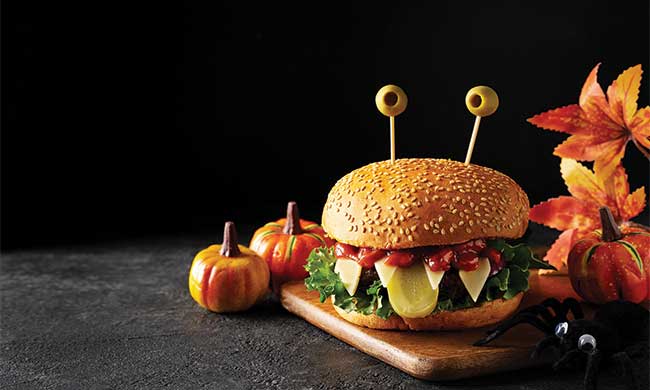
(Feature Impact) Out with the ordinary, in with the weird – that’s what the Halloween season is all about. These Halloween Monster Burgers give a ghoulishly fun twist on burger night, featuring all your favorite toppings transformed into olive eyes, cheese fangs and a pickle tongue.
Whether you reach for a traditional hamburger patty or switch it up with chicken, turkey, bean or veggie options, the effect is the same: a dinner that looks like it escaped from a mad scientist’s lab. It’s a good way to get some protein and veggies into kids before the trick-or-treating sugar rush, and you can even make it interactive by inviting them to decorate their own monsters and come up with creative variations.
Alternatively, if you’re looking for some spooky hors d’oeuvres to impress at this year’s Halloween party, these burgers are easy to size down into slider form. Serve a whole tray of mini monsters ready to devour – or be devoured by – hungry guests.
Find more Halloween recipe inspiration at Culinary.net.
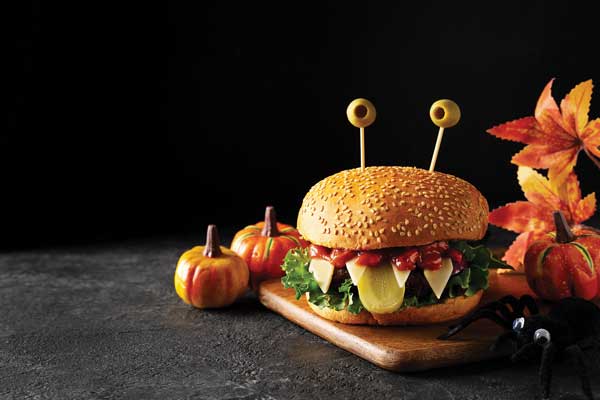
Halloween Monster Burgers
Recipe adapted from Happy Foods Tube
Prep time: 10 minutes
Total time: 18 minutes
Servings: 4
- 4 hamburger, chicken or veggie patties
- 4 tablespoons mayonnaise
- 4 teaspoons ketchup, plus additional, to taste, divided
- 4 hamburger buns
- 8 leaves baby romaine lettuce
- 4 slices dill pickles, sliced lengthwise
- 4 cheese slices
- 8 large green olives, pits removed
- Cook burger patties until they reach desired doneness.
- In small bowl, combine mayonnaise and 4 teaspoons ketchup. Spread each bun base with about 1 tablespoon mayo sauce then add two lettuce leaves and cooked burger patty.
- Add pickle slice as monster “tongue.” Take each cheese slice and cut triangles into one side to resemble teeth; add to burger then cover with ketchup “blood,” to taste.
- Stick olives on toothpicks and add two to each top bun as “eyeballs.”
Photo courtesy of Shutterstock

SOURCE:

Foodie News
Red Lobster Serves Up October Deals, New Shrimp Flavors and Free Kids Meals for Halloween
Red Lobster unveils October 2026 deals, new Endless Shrimp flavors and free kids meals for Halloween weekend. See dates, offers and restrictions.
STM Daily News | Food & Drink | News Brief
October 13, 2026
Red Lobster Kids Eat Free Halloween 2026
Red Lobster is bringing new seafood specials, weekday meal deals and a Halloween treat for families this October. The restaurant chain has announced a lineup of promotions that includes discounted appetizers, new Endless Shrimp flavors and free kids meals for Halloween weekend.
The promotions, announced October 9, feature several offers for Canadian customers, along with select deals available in the United States.

New Weekday Seafood Deals
Red Lobster is introducing an updated weekday Daily Deals menu at participating Canadian restaurants, featuring a different seafood combination each day.
The lineup includes:
- Monday – Endless Shrimp ($36.99 CAD): A selection of shrimp favorites served with one side.
- Tuesday – Crab Lover’s Duo ($34.99 CAD): Steamed snow crab legs paired with Crab & Shrimp Linguini Alfredo.
- Wednesday – Steak & Walt’s ($27.99 CAD): Grilled sirloin with Walt’s Favourite Shrimp and one side.
- Thursday – Salmon New Orleans ($29.99 CAD): Blackened salmon topped with shrimp in Cajun butter sauce.
- Friday – Captain’s Platter ($25.99 CAD): Garlic shrimp, popcorn shrimp and crispy battered fish with one side.
These prices and specific weekday offers apply to participating Canadian restaurants. Red Lobster’s U.S. Daily Deals are separate and may differ in price and availability.
Endless Shrimp Gets an OLD BAY Twist
Beginning October 13, Red Lobster is adding NEW OLD BAY Garlic Shrimp to its Canadian Endless Shrimp lineup.
The limited-time promotion allows guests to mix and match shrimp varieties throughout their meal, accompanied by a side and Red Lobster’s signature Cheddar Bay Biscuits.
The Canadian Endless Shrimp promotion is advertised at $34.99 CAD, with pricing and participation varying by location. Endless Shrimp is available for dine-in only at participating U.S. and Canadian restaurants.
Kids Eat Free for Halloween Weekend
Families looking for a Halloween dining treat can take advantage of Red Lobster’s Kids Eat Free promotion from October 30 through November 1, 2026, at participating restaurants in both the United States and Canada.
Children who arrive in costume can receive free kids meals when dining with an adult purchasing a full-price dinner entrée.
For dine-in customers, one qualifying adult entrée can provide up to two free kids meals, with a maximum of two per table.
Families ordering online for takeout can receive one free kids meal with a qualifying adult entrée by using promo code SPOOKY26.
The maximum discount is $9.99 per free kids meal, and additional restrictions apply.
What About the $3 Appetizers?
Red Lobster also offered $3 individually sized appetizers from October 9–12 at participating Canadian restaurants. The limited-time Thanksgiving weekend promotion included Island Coconut Shrimp, Shrimp Cocktail and Mozzarella Cheesesticks with the purchase of an entrée.
That promotion has now ended and was not advertised as a U.S. offer.
Check Before You Go
With restaurant promotions varying by country and location, customers should confirm availability, prices and restrictions before visiting.
For menus, participating restaurants and additional details, visit Red Lobster’s U.S. website or Red Lobster Canada.
More Food & Drink News from STM Daily News
Looking for the latest restaurant promotions, food trends, recipes and dining news? Explore the Food & Drink section of STM Daily News for more delicious discoveries, helpful tips and updates on what’s happening in the world of food.
Source: RL Investor Holdings LLC / Red Lobster, press release dated October 9, 2026.
Editor’s Note: Promotional offers are subject to participation, availability and restrictions. Canadian prices are listed in Canadian dollars and should not be interpreted as U.S. pricing.
Beverages
Dr Pepper Ice Cream Float Is Coming: Keurig Dr Pepper Teases 2027 Flavor Pipeline Ahead of NACS
Keurig Dr Pepper is already looking past the next season and into 2027. In a new announcement ahead of the National Association of Convenience Stores (NACS) Show, the beverage giant previewed a slate of new products designed to hit the biggest pressure points in today’s drink culture: nostalgia that still feels fresh, a louder energy category, and brand updates meant to keep icons like 7UP and Sunkist relevant on shelves and fountain lines.
For Food & Drink readers, the headline is simple: the “treat soda” era isn’t slowing down—and KDP is leaning into it with flavors that borrow from desserts, frozen cocktails, and childhood staples, often with Regular and Zero Sugar versions built in from day one.
Familiar Favorites, Reimagined (and Built for Zero Sugar)
KDP’s pitch is that younger consumers are experimenting across categories, but they still want the comfort of brands they grew up with. That’s showing up in 2027 as “classic, but remixed.”
Dr Pepper Ice Cream Float (Permanent)
The biggest new reveal is Dr Pepper Ice Cream Float, a flavor that blends the brand’s signature “23 flavors” with creamy vanilla ice cream notes, plus caramel and butterscotch.
- Launch timing: February 2027
- Where you’ll see it: cans and 20 oz. bottles first
- More formats later: fountain and frozen dispensed versions expected mid-year
It’s an important detail that this one is nationwide and permanent, not a limited-time test. That signals confidence that dessert-forward sodas are now a stable lane—not just a novelty.
7UP Miami Vice (Limited-Time)
KDP is also turning 7UP into a tropical, frozen-cocktail-inspired playground with 7UP Miami Vice, combining lime-lemon with strawberry daiquiri and piña colada flavors.
- Launch timing: June 2027
- Status: limited-time offering
7UP Shirley Temple (Holiday Return)
One of 7UP’s most successful recent platforms is coming back: 7UP Shirley Temple, featuring cherry and pomegranate.
- Launch timing: holiday season 2027
- What’s new: expanded immediate-consumption availability via a new 20 oz. package
Canada Dry Raspberry Lemonade (Seasonal Twist)
For spring, KDP is adding Canada Dry Raspberry Lemonade, mixing raspberry and lemonade flavors with the brand’s crisp profile.
- Launch timing: Spring 2027
Energy Gets Bigger (and More Collaborative)
KDP’s other major bet is energy. The company says innovation and limited-time drops are driving a large share of category growth, and it plans to distribute more than 25 new energy items in 2027 across owned brands and partners.
GHOST Energy: 7UP and A&W Become Permanent
GHOST—now positioned by KDP as a $1 billion retail brand—is making two 2026 limited releases permanent in 2027:
- GHOST Energy x 7UP
- GHOST Energy x A&W
New additions include:
- GHOST Energy Sour Strips Appleberry (green apple + strawberry), launching January
- GHOST Energy Blueberry Cream (blueberry + vanilla, “nostalgic yogurt-inspired”), as a limited-time release later in 2027
Bloom Energy: “Iconic Treats” Lineup
Bloom is going straight for the ice-cream-truck memory bank:
- Strawberry Shortie (October 2026)
- Cotton Candy (January 2027)
- Lemon Freezie (January 2027)
C4 Energy: Cereal’s Most Wanted Expands
C4 is expanding its zero-sugar Cereal’s Most Wanted lineup:
- Cocoa Loco in 16 oz cans (January 2027)
- New 8.4 oz mini cans for select flavors
The subtext here is clear: energy is increasingly behaving like soda—flavor-first, collectible, and built for repeat discovery.
Icon Brands Get Refreshed (7UP and Sunkist)
Not every innovation is a new flavor. KDP is also investing in renovations that keep legacy brands competitive.
- 7UP recently rolled out its biggest evolution in more than 15 years, including a more lime-forward formula and refreshed visual identity.
- Sunkist is slated for updated graphics and a refreshed recipe in Q1 2027, aiming for a more fruit-forward orange taste.
For convenience retailers—and for anyone watching the beverage aisle—these updates matter because they’re designed to improve “shelf pop” and keep familiar brands from feeling dated next to trendier newcomers.
What to Watch For (Food & Drink Angle)
If you’re tracking where mainstream beverage culture is going, KDP’s 2027 preview points to three big themes:
- Dessert and “treat” flavors are becoming everyday drinksFloat, cream, caramel, butterscotch—these are no longer seasonal one-offs.
- Zero Sugar is now the default, not the alternativeMany of these launches are planned in both Regular and Zero Sugar formats, which changes how quickly they can scale.
- Energy is turning into a flavor labCollaborations, limited-time drops, and nostalgic concepts are making energy behave like the most experimental part of the aisle.
Bottom Line
Keurig Dr Pepper’s early look at 2027 innovation reads like a map of where beverage demand is headed: familiar brands with a twist, more energy variety, and strategic refreshes that keep icons in the conversation. If Dr Pepper Ice Cream Float lands the way KDP expects, don’t be surprised if “dessert soda” becomes a year-round staple—especially in convenience stores where discovery drives the impulse buy.
Quick Launch Timeline (At a Glance)
- Oct 2026: Bloom Energy Strawberry Shortie
- Jan 2027: GHOST Energy Sour Strips Appleberry; Bloom Cotton Candy + Lemon Freezie; C4 Cereal’s Most Wanted expansion
- Feb 2027: Dr Pepper Ice Cream Float (permanent)
- Spring 2027: Canada Dry Raspberry Lemonade
- Mid-2027: Dr Pepper Ice Cream Float fountain + frozen formats
- June 2027: 7UP Miami Vice (limited-time)
- Holiday 2027: 7UP Shirley Temple return (with expanded 20 oz availability)
- Q1 2027: Sunkist refreshed graphics + recipe
Source (Press Release)
- Keurig Dr Pepper — “Keurig Dr Pepper Reveals 2027 Beverage Innovation Ahead of NACS Show” (PRNewswire, Oct. 5, 2026)
Related Links
- Keurig Dr Pepper corporate site: https://www.keurigdrpepper.com
- Keurig Dr Pepper on LinkedIn (for brand updates/announcements): https://www.linkedin.com/company/keurig-dr-pepper-inc-/
- NACS Show (event context): https://www.nacsshow.com
- Circana (referenced for data in the release): https://www.circana.com




