

News
Exploring the Walkability of Los Angeles: Unpacking the Rankings and Local Opinions
Exploring LA’s walkability: Rankings and local opinions reveal the city’s unique urban landscape and the ongoing quest for a more pedestrian-friendly environment.

Last Updated on July 5, 2024 by Daily News Staff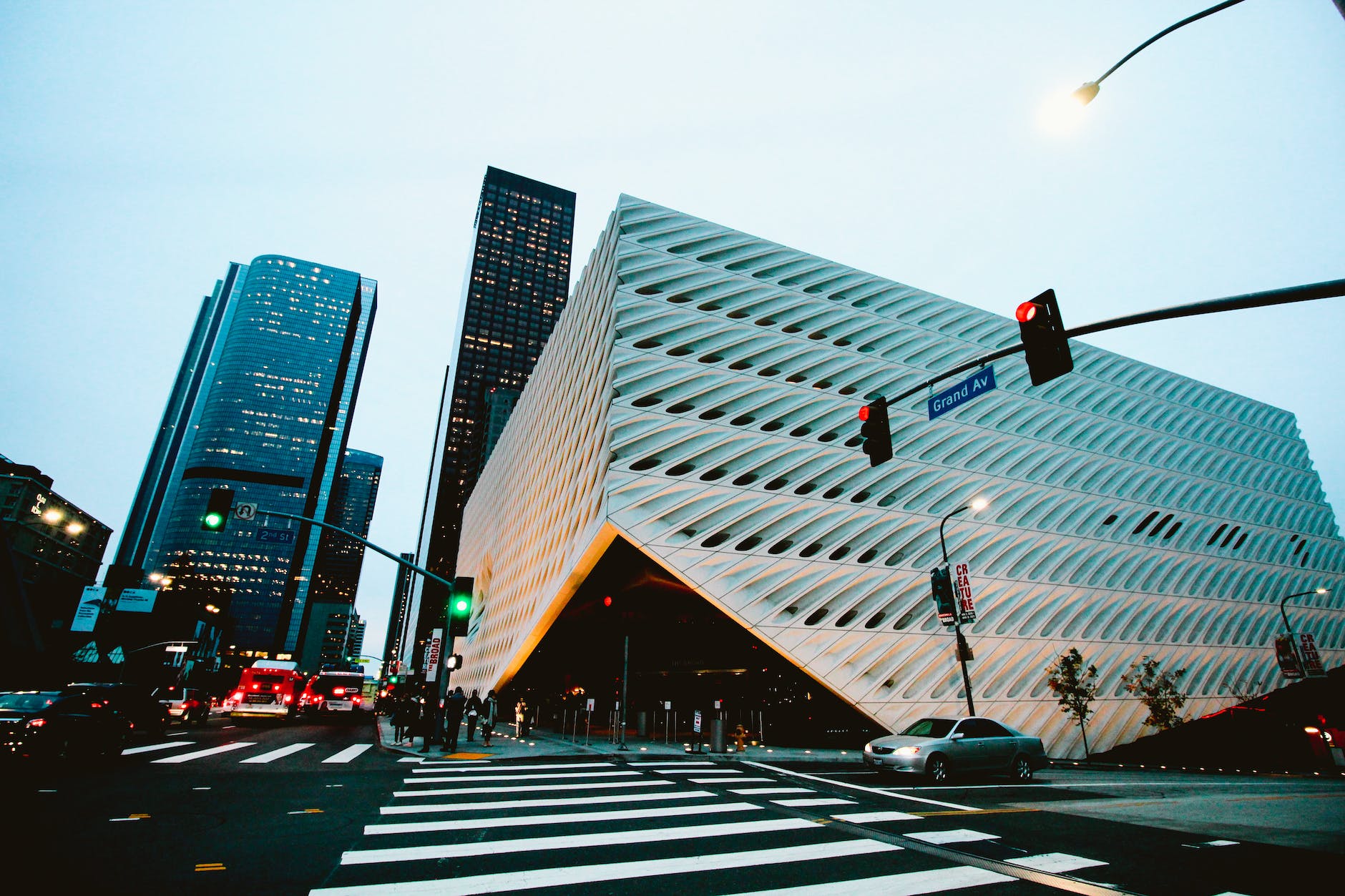
In a recent article posted on the website “Secret Los Angeles,” the question of whether Los Angeles is a walkable city was posed, with the city being ranked as the 8th most walkable city in the U.S. This ranking might surprise those familiar with LA’s reputation for traffic congestion and car culture. However, Los Angeles boasts a variety of walkable spots, including beaches, boardwalks, shopping districts, and hiking trails.
The study that ranked Los Angeles as the 8th most walkable city in the U.S. considered factors such as points of interest, job density, and the availability of office or retail space. While the city’s extensive transit system of metro, buses, and shared scooters and bikes contributed to its high ranking, challenges like income inequality and the high cost of living dim its walkability badge.
To delve deeper into the lived reality of walkability in LA, the article gathered opinions from Angelenos. Responses varied widely, with some asserting that LA is walkable due to areas like Santa Monica and West LA, while others argued that the city’s sprawl limits its walkability compared to cities like NYC, Chicago, or SF. Some respondents highlighted the need for better sidewalks and urban planning to enhance LA’s walkability.
The blog post also references a 2023 study by the National Association of Realtors, which revealed a strong preference among Americans, especially younger generations, for neighborhoods where amenities are within walking distance. This preference underscores the importance of walkability in urban areas.
While the question of whether Los Angeles is truly a walkable city remains complex and subjective, the diverse range of opinions reflects the city’s unique urban landscape. The blog post concludes by emphasizing the opportunity for LA to improve its walkability through thoughtful urban planning and design, despite the challenges it may present.
The post closes with a list of the 20 most walkable cities in America, illustrating the varying degrees of walkability across different urban centers. Readers are encouraged to explore the methodology behind the rankings and learn more about walkable cities in America on the Smart Growth America website.
The 20 most walkable cities in America
- New York
- Boston
- Washington, D.C.
- Seattle
- Portland
- San Francisco
- Chicago
- Los Angeles
- Pittsburgh
- Philadelphia
- Minneapolis-St. Paul
- Miami
- Charlotte
- Austin
- Atlanta
- Denver
- Cleveland
- Houston
- Columbus
- Baltimore
Source: Secret Los Angeles
https://secretlosangeles.com/is-los-angeles-walkable-angelenos-weigh-in
https://stmdailynews.com/category/the-bridge/urbanism


The Knowledge
Asteroid 1998 KY26: Can Sunlight Explain Its Motion?
Sunlight may explain the unusual motion of asteroid 1998 KY26. A new study casts doubt on the dark comet theory, and Japan has canceled its planned visit.

Last Updated on November 20, 2026 by Daily News Staff

A tiny asteroid about the length of a school bus has been drifting slightly off the path astronomers would predict from gravity alone. The object, known as 1998 KY26, spins once every five minutes and 21 seconds. One of the strongest explanations for its unusual motion comes from a familiar source: sunlight.
In a 2025 study, researchers led by NASA’s Jet Propulsion Laboratory modeled two small forces acting on the roughly 36-foot-wide asteroid. Sunlight exerts pressure when it strikes the surface, and the asteroid gets another tiny push as it radiates heat back into space. When the team accounted for the asteroid’s irregular shape and rapid spin, the model closely matched its observed trajectory.
A newer study published in Icarus casts doubt on another explanation. Astronomers had proposed that escaping water vapor might give KY26 a gentle push without producing a visible tail, making it a candidate for what scientists call a “dark comet.” But temperature simulations found that even the object’s coldest regions would be too warm to hold on to buried water ice over long periods. The findings make long-lived ice a less likely source of the asteroid’s extra acceleration.
A close-up look was planned for 2031, when Japan’s Hayabusa2 spacecraft was due to rendezvous with KY26. On November 17, Japan’s space agency announced that ion-engine trouble had forced a change of plans. The spacecraft is now slated to fly past a different asteroid, 2015 BM510, in April 2028.
Sources
EarthSky, November 20, 2026. Paul Scott Anderson covers the unusual motion of 1998 KY26, the proposed explanations, and the cancellation of Hayabusa2’s planned visit. Mystery space object moves in strange ways- Solar radiation and the orbit. The 2025 study found that sunlight pressure and heat emitted by the asteroid could reproduce its observed trajectory. The Astrophysical Journal Letters
— Radiation Forces and Trajectory of Hayabusa2 Target 1998 KY26
- The new water-ice study. Temperature modeling suggests buried water ice would have difficulty surviving over long periods. Icarus
— Thermally Unfavorable Conditions of Volatile Existence in Near-Earth Asteroid 1998 KY26
- Size and rotation. The team used optical and radar observations to revise the asteroid’s estimated diameter and spin rate. Nature Communications
— 1998 KY26 Is Smaller and Rotating Faster Than Previously Known
- Hayabusa2 mission change. JAXA’s November 17 briefing details the switch from the KY26 rendezvous to a flyby of 2015 BM510. JAXA mission briefing (PDF, Japanese)
· Jiji Press coverage in English
Related reading on STM Daily News
- Large Asteroid 1999 AN10 Will Safely Pass Earth in August 2027
- Asteroid Apophis: An Exciting Encounter with Earth
- Interstellar Visitor 3I/ATLAS Surprises Astronomers With Growing Tail and Strange Chemistry
Transportation
LA Metro’s D Line Extension to Century City Needs $296 Million More as Completion Slips
LA Metro is seeking another $296 million for D Line Extension Section 2 as the project’s substantial-completion forecast shifts from spring to fall 2027. Metro has not announced a replacement date for passenger service to Beverly Hills and Century City.

LOS ANGELES — The next segment of LA Metro’s D Line subway extension is facing a major cost increase and a later construction milestone as the agency works to finish stations serving Beverly Hills and Century City.
Metro staff is asking the agency’s Board of Directors to increase the life-of-project budget for D Line Extension Section 2 by $296 million, from approximately $2.575 billion to $2.871 billion. The proposed increase amounts to about 11.5 percent of the project’s current budget.
According to a Metro Board report, Section 2 was 95 percent complete as of September 2026. However, its unallocated contingency had fallen to approximately $6.7 million, an amount Metro says is insufficient to carry the project through completion.
Contractor settlement and additional construction costs
The requested funding includes a $151 million settlement with design-build contractor Tutor Perini/O&G over a time-related claim. The contractor initially sought more than $200 million, while other claims and notices brought the total potential value of the disputed issues above $357 million.
Metro also identified approximately $75 million in added cost exposure connected to a secondary tunnel liner. Other expenses include additional construction work, real estate costs, extended professional services and restored contingency for remaining risks.
This would be the project’s second major budget increase. The Metro Board approved an additional $134 million in July 2023, after a Federal Transit Administration risk assessment found that the project’s budget was insufficient.
Completion shifts to fall 2027
The negotiated settlement also changes the contractor’s milestone schedule. Metro says the forecast for substantial completion has shifted from spring 2027 to fall 2027.
Metro had previously listed spring 2027 as the start of passenger operations for Section 2. The agency has not announced a revised revenue-service date in the new Board report. Because substantial completion is now forecast for fall 2027, the previous spring opening timetable no longer appears achievable. Testing, safety certification and operating preparations would still be required before riders can use the extension.
Section 2 will extend D Line service about 2.6 miles west from Wilshire/La Cienega, adding the Beverly Drive and Century City stations. It is the middle portion of Metro’s nine-mile Westside subway expansion. Section 1 opened in May 2026, while Section 3 is intended to continue the line to Westwood/UCLA and the Westwood/VA Hospital.
How Metro proposes to cover the increase
Metro staff recommends using $296 million in Measure R transit-capital funds currently programmed for the Division 20 rail-yard program. Proposition A funds would then replace that money for Division 20.
The report says reducing the scope, shortening the segment or relying on additional value engineering is no longer practical because construction is so advanced. Metro warns that without the budget amendment, it would be unable to fund completion according to the current schedule.
The proposal is scheduled for consideration by Metro’s Finance, Budget and Audit Committee on November 19, 2026. The budget amendment will still require Board approval.
The disclosure is consequential for riders because it places both the cost and timing of the Beverly Hills–Century City extension under renewed scrutiny. Although the subway is approaching completion, Metro must now secure hundreds of millions of dollars more and establish a realistic opening timetable for one of the region’s most important transit expansions.
Source

Consumer Corner
What Shoppers Should Know Before Switching to a Hybrid Vehicle
Switching to a Hybrid Vehicle: With gas prices rising, fuel efficiency is an important consideration for car shoppers. Hybrid vehicles are an increasingly attractive solution for Americans navigating a challenging economy and those fluctuating fuel costs.
What Shoppers Should Know Before Switching to a Hybrid Vehicle
(Feature Impact) With gas prices rising, fuel efficiency is an important consideration for car shoppers. Hybrid vehicles are an increasingly attractive solution for Americans navigating a challenging economy and those fluctuating fuel costs.
For drivers who aren’t ready to make the transition to a fully electric vehicle, hybrids provide an easy middle ground for a smart alternative to gas-powered cars. They deliver improved fuel efficiency without major lifestyle changes, evolving significantly from earlier models to offer the styling and performance drivers expect from modern vehicles while reducing time at the pump.
Watch this to find out more:
//www.youtube.com/embed/ZheYI3sacZU
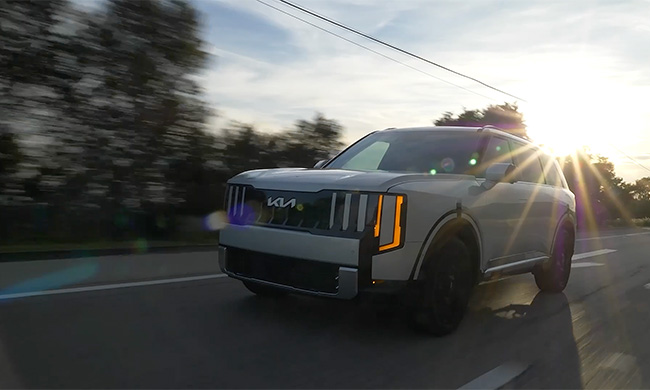
Consider the hybrid lineup from Kia, spanning multiple vehicle classes including the flagship, three-row Telluride, mid-size SUVs and minivans. That variety gives drivers more flexibility when choosing the best vehicle for their lifestyle.
Hybrid electric vehicles combine a gasoline engine with a self-charging electric motor to improve fuel economy. Since no plug-in is required, turbo hybrid models are a practical option for drivers looking for both maximum fuel efficiency and passing power.
“Start by considering your true budget, actual driving habits and cargo space you really need,” said James Bell, head of corporate communications and public relations at Kia America. “Shoppers should also compare a hybrid’s fuel economy and purchase price with similar gas-powered models to highlight expected savings.”
Hybrid vehicles have come a long way with more options for drivers looking for the right fit. Learn what you should consider before making the switch at Kia.com.

SOURCE:
Kia




