

Lifestyle
DOVE MEN+CARE LAUNCHES “CARE MAKES A DAD” THIS FATHER’S DAY
Care Makes a Dad:
The new campaign from the men’s grooming brand will spotlight stories of the caring role that father figures play in the lives of so many


ENGLEWOOD CLIFFS, N.J. /PRNewswire/ — Every year, Father’s Day celebrates wonderful dads across the country. However, the role of dad can take many forms – and powerhouse men’s grooming brand Dove Men+Care is shining a light on that for Father’s Day this year.
New research commissioned by Dove Men+Care found that 70% of people have an impactful father figure in their life, but only 10% regularly celebrate them on Father’s Day. That’s why Dove Men+Care is recognizing the stepfathers, foster fathers, godfathers, brothers, coaches, friends, teachers and more this Father’s Day that have played the role of an impactful father figure through their unconditional care – the living proof that Care Makes a Difference. Care Makes A Dad.
To ignite this conversation, Dove Men+Care released a new film “Care Makes a Dad“. The film showcases the real stories of kids from across the U.S. and the special bonds they share with their father figures, who rise to the occasion every day to make a difference in their lives.
“We’re thrilled to bring attention to the unsung heroes of Father’s Day,” says Alejandro Fiecconi, Global Head of Brand for Dove Men+Care at Unilever. “There are children with father figures in their lives who mean the world to them, show up for them, support them. These men exemplify care. We wanted to give these men a round of applause – even if they didn’t ask for one.”
Joining this celebration is father figure and professional basketball player Nah’Shon Lee “Bones” Hyland. Bones has been a father figure to his cousin Izzy since a tragic incident brought them closer together when Izzy was a baby, creating an inseparable bond. Bones’ compassion and commitment to doing what’s right every day makes him a role model and hero to Izzy, and exemplifies the ways care makes a difference. Together, with five other father figures – from teachers, stepfathers, and grandfathers – they remind us that Care Makes a Dad.
“It’s an honor to be featured in this campaign,” says Bones Hyland. “My cousin Izzy is one of the most important people in my life. He’s like a son to me. I’ll be there for him every step of the way any way I can.”
Ogilvy, who led creative development of the campaign, shares more on the evolution of the campaign. “This year, building on our commitment to celebrate and champion the transformative care that all dads can give, we’re throwing the definition of fatherhood open wide,” says Rob Butcher, Global Creative Director, Dove Men+Care for Ogilvy. “This campaign celebrates all the men who step up to care out of choice. Coaches, uncles, adoptive fathers and community dads who show that care makes all the difference to the children in their lives.”
Dove Men+Care is bringing the ethos of the film to real life to spark a change on those we should recognize on Father’s Day and beyond by:
- Launching the “Celebrate ALL Father Figures”sweepstakes – a chance for everyone to recognize a father figure who has made a difference. Select winners will be featured in a full-page ad in The New York Times following Father’s Day.
- How to enter: Post a photo on Instagram featuring you and your father figure! It could be your dad, stepdad, uncle, coach, or anyone who played a significant role in your life. Make sure to tag @DoveMenCare and include the hashtags #CelebrateALLDads and #Sweepstakes. This sweepstakes will close on Father’s Day on June 16th. More information can be found here.
- Hosting a special Celebrate ALL Father Figures pop-up event in New York City on June 14th. Fit for the whole family, loved ones and the community to gather with their father figures, create special mementos for the holiday, and have a chance to participate in mini photo-shoots that reshape the literal picture of what it means to be a DAD. The event will take place from 2 PM to 6 PM at the 91st Street Plaza between 2nd and 3rd Avenue. Images captured will also be eligible for the sweepstakes.
To learn more about the campaign, visit www.dovemencare.com/CareMakesADad and follow along on the Dove Men+Care Youtube channel and @DoveMenCare on the brand’s Instagram channel.
About Dove Men+Care
Dove Men+Care is the first range of products from Dove developed specifically for men. Manufactured by Unilever, the line includes the #1 dermatologist-recommended body wash brand. Launched in 2010, Dove Men+Care is a powerhouse men’s grooming brand in the U.S. with a product portfolio that includes bars, body washes, face care, antiperspirant/deodorants, hair care, and hand/body lotions, which are available nationwide in food, drug, and mass outlet stores.
Since launching, Dove Men+Care has also been dedicated to debunking the stereotypes of how men around the world care for themselves and others. The brand is on a mission to inspire every man to experience the transformative effects of care and focuses on making that a reality through cultural initiatives, legislative action, and community engagement. Learn more at DoveMenCare.com.
About Unilever in North America
Unilever is one of the world’s leading suppliers of Beauty & Wellbeing, Personal Care, Home Care, Nutrition and Ice Cream products, with sales in over 190 countries and products used by 3.4 billion people every day. We have 127,000 employees and generated sales of €59.6 billion in 2023.
Our leading brands in North America include Dove, Hellmann’s, Vaseline, Degree, Axe, TRESemmé, Knorr, Magnum, Ben & Jerry’s, Nutrafol, Liquid I.V., Paula’s Choice, and Dermalogica.
For more information on Unilever U.S. and its brands visit: www.unileverusa.com
For more information on Unilever Canada and its brands visit: www.unilever.ca
SOURCE Dove Men+Care
https://stmdailynews.com/category/lifestyle


Health and Life Insurance
Lessons in Life Insurance: 4 Reasons Getting It May Be Easier Than You Think
Life is the most valuable thing you have – and like all valuable things, it should be insured. Even thinking about life insurance can be stressful, so it’s one of those things that’s easy to put off and tell yourself you’ll do another day. Consider these four ways to make getting life insurance simpler than you thought.

Lessons in Life Insurance: 4 Reasons Getting It May Be Easier Than You Think
(Feature Impact) Life is the most valuable thing you have – and like all valuable things, it should be insured. Even thinking about life insurance can be stressful, so it’s one of those things that’s easy to put off and tell yourself you’ll do another day.
If that’s how you feel, you aren’t alone. According to the 2026 Life Happens Life Insurance Survey, nearly half (46%) of U.S. adults have getting life insurance on their to-do list but plan to deal with it later or not at all. Confusion, procrastination and cost concerns are among the main reasons people kick this can down the road, according to 45% of respondents.
Yet the survey also uncovered an interesting disconnect: 69% of Americans said they personally know someone who had life insurance or whose family used a life insurance policy, most often a parent or parent figure (33%), but still haven’t made getting coverage a priority.
“Life insurance isn’t unfamiliar to most Americans,” Life Happens Executive Director Brian Steiner said. “The challenge is turning that awareness into action. People may think life insurance is something they can deal with later, but waiting can leave the people they love financially vulnerable. Getting started doesn’t have to be complicated, and professional guidance can help you find protection that fits your needs and budget.”
Consider these four ways to make getting life insurance simpler than you thought.
Watch this video to learn more
1. Find a policy that’s a fit.
Roughly 4 in 10 survey respondents reported feeling overwhelmed, anxious or some combination of both about planning for life insurance, with 12% citing thinking it’ll be too expensive as a reason they’ve delayed looking into, buying or updating life insurance.
The good news: There’s a policy that’s right for your current needs. It may be term life insurance, which provides protection for a specific period of time, like to cover a mortgage or tuition for children. There’s also permanent life insurance, which offers lifelong protection, as long as you pay the premiums.
2. Take advantage of digital tools
One-quarter of respondents said they’d be more likely to look into life insurance if they learned it was easier to get than they thought, and digital tools can help make that demand a reality.
It can take as little as two minutes to find out how much you need, for example, with the life insurance needs calculator from the nonprofit Life Happens. Just answer a few simple questions to estimate the amount of life insurance coverage you may need to take care of your family.
3. It’s about protection, not perfection.
Part of the anxiety around life insurance may be the perception that it should be perfect. For more than 1 in 5 survey participants, the plan is to seriously look at it when they feel more financially stable, and another 12% simply said they’ll do it when they’re older.
However, life insurance doesn’t have to check all the boxes for every stage of your life – you can find what works for your family right now then adjust as things change over time.
4. Professional help is available.
Perhaps the biggest hurdle to tackling life insurance is the feeling that you’re in it alone. Overall, 55% of respondents said if they learned life insurance may be easier to get than they expected, they’d be more likely to start the process.
With professional help only a few clicks away, you can rest assured you’re on the path to a life insurance fit that’s right for you by visiting findapro.lifehappens.org.
Photo courtesy of Shutterstock

SOURCE:
Child Health
Changing the Landscape of Childhood Cancer Survivorship
Childhood Cancer: hile “cancer” is a term no family wants to hear, especially when it comes to their children, there is reason for hope. Today, 85% of children diagnosed with cancer survive at least five years. Survival is only part of the journey, however.
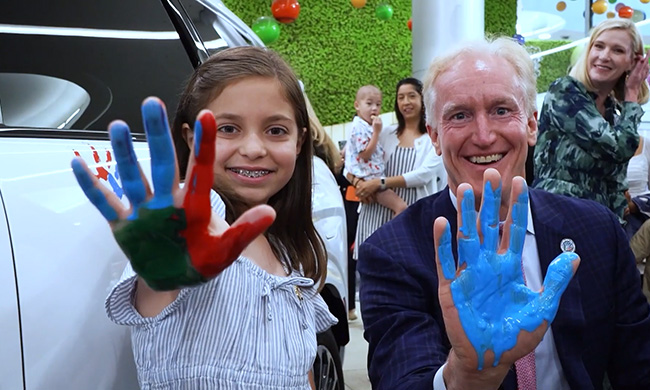
Changing the Landscape of Childhood Cancer Survivorship
(Feature Impact) While “cancer” is a term no family wants to hear, especially when it comes to their children, there is reason for hope. Today, 85% of children diagnosed with cancer survive at least five years, according to the National Cancer Institute, up from 75% three decades ago.
Watch this video to learn more
“This progress is driven in large part by dedicated research,” Hyundai Hope on Wheels Board Member Kevin Reilly said. “Over the last 28 years, Hyundai Hope on Wheels has committed over $300 million in pediatric cancer research and program grants, awarding more than 1,600 grants to 210 medical institutions nationwide, impacting thousands of young lives each year.”
Survival is only part of the journey, however. Nearly half (46%) of U.S. adults believe a child ringing the hospital bell after cancer treatment means the child is cancer-free and their medical journey is largely over, according to a survey conducted by Atomik Research on behalf of Hyundai Hope on Wheels. For the children and families living through a diagnosis, the reality is far more complex.
“The reality is that healing continues long after treatment, which is why sustained investment in survivorship care is a priority for us,” said John Guastaferro, executive director of Hyundai Hope on Wheels.
Isabella Franco-Capps, 11, understands that journey firsthand. Diagnosed with B-cell acute lymphoblastic leukemia at age 5, her journey took two years before she could say she’s “a cancer survivor.”
“I was diagnosed with b-cell acute lymphoblastic leukemia,” she said. “This began my two-year-long journey of scans, pokes, chemotherapy and hospital stays. And now I’m a cancer survivor.”
Fellow Hyundai Hope on Wheels National Youth Ambassador, Jackson Trihn, 12, is using his voice to call for continued research and to bring hope to others.
“The role … is being able to share my story,” he said. “Not just to spread awareness but to spread hope to kids that need it. And awareness is so important because people don’t understand how hard pediatric cancer can be.”
Continued progress can help ensure more children ring the bell and receive the care and support they need long after they’ve had the opportunity to do so. To learn more about these efforts and how you can help, visit HyundaiHopeOnWheels.org.

SOURCE:
💪 Your health journey starts here! Explore the latest health news, fitness tips, wellness trends, and healthy living advice. Share your thoughts in the comments and subscribe to the STM Daily News newsletter to stay informed and inspired every day.

(Feature Impact) Driven by rising rates of obesity, diabetes, high blood pressure and other risk factors,cardiovascular disease has surpassed cancer as the leading cause of death among Hispanic adults in the United States.
Hispanic people represent nearly 1 in 5 of the U.S. population and are the nation’s largest ethnic minority group, yet many continue to face barriers to achieving heart health and accessing high-quality healthcare. A new scientific statement published in the American Heart Association’s flagship journal, “Circulation,” revealed how social, economic, cultural and environmental factors contribute to persistent disparities in cardiovascular health, calling for culturally tailored prevention strategies, equitable access to care and greater representation of Hispanic populations in cardiovascular research.
“Hispanic populations in the U.S. are incredibly diverse even within their own communities with differences in genetic ancestry, language, cultural traditions and social experiences that can significantly influence cardiovascular health,” said Johanna Contreras, M.D., M.Sc., FAHA, director of the Division of Heart Failure and medical director of the Hispanic Heart Center within the Mount Sinai Health System. “Yet Hispanic people remain underrepresented overall in the research that guides prevention and treatment strategies… Without better representation and more detailed data, we risk overlooking important differences that can help us improve care and save lives.”
Hispanic Cardiovascular Health by the Numbers
Cardiovascular risk factors – obesity (nearly 46%), type 2 diabetes (15.5%) and high blood pressure (approximately 44%) – are prevalent among Hispanic adults and often emerge at younger ages and occur more frequently among Hispanic adults compared with white adults.
According to the report, only about 1 in 5 Hispanic adults achieves ideal cardiovascular health as defined by the American Heart Association’s original Life’s Simple 7 metrics. Updated analyses using the Life’s Essential 8 framework demonstrated persistent disparities for heart and brain health, as well as suboptimal dietary quality, sleep patterns and levels of physical activity.
Social and Economic Barriers Matter
Biology alone does not explain cardiovascular health disparities. The environments where people live, work and age, along with social and economic challenges, impact heart health. In fact, approximately 17% of Hispanics live below the federal poverty threshold, compared with 8.2% of white adults.
“Many Hispanic adults face obstacles that extend far beyond the doctor’s office,” Contreras said. “Limited health insurance coverage, language differences, food insecurity, environmental exposures and concerns related to immigration status can make it more difficult to prevent disease, manage chronic conditions and receive timely treatment.”
Contreras emphasized the cultural values and practices of Hispanic people also influence how they perceive their health and healthcare options.
“Family plays a central role in many Hispanic communities and can be an extraordinary source of strength, support and resilience,” Contreras said. “At the same time, family members are often called upon to translate medical information, navigate health systems and help make healthcare decisions for loved ones. Those responsibilities can shape how health information is understood and acted upon.”
An Action Plan for Improving Hispanic Health
There are practical opportunities to achieve equitable cardiovascular health and reduce disparities through community engagement, culturally responsive care, inclusive research and policies that address the underlying drivers of health.
“Reducing cardiovascular disease among Hispanic populations demands action at every level,” Contreras said, “from improving access to culturally responsive care and expanding research participation to addressing the social and environmental conditions that shape health.”
By addressing both medical risk factors and the social conditions that shape health, experts believe there is an important opportunity to reduce disparities and help more people live longer, healthier lives. Learn more at Heart.org.
Photo courtesy of Shutterstock

SOURCE:
Subscribe to our news letter STM Daily News





