

Community
The Government of Canada launches Canada’s Action Plan on Combatting Hate

Canada’s first-ever Action Plan on Combatting Hate brings together key federal initiatives to combat hate across the country
OTTAWA, ON /CNW/ – Canada, like elsewhere around the world, has seen a rise in hate both on the streets and online in recent years. The federal government is committed to doing whatever it takes to protect everyone living in Canada as well as the resilient and diverse communities across the country to ensure that all can thrive while being their authentic self.
The rise in hate incidents has disproportionately affected Indigenous Peoples; Black, racialized, religious minorities, and 2SLGBTQI+ communities; women; and persons with disabilities. Hate not only harms those directly targeted but also impacts the broader Canadian society, undermining social cohesion and posing a threat to national security.
That’s why today, the Honourable Kamal Khera, Minister of Diversity, Inclusion and Persons with Disabilities, unveiled Canada’s Action Plan on Combatting Hate. The Action Plan represents Canada’s first-ever comprehensive cross-government effort to combat hate. It brings together 20 key federal initiatives grounded on three pillars:
- Empower communities to identify and prevent hate;
- Support victims and survivors, and protect communities; and
- Build community trust, partnerships and institutional readiness.
The Action Plan invests $273.6 million over six years, and $29.3 million ongoing, to tackle hatred from multiple angles. It includes increasing support to victims and survivors, helping communities prevent, address and protect people from hate; enhancing research and data collection; providing greater resources for law enforcement; and raising public awareness.
Everyone has a right to be safe and treated with dignity. We will collaborate with provincial, territorial and international governments, as well as First Nations, Inuit and Métis partners, and cities and communities across Canada to make this happen. Canada’s Action Plan on Combatting Hate will help us continue building a safer and more inclusive Canada where everyone can succeed, regardless of who they are, who they love or what they believe in.
Quotes
“Everyone has the right to feel safe, regardless of who they are, what they look like or what they believe in. We have all been alarmed to witness the tragic consequences of hate, both at home and abroad. Hate has no place in Canada – whether in person or online, in our schools, or in our places of worship. Our government is committed to keeping communities across the country safe. Because when someone becomes a victim of hate, it affects all of us. Canada’s first-ever Action Plan on Combatting Hate represents an unprecedented cross-government effort to combat hate while providing more support to victims of hate and at-risk communities. As we face difficult and challenging times, we must stand up for who are as a country – a country where diversity is our strength and where everyone can be who they are and achieve their dreams without fear.”
—The Honourable Kamal Khera, Minister of Diversity, Inclusion and Persons with Disabilities
“Hate, in all its forms, has no place in Canada – everyone has a right to feel and be safe in their homes and in their communities. We all have a role to play in fighting discrimination and fostering a fairer, safer and more inclusive Canada. The Changing Narratives Fund, as part of Canada’s Action Plan on Combatting Hate, will break down systemic barriers and empower diverse voices in the arts, culture and media. The fund ensures their experiences and perspectives are better represented, and advances anti-racism, equity, and diversity and inclusion within the cultural and media sectors.”
—The Honourable Pascale St–Onge, Minister of Canadian Heritage
“In the face of an increase in hate crimes, our government is stepping up to ensure at-risk communities can access financial support to protect their institutions. The new Canada Community Security Program is designed to be simpler, more flexible and more generous, in direct response to what we’ve heard from community organizations across the country.”
—The Honourable Dominic LeBlanc, Minister of Public Safety, Democratic Institutions and Intergovernmental Affairs
“No one should live in fear of being who they are, but we know that discrimination based on sexual orientation or gender identity and expression continues to be a reality in Canada. This is wrong and must be eliminated. Canada’s Action Plan on Combatting Hate complements actions we have taken to protect and support Canadians since 2015, including the Federal 2SLGBTQI+ Action Plan, all of which were developed by listening to the voices and lived experiences of individuals and communities across Canada. As always, we continue to stand shoulder to shoulder with all communities experiencing hate and we will not hesitate to use all federal tools to protect and support them.”
—The Honourable Marci Ien, Minister for Women and Gender Equality and Youth
“We all expect to be safe in our homes, in our neighbourhoods and in our communities. This is why we introduced Bill C-63, a key component of Canada’s Action Plan on Combatting Hate. We know that online harms can have real world impacts with tragic and sometimes fatal consequences. This legislation is about keeping everyone safer in an online world that can feel more dangerous and unfortunately more toxic each and every day so that women, racialized persons, 2SLGBTQI+ people, and people of diverse faiths and backgrounds can go to their places of worship, community centres, schools or work without fearing that online threats might turn into real world danger.”
—The Honourable Arif Virani, Minister of Justice and Attorney General of Canada
“Canada is as innovative as it is diverse, and it is far more successful when everyone is given a fair chance to develop their full potential, free from hate and discrimination. With Canada’s Action Plan on Combatting Hate, we are standing up to confront hate and protect Canadians, and Statistics Canada will be key in researching and gathering the data needed to build a safer and more resilient society.”
—The Honourable François-Philippe Champagne, Minister of Innovation, Science and Industry
“Canada is a country rich in diversity, where every person deserves to feel safe and be respected. This is why today we’re launching Canada’s first-ever Action Plan on Combatting Hate, a commitment of $273 million to help build a safe Canada for everyone.”
—Sameer Zuberi, Parliamentary Secretary to the Minister of Diversity, Inclusion and Persons with Disabilities
Quick Facts
Budget 2022 provided $85 million over four years, starting in 2022–23, to the Department of Canadian Heritage to launch and implement the new Anti-Racism Strategy and a national action plan on combatting hate. Budget 2024 provides an additional $273.6 million over six years, starting in 2024–25, and $29.3 million ongoing to support Canada’s Action Plan on Combatting Hate. The Action Plan brings together key initiatives led by federal departments and organizations, including Canadian Heritage, Public Safety Canada, Justice Canada, the Royal Canadian Mounted Police, Women and Gender Equality Canada, Statistics Canada and the Canadian Race Relations Foundation.
According to the July 2024 Statistics Canada data release, the number of police-reported hate crimes increased from 3,612 incidents in 2022 to 4,777 in 2023 (+32%), even though some victims might not report a hate crime they experienced. This followed an 8-percent increase in 2022 and a 72-percent increase from 2019 to 2021. Overall, the number of police-reported hate crimes (+145%) has more than doubled since 2019.
Canada’s Action Plan on Combatting Hate is complemented by the work of the Special Envoy on Preserving Holocaust Remembrance and Combatting Antisemitism and the Special Representative on Combatting Islamophobia.
Public Safety Canada’s enhanced Canada Community Security Program (CCSP) (previously the Security Infrastructure Program) is also part of Canada’s Action Plan on Combatting Hate. The CCSP is making it easier and more efficient for organizations and communities at risk of hate-motivated crime to access security support when they need it.
The Action Plan aligns with ongoing efforts to further mitigate the risk of exposure to harmful content online through Bill C-63, which proposes to create a new Online Harms Act to create stronger protections for the most vulnerable groups online. The Government of Canada has tabled Bill C-63, An Act to enact the Online Harms Act, to amend the Criminal Code, the Canadian Human Rights Act and An Act respecting the mandatory reporting of Internet child pornography by persons who provide an Internet service and to make consequential and related amendments to other Acts, in the House of Commons.
Canada is signatory to the Christchurch Call to Eliminate Terrorist and Violent Extremist Content Online, which is a global pledge by 56 governments, including Canada, as well as online service providers and civil society organizations to coordinate and collaborate on efforts to eliminate terrorist and violent extremist content online. The Government of Canada reiterates its engagement to advance the Christchurch Call to Action in Canada’s Action Plan on Combatting Hate.
Canada’s Action Plan on Combatting Hate complements Changing Systems, Transforming Lives: Canada’s Anti-Racism Strategy 2024–2028. Both initiatives take a comprehensive and intersectional approach to confronting hate, racism and discrimination.
Associated Links
Canada’s Action Plan on Combatting Hate
The Canada Community Security Program
Canada’s Anti-Racism Strategy: Changing Systems, Transforming Lives 2024–2028
Building a Foundation for Change: Canada’s Anti-Racism Strategy 2019–2022
Backgrounder: Canada’s Action Plan on Combatting Hate
OTTAWA, September 24, 2024
Far too many people’s lives are impacted by hate and its devastating consequences. Canada’s Action Plan on Combatting Hate is informed by individuals and communities with lived experience of hate. It is grounded in consultation activities organized by the Federal Anti-Racism Secretariat, which included:
- 15 town halls
- 2 national summits on antisemitism and Islamophobia;
- 1 national youth forum on anti-Black racism;
- 21 roundtables; and
- an online questionnaire open to everyone in Canada.
Additionally, the Action Plan builds on community engagement conducted by the 2SLGBTQI+ Secretariat for the Federal 2SLGBTQI+ Action Plan, three roundtables led by Public Safety Canada on the Security Infrastructure Program (now known as the Canada Community Security Program), and research and recommendations from the Canadian Race Relations Foundation.
The Action Plan lays the foundation for the Government of Canada’s robust response to the growing threat of hate while ensuring every person’s right to be safe and treated with dignity. To achieve this goal, priority areas for action are organized under three pillars:
- Empower communities to identify and prevent hate;
- Support victims and survivors, and protect communities; and
- Build community trust, partnerships and institutional readiness.
To drive real change across the country, the Action Plan brings new and existing initiatives together to foster greater coordination and collaboration among federal organizations. Working in collaboration with their provincial, territorial, international, Indigenous and municipal counterparts, it includes federal initiatives led by:
- Canadian Heritage;
- Canadian Race Relations Foundation;
- Justice Canada;
- Public Safety Canada;
- Royal Canadian Mounted Police;
- Statistics Canada; and
- Women and Gender Equality Canada.
Everyone has multiple and diverse factors of identity that intersect. This impacts how individuals understand and experience hate and the government’s response to hate crimes and hate incidents. This Action Plan was developed using Gender-Based Analysis Plus in an effort to develop responsive measures that take into account the diversity of needs and realities.
For more information, consult the Action Plan web page at https://www.canada.ca/en/canadian-heritage/services/combatting-hate.html.
SOURCE Canadian Heritage
The Bridge is a section of the STM Daily News Blog meant for diversity, offering real news stories about bona fide community efforts to perpetuate a greater good. The purpose of The Bridge is to connect the divides that separate us, fostering understanding and empathy among different groups. By highlighting positive initiatives and inspirational actions, The Bridge aims to create a sense of unity and shared purpose. This section brings to light stories of individuals and organizations working tirelessly to promote inclusivity, equality, and mutual respect. Through these narratives, readers are encouraged to appreciate the richness of diverse perspectives and to participate actively in building stronger, more cohesive communities.
https://stmdailynews.com/category/the-bridge


Community
Zum Begins 2026–27 School Year With Expanded Student Transportation Network
Zum is launching the 2026–27 school year with expanded school bus operations in Fresno, Los Angeles and other communities, bringing real-time tracking and modern transportation technology to students and families.

New partnerships in Fresno and Kansas join ongoing operations in Omaha, St. Louis, Santa Barbara and Los Angeles
As millions of students return to classrooms, transportation company Zūm is beginning the 2026–27 school year with new district partnerships, expanded technology deployments and thousands of drivers preparing for what the company calls “the most important commute in America.”
The Redwood City, California-based student mobility company announced that its teams have completed months of driver training, route validation and operational planning ahead of the new academic year.
“There is nothing quite like the first day of school at Zum,” founder and CEO Ritu Narayan said in the company’s announcement. “You see drivers arriving before sunrise, teams making final preparations and buses rolling out of yards across the country—all united around one purpose: getting students safely and reliably to school.”
New buses roll out in Fresno
One of Zūm’s largest new launches is in California’s Fresno Unified School District. According to the company, 168 buses were placed into service just two weeks after its local team moved into a new transportation yard.
The district is also introducing the Zūm Parent App, which allows families to track buses in real time, receive arrival alerts, view scheduled rides and receive notifications when a child boards or exits a bus. Registered students will receive bus cards connected to the transportation system, according to Fresno Unified.
The rollout is part of a broader change in how Fresno Unified manages student transportation. Routes and stops will continue to be evaluated using registration information, actual ridership and family feedback, the district says. Beginning September 28, registered students will generally be required to show a bus pass before boarding. Fresno Unified’s transportation page provides registration instructions and assistance for families.
Technology comes to LAUSD’s in-house fleet
In Los Angeles, Zūm says its CMX technology has been deployed across the Los Angeles Unified School District’s internally operated bus fleet.
The platform is designed to connect routing, dispatch, drivers, schools, transportation officials and families through one operating system. Its tools include real-time vehicle visibility, route planning, operational coordination and family communications.
Rather than replacing the district’s in-house drivers, the Los Angeles deployment focuses on providing the technology used to coordinate district-operated buses.
New partnership in Kansas
Zūm also began a new partnership with the Shawnee Mission School District in Kansas. District leaders, drivers, monitors and school employees marked the start of the program with a launch celebration.
The company said Shawnee Mission’s transition is intended to give the district a more modern and technology-supported approach to student transportation.
Meanwhile, Zūm is returning for a third school year in Omaha and Santa Barbara. Its St. Louis operation is entering its second year.
Drivers remain at the center
Although technology plays a growing role in school transportation, Zūm emphasized that drivers remain essential to the daily experience of students and their families.
“Back to school is when months of preparation come to life,” said Liz Sanchez, Zūm’s executive vice president of student mobility. “Our teams spend months hiring and training drivers, validating routes and working alongside our district partners to prepare.”
Drivers often serve as the first school-related adults students see in the morning and the last they see before returning home. Their work can also determine whether students arrive safely and on time—especially in communities where families have limited transportation choices.
A changing school-bus experience
School transportation has traditionally depended on separate systems for scheduling, dispatching, vehicle tracking and communicating with parents. Zūm CMX is designed to bring those functions together and give school districts a clearer view of their daily operations.
For families, the most visible change may be access to real-time bus locations and arrival notifications. These tools can reduce some of the uncertainty associated with late buses, route changes and missed pickups.
Zūm reports that its technology and transportation services now support more than 6,500 schools across 19 states. As the company expands, the 2026–27 school year will test how effectively its technology, drivers and district partnerships can translate into dependable daily service.
For students, however, the goal remains straightforward: a safe ride to school, a reliable trip home and one less obstacle between them and their education.
This article is based primarily on information provided in an August 21, 2026, Zūm press release. Statements about the company’s national reach, fleet deployments and technology are attributed to Zūm unless independently noted.
Source: Zūm official website
Related links:
- Fresno Unified: Zūm Parent App
- Fresno Unified: New Transportation Model
- Fresno Unified: Bus Routes
- Fresno Unified: Back-to-School Resources
📰 Enjoying STM Daily News? Join the conversation!
💬 Leave a comment, share your thoughts, and subscribe to our newsletter for the latest stories, updates, and “News You Can Use This Moment!” delivered to your inbox.
Stay connected with STM Daily News!

Community
ABCs for School Zone Safety: Tips for Drivers, Pedestrians and Bicyclists
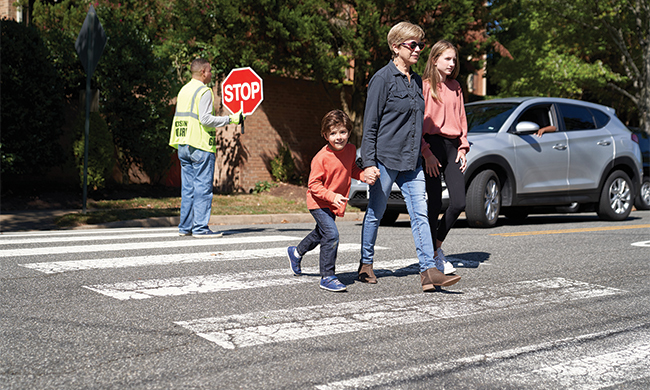
School Zone Safety: A new school year means there’s more traffic around school campuses. Between dropoffs and pickups, children riding bicycles, walking to school and all the shuttling between sports practices and other extracurricular activities, this season is a reminder to make every trip to and from school a safe one.
ABCs for School Zone Safety: Tips for Drivers, Pedestrians and Bicyclists
(Feature Impact) A new school year means there’s more traffic around school campuses. Between dropoffs and pickups, children riding bicycles, walking to school and all the shuttling between sports practices and other extracurricular activities, this season is a reminder to make every trip to and from school a safe one.
To make sure no parent worries about their child getting to school safely, the California Office of Traffic Safety (OTS) and Caltrans are encouraging drivers, pedestrians and bicyclists to remember their “ABCs” on every trip: stay Alert for Bicyclists and watch for and yield to Children crossing the street.
With students in school and traffic patterns changing, consider these tips so students arrive to and from class safely:
Drivers
Because children outside of vehicles do not have the same protections as drivers and passengers, drivers have an outsized role to protect people walking, biking and rolling.
- Take your time and be patient.
- Always follow the speed limit.
- Use extra caution at crosswalks and intersections, especially if you notice children nearby.
- Don’t drive distracted – even a quick glance at your phone can have tragic consequences.
- Never drive while impaired.
- Adjust your driving to the conditions and use extra caution in rain, fog and darkness.
- If you see a bicyclist ahead, wait until it’s safe to pass and give them at least 3 feet of space when you do.
Pedestrians
Pedestrians have an important role in their own safety, particularly in school zones and crosswalks where children and other people may be present.
- Use sidewalks when available. If there are no sidewalks, walk facing traffic so you can see drivers and they can see you.
- Avoid crossing outside of crosswalks. If there is a signalized crosswalk or marked crosswalk, use it.
- Before crossing the street, look both ways. If there are any stopped or turning cars, try to make eye contact with the drivers before crossing so you know they see you.
- If you’re walking after dark or when visibility is poor, make yourself visible by wearing something bright or reflective and shining a light.
- Stay alert – don’t wear headphones or use your phone while crossing the street or walking across a busy road.
 Bicyclists
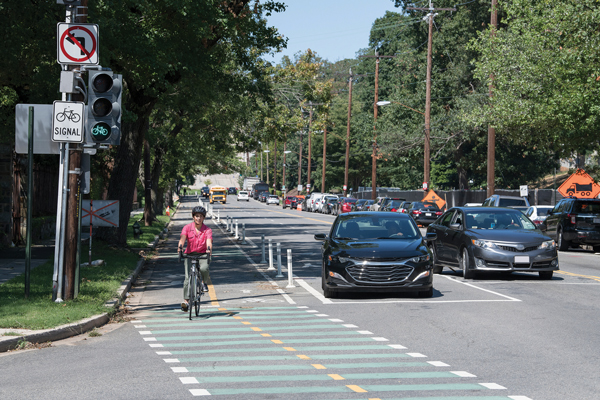
Bicyclists can help protect themselves by staying alert and visible, especially in areas where traffic, pedestrians and young students may be present.
- When possible, plan your route along bike paths or roads with dedicated bike lanes away from vehicle traffic.
- Equip your bicycle with lights and reflectors to be more visible to drivers and pedestrians.
- Wear a properly fitted helmet and bright clothing.
- Learn cyclist hand signals to communicate when you’re turning, slowing or stopping.
- Stay aware of drivers and always yield to pedestrians.
To learn more and join the movement, visit GoSafelyCA.org.
E-Bike Safety Tips
With more young people using e-bikes than ever before, it’s important that riders and their parents or guardians understand the risks involved and make smart, safe choices.
Since e-bikes can travel at faster speeds than traditional bicycles, they pose greater risk for serious injury or death in the event of a crash. Class 1 and 2 e-bikes can both travel at up to 20 mph unassisted, while Class 3 e-bikes can go as fast as 28 mph unassisted.
E-bike rules vary based on the top unassisted speed, but parents and guardians should follow these tips for e-bikes:
- Many local ordinances and state laws restrict e-bike use for minors or require special licensing.
- Helmets are required for riders under age 18 for Class 1-2 e-bikes and all riders on Class 3 e-bikes, regardless of age.
- You must be 16 years or older to ride a Class 3 e-bike.
- Never ride e-bikes that don’t have pedals as they could be considered e-motos and not legally permitted on roads.
- Ride in bike lanes or on legal paths, avoiding roads with traffic when possible.
- Be as predictable as possible and use caution when making turns, crossing streets or riding in conditions with poor visibility.
E-bike rules may vary by state and regionally. Contact local law enforcement regarding local laws.

SOURCE:
📰 Enjoying STM Daily News? Join the conversation!
💬 Leave a comment, share your thoughts, and subscribe to our newsletter for the latest stories, updates, and “News You Can Use This Moment!” delivered to your inbox.
Stay connected with STM Daily News!
child education
When School’s Out, Community Steps In
Community: The joy of being a kid on summer vacation offers a time to explore with your friends, discover new things about the world and yourself and recharge for a few months before heading back to school in the fall. However, for millions of families, the end of the school year also marks the beginning of a stressful season filled with tough choices, as children can fall behind in the months away from the classroom.
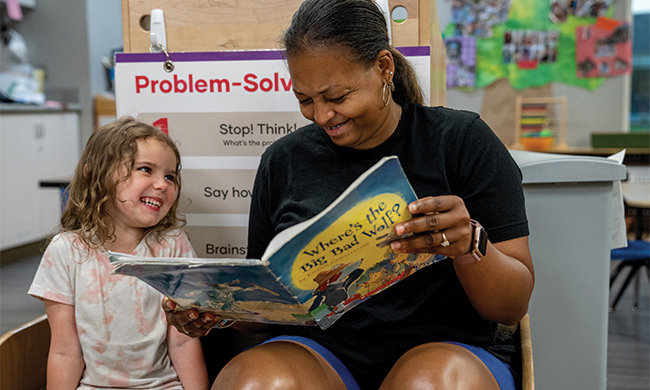
(Feature Impact) The joy of being a kid on summer vacation offers a time to explore with your friends, discover new things about the world and yourself and recharge for a few months before heading back to school in the fall. However, for millions of families, the end of the school year also marks the beginning of a stressful season filled with tough choices, as children can fall behind in the months away from the classroom.
The summer gap begins when the school doors close and many children lose access to the daily routines, educational support and dependable nutrition that help them thrive. For families already juggling tight budgets and demanding schedules, summer can quickly become a season of added pressure and stress.
Summer learning loss – or the decline in academic skills and learning during the school break – can have a lasting impact on academic outcomes. Studies show over the summer, students can forget 20-30% of what they learned during the school year. Without the right support, students often start the new school year playing catchup, which can cause them to fall further behind.
 Summer can also intensify food insecurity. Of the more than 22 million kids who rely on free or reduced-priced school meals, many lose access to these vital programs over the summer. When those meals disappear, families must stretch already limited budgets to cover up to 10 additional meals a week per child. In fact, recent United Way Worldwide data from 211 – the free 24/7 helpline that connects people with local resources – identified food access as one of the most pressing needs facing millions of families nationwide.
These overlapping pressures fall especially hard on millions of working families living paycheck to paycheck, including ALICE (Asset Limited, Income Constrained, Employed) households. They earn above the federal poverty level but still struggle to afford basic expenses like housing, medicine, food and transportation.
Addressing the summer gap requires a community-wide approach and solutions that meet hardworking families where they are. For example, United Way Community Schools are community-based hubs that bring together schools, social services agencies, volunteers and other community partners to provide students and families with essential support like tutoring, food access and health and wellness resources.
Families also need easy, practical, daily tips and local resources to make ends meet and help their kids stay on track.
Learning that Fits Your Day
For busy families, low- or no-cost learning moments that fit into packed schedules can make a real difference. Many communities and nonprofits offer dedicated programs to keep children active and learning during the summer, such as:
- Summer art classes, creative writing workshops and digital literacy tutoring at local libraries
- Free monthly book deliveries and reading challenges through Dolly Parton’s Imagination Library – a United Way partner – or book exchanges at Little Free Libraries in high-traffic areas
- Gardening classes, nature appreciation classes and swim lessons through local parks and recreation departments
- Free weekly youth workshops offered by many public museums, zoos and botanical gardens
- Free virtual museum field trips through institutions like the Smithsonian and NASA Glenn Research Center
- Free online courses in topics ranging from coding to art or language learning
Accessing Your Community’s Food Network
Families shouldn’t have to choose between nutritious food and other essentials. Help is available to ensure kids have the nutrition needed to thrive over the summer. While resources vary by community, examples include:
- Youth-serving organizations serving as open summer meal sites, offering free breakfast and lunch to kids and teens
- City parks departments offering daily meal stations
- School districts offering summer meal programs; food delivery may be an option
- Local places of worship hosting open-door meal programs or distributing weekend grocery bags for families
For those looking to make a difference this summer, consider lending a hand to help children and families. Volunteering is a rewarding way to give back to your community. Whether it’s mentoring, serving meals, reading with students or supporting local programs, even a small time investment can make a lasting impact. After all, when families thrive, communities thrive.
To learn more about childhood summer learning programs, food initiatives and ways to support your community, visit unitedway.org.

SOURCE:
The Bridge is a section of the STM Daily News Blog meant for diversity, offering real news stories about bona fide community efforts to perpetuate a greater good. The purpose of The Bridge is to connect the divides that separate us, fostering understanding and empathy among different groups. By highlighting positive initiatives and inspirational actions, The Bridge aims to create a sense of unity and shared purpose. This section brings to light stories of individuals and organizations working tirelessly to promote inclusivity, equality, and mutual respect. Through these narratives, readers are encouraged to appreciate the richness of diverse perspectives and to participate actively in building stronger, more cohesive communities.
https://stmdailynews.com/the-bridge





