

The Bridge
How a survey of over 2,000 women in the 1920s changed the way Americans thought about female sexuality

Anya Jabour, University of Montana
American women still have fewer orgasms than men, according to new research that suggests that decades after the sexual revolution, the “orgasm gap” is still very much in effect.
One of the study’s lead authors at the Kinsey Institute for Research in Sex, Gender, and Reproduction told The New York Times that the gap persists because many Americans continue to “prioritize men’s pleasure and undervalue women’s sexual pleasure.”
As my research shows, these attitudes toward sexual pleasure have a long history.
But so do efforts to push back against them.
Almost a century ago, a pioneering American sex researcher named Katharine Bement Davis challenged the prevailing view that respectable women did not – and should not – experience sexual desire or have sex, except to please men or to have children.
Davis’s 1929 book, “Factors in the Sex Life of Twenty-Two Hundred Women,” completely upended this thinking.
By surveying everyday American women, she was able to show that it was completely normal for American women to have sex for the sake of pleasure.
An unlikely advocate for sexual liberation
Davis spent the first half of her career policing women’s sexuality, not promoting it.
In 1901, after earning her Ph.D. at the University of Chicago, Davis became superintendent of the New York State Reformatory for Women at Bedford Hills. While there, she studied the women in her care. Most female convicts, she concluded, were “immoral women.”
Davis’ efforts to enforce sexual morality drew the attention of philanthropist John D. Rockefeller Jr. In 1917, he invited her to lead his private agency, the Bureau of Social Hygiene, founded to study and combat prostitution and venereal disease.
During World War I, Davis promoted sex education to curb sexually transmitted infections among soldiers and civilians. Through this work, she became convinced that sexual ignorance – not sexual immorality – posed the greatest danger to women’s welfare.
Davis had long criticized the sexual double standard, which condoned men’s sexual experimentation but condemned women’s sexual experience.
Now, she also recognized that this double standard promoted women’s chastity at the expense of knowledge. She complained that discussions of women’s sexuality were “taboo,” which resulted in “distorted views, baffled speculation, and unfortunate experiences.”
Tackling a taboo topic
Insisting that Americans needed accurate information to achieve “a sane outlook on all matters pertaining to sex,” Davis made it her mission to teach women about sex.
But first, she needed to learn about women’s actual sexual experiences. Davis decided to undertake a large-scale study of what she called “the sex life of normal women.”
Davis’ approach was a dramatic departure from existing studies of “abnormal” sexuality focused on institutionalized populations. “Except on the pathological side,” she remarked, “sex is scientifically an unexplored country.”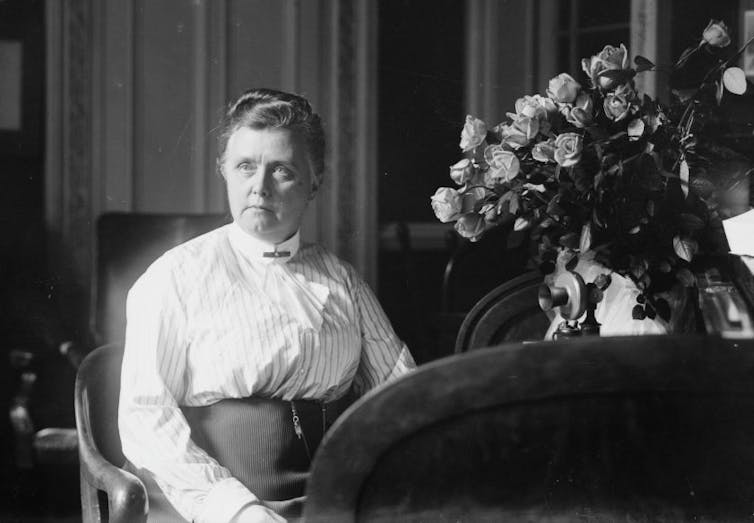
By contrast, Davis explained, she wanted to understand “the woman who was not pathological mentally or physically.”
To that end, Davis distributed a detailed questionnaire to what she called “women of good standing in the community” from 1921 to 1923. The resulting study sample of 1,000 married women and 1,200 unmarried women was not representative – it skewed white, well-educated and well-to-do. But their responses allowed Davis to redefine female sexuality.
America’s first sexual revolution
Davis launched her study of women’s sexuality during what historians now refer to as America’s first sexual revolution. The second – and more well-known one – would take place in the 1960s.
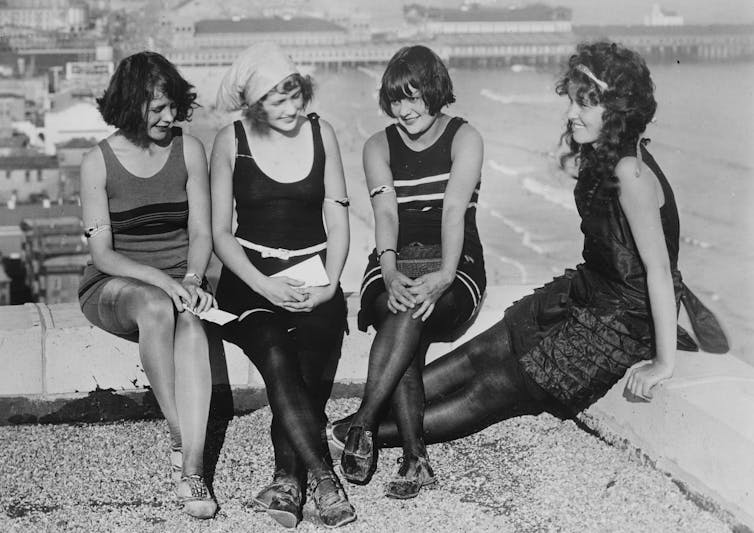
In the 1920s, as one commentator noted, a “revolution in manners and morals” was underway. Sex suffused popular culture. Contestants in beauty pageants displayed their charms in skimpy bathing costumes and short skirts. Actresses flaunted their sex appeal on stage and screen.
New attitudes about sex affected the daily lives of average Americans, too. Young women throughout the nation adopted the sexy look of “flappers,” the term used for women who sported short skirts, rolled stockings and bobbed hair.
Prior to the 1920s, courtship often took place in the home, allowing parents to closely supervise couples. But the ubiquitous automobile – which one juvenile court judge had dubbed “a house of prostitution on wheels” – rendered adult chaperonage obsolete and granted young people unprecedented sexual freedom.
Meanwhile, birth control activists like Margaret Sanger and Mary Ware Dennett distributed contraceptive devices and disseminated sexual information in defiance of the Comstock Act of 1873, which had defined birth control and sex education as “obscene” and made circulating such materials a federal crime.
Sex, secrecy and shame
Even amid the nation’s first sexual revolution, the facts of life remained in short supply.
According to surveys Davis distributed to married women, only about half of the respondents believed that they had been “adequately prepared … for the sex side of marriage.”
After expanding her study to include unmarried women, Davis found that fewer than one-third of all participants received sex education from their parents.
Many women didn’t know how pregnancy occurred. Some had been unprepared even for menstruation. One recalled that when she experienced her first period, “I naturally thought I was bleeding to death.”
In place of information, many women imbibed shame. “Having acquired the feeling as a small child that any sex pleasure was shameful and a great sin,” as one respondent put it, some could never overcome their discomfort with sex. Another woman regarded all sexual thoughts as “something to be shunned like the devil.”
One response succinctly summarized the problem: “Our present secrecy, fear, and repression are responsible for most of our sex ills.”
Challenging the conspiracy of silence
Many women were eager to challenge what one called a “conspiracy of silence” surrounding female sexuality.
Study participants ended up providing Davis with over 10,000 pages of handwritten responses. She used this information to produce the nation’s first major study of women’s sexuality, a 400-plus page book brimming with both statistical data and personal stories.
“Factors in the Sex Life of Twenty-Two Hundred Women” covered a wide range of topics, ranging from sex education to sex play. Running throughout the entire work, however, was one central idea: Women liked sex.
Davis included data on birth control, same-sex relationships and masturbation. At the time, these practices were universally stigmatized and often criminalized. Yet significant proportions of study participants engaged in all these activities.
Nearly three-quarters of married respondents reported using contraceptives. Many probably took advantage of state laws allowing physicians to prescribe diaphragms to protect patients’ health. Surprisingly, nearly 1 in 10 women admitted having abortions, even though the procedure was illegal in every state.
More than half of unmarried women and nearly one-third of married women stated that they had experienced “intense emotional relationships” with other women. In each group, approximately half described those relationships as sexual. This was a remarkably high figure, given prevailing views of homosexuality as sexual deviance and state laws criminalizing homosexual acts.
Nearly 65% of unmarried women and more than 40% of married women reported masturbating. Since nearly all physicians and pastors condemned the practice, Davis assumed the actual numbers were even higher.
Davis’ data demonstrated that “normal” women experienced what one called “natural sex feeling.” In short, her study showed that many women enjoyed sex for its own sake.
Davis believed that reliable data would lead to “more satisfactory adjustments of the sex relationship.” In other words, better information would lead to better sex.
Davis paved the way for future studies that validate women’s sexual pleasure. While researching female sexuality, she established the National Research Council’s Committee for Research on the Problems of Sex. The Rockefeller-funded committee later subsidized Alfred Kinsey’s studies of human sexuality.
Davis’ legacy lives on. The findings from the Kinsey Institute’s latest study show that discussing sexual pleasure still matters, particularly for women. It also suggests that Americans’ understandings of sex have improved over the past century.
When Davis conducted her study in the 1920s, she found it “advisable” to define “orgasm” for participants who were unclear on the concept. Now, a generation of better-informed Americans ponder how to address a persistent “orgasm gap.”
Anya Jabour, Regents Professor of History, University of Montana
This article is republished from The Conversation under a Creative Commons license. Read the original article.

Community
‘Give Like a Kid Again’ for Real-World Impact This Halloween
Costumes. Candy. Jack-o-lanterns glowing on porches. Halloween is filled with moments that spark children’s imaginations. This Halloween, children and families can “Give Like a Kid Again,” turning imagination into kindness and helping children around the world.

‘Give Like a Kid Again’ for Real-World Impact This Halloween
(Feature Impact)Costumes. Candy. Jack-o-lanterns glowing on porches. Halloween is filled with moments that spark children’s imaginations.
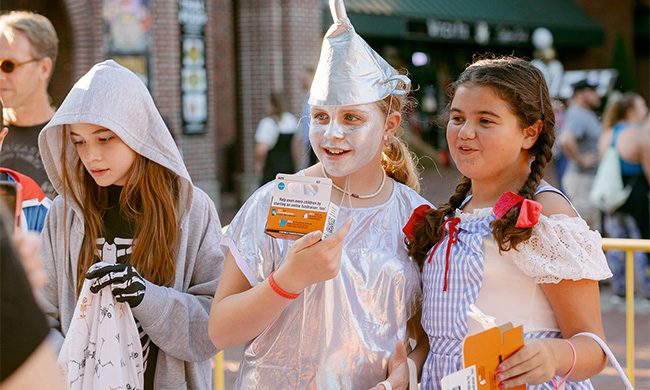
This Halloween, Trick-or-Treat for UNICEF is inviting children and families to “Give Like a Kid Again,” turning imagination into kindness and helping children around the world. For eight decades,the campaign has shown children that even the smallest act of kindness can travel farther than any front porch and shine brighter than any jack-o-lantern. As the longest-running youth engagement campaign in the United States, it has inspired generations of children to discover that when kids help kids, one Halloween tradition can turn into a lifetime of impact.
What started with just $17 in 1950, when a small group of children filled milk cartons with spare change to help children recovering from World War II, has grown into one of America’s most beloved Halloween traditions, raising nearly $200million to help the organization deliver lifesaving support for children around the world. Today, the iconic orange collection box reminds families that small acts of generosity can create lasting change.
“Each Halloween, Trick-or-Treat for UNICEF reminds us that even the smallest acts of generosity can grow into something extraordinary,” said Shelley Diamond, chief marketing officer, UNICEF USA. “For more than 75 years, this campaign has shown generations of children that you are never too young to make a difference and ‘Give Like a Kid Again’ is about passing that belief on to the next generation.”
Beyond supporting programs in more than 190 countries and territories, donations strengthen the organization’s global humanitarian supply network, delivering emergency essentials like therapeutic food, medicine, blankets and safe water to children impacted by conflict, disasters and disease.
- Be a mermaid and help make waves for clean water. Help provide safe water for a child for a year for $5.
- Be a vampire and help scare away preventable diseases. World Polio Day, just a week before Halloween, provides an opportunity to protect 200 children under age 5 from polio with a $43 donation.
- Be a scientist and help uncover lifesaving answers. Provide 25 malaria diagnostic tests for just $8, helping children receive timely treatment.
- Be a teacher and help children write their next chapter. Provide 1,000 pencils to help children put their ideas, lessons and dreams on paper for $30.
- Be a chef and help cook up a healthier future. Over a two-month period, $10 can treat 15 children by providing 450 packets of micronutrient powder.
- Be an astronaut and help a girl reach for the stars. To helpsix girls feel confident in school, $36 can provide reusable menstrual pads.
- Be a snowman and help bundle up a child against the cold. A donation of $50 could provide a child in an emergency setting with winter clothing, including a jacket, hat, scarf, mittens, socks, winter boots, a warm sweater and warm puffball trousers.
- Be a soccer player (or referee) and help kick off playtime. Provide up to four packages of soccer balls for a child-friendly space for $25 to help kids just be kids again.
This October, everyone can “Give Like a Kid Again” through the iconic orange collection box, online fundraising and family-friendly activities. Visit unicefusa.org/TOT2026 to join the tradition and help make a difference for children around the world.
SOURCE:
UNICEF
📰 Enjoying STM Daily News? Join the conversation!
💬 Leave a comment, share your thoughts, and subscribe to our newsletter for the latest stories, updates, and “News You Can Use This Moment!” delivered to your inbox.
Stay connected with STM Daily News!
Community
PenFed Foundation Raises Over $1.2M for Veterans and Military Families at 23rd Annual Military Heroes Golf Classic
The PenFed Foundation says it raised over $1.2 million for veterans and military families at its 23rd annual Military Heroes Golf Classic.

The PenFed Foundation for Military Heroes said it raised more than $1.2 million to support veterans and military families during its 23rd annual Military Heroes Golf Classic, held Monday, Aug. 31, according to a PRNewswire release. The nonprofit, based in the Washington, D.C. region, focuses on helping veterans transition “from service to success” through programs and grants aimed at military-connected communities.
“We are deeply grateful to our partners and supporters whose generosity and dedication make this event—and the Foundation’s work—possible,” said retired Air Force Lt. Gen. Bradford J. “B.J.” Shwedo, president of the PenFed Foundation, in a statement announcing the fundraising total.
At a dinner held the night before the Golf Classic, PenFed Credit Union President/CEO and PenFed Foundation CEO James Schenck recognized Ed Cody for 25 years of service on the foundation’s board of directors. Cody also serves as chairman of the PenFed Credit Union board and was credited with helping guide initiatives including Defender’s Lodge, the Afghan Rescue and Resettlement Program, the Veteran Entrepreneur Program, and grants supporting wounded, ill, and injured service members.
The foundation said it has provided more than $55 million in financial support to veterans, active-duty service members, and military families since it was founded in 2001. It also noted that PenFed Credit Union covers salaries and administrative costs, allowing more donations to go directly to programs.
What to watch for: How the foundation allocates the new $1.2M across its veteran transition and emergency support programs—and whether it announces new grant rounds tied to entrepreneurship and resettlement work.
SOURCE PenFed Foundation
Subscribe to our newsletter STM Morning Brief!





