

Consumer Corner
Jeep Goes Back to 1945 With the 2027 Wrangler JL-2A
Jeep is looking back more than 80 years with the 2027 Wrangler JL-2A, a Rubicon-based special edition inspired by the Willys CJ-2A, the first Jeep designed specifically for civilian use.

Last Updated on October 5, 2026 by Daily News Staff
The special-edition Wrangler pays tribute to the Willys CJ-2A, the vehicle that helped transform the wartime Jeep into an American civilian icon.
More than 80 years after the first civilian Jeep rolled onto farms, ranches and roads across America, Jeep is reaching deep into its history for a new special-edition Wrangler.
The 2027 Jeep Wrangler JL-2A is a modern tribute to the Willys CJ-2A, introduced in 1945 as the first Jeep vehicle developed specifically for civilian use.
Rather than simply adding a heritage badge to a modern Wrangler, Jeep has incorporated colors, wheels, interior materials and design details inspired by the vehicle that helped establish the civilian Jeep nearly eight decades ago.
The JL-2A is also the 11th installment in Jeep’s Twelve 4 Twelve series of special-edition vehicles.
From the Battlefield to Civilian America
The story behind the JL-2A begins at the end of World War II.
The military Willys MB had earned a reputation for ruggedness during the war, but Willys-Overland saw an opportunity for the basic concept beyond military service.
In July 1945, the company introduced the Willys CJ-2A.
The letters “CJ” stood for Civilian Jeep, and the CJ-2A adapted the military Jeep formula for farmers, ranchers, industrial workers and everyday civilian users.
Changes included a tailgate, larger headlights and a rear power takeoff that allowed the Jeep to operate certain agricultural and industrial equipment. The CJ-2A also helped establish the familiar seven-slot grille that would eventually become one of Jeep’s most recognizable design elements.
It wasn’t just a utilitarian machine, either.
Willys offered memorable postwar color combinations such as Harvest Tan with Sunset Red wheels and Pasture Green with Autumn Yellow wheels.
Those colorful early Jeeps provided much of the inspiration for the new JL-2A.
A 1945 Look on a Modern Wrangler
The 2027 Wrangler JL-2A is based on the modern Wrangler Rubicon, meaning the retro styling is paired with serious off-road hardware.
One of its most noticeable features is a set of exclusive 17-inch retro-style wheels finished in Joose, accompanied by orange front and rear tow hooks. The combination recalls the bright Sunset Red wheels found on some original CJ-2As.
The wheels are paired with standard 33-inch BFGoodrich KO2 All-Terrain tires.
Jeep is also bringing back Gobi exterior paint for 2027. The tan-like color is particularly appropriate for this edition because it echoes the Harvest Tan finish offered on the original CJ-2A.
Other available colors include ’41, Bright White, Sting Gray, Ghost and Joose.
Body-color fender flares and a three-piece hardtop give the JL-2A a relatively clean exterior appearance, while Dark Metallic Grey accents update the Wrangler’s familiar seven-slot grille.
Jeep Takes the Retro Theme Inside
Jeep has carried the historical theme into the cabin with a color and material combination never previously offered on a Wrangler.
The seats are covered in Nappa Heritage Tan leather, complemented by Bison Brown on the door panels, lower instrument panel and center console.
Desert Orange stitching ties the interior to the brightly colored exterior wheels and tow hooks.
There are also several details specifically aimed at Jeep history enthusiasts.
A satin-chrome Willys-Overland shifter medallion pays tribute to the company’s roots, while heritage-inspired HVAC vent graphics incorporate the seven-slot grille and a Willys silhouette.
Perhaps the most interesting detail is found at the rear.
Jeep has created a swing-gate plaque based on the dashboard data-plate artwork of the original CJ-2A. It includes farm and factory imagery recalling the original civilian Jeep’s role as a working vehicle rather than simply a recreational off-roader.
Modern conveniences haven’t been forgotten. The JL-2A includes remote start, an auto-dimming rearview mirror, universal garage-door opener and a front TrailCam with an integrated washer.
How Much Will the Wrangler JL-2A Cost?
Jeep says the JL-2A package will carry an MSRP of $4,995.
According to the automaker, that puts the special edition just $115 above a comparably equipped Wrangler Rubicon, making the package largely about choosing its unique heritage-inspired appearance and equipment rather than paying a substantial premium solely for a limited-edition name.
Orders are scheduled to open in October 2026.
Jeep has not presented the JL-2A as a recreation of the CJ-2A. Underneath the nostalgic colors and Willys-inspired details is a thoroughly modern Wrangler Rubicon.
And that may be the point.
More Than 80 Years of Civilian Jeep History
The original CJ-2A represented a turning point for Jeep.
A vehicle concept born from wartime necessity found a second life in civilian America, where Jeeps became farm equipment, work vehicles, recreational 4x4s and eventually lifestyle vehicles.
The CJ line evolved through multiple generations before eventually giving way to the Wrangler nameplate in the 1980s.
The 2027 Wrangler JL-2A connects those two ends of Jeep’s history — from the simple postwar CJ-2A built to work the back forty to today’s technology-packed Wrangler designed to tackle the trail.
More than eight decades separate them, but park the two side by side and the family resemblance would be difficult to miss.
Source: Stellantis / Jeep, September 12, 2026
A Civilian Legend Reimagined: Jeep Brand Introduces 2027 Jeep Wrangler JL-2A PR Newswire
Jeep Official Website:
Jeep Official Website


Consumer Corner
What Shoppers Should Know Before Switching to a Hybrid Vehicle
Switching to a Hybrid Vehicle: With gas prices rising, fuel efficiency is an important consideration for car shoppers. Hybrid vehicles are an increasingly attractive solution for Americans navigating a challenging economy and those fluctuating fuel costs.

What Shoppers Should Know Before Switching to a Hybrid Vehicle
(Feature Impact) With gas prices rising, fuel efficiency is an important consideration for car shoppers. Hybrid vehicles are an increasingly attractive solution for Americans navigating a challenging economy and those fluctuating fuel costs.
For drivers who aren’t ready to make the transition to a fully electric vehicle, hybrids provide an easy middle ground for a smart alternative to gas-powered cars. They deliver improved fuel efficiency without major lifestyle changes, evolving significantly from earlier models to offer the styling and performance drivers expect from modern vehicles while reducing time at the pump.
Watch this to find out more:
//www.youtube.com/embed/ZheYI3sacZU
Consider the hybrid lineup from Kia, spanning multiple vehicle classes including the flagship, three-row Telluride, mid-size SUVs and minivans. That variety gives drivers more flexibility when choosing the best vehicle for their lifestyle.
Hybrid electric vehicles combine a gasoline engine with a self-charging electric motor to improve fuel economy. Since no plug-in is required, turbo hybrid models are a practical option for drivers looking for both maximum fuel efficiency and passing power.
“Start by considering your true budget, actual driving habits and cargo space you really need,” said James Bell, head of corporate communications and public relations at Kia America. “Shoppers should also compare a hybrid’s fuel economy and purchase price with similar gas-powered models to highlight expected savings.”
Hybrid vehicles have come a long way with more options for drivers looking for the right fit. Learn what you should consider before making the switch at Kia.com.

SOURCE:
Kia
Consumer Corner
5 Ways Homeowners Can Put Their Equity to Use
For many homeowners, their home represents their largest financial asset. When facing competing financial priorities, homeowners have several options for accessing equity and gaining financial flexibility. Consider these ways homeowners can then leverage that equity.
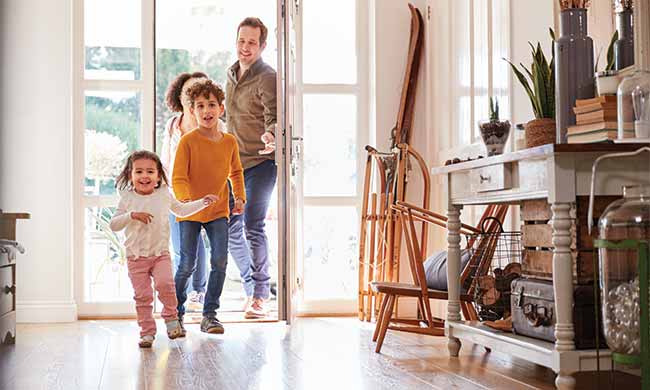
5 Ways Homeowners Can Put Their Equity to Use
(Feature Impact) For many homeowners, their home represents their largest financial asset. In fact, Americans are sitting on more than $35 trillion in total home equity – an average of $310,000 per mortgaged home – but many aren’t clear on how it could work for them to address today’s needs.
While 60% of homeowners in a survey conducted by Unlock said having the option to leverage home equity provides an extra level of financial security, nearly half (46%) don’t know how much equity they have. Equity can fluctuate over time, but you can calculate your current amount by determining your home’s worth and subtracting what you owe on your mortgage and any other loans. As your home’s value increases and you pay down your loans, equity rises.
When facing competing financial priorities, homeowners have several options for accessing equity and gaining financial flexibility – such as a home equity loan, home equity line of credit or cash-out refinance – each with different costs, requirements and trade-offs. A home equity agreement (HEA), sometimes referred to as a home equity investment, is an option that doesn’t require refinancing or giving up favorable interest rates – as is the case with the 57% of mortgaged U.S. homeowners who currently have a rate below 4%.
Offered by companies like Unlock, an HEA allows you to trade a portion of your home’s value at the end of the agreement in exchange for cash now. It lets you stay in your home, keep your current mortgage rate and have no monthly payments during the term. At the end of the term – which can last 10-30 years, depending on the provider – you’ll owe a single payment based on a percentage of your home’s value at that time, plus applicable fees and closing costs. Homeowners often settle by selling their home or using another form of financing to buy out the HEA provider’s share. The agreement is secured with a property lien, so a solid repayment plan can help minimize risks.
For homeowners who feel the squeeze of rising daily costs, an HEA allows them to use equity in smart, strategic ways by providing liquid funds for big expenses or everyday needs. Consider these ways homeowners can leverage their equity.
 Funding Home Improvements and Repairs
You can use the current value of your home to improve its future value. Whether you need a new roof, plumbing upgrades or a kitchen renovation, home improvements can be expensive. Receiving a lump sum from home equity can help you pay for important repairs, maintenance, upgrades and more.
Cover Unexpected Expenses
Life can be unpredictable. Cars break down, appliances go on the fritz, pets need a trip to the vet or family emergencies leave you wondering how you’ll afford the bill. If you have value tied up in your home, cashing in that equity can help provide a financial cushion.
Manage High-Interest Debt
If you’re caught in a cycle of debt where interest keeps piling up and you can barely make a dent in the original amount, your home’s equity could help you clear that slate. High-interest debt may include credit cards, payday loans, certain personal loans or other types of debt – especially any with double-digit interest rates. For homeowners who feel crushed by debt even though they have a positive net worth thanks to equity, tapping into home value can be a way to break that cycle.
Pay for Major Life Expenses
Some life expenses are unexpected, but there are others you can see coming in advance. Whether you’re planning a wedding, starting a business, paying college tuition or acquiring a rental property, home equity may enable you to cover the costs without stretching yourself thin.
Create Financial Flexibility
An HEA could make sense for homeowners who need extra financial flexibility. Since you don’t have to make monthly payments and have a decade or more to plan for settlement, this structure can free up cash flow for everyday essentials like daycare, insurance, groceries and more, along with future needs and goals.
Visit Unlock.com to learn more and find out how much equity you may have access to.
Photos courtesy of Shutterstock
SOURCE:
Unlock
home improvement
4 Ways to Make Room for Better Living
Make Room for Better Living: Oftentimes, making your home better suited for your needs starts with rethinking how the doors open. Whether you’re remodeling or building a new home, understanding the options can help you choose doors – and the installation hardware behind them – that make rooms more comfortable and convenient.
Last Updated on November 16, 2026 by Daily News Staff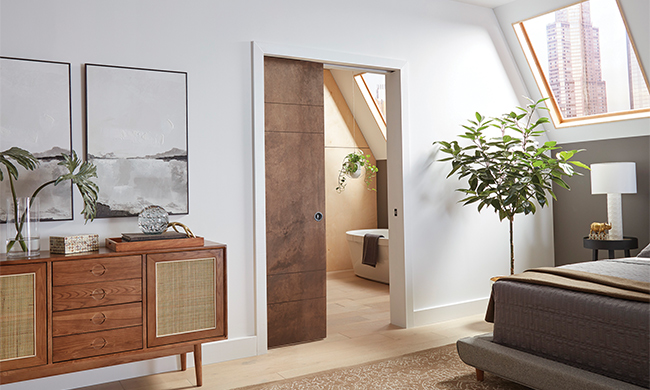
4 Ways to Make Room for Better Living
A bathroom door that bumps into the vanity. A closet interior that’s awkward to reach. A home office that needs a little separation from family activity. Oftentimes, making your home better suited for your needs starts with rethinking how the doors open.
Sliding, folding and pocket doors offer practical ways to improve everyday spaces without adding square footage. Whether you’re remodeling or building a new home, understanding the options can help you choose doors – and the installation hardware behind them – that make rooms more comfortable and convenient.
Consider these four ways to put your doors to work from the experts at Johnson Hardware, who make easy-to-install hardware systems in the U.S.:
Free Up Floor Space with Pocket Doors
In bathrooms, kitchen pantries and laundry rooms, a swinging door can compete with storage, taking up to 14 square feet of floor space and interrupting traffic flow. Pocket doors slide into the wall, freeing the area a hinged door needs to swing open.
Made for single pocket doors in compact rooms or two converging doors for larger openings between adjoining spaces, pocket door hardware with its soft-close feature helps doors glide gently into the open and closed positions, reducing slamming. Discuss pocket doors early in your project so your building professional can plan for the space needed inside the wall.
 Keep Essentials Handy with Bypass and Multi-Pass Doors
A frequently used mudroom, hallway or bedroom closet can look more organized with sliding bypass or multi-pass doors. The panels travel on separate tracks and slide past one another, letting you reach different sections without doors swinging into the room.
Options like Johnson’s bypass and multi-pass hardware systems help keep walkways clear while concealing storage or everyday clutter. Ask your designer or remodeler about panel arrangements and soft-close options that suit the opening based on how you’ll use the space.
Add Flexibility with Wall-Mount Sliding Doors
If you want the space-saving benefits of a sliding door but a pocket door isn’t practical, wall-mount doors travel along a track outside the wall. With easy-to-install hardware systems, making the switch from a swinging door can be a quick, practical room upgrade.
Often called barn doors, they can complement many decorating styles, from traditional painted wood to contemporary glass designs. Wall-mount sliding doors work well in home offices, bedrooms, laundry rooms and pantries, where soft-close and soft-open hardware can help reduce noise. Plan for clear wall space beside the opening so the door has room to slide.
Open Up Storage with Full-Access Bifold Doors
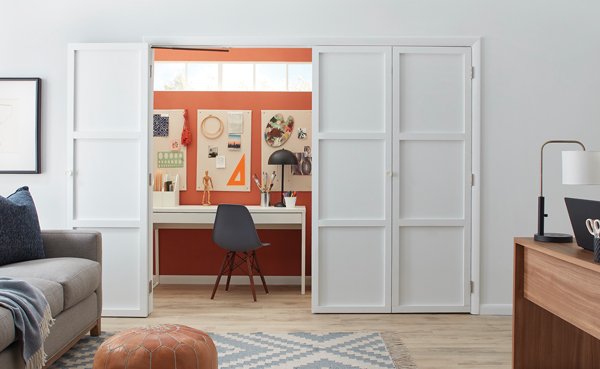
A closet can hold more than clothes. It might become a craft station, compact workspace or convenient place for laundry supplies.
Bifold doors use hinged panels that fold together as they open. Unique 1601 Full-Access Bifold Door Hardware goes a step further, allowing panels to fold flat against adjacent walls for full access across the opening. That makes it easier to reach shelves, organize supplies and use the space inside.
Thoughtful door hardware choices can make everyday routines easier, from reaching pantry shelves to creating a quiet place to work. As you plan your project, ask your designer, architect, remodeler or building contractor how pocket, sliding and folding door hardware systems can help make better use of your space.
For more ideas, visit johnsonhardware.com.
SOURCE:




