Connect with us

Science

Landing on the Moon is an incredibly difficult feat − 2025 has brought successes and shortfalls for companies and space agencies

Published

on

Moon
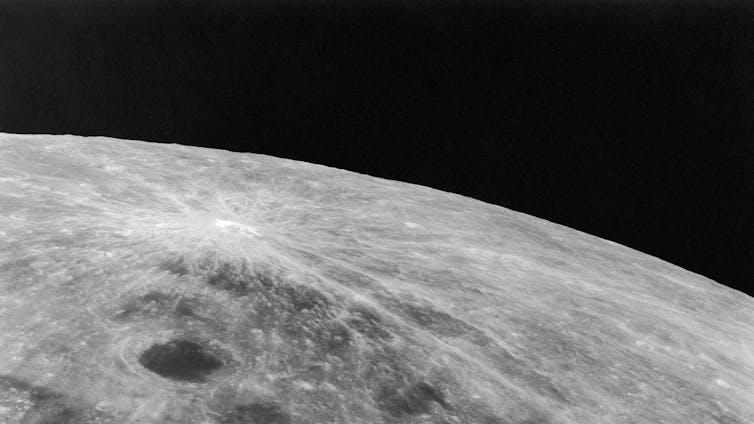
Several missions have already attempted to land on the lunar surface in 2025, with more to come.
AP Photo

Zhenbo Wang, University of Tennessee

Half a century after the Apollo astronauts left the last bootprints in lunar dust, the Moon has once again become a destination of fierce ambition and delicate engineering.

This time, it’s not just superpowers racing to plant flags, but also private companies, multinational partnerships and robotic scouts aiming to unlock the Moon’s secrets and lay the groundwork for future human return.

So far in 2025, lunar exploration has surged forward. Several notable missions have launched toward or landed on the Moon. Each has navigated the long journey through space and the even trickier descent to the Moon’s surface or into orbit with varying degrees of success. Together, these missions reflect both the promise and difficulty of returning to the Moon in this new space race defined by innovation, competition and collaboration.

As an aerospace engineer specializing in guidance, navigation and control technologies, I’m deeply interested in how each mission – whether successful or not – adds to scientists’ collective understanding. These missions can help engineers learn to navigate the complexities of space, operate in hostile lunar environments and steadily advance toward a sustainable human presence on the Moon.

Why is landing on the Moon so hard?

Lunar exploration remains one of the most technically demanding frontiers in modern spaceflight. Choosing a landing site involves complex trade-offs between scientific interest, terrain safety and Sun exposure.

The lunar south pole is an especially attractive area, as it could contain water in the form of ice in shadowed craters, a critical resource for future missions. Other sites may hold clues about volcanic activity on the Moon or the solar system’s early history.

Each mission trajectory must be calculated with precision to make sure the craft arrives and descends at the right time and place. Engineers must account for the Moon’s constantly changing position in its orbit around Earth, the timing of launch windows and the gravitational forces acting on the spacecraft throughout its journey.

They also need to carefully plan the spacecraft’s path so that it arrives at the right angle and speed for a safe approach. Even small miscalculations early on can lead to major errors in landing location – or a missed opportunity entirely.

Once on the surface, the landers need to survive extreme swings in temperature – from highs over 250 degrees Fahrenheit (121 degrees Celsius) in daylight down to lows of -208 F (-133 C) at night – as well as dust, radiation and delayed communication with Earth. The spacecraft’s power systems, heat control, landing legs and communication links must all function perfectly. Meanwhile, these landers must avoid hazardous terrain and rely on sunlight to power their instruments and recharge their batteries.

These challenges help explain why many landers have crashed or experienced partial failures, even though the technology has come a long way since the Apollo era.

Advertisement
Get More From A Face Cleanser And Spa-like Massage

Commercial companies face the same technical hurdles as government agencies but often with tighter budgets, smaller teams and less heritage hardware. Unlike government missions, which can draw on decades of institutional experience and infrastructure, many commercial lunar efforts are navigating these challenges for the first time.

Successful landings and hard lessons for CLPS

Several lunar missions launched this year belong to NASA’s Commercial Lunar Payload Services program. CLPS is an initiative that contracts private companies to deliver science and technology payloads to the Moon. Its aim is to accelerate exploration while lowering costs and encouraging commercial innovation.

An illustration of a lander, which looks like a mechanical box with small suport legs, on the lunar surface.
An artist’s rendering of Firefly Aerospace’s Blue Ghost lander, which navigated and avoided hazards during its final descent to the surface.
NASA/GSFC/Rani Gran/Wikimedia Commons

The first Moon mission of 2025, Firefly Aerospace’s Blue Ghost Mission 1, launched in January and successfully landed in early March.

The lander survived the harsh lunar day and transmitted data for nearly two weeks before losing power during the freezing lunar night – a typical operational limit for most unheated lunar landers.

Blue Ghost demonstrated how commercial landers can shoulder critical parts of NASA’s Artemis program, which aims to return astronauts to the Moon later this decade.

The second CLPS launch of the year, Intuitive Machines’ IM-2 mission, launched in late February. It targeted a scientifically intriguing site near the Moon’s south pole region.
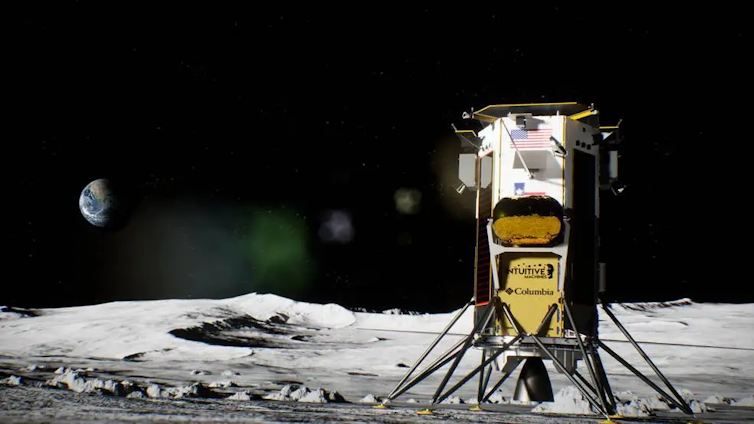
An illustration of a lander, a rectangular machine on triangular legs, on the lunar surface.
An artist’s rendering of Intuitive Machines’ IM-2 mission, which is scheduled to land near the lunar south pole for in-situ resource utilization demonstration on the Moon.
NASA/Intuitive Machines

The Nova-C lander, named Athena, touched down on March 6 close to the south pole. However, during the landing process, Athena tipped over. Since it landed on its side in a crater with uneven terrain, it couldn’t deploy its solar panels to generate power, which ended the mission early.

While Athena’s tipped-over landing meant it couldn’t do all the scientific explorations it had planned, the data it returned is still valuable for understanding how future landers can avoid similar fates on the rugged polar terrain.

Not all lunar missions need to land. NASA’s Lunar Trailblazer, a small lunar orbiter launched in February alongside IM-2, was intended to orbit the Moon and map the form, abundance and distribution of water in the form of ice, especially in shadowed craters near the poles.

Shortly after launch, however, NASA lost contact with the spacecraft. Engineers suspect the spacecraft may have experienced a power issue, potentially leaving its batteries depleted.

NASA is continuing recovery efforts, hoping that the spacecraft’s solar panels may recharge in May and June.

An illustration of Lunar Trailblazer, which looks like a mechanical box with two solar panel wings.
An artist’s rendering of NASA’s Lunar Trailblazer spacecraft. If recovered, it will orbit the Moon to measure the form and distribution of water on the lunar surface.
Lockheed Martin Space

Ongoing and future missions

Launched on the same day as the Blue Ghost mission in January, Japanese company ispace’s Hakuto-R Mission 2 (Resilience) is on its way to the Moon and has successfully entered lunar orbit.

The lander carried out a successful flyby of the Moon on Feb. 15, with an expected landing in early June. Although launched at the same time, Resilience took a longer trajectory than Blue Ghost to save energy. This maneuver also allowed the spacecraft to collect bonus science observations while looping around the Moon.

Advertisement
Get More From A Face Cleanser And Spa-like Massage

The mission, if successful, will advance Japan’s commercial space sector and prove an important comeback for ispace after its first lunar lander crashed during its final descent in 2023.

A lander – which looks like a large box with metal sides – on a platform in a white room.
The Resilience lunar lander days before its launch in the payload processing facility at the U.S. Space Force station. The Resilience lander has completed its Earth orbit and a lunar flyby. It is now completing a low-energy transfer orbit and entering an orbit around the Moon.
Business Wire

The rest of 2025 promises a busy lunar calendar. Intuitive Machines plans to launch IM-3 in late 2025 to test more advanced instruments and potentially deliver NASA scientific experiments to the Moon.

The European Space Agency’s Lunar Pathfinder will establish a dedicated lunar communications satellite, making it easier for future missions, especially those operating on the far side or poles, to stay in touch with Earth.

Meanwhile, Astrobotic’s Griffin Mission-1 is scheduled to deliver NASA’s VIPER rover to the Moon’s south pole, where it will directly search for ice beneath the surface.

Together, these missions represent an increasingly international and commercial approach to lunar science and exploration.

As the world turns its attention to the Moon, every mission – whether triumph or setback – brings humanity closer to a permanent return to our closest celestial neighbor.

Zhenbo Wang, Associate Professor of Mechanical and Aerospace Engineering, University of Tennessee

This article is republished from The Conversation under a Creative Commons license. Read the original article.

The science section of our news blog STM Daily News provides readers with captivating and up-to-date information on the latest scientific discoveries, breakthroughs, and innovations across various fields. We offer engaging and accessible content, ensuring that readers with different levels of scientific knowledge can stay informed. Whether it’s exploring advancements in medicine, astronomy, technology, or environmental sciences, our science section strives to shed light on the intriguing world of scientific exploration and its profound impact on our daily lives. From thought-provoking articles to informative interviews with experts in the field, STM Daily News Science offers a harmonious blend of factual reporting, analysis, and exploration, making it a go-to source for science enthusiasts and curious minds alike. https://stmdailynews.com/category/science/

Continue Reading
Advertisement SodaStream USA, inc

Science

Sonic booms from meteors can release the energy of hundreds of tons of TNT – here’s how they work

Published

on

Sonic booms from meteors can release the energy of hundreds of tons of TNT – here’s how they work
The Chelyabinsk asteroid left a vapor trail as it hit the Earth’s atmosphere in 2013. M. Ahmetvaleev/European Space Agency

Shawn Laatsch, University of Maine

Sonic booms from meteors can release the energy of hundreds of tons of TNT – here’s how they work

As humans, we live out our lives on a planet that is constantly sweeping through a cosmic ocean littered with ancient debris from the formation of the solar system. For the most part, our world glides silently through space, shielded by Earth’s thin atmosphere.

Occasionally, however, the rest of the universe reminds us of its presence with stunning, visceral clarity.

Residents along the Massachusetts–New Hampshire border were startled by a sudden sonic boom on the afternoon of May 30, 2026. A large number of people up and down the Eastern Seaboard witnessed it.

After NASA analyzed imagery from weather satellites, they identified the culprit as a small meteor measuring roughly 3 to 5 feet (1 to 2 meters) across. It was screaming through space at an astonishing 42,000 miles per hour (68,000 kilometers per hour) when it plunged into Earth’s upper atmosphere.

Fragments from a meteor fell into Cape Cod Bay in May 2026.

Friction between the meteor and the increasingly dense air quickly turned the kinetic energy of the rock shooting through the sky into blistering heat. At an altitude of roughly 40 miles (60 kilometers), the immense heat and pressure overcame the structural integrity of the meteor, causing it to fragment in a brilliant flash.

The breakup released a staggering burst of energy equivalent to 300 tons of TNT. When an object travels through the air at speeds faster than sound, which is 761 mph (1,225 kph), it creates a shock wave creating a thunderous clap, or sonic boom. While the majority of the rock vaporized, the remaining fragments rained down harmlessly into the waters of Cape Cod Bay.

In the past, such an event might have passed as an unverified sighting in the daytime sky. Today, however, our planet is wired with an accidental network of planetary defense sensors: dashboard cameras, security systems and digital doorbells.

Because meteor entries like this one last only a few fleeting seconds, they were easily missed in the past. Now, our collective digital eyes capture these spontaneous cosmic intrusions almost instantly, bringing the universe directly into our daily news feeds. While dramatic, these events are more common than most people imagine.

As someone who has worked as a planetarium director and astronomy educator for over four decades, I often get emails, social media messages and phone calls about such objects and sightings. While hearing a sonic boom can be a bit unsettling or even shocking, it reminds us we live in an active universe and may want to occasionally look up instead of down at our devices.

A meteoric spring

The Cape Cod fireball was the latest sighting in an active season of meteoritic arrivals. Just months earlier, the solar system seemed to be sending a parade of rocky objects down to Earth.

Advertisement
Get More From A Face Cleanser And Spa-like Massage

From March 8-11, observers in Northern Europe witnessed large, slow-moving fireballs in their skies. Enthusiasts and scientists successfully recovered several fragments. Lab analysis of these specimens revealed their place in a fascinating lineage – scientists determined that they had originated from Vesta, a massive, pristine asteroid orbiting between Mars and Jupiter.

On March 17, a 7-ton asteroid measuring roughly 6 feet across entered the atmosphere directly over Lake Erie. Traveling at 45,000 mph (72,400 kph), it generated a brilliant daytime flash and a powerful sonic boom, unloading an energy equivalent to 250 tons of TNT. NASA scientists published data about its trajectory, allowing meteorite hunters to recover pristine fragments in Valley City, just a short drive from Cleveland, Ohio.

Only four days later, on March 21, another cosmic fragment blazed across the skies of Texas. This object was about 3 feet wide, and it traveled at 35,000 mph (56,300 kph), releasing the energy of roughly 26 tons of TNT.

Outside of Houston, homeowner Sherri James was startled by a sudden crash, only to discover a 6-inch (15-cm) hole in her roof and a small piece of the solar system resting on her floor.

Thank goodness for Earth’s atmospheric shield

The benchmark for modern atmospheric impacts is the Chelyabinsk meteor, which exploded over Russia on Feb. 15, 2013.

That object was significantly larger than any of the meteors researchers have observed in 2026, measuring 60 feet (18 m) across and weighing roughly 10,000 tons. When it shattered 18 miles (29 km) above the ground, it produced an airburst with an explosive force 30 times greater than the Hiroshima atomic bomb.

A gif of a bright streak moving across the sky and growing brighter towards the end of its journey
The Chelyabinsk meteor, the largest observed in modern history, shoots through the sky in February 2013. Aleksandr Ivanov/Wikimedia Commons, CC BY

The resulting shock wave shattered glass across hundreds of square miles, injuring nearly 1,500 people and registering as a seismic event between 2.7 and 3.7 on the Richter scale. The incident was a stark reminder that while Earth’s atmosphere is an incredibly effective shield, absorbing the lion’s share of cosmic impacts, a large enough kinetic punch can still reach the surface below.

Despite the dramatic stories around these meteor impacts, history shows that the cosmic lottery rarely targets humans directly. In all of recorded history, there is only one universally confirmed case of a person being directly struck by a space rock.

In 1954, an 8.5-pound (3.8 kg) meteorite crashed through the roof of a house in Sylacauga, Alabama, ricocheted off a heavy wooden radio and struck a sleeping woman named Ann Hodges. Though it left a severe bruise on her hip, the radio absorbed the brunt of the impact. Had it not been for the radio, there is a chance she could have been seriously injured or killed by this object.

Living with the cosmos

So, are you in any imminent danger from meteors? The mathematics of the cosmos provide profound reassurance. The statistical odds of being struck by a meteorite are vanishingly small. You stand a better chance of winning a multimillion-dollar lottery jackpot 10 times in a row than ever being hit by a meteorite.

The vast majority of the tons of space debris that bombard Earth daily arrive as harmless dust grains, burning up as elegant meteors or shooting stars. But when the larger pieces do break through and land on our planet, they offer a rare, tangible connection to the beginning of the solar system.

Advertisement
Get More From A Face Cleanser And Spa-like Massage

If you ever happen to witness one of these magnificent fireballs ripping open the sky, consider reporting your observation to the American Meteor Society. The organization keeps track of sightings and falls from around the globe. Recovered fragments provide a way for scientists to gain valuable information about the origin of our solar system, and of our home planet.

Shawn Laatsch, Director of the Versant Power Astronomy Center, University of Maine

This article is republished from The Conversation under a Creative Commons license. Read the original article.

📰 Thanks for reading STM Daily News – your source for News You Can Use This Moment!

We love hearing from our readers. Share your thoughts in the comments section and join the conversation with our growing community. Your feedback helps us create the stories and features that matter most to you.

Don’t miss the latest news, inspiring stories, lifestyle tips, food and drink features, and exclusive updates. Subscribe to the STM Daily News newsletter and get our top stories delivered directly to your inbox.

💬 Leave a comment.
📧 Subscribe to our newsletter.
📢 Share your favorite stories with friends and family.

Stay informed, stay connected, and be part of the STM Daily News community at STMDailyNews.com.

Advertisement
Get More From A Face Cleanser And Spa-like Massage
Continue Reading

Forgotten Genius Fridays

Valerie Thomas: NASA Engineer, Inventor, and STEM Trailblazer

Published

on

Last Updated on June 12, 2026 by Rod WashingtonValerie Thomas

Valerie Thomas is a true pioneer in the world of science and technology. A NASA engineer and physicist, she is best known for inventing the illusion transmitter, a groundbreaking device that creates 3D images using concave mirrors. This invention laid the foundation for modern 3D imaging and virtual reality technologies.

Beyond her inventions, Thomas broke barriers as an African American woman in STEM, mentoring countless young scientists and advocating for diversity in science and engineering. Her work at NASA’s Goddard Space Flight Center helped advance satellite technology and data visualization, making her contributions both innovative and enduring.

In our latest short video, we highlight Valerie Thomas’ remarkable journey—from her early passion for science to her groundbreaking work at NASA. Watch and be inspired by a true STEM pioneer whose legacy continues to shape the future of space and technology.

🎥 Watch the video here: https://youtu.be/P5XTgpcAoHw

Dive into “The Knowledge,” where curiosity meets clarity. This playlist, in collaboration with STMDailyNews.com, is designed for viewers who value historical accuracy and insightful learning. Our short videos, ranging from 30 seconds to a minute and a half, make complex subjects easy to grasp in no time. Covering everything from historical events to contemporary processes and entertainment, “The Knowledge” bridges the past with the present. In a world where information is abundant yet often misused, our series aims to guide you through the noise, preserving vital knowledge and truths that shape our lives today. Perfect for curious minds eager to discover the ‘why’ and ‘how’ of everything around us. Subscribe and join in as we explore the facts that matter.  https://stmdailynews.com/the-knowledge/

Forgotten Genius Friday: The Enduring Legacy of Elijah McCoy — Is he the Man Behind “The Real McCoy?”

Forgotten Genius Fridays

https://stmdailynews.com/the-knowledge-2/forgotten-genius-fridays/

🧠 Forgotten Genius Fridays

A Short-Form Series from The Knowledge by STM Daily News

Every Friday, STM Daily News shines a light on brilliant minds history overlooked.

Forgotten Genius Fridays is a weekly collection of short videos and articles dedicated to inventors, innovators, scientists, and creators whose impact changed the world—but whose names were often left out of the textbooks.

Advertisement

Get More From A Face Cleanser And Spa-like Massage

From life-saving inventions and cultural breakthroughs to game-changing ideas buried by bias, our series digs up the truth behind the minds that mattered.

Each episode of The Knowledge runs 30–90 seconds, designed for curious minds on the go—perfect for YouTube Shorts, TikTok, Reels, and quick reads.

Because remembering these stories isn’t just about the past—it’s about restoring credit where it’s long overdue.

 🔔 New episodes every Friday

📺 Watch now at: stmdailynews.com/the-knowledge

 🧠 Now you know.


View recent photos

Unlock fun facts & lost history—get The Knowledge in your inbox!

We don’t spam! Read our privacy policy for more info.

Continue Reading

Automotive

The Road to Cleaner Water: How to Prevent Roads from Polluting Waterways

Everyone loves driving on clean highways and spotless local roads. Few people, however, realize the benefits of clean roads go well beyond mere aesthetics. Cleaner roads also mean cleaner and healthier local rivers, lakes and beaches. Follow these simple year-round tips to help make the waters as fun and healthy as possible this summer.

Published

on

Everyone loves driving on clean highways and spotless local roads. Few people, however, realize the benefits of clean roads go well beyond mere aesthetics. Cleaner roads also mean cleaner and healthier local rivers, lakes and beaches. Follow these simple year-round tips to help make the waters as fun and healthy as possible this summer.

(Feature Impact) Everyone loves driving on clean highways and spotless local roads. Few people, however, realize the benefits of clean roads go well beyond mere aesthetics. Cleaner roads also mean cleaner and healthier local rivers, lakes and beaches.

That’s because harmful pollutants in local waters often run off untreated from highways and roads during strong storms. Those rains sweep trash, dripped oil, harmful chemicals and even dangerous bacteria from pet waste into local waters via stormways and sewers. This untreated runoff can affect people’s health, make water unsafe for swimming and harm aquatic life. Every year, such man-made “stormwater pollution” even closes portions of recreational rivers and beaches.

It’s up to everyone to help prevent human-caused stormwater pollution. Don’t wait for rain in the forecast to get started. Instead, follow these simple year-round tips from the experts at the California Department of Transportation to help make the cooling waters in California and beyond as fun and healthy as possible this summer.

Trash-Free Trips and Responsible Car Care

Summer can mean more road time traveling to your next adventure. Loose items in truck beds and on roof carriers or trash tossed from car windows can quickly become the next wave of stormwater pollution flowing into local waters. To reduce:

  • Secure Your Load: Always securely tarp and tie down anything in a truck bed or on a roof rack. Items falling off vehicles are both a safety hazard and can become roadside debris.
  • Keep a Car Trash Catcher: Designate a bag or container in your car for food wrappers, coffee cups and other small trash until you can dispose of it properly.
  • Wash Smart: Commercial car washes that recycle water are superior for preventing road dirt and chemicals accumulated on your car from entering storm drains compared to washing in a driveway. If washing at home, do it on your lawn or a permeable surface where the water naturally filters into the ground and not street gutters.
17968 B detail embed

Outdoor Adventures That Leave Only Footprints

Whether you’re hiking a mountain trail, picnicking at the park or relaxing on the beach, remember the outdoor golden rule: pack out everything you pack in. Food wrappers, plastic bottles and even seemingly small items like bottle caps and cigarette butts are some of the most common litter found in parks, waterways and along coastlines. When left behind, they’re not just eyesores; they’re prime candidates for being washed into waterways.

  • Pro Tip: Choose reusable water bottles that clip onto bags to reduce pollution from discarded plastic bottles.

At Home and In Your Neighborhood


Even close to home, your actions can make a difference.

  • Garden Care: When tidying up your garden or front lawn, sweep leaves and grass clippings into your green bin instead of hosing them down the driveway. Hosing yard waste into road gutters can clog storm drains and cause flooding.
  • Pesticide Prevention: To protect waterways from harmful chemical runoff, opt for organic or eco-friendly alternatives for pest and weed control whenever possible.
  • Scoop the Poop: Pet waste contains harmful bacteria that can contaminate waterways. In fact, the EPA estimates that just two days’ worth of waste from 100 dogs can produce enough bacteria to close a beach. Always pick up after your pets, especially when walking in your neighborhood or parks, and dispose of it in a trash bin.

Pollution in waterways doesn’t just look bad; it creates real problems, from harming wildlife and ecosystems to causing potential health issues for humans and pets who encounter contaminated water. The cleaner roads and surrounding areas are, the healthier rivers, lakes and beaches become. For more tips and resources, visit CleanWaterCA.com to ensure a clean, healthy summer for everyone.

Photos courtesy of Shutterstock collect?v=1&tid=UA 482330 7&cid=1955551e 1975 5e52 0cdb 8516071094cd&sc=start&t=pageview&dl=http%3A%2F%2Ftrack.familyfeatures track

SOURCE:
California Department of Transportation

STM Daily News is a vibrant news blog dedicated to sharing the brighter side of human experiences. Emphasizing positive, uplifting stories, the site focuses on delivering inspiring, informative, and well-researched content. With a commitment to accurate, fair, and responsible journalism, STM Daily News aims to foster a community of readers passionate about positive change and engaged in meaningful conversations. Join the movement and explore stories that celebrate the positive impacts shaping our world. 

https://stmdailynews.com/

Continue Reading

Trending


