

Food and Beverage
People can have food sensitivities without noticeable symptoms – long-term consumption of food allergens may lead to behavior and mood changes
Food Sensitivities: Food allergies affect about 10% of the U.S. population, leading to various symptoms. Recent research indicates asymptomatic individuals may still experience neurological effects from food allergens, resulting in behavioral changes like anxiety and depression. Chronic inflammation from allergens may contribute to long-term brain issues, highlighting the need for further study on food hypersensitivity’s impact on mental health.

Last Updated on October 16, 2025 by Daily News Staff
People can have food sensitivities without noticeable symptoms – long-term consumption of food allergens may lead to behavior and mood changes
Kumi Nagamoto-Combs, University of North Dakota
The prevalence of food allergies is increasing worldwide, approaching an epidemic level in some regions. In the U.S. alone, approximately 10% of children and adults suffer from food allergies, with allergies to cow’s milk, eggs, peanuts and tree nuts being the most common. Some patients have mild symptoms that might not need medical attention, leaving these cases unreported.
Food allergies, or food hypersensitivities, result from the overreaction of the immune system to typically harmless proteins in food. They can manifest as a spectrum of symptoms, ranging from itching, redness and swelling for milder reactions, to vomiting, diarrhea, difficulty breathing and other potentially life-threatening symptoms for severe reactions.
Besides self-reporting, food allergies can be diagnosed by exposing patients to trace amounts of offending proteins, or allergens, via their mouth or skin and observing their immediate reactions. More commonly, doctors use blood tests to measure the levels of immunoglobulin E, or IgE, a specialized antibody that the immune system uses to identify allergens and trigger a response. Although healthy individuals may have low levels of IgE in the blood, patients with food allergies have much higher levels that increase their risk of having severe allergic reactions.
But some people who test positive on skin-prick allergy tests with moderate increases in IgE don’t notice any allergy-related symptoms when they eat the allergen. This condition is sometimes referred to as asymptomatic sensitization. In many cases, people with this condition may not even be aware that they have a food hypersensitivity.
Are they truly asymptomatic, though? Or are there effects within their body that they aren’t aware of?
I am a neuroscientist studying how the brain is affected by food allergies. I became interested in this topic when I found that some of my family members had a hypersensitivity to cow’s milk. Some totally avoid dairy products because they have experienced severe, life-threatening symptoms. Those who don’t have typical allergic reactions occasionally eat dairy, but appear to develop seemingly unrelated illnesses a day or two later.
What I and other researchers have found is that food allergens can affect your brain and behavior if you’re hypersensitized, even if you don’t have typical food allergy symptoms.
Food allergies linked to behavioral disorders
Researchers have suspected food hypersensitivities to be a potential cause for behavioral disorders for decades.
A 1949 case report described behavioral and mood disturbances in patients after they ate certain foods, such as milk and eggs. Their symptoms improved after removing the suspected foods from their diet, suggesting that a food hypersensitivity was the likely culprit. However, I was intrigued that the patients had been able to eat the offending foods up until they chose to avoid them. In other words, they were asymptomatically sensitized, or tolerant, to the allergens.
Several recent studies in people have supported the association between food allergies and various neuropsychiatric disorders, including depression, anxiety, attention-deficit/hyperactivity disorder and autism. They strengthen the possibility that some reactions to food allergens could involve the nervous system and manifest as behavioral disorders. https://www.youtube.com/embed/xyQY8a-ng6g?wmode=transparent&start=0 The food you eat can affect your brain in many ways.
However, the idea of food hypersensitivity causing neuropsychiatric disorders is still controversial because of inconsistencies across studies. Differences in the types of allergies, ethnic backgrounds, dietary habits and other factors among the study participants can produce conflicting results. More importantly, some studies included those with self-reported food allergies, while others included only those with lab-confirmed food allergies. This limited investigations to only symptomatic individuals.
Food hypersensitivity, brain and behavior
My laboratory tested whether food allergens could manifest as behavioral symptoms, particularly in asymptomatically sensitized individuals. We wanted to find out whether eating offending foods could lead to brain inflammation and behavioral changes after sensitization, even in the absence of other obvious severe reactions.
To minimize the individual differences found in human studies, we decided to work with mice. We sensitized mice of the same age and genetic background to the common milk allergen β-lactoglobulin, or BLG, and fed them the same diet in the same room. We found that while BLG-sensitized mice produced moderately but significantly elevated levels of IgE, they did not show immediate allergic reactions. They could even eat food containing the milk allergen for two weeks without showing any obvious symptoms, despite maintaining elevated levels of IgE. This indicated that they were asymptomatically sensitized.
We then observed whether they showed any changes in emotionally driven behavior. Because we could not ask mice how they felt, we deduced their “feelings” by noting changes from their normal, survival-oriented behavior. Mice instinctively explore their environment to search for food and shelter while avoiding potential danger. However, “anxious” mice tend to spend more time hiding to play it safe. We identified “depressed” mice by briefly holding them by the tail. Most mice will keep fighting to get out of the uncomfortable predicament, while depressed mice quickly give up.
Our experiments were designed to simulate situations where asymptomatically sensitized individuals would eat either a large amount of an offending food in one day or small amounts every day for a few weeks. We mimicked these situations by placing a large amount of the milk allergen directly into the stomach of sensitized mice with a feeding tube, or giving them an allergen-containing mouse chow to eat the allergen a little at a time.
Interestingly, BLG-sensitized mice showed anxiety-like behavior one day after receiving a large amount of the allergen. Another group of sensitized mice developed depression-like behavior after eating small amounts of allergen for two weeks. In addition, BLG-sensitized mice showed signs of brain inflammation and neuronal damage, suggesting that changes in the brain may be responsible for their behavioral symptoms.
We also investigated the long-term effect of allergen consumption by keeping BLG-sensitized mice on the allergen-containing diet for one month. We found that IgE levels declined in sensitized mice by the end of the month, indicating that continually eating small amounts of the allergen led to decreased immune responses, or “desensitization.” In contrast, signs of brain inflammation remained, suggesting that the harmful effect of allergens persisted in the brain.
Chronic brain inflammation
Researchers have yet to study prolonged brain inflammation, or neuroinflammation, in people who are asymptomatically sensitized. In general, though, chronic neuroinflammation is a known contributor to neurodegenerative diseases, such as multiple sclerosis and Alzheimer’s disease, although the exact causes of these diseases are unknown. A better understanding of the role allergens play in neuroinflammation can help researchers clarify whether food allergens trigger chronic inflammation that can lead to these diseases.
This knowledge could be especially important for patients undergoing oral immunotherapy, an approach to allergy treatment that involves incrementally ingesting small amounts of allergens over time. The goal is to desensitize the immune system and reduce the incidence of anaphylaxis, or life-threatening allergic reactions. In 2020, the U.S. Food and Drug Administration approved a standardized form of peanut allergens to prevent anaphylaxis in eligible pediatric patients. However, its possible long-term effect on the nervous system is unknown.
Food allergens can affect the brain and behavior of seemingly asymptomatic people, making them not so asymptomatic neurologically. Considering how your brain responds to the food you eat puts a whole new meaning to the phrase “you are what you eat.”
Kumi Nagamoto-Combs, Assistant Professor of Biomedical Sciences, University of North Dakota
This article is republished from The Conversation under a Creative Commons license. Read the original article.
Our Lifestyle section on STM Daily News is a hub of inspiration and practical information, offering a range of articles that touch on various aspects of daily life. From tips on family finances to guides for maintaining health and wellness, we strive to empower our readers with knowledge and resources to enhance their lifestyles. Whether you’re seeking outdoor activity ideas, fashion trends, or travel recommendations, our lifestyle section has got you covered. Visit us today at https://stmdailynews.com/category/lifestyle/ and embark on a journey of discovery and self-improvement.


Foodie News
Wingstop Kicks Off Football Season With Lemon Pepper Trio and First-Ever Wing Pass
Wingstop is kicking off football season with two new twists on its iconic Lemon Pepper flavor and its first-ever Wing Pass, offering select fans weekly Watch Party Bundles throughout the regular season.

Two new takes on Wingstop’s popular Lemon Pepper flavor are joining the menu as the chain rolls out a limited-edition Wing Pass aimed at football watch parties.
Football season is underway, and Wingstop is betting that wings will remain a major part of the weekly game-day spread.
The Dallas-based restaurant chain is expanding one of its signature flavors with the launch of its new Lemon Pepper Trio, featuring the familiar Original Lemon Pepper alongside two new variations: Lemon Pepper Chili Crunch and Lemon Pepper Chili Glaze.
The trio will receive an early release for Club Wingstop members beginning Sept. 10 before becoming available nationwide at participating U.S. locations on Sept. 15 for a limited time, according to the company.
Three Takes on Lemon Pepper
Wingstop’s Original Lemon Pepper combines lemon flavor with cracked black pepper in the dry rub that has become one of the chain’s best-known offerings.
The two newcomers take that familiar flavor in different directions.
Lemon Pepper Chili Crunch starts with the traditional Lemon Pepper dry rub and adds crispy Korean chili crunch, introducing additional texture and heat.
Lemon Pepper Chili Glaze goes in a sweeter and saucier direction, combining citrus flavor and sweet heat with crispy Korean chili crunch.
All three flavors can be ordered on Wingstop’s classic wings, giving customers the option of sticking with the original or trying one of the spicier variations.
“Lemon Pepper is an iconic flavor, and Wingstop is proud of the role we’ve played in bringing it to fans around the world,” Wingstop President and CEO Michael Skipworth said in announcing the promotion.
The new flavors arrive as restaurants and food brands compete for a place in one of the biggest recurring food occasions of the fall: football watch parties.
Wingstop Introduces Its First Wing Pass
Wingstop is also taking an unusual approach to football-season promotions with its first Wing Pass, essentially turning weekly wing orders into the restaurant equivalent of a season ticket.
Each Wing Pass provides access to as many as 18 Watch Party Bundles, representing one bundle for each week of the regular football season.
A Watch Party Bundle includes 20 classic wings in as many as four flavors, a large order of fries and a large ranch.
Here’s where the promotion becomes especially notable: Wingstop says the Wing Pass costs $27.99 — the price of a single Watch Party Bundle.
Only 100 passes are being made available.
Club Wingstop members can purchase the limited passes beginning Sept. 10 at noon Central Time through Wingstop’s Wingshop. Passholders will then receive a Watch Party Bundle offer through their Wingstop app account each Sunday morning during the 18-week season, subject to the promotion’s terms and conditions.
With only 100 passes available nationwide, the Wing Pass is less a traditional discount program than a limited promotional event designed to generate attention around Wingstop’s football-season push.
Wings and Football Remain a Powerful Combination
The promotion highlights just how closely chicken wings have become associated with watching football in the United States. Restaurants routinely introduce larger bundles, limited flavors and game-day promotions as fans gather at homes, sports bars and restaurants throughout the season.
For Wingstop, the strategy combines both sides of that equation.
The Lemon Pepper Trio gives customers something new to try, while the Wing Pass encourages the idea of making Wingstop part of a weekly football routine.
Founded in 1994, Wingstop has grown to more than 3,000 restaurants worldwide. The company reported more than $5 billion in system-wide sales during fiscal 2025 and has ambitions of becoming one of the world’s top 10 restaurant brands.
Whether Lemon Pepper Chili Crunch or Lemon Pepper Chili Glaze develops the following of Wingstop’s original version remains to be seen. But for Lemon Pepper fans looking for something different during football season, the starting lineup just got a little bigger.
Source: Wingstop Restaurants Inc., press release issued Sept. 9, 2026.
Availability and promotional offers may vary by participating location. The Lemon Pepper Trio is a limited-time offering while supplies last. The Wing Pass is subject to Wingstop’s official terms and conditions.
Sources
- Wingstop — Lemon Pepper Trio and First-Ever Wing Pass announcement — Wingstop’s official Sept. 9, 2026 announcement covering the Lemon Pepper Chili Crunch, Lemon Pepper Chili Glaze and Wing Pass.
- PR Newswire — Wingstop Kicks Off Football Season with New Lemon Pepper Trio and Wing Pass — Original distributed press release dated Sept. 9, 2026.
Related Links
- Wingstop Lemon Pepper Flavor Guide — Background on Wingstop’s original Lemon Pepper dry rub, including its lemon and cracked-pepper flavor profile.
- Wingstop Investor Relations — Corporate information, financial results and current company announcements.
- Wingstop News & Press Releases — Additional Wingstop product launches and company news, including its recent Carolina Gold and Jamaican Jerk promotion.
Craving Something Delicious? 🔥🍴
Turn up the flavor with STM Daily News Food & Drink — your destination for sizzling food news, must-try restaurant trends, crave-worthy recipes, game-day eats and the flavors everyone’s buzzing about.
Come hungry. Discover what’s cooking. Find your next obsession.


WESTON, Mo. — Kansas City barbecue is heading north to historic Weston, Missouri, where dozens of competition pitmasters are battling for more than prize money. The winner could soon be serving their barbecue to travelers from around the world. UPDATE: Smokey Bey’s BBQ of Liberty, Missouri, led by pitmaster Charles Bey, was crowned Grand Champion of the 2026 Made for KC BBQ Championship. The victory earned the team $10,000 and an 18-month licensing agreement to become the featured pitmaster at the Made for KC BBQ Experience at Kansas City International Airport beginning in March 2027. The final competition included 44 teams, according to post-event reports.
The 4th Annual Made for KC BBQ Championship, held August 21–22, 2026, brought 47 of the region’s top competition barbecue teams to downtown Weston, with Holladay Distillery serving as a host partner.
The weekend began Friday with a VIP event on the grounds of the historic distillery before teams settled in for an overnight cook ahead of Saturday’s competition.
More Than a Barbecue Trophy
Created by OHM Concession Group in partnership with the Kansas City Barbeque Society (KCBS), the Made for KC BBQ Championship offers competitors an unusually valuable prize.
The 2026 championship features a $33,500 total purse, including $10,000 for the Grand Champion. But the biggest opportunity may come after the smokers cool down.
The winning team receives an 18-month licensing agreement to become the next featured pitmaster at the Made for KC BBQ Experience at Kansas City International Airport, beginning March 1, 2027.
The Grand Champion’s name, recipes, rubs and sauces will be showcased at the approximately 8,000-square-foot restaurant, putting the winning team’s barbecue in front of travelers passing through Kansas City.
That makes the competition more than a traditional barbecue contest. For one pitmaster, it could provide a major platform to introduce their food and brand to an international audience.
Competition Barbecue Meets Kansas City’s Airport
The Made for KC BBQ Experience opened alongside Kansas City International Airport’s new terminal in 2023. Its concept gives competition barbecue teams an opportunity rarely available on the traditional barbecue circuit: moving their food from cook-offs and judging tables into a major commercial restaurant.
A new Grand Champion is featured at the airport restaurant every 18 months.
In 2024, Meat Rushmore BBQ of Lee’s Summit, Missouri, captured the championship and later became the featured pitmaster at the airport location.
The competition is designed to continue that rotation while highlighting the deep barbecue culture associated with the Kansas City region.
Barbecue and Bourbon in Historic Weston
Weston provides a fitting setting for the competition.
Holladay Distillery was founded there in 1856 and is celebrating its 170th anniversary in 2026. According to the company, it remains the oldest continuously operating distillery on its original site in Missouri.
“Hosting the Made for KC BBQ Championship is exactly the kind of opportunity we’re proud to bring to Weston,” Patrick Fee, Holladay Distillery’s vice president of sales and marketing, said in the announcement.
“This competition celebrates the craftsmanship and traditions that make our region special, while bringing talented people from across the barbecue community right here to our hometown.”
The combination of bourbon, barbecue and a historic Missouri town also gives the championship an identity that extends beyond the judging tent.
“Bourbon and barbecue have always been a natural pairing,” Fee said.
A Bigger Prize for Kansas City Pitmasters
Competition barbecue can require years of practice, specialized equipment, travel and countless hours tending smokers in pursuit of trophies and recognition.
The Made for KC championship adds something different: the possibility of turning a competition victory into a lengthy restaurant residency.
For the 2026 Grand Champion, that means going from an overnight cook in Weston to having their recipes served at one of the region’s busiest transportation gateways.
And for travelers arriving in Kansas City, it offers something equally interesting — an opportunity to experience barbecue created by the people who compete seriously in one of America’s best-known barbecue regions.
The Made for KC BBQ Championship may take place in Weston, but for the winning pitmaster, the journey is only beginning.
Source: Holladay Distillery press release, August 21, 2026. The Made for KC BBQ Championship was created by OHM Concession Group in partnership with the Kansas City Barbeque Society.
Source & Related Links
Primary/official sources
Holladay Distillery — Official site for the historic Weston distillery, which says it has been making bourbon for 170 years.
Kansas City Barbeque Society — Made for KC Championship background — Background on the competition and its relationship with the airport restaurant.
Kansas City International Airport — Made for KC BBQ Experience — Official airport background explaining how championship pitmasters rotate through the airport restaurant.
Vantage Group — Meat Rushmore airport residency — Details on previous champion Meat Rushmore and the 18-month airport showcase.
2026 results
FireBoard — 2026 Made for KC BBQ Championship results — Reports Smokey Bey’s BBQ as the 2026 Grand Champion.
KCTV — Smokey Bey’s wins 2026 championship — Post-event coverage of the winner and upcoming airport residency.
For more Food and Beverage News visit our “Food & Drink” page.
Recipe of the Week
Score Big on Game Day with Winning Tailgate Recipes
A Game Day Win: Football, family, friends and food are a winning combination during tailgating season, especially if your recipe game is locked in. A main course of Grilled Chicken Kebabs served alongside Steakhouse Hasselback Potatoes and Simple Salami Sliders will fuel you and your crew all the way from the pre-game festivities to the after party.

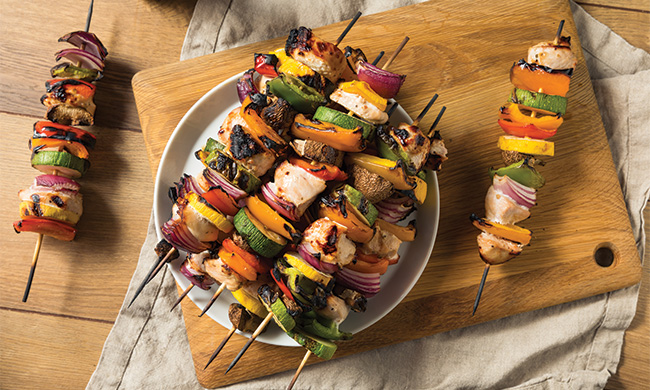
(Feature Impact) Football, family, friends and food are a winning combination during tailgating season, especially if your recipe game is locked in. Whether you’re feeding a hungry crowd in the stadium parking lot or putting together a savory plate to enjoy while you chill on the sofa, these recipes bring plenty of flavor and keep the energy going until the final whistle.
A main course of Grilled Chicken Kebabs served alongside Steakhouse Hasselback Potatoes and Simple Salami Sliders will fuel you and your crew all the way from the pre-game festivities to the after party.
Visit Culinary.net to find more recipes to inspire your game plan.
Fire Up the Grill for Mouthwatering Chicken Kebabs
Tailgating and grilling go together like touchdowns and victory dances, and some of the best game-day recipes are the ones you can make well ahead of kickoff so you aren’t rushing around to get ready. These sweet-and-smoky Grilled Chicken Kebabs can be prepped and marinated up to 8 hours in advance so all you need to do is pull them out of the fridge and get them to the grill.
With lean protein from the chicken plus vitamins and fiber from a generous amount of bright, colorful veggies, this recipe is a score for more than your taste buds.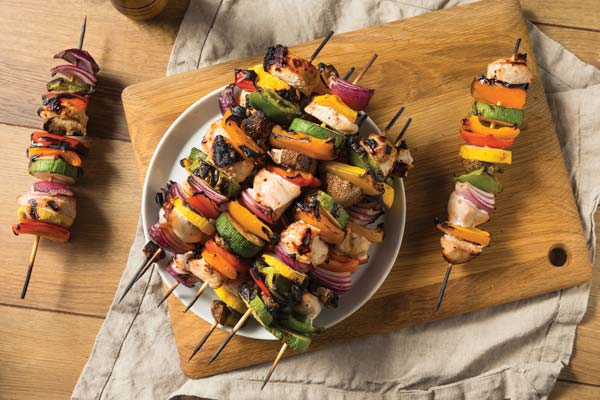
Grilled Chicken Kebabs
Recipe adapted from Dinner at the Zoo
Prep time: 20 minutes
Marinating time: 1 hour
Cook time: 10 minutes
Servings: 4
Marinade:
- 1/4 cup extra-virgin olive oil
- 1/4 cup balsamic vinegar or other vinegar
- 1/8 cup soy sauce
- 1 teaspoon lemon juice
- 1/4 cup brown sugar
- 1 teaspoon minced garlic
- salt, to taste
- pepper, to taste
Kebabs:
- 1 pound boneless, skinless chicken breasts, cut into 1-inch pieces
- 1 red bell pepper, cut into 1-inch pieces
- 1 orange bell pepper, cut into 1-inch pieces
- 1 small zucchini, cut into 1-inch slices
- 1 small yellow squash, cut into 1-inch slices
- 1 red onion, cut into 1-inch pieces
- 4 wooden skewers
- 1 tablespoon chopped parsley
- To make marinade: In large bowl, whisk olive oil, vinegar, soy sauce, lemon juice, brown sugar and garlic. Season with salt and pepper, to taste.
- To make kebabs: In bowl, toss chicken, bell peppers, zucchini, squash and red onion with marinade. Cover and refrigerate 1-8 hours.
- Soak wooden skewers in cold water at least 30 minutes to prevent burning. Preheat grill to medium-high heat.
- Thread chicken pieces and vegetables onto skewers, alternating ingredients. Cook 5-7 minutes on each side, or until chicken is cooked through.
- Sprinkle with parsley and serve.
Fuel Your Tailgate Team with a Steakhouse Side
If you’re looking for a tasty twist on tailgating tradition that’ll give you as much energy in the stands as the athletes on the field, look for a steakhouse-worthy side dish that’s loaded with complex carbohydrates and fueling flavor.
These Steakhouse Hasselback Potatoes, loaded with caramelized onions and crispy bacon, feature Wisconsin Russets – a complex carbohydrate that plays an important role in the body by providing energy to cells, the brain and certain parts of the kidney. As a healthier choice than simple carbs, which are composed of sugars that break down faster in your system, potatoes are also a good source of vitamin B6, potassium, copper, vitamin C, manganese, phosphorus, niacin, dietary fiber and pantothenic acid, making them a superstar selection on game day.
Tackle your next tailgate with more delicious recipes by visiting eatwisconsinpotatoes.com.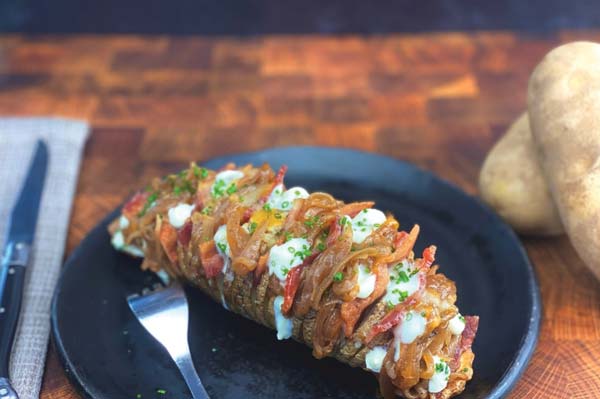
Steakhouse Hasselback Potatoes
Prep time: 20 minutes
Cook time: 90 minutes
Servings: 8
Hasselback Potatoes:
- 4 Wisconsin Russets (about 1 pound each)
- 4 tablespoons olive oil
- 2 tablespoons kosher salt
Caramelized Onions:
- 2 tablespoons unsalted butter
- 2.2 pounds yellow onions, sliced thin
- 2 teaspoons kosher salt
- 1/4 cup cognac or brandy (optional)
To Plate:
- 1 cup shredded cheddar jack cheese
- 12 ounces hickory smoked bacon, cooked and cut into 2-inch pieces
- 1/2 cup sour cream
- 2 tablespoons fresh chives, chopped
- Preheat oven to 400 F.
- To make Hasselback potatoes: Using vegetable brush, wash potatoes. Dry well and place on cutting board. Arrange handles of two wooden spoons so they are alongside potatoes to prevent knife from slicing all the way through. Make several cuts down each potato about 1/4 inch apart. Repeat with remaining potatoes and arrange on baking sheet fitted with wire rack.
- Drizzle with olive oil, making sure some oil is in slices. Sprinkle salt on each potato.
- Bake 90 minutes, or until potatoes are crispy on outside, fluffy in center and internal temperature is 205 F. Remove from oven and allow to cool slightly.
- To make caramelized onions: In heavy-bottomed shallow pan over medium heat, melt butter. Add sliced onions and season with salt. Continue to cook, stirring regularly until onions are deep brown and caramelized. Deglaze pan with cognac or brandy, if desired, scraping caramelized bits off bottom of pan. Remove from heat and set aside.
- To assemble, sprinkle potatoes with cheese, about 1/4 cup per spud, ensuring some cheese is in potato slices. Place cooked bacon pieces in some slices.
- Return potatoes to oven for about 5 minutes, just long enough to heat potatoes slightly and melt cheese. Place potatoes on serving platter and garnish with caramelized onions, sour cream and chopped chives.
Slide Into the End Zone with Salami
A tailgating MVP recipe is easy to assemble, easy to eat and packed with flavor – and these Simple Salami Sliders check every box. Soft slider buns, melty cheese and savory salami are baked in a buttery sauce for craveable bites that will disappear as soon as you pass the basket around.
Switch up the sauce, use a different cheese or add your favorite extra toppings to customize your perfect slider.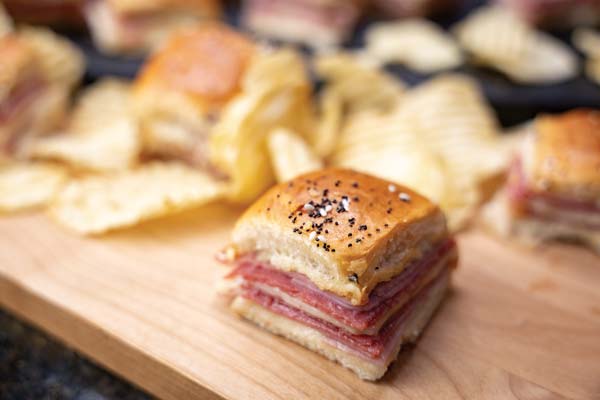
Simple Salami Sliders
Recipe courtesy of “Cookin’ Savvy”
Servings: 4-6
- 1 package slider buns
- 8 slices Swiss cheese
- 8 slices salami
- 8 slices ham or other deli meat
- 1 stick butter, melted
- 1 tablespoon Worcestershire sauce
- 2 tablespoons brown sugar
- 1 tablespoon grated Parmesan cheese
- 1 teaspoon onion powder
- 1 teaspoon garlic powder
- everything bagel seasoning (optional)
- Heat oven to 350 F.
- Halve slider buns, creating top and bottom portions. Set top portion aside, leaving bottom portion in original container. Place bottom portion and container in baking dish to prevent sticking.
- Layer Swiss cheese, salami and ham then cover with top buns.
- Mix melted butter, Worcestershire sauce, brown sugar, Parmesan cheese, onion powder and garlic powder. Pour over sliders.
- Cover with foil and bake 15 minutes then remove foil, sprinkle with everything bagel seasoning, if desired, and bake, uncovered, 10 minutes.
Photo courtesy of Shutterstock (kebabs)

SOURCE:
Find more recipes on our “Food & Drink” page!





