Discover how Katherine Johnson's mathematical genius helped NASA send astronauts into space and to the Moon. Learn why she remains one of America's most inspiring scientific...


The prospect of detecting signs of life on distant planets is indeed exhilarating; however, confirming such findings often requires an extensive timeframe, potentially spanning several years.


Discover the stunning eclipse seen by Artemis II astronauts during their 2026 Moon mission. A truly extraordinary spectacle awaits.


Craig Fehrman, Indiana University Astronaut Victor Glover In April 2026, four astronauts are scheduled to fly around the Moon. As part of NASA’s Artemis II mission,...


Why has it taken 50+ years to return to the Moon? A space historian explains the technical, political, and financial complexities behind Artemis II's long journey.


Unlikely Collaborators is bringing astrophysicist Dr. Lisa Kaltenegger to Santa Monica for a conversation centered on one of science’s most enduring questions: Are we alone in...

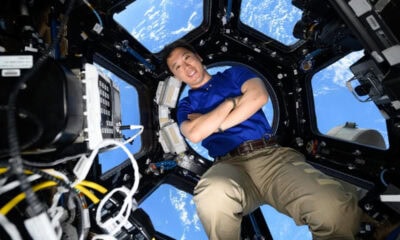

NASA astronaut Jonny Kim will discuss his eight-month International Space Station mission during a live news conference on Dec. 19. Discover the science, technology, and teamwork...
Habitable zone planets: Scientists use the habitable zone to find planets that could host liquid water and life. Learn how planetary atmospheres and geology determine true...


The habitable zone is just the start. Scientists now focus on exoplanet atmospheres to find signs of life beyond Earth. Discover how carbon cycling, greenhouse gases,...

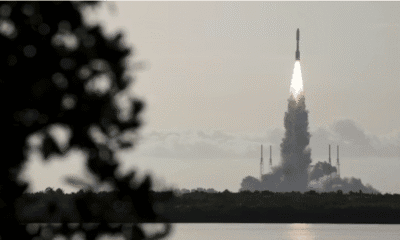

AI Spacecraft Propulsion: Discover how AI and machine learning are transforming spacecraft propulsion systems, from nuclear thermal engines to fusion technology, making interplanetary travel faster and...