

Entertainment
The End of an Era: Six Flags Magic Mountain Says Goodbye to an Original Piece of Park History

Last Updated on July 21, 2026 by Daily News Staff
For millions of Southern Californians, a visit to Six Flags Magic Mountain meant more than just riding roller coasters. It was a rite of passage—a place where families spent summer vacations, teenagers celebrated graduations, and thrill seekers chased ever-faster rides.
Now, one of the last remaining reminders of the park’s opening days is preparing to disappear.
According to KTLA, Los Angeles County has approved demolition permits for the former Laughing Dragon Restaurant, an iconic structure perched atop Samurai Summit that has overlooked Magic Mountain for more than five decades.
Although the building has been vacant since 2008, its demolition marks the end of another chapter in one of California’s most famous amusement parks.
A Restaurant with Deep Roots
When Magic Mountain welcomed its first guests in 1971, the building opened as the elegant Four Winds Steakhouse.
Unlike the quick-service restaurants common in today’s theme parks, Four Winds offered guests a sit-down dining experience high above the park, complete with sweeping views of the surrounding Santa Clarita Valley.
In 1988, after the opening of the park’s suspended roller coaster Ninja, the restaurant was renamed The Laughing Dragon, embracing the area’s Asian-inspired theme.
For years, it became a familiar landmark for guests making the climb to Samurai Summit.
Eventually, changing guest habits and the park’s evolving dining strategy led to the steakhouse’s closure in 2006. The building briefly operated as a Papa John’s Pizza location before closing permanently in 2008.
Since then, it has quietly watched generations of visitors pass by.
More Than an Empty Building
To younger guests, the vacant structure may have seemed like little more than an abandoned restaurant.
To longtime visitors, however, it represented something much larger.
Magic Mountain has transformed dramatically since its opening more than 50 years ago. Wooden roller coasters gave way to towering steel giants. New technology replaced classic attractions. Entire themed areas evolved with each generation.
Yet the former Laughing Dragon remained—a silent reminder of what the park looked like during its earliest years.
For many fans, it was one of those familiar landmarks that helped connect today’s park with its past.
Samurai Summit Continues to Change
The demolition comes during a period of significant change for the Samurai Summit section of the park.
Nearby, Superman: Escape from Krypton closed in 2024 after decades of launching riders nearly 400 feet into the air. Meanwhile, Tatsu continues to dominate the skyline with one of the world’s most celebrated flying roller coasters.
Construction is also underway on Magic Mountain’s newest attraction—a Vekoma Thrill Glider Roller Coaster, expected to debut in 2027. While the park has not announced what will replace the Laughing Dragon site, many enthusiasts believe the area could become part of future expansion plans.
The Challenge of Preserving Theme Park History
Unlike museums or historic landmarks, amusement parks are constantly reinventing themselves.
Older attractions are removed to make room for larger, faster, and more technologically advanced experiences. Restaurants close as guest preferences change. Buildings that once bustled with activity can quickly become obsolete.
From a business standpoint, redevelopment makes sense.
But every demolition also removes another tangible connection to the park’s history.
Many Disney attractions have been preserved through photographs, documentaries, and archives. Regional parks like Magic Mountain often receive far less historical attention, making the loss of original structures even more significant for longtime fans.
Looking Ahead
Magic Mountain has not revealed what, if anything, will replace the Laughing Dragon building.
Whether the site becomes part of a new attraction, additional guest amenities, or another expansion remains to be seen.
What is certain is that another piece of the park’s 1971 identity is about to disappear.
For those who grew up visiting Magic Mountain, it’s another reminder that while roller coasters continue to evolve, nostalgia often rides alongside progress.
Did You Know?
- 🎢 Magic Mountain opened on May 29, 1971.
- 🥩 The building originally housed the Four Winds Steakhouse.
- 🐉 It became The Laughing Dragon after Ninja opened in 1988.
- 🍕 It briefly served as a Papa John’s before closing permanently in 2008.
- 🏗️ The building sat vacant for nearly 18 years before demolition plans were approved.
STM Daily News Perspective
As someone who grew up in Southern California, I know that Magic Mountain wasn’t just another amusement park—it was part of the Southern California experience. While the biggest headlines usually focus on new roller coasters, it’s often the quieter stories, like the loss of a familiar restaurant overlooking the park, that resonate most with longtime visitors. Places like the Laughing Dragon became part of family traditions, first dates, school trips, and summer vacations. Its demolition is a reminder that every park evolves, but each change also closes another chapter of its history.
Join the Conversation
Have you ever eaten at the Four Winds or the Laughing Dragon? Do you have memories of visiting Magic Mountain in the 1970s, ’80s, ’90s, or early 2000s?
Share your favorite Magic Mountain memories in the comments below, and subscribe to the STM Daily News newsletter for more stories celebrating Southern California history, attractions, and the places that shaped our communities.
Related Links


Entertainment
Lights, Camera, Snackers: How Aspiring Filmmakers Can Enter to Win $25,000
The director’s chair is open and the opportunity to create the next great snack-sized movie could be yours. Aspiring filmmakers and creators have the chance to turn a prewritten script into an original short film for a $25,000 prize.
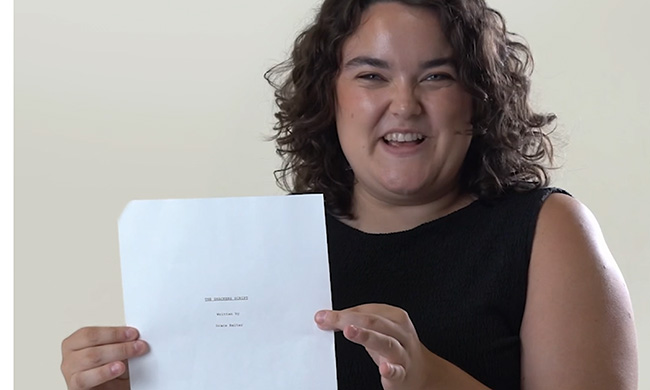
Lights, Camera, Snackers: How Aspiring Filmmakers Can Enter to Win $25,000
(Feature Impact) The director’s chair is open and the opportunity to create the next great snack-sized movie could be yours.
For the second year, Bumble Bee is bringing back its Tuna “Cans”Film Festival, giving aspiring filmmakers and creators the chance to turn a script written by comedian and actress, Grace Reiter, into an original short film starring its deliciously convenient tuna Snackers.
Watch the video to learn more!
“I love a chance to support those starting out in the film industry – and this time, I’m partnering with Bumble Bee for the Tuna Cans Film Festival to do it,” Reiter said. “Plus, I’m making it easy: I already wrote the script.”
Using Reiter’s scripted lines, creators can make the story entirely their own, bringing their vision to life through original characters, settings, music, editing and creative flair.
The creative brief is simple: The finished film must be 60 seconds or less and Bumble Bee Snackers™ need to get their moment in the spotlight.
Plus, the stakes are bigger than ever: The winning filmmaker will take home a $25,000 grand prize to help make their filmmaking dreams a reality.
Creators can submit their original short film by Oct. 23, 2026, at 11:59 p.m. PT.
The film can be funny, dramatic, unexpected or all three. The lines are already written but the order, arrangement and any additions are open to creative interpretation. Now it’s time to see what you can do with it.
Visit tunacansfilmfest.com, where you can find Reiter’s original script, submission instructions and complete contest details, to get started.
SOURCE:
Bumble Bee

Last Updated on October 9, 2026 by Daily News Staff
From haunted mazes after dark to daytime trick-or-treating with Snoopy, Knott’s offers two ways to celebrate Halloween in 2026.
BUENA PARK, Calif. — Halloween season is underway at Knott’s Berry Farm, where visitors can choose between the nighttime frights of Knott’s Scary Farm and the playful daytime activities of Knott’s Spooky Farm.
For readers planning a Southern California outing this October, the two celebrations offer different ways to get into the Halloween spirit.
Scary Farm brings new nightmares after dark
Knott’s Scary Farm runs on select nights through October 31, 2026, transforming the park with haunted mazes, scare zones, shows, and more than 1,000 creatures, according to Knott’s.
Two new mazes join this year’s lineup. Inked turns a cartoonist’s creations into a nightmare, while Unearthed sends visitors into an excavation where an ancient evil has awakened.
Also new for 2026 is Color Collect, an activity in which guests use an interactive lantern to activate pillars around the park and collect six colors.
Scary Farm requires its own paid event admission. As of October 4, online single-night tickets are advertised from $65, with taxes potentially additional. Knott’s does not recommend the event for children under 13.
Spooky Farm offers daytime Halloween fun
For families seeking a gentler celebration, Knott’s Spooky Farm takes place Thursdays through Sundays, September 24–October 31, plus October 12, according to the park’s events calendar, which lists the additional date as Columbus Day.
Children can trick-or-treat through Ghost Town, enjoy games and spooky stories with Snoopy and the Peanuts characters, and show off their Halloween outfits at Snoopy’s Spooktacular Costume Party.
Other activities include the Creepy Critters of Calico, cookie decorating in the pumpkin patch, and performances by the Bob Baker Marionette Theater. Cookie decorating carries an additional fee.
The daytime celebration gives families a chance to enjoy Halloween decorations, treats, and entertainment together before the nighttime haunt begins.
Planning your visit
Knott’s Berry Farm is located at 8039 Beach Boulevard in Buena Park, California. Before heading out, check the park’s official calendar for your chosen date, operating hours, admission options, and event policies.
Whether your Halloween plans call for a bag of candy or a trip through a haunted maze, Knott’s has a seasonal celebration to match.
Keep the fun going: Visit STM Daily News for more entertainment news, theme park updates, and stories worth sharing.
Official sources
- Knott’s Scary Farm: attractions and tickets
- Knott’s Spooky Farm: activities and entertainment
- Knott’s Berry Farm: seasonal event dates
Information checked October 4, 2026. Event schedules, offerings, and ticket prices may change.


The next round of Street Fighter is heading to the big screen. Paramount Pictures and Legendary Pictures will release the new live-action movie exclusively in theaters on October 16, 2026, bringing Capcom’s video game characters into a story built around rivalries, a dangerous tournament, and a conspiracy lurking behind the competition.
Directed by Kitao Sakurai, the film features Andrew Koji as Ryu, Noah Centineo as Ken Masters, and Callina Liang as Chun-Li, alongside an ensemble that includes Jason Momoa, Curtis “50 Cent” Jackson, and wrestling stars Roman Reigns and Cody Rhodes.
Ryu and Ken Face a Fight Beyond the Arena
Set in 1993, the movie finds Ryu and Ken estranged when Chun-Li draws them back into combat for the next World Warrior Tournament. What initially looks like a chance to test their fighting skills becomes something much more dangerous.
According to the studio’s synopsis, a deadly conspiracy puts the two fighters on a collision course, forcing them to confront both each other and unresolved struggles from their past. That setup gives the film a personal conflict to explore alongside its tournament action.
For viewers who remember gathering around an arcade cabinet, the 1993 setting offers a nostalgic hook. The studio is also promising familiar signature moves, including Hadoukens and roundhouse kicks, as the game’s combat makes the jump to live action.
A Cast Packed With Familiar Fighters
Beyond its central trio, the announced lineup brings together actors, comedians, musicians, wrestlers, and martial artists. Among the character pairings:
- Joe “Roman Reigns” Anoai as Akuma
- David Dastmalchian as M. Bison
- Cody Rhodes as Guile
- Vidyut Jammwal as Dhalsim
- Orville Peck as Vega
- Olivier Richters as Zangief
- Hirooki Goto as E. Honda
- Mel Jarnson as Cammy
- Curtis “50 Cent” Jackson as Balrog
- Jason Momoa as Blanka
The cast also includes Andrew Schulz as Dan Hibiki, Eric André as Don Sauvage, Rayna Vallandingham as Juli, Kyle Mooney as Marvin, and Alexander Volkanovski as Joe.
With so many characters sharing the screen, one question will be how the movie balances the wider roster with Ryu and Ken’s central story. The announced cast gives longtime fans plenty of familiar names to watch for.
Who Is Behind the Movie?
Paramount Pictures and Legendary Pictures present Street Fighter in association with Capcom. The Legendary Pictures production is based on the Capcom video game, with a story by Dalan Musson and Gary Dauberman and a screenplay by T.J. Fixman and Kitao Sakurai.
Producers include Mary Parent, Cale Boyter, Jason Momoa, Takayuki Nakayama, and Stefan Makhoul. The supplied production announcement notes that credits are subject to change.
Release Date and Rating
Street Fighter opens only in theaters October 16, 2026. The film is rated PG-13 for violence/action, bloody images, strong language, sexual references, partial nudity, and brief smoking, according to the supplied studio announcement.
Fans can visit Paramount’s official Street Fighter page for the trailer and film information, and follow #StreetFighterMovie for promotional updates.
Which fighter are you most excited to see in live action? Share your pick in the comments, and visit STM Daily News for more Entertainment coverage and newsletter updates.
Source: Supplied Paramount Pictures/Legendary Pictures production announcement; release date, synopsis, and selected credits checked against Paramount’s official film page. This article is a preview, not a review.





