

FDA CDC News
Urgent Recall Notice: Diamond Shruumz-Brand Chocolate Bars, Cones, & Gummies

Last Updated on July 6, 2024 by Daily News Staff

Recall Notice:
Recently, the FDA issued an urgent recall notice for Diamond Shruumz-Brand Chocolate Bars, Cones, and Gummies due to reports of severe illnesses associated with consuming these products. This blog post aims to provide you with essential information about the ongoing investigation and steps you can take to protect yourself and your loved ones.
Recall Details:
The FDA advises against eating, selling, or serving any flavor of Diamond Shruumz-Brand Chocolate Bars, Cones, and Gummies. These products have been linked to a range of severe symptoms including seizures, central nervous system depression, abnormal heart rates, and nausea. The recall affects all flavors of Diamond Shruumz-Brand products, including Microdosing Chocolate Bars, Infused Cones, and Micro-Dose/Mega-Dose Gummies.
Affected Stores:
The Diamond Shruumz-Brand products were previously available online and at various retail locations nationwide, including smoke/vape shops and stores selling hemp-derived products like CBD or delta-8 THC. If you have purchased any of these products, it’s crucial to stop consumption immediately.
Current Status:
The investigation is ongoing, with updates being provided as new information becomes available. It is essential to take proactive steps to ensure your safety and the safety of those around you.
Recommendations:
- Do not consume any Diamond Shruumz-Brand products. Check your home for these items and either discard them or return them to the company for a refund.
- Parents and caregivers should be vigilant as these products may appeal to children and teens. Educate them about the dangers and ensure that these items are not consumed.
- Retailers are urged not to sell or distribute any Diamond Shruumz-Brand products and to follow the proper recall procedures.
Health Warning:
If you or someone you know experiences symptoms after consuming Diamond Shruumz-Brand products, contact a healthcare provider immediately. You can also reach out to the Poison Help Line at 1-800-222-1222 for assistance.
Case Updates:
As of July 1, 2024, a total of 48 illnesses have been reported in 24 states, with 27 individuals requiring hospitalization and one potentially associated death under investigation. It is crucial to stay informed and take necessary precautions to avoid any further health risks.
Your health and safety are of utmost importance. By following the FDA’s recall notice and taking appropriate actions, you can help prevent further illnesses related to Diamond Shruumz-Brand Chocolate Bars, Cones, and Gummies. Stay informed, stay safe, and prioritize your well-being and that of your community.
Remember, if you have any concerns or experience symptoms, do not hesitate to seek medical help promptly. Together, we can navigate through this challenging situation and protect each other from potential harm.
Who to Contact
Consumers who have symptoms should contact their health care provider to report their symptoms and/or the Poison Help line to receive care.
To report a complaint or adverse event (illness or serious allergic reaction), you can
- Call the poison centerExternal Link Disclaimer at 1-800-222-1222
- Call an FDA Consumer Complaint Coordinator if you wish to speak directly to a person about your problem.
- Complete an electronic Voluntary MedWatch form online.
- Complete a paper Voluntary MedWatch form that can be mailed to FDA.
Submit Questions/Get Assistance
Useful Links
- CDC Outbreak Investigation Summary
- CDC HAN Advisory
- America’s Poison Centers (Poison Control) External Link Disclaimer
- Prophet Premium Blends Recall Announcement
- Food Safety Tips for Retailers and Consumers During an Outbreak
- Food Safety Resources for Produce Shippers and Carriers During a Foodborne Illness Outbreak
- Who to Contact
Source: FDA
Our Lifestyle section on STM Daily News is a hub of inspiration and practical information, offering a range of articles that touch on various aspects of daily life. From tips on family finances to guides for maintaining health and wellness, we strive to empower our readers with knowledge and resources to enhance their lifestyles. Whether you’re seeking outdoor activity ideas, fashion trends, or travel recommendations, our lifestyle section has got you covered. Visit us today at https://stmdailynews.com/category/lifestyle/ and embark on a journey of discovery and self-improvement.


Food and Beverage
Millions of Eggs Recalled Over Possible Salmonella Risk: What Consumers Need to Know
A major egg recall is affecting nearly 1.6 million dozen eggs sold under several popular brands. Here’s how to determine if your eggs are included and what steps to take if they are.

News You Can Use This Moment!

Consumers are being urged to check their refrigerators after a major recall involving nearly 1.6 million dozen shell eggs due to the potential presence of Salmonella Enteritidis, a bacterium that can cause serious foodborne illness.
The voluntary recall, announced by Midwest Poultry Services, L.P., affects white shell eggs and brown cage-free eggs produced at two Texas farms and distributed between June 6 and July 3, 2026. According to the U.S. Food and Drug Administration (FDA), the eggs were sold through grocery stores and foodservice distributors in Texas, Louisiana, Oklahoma, Arkansas, Mississippi, and New Mexico.
What Brands Are Included?
The recalled eggs were sold under several familiar brand names, including:
- Kroger
- Simple Truth
- Brookshire’s
- Country Morning
- Sunups
Not every carton under these brands is affected. Consumers should look for:
- Plant Code: P-1950 or 0840962
- Julian Dates: 157 through 184
- Best By/Sell By Dates: July 20, 2026, through August 17, 2026
Why the Recall Matters
Salmonella can cause symptoms including:
- Diarrhea
- Fever
- Stomach cramps
- Nausea
- Vomiting
Symptoms typically begin 12 to 72 hours after eating contaminated food and usually last four to seven days. While many healthy adults recover without treatment, infections can become severe in young children, older adults, pregnant women, and people with weakened immune systems.
The FDA and the Centers for Disease Control and Prevention (CDC) are investigating a multistate outbreak involving 98 confirmed illnesses across 17 states, resulting in 26 hospitalizations. No deaths have been reported. Investigators say the recalled eggs are linked to part of the outbreak, although they do not account for every reported illness.
What Should You Do?
If you have eggs matching the recalled codes:
- Do not eat them.
- Return them to the store for a refund or dispose of them safely.
- Wash your hands thoroughly after handling the carton.
- Clean and sanitize any refrigerator shelves, containers, or kitchen surfaces the eggs may have touched.
If you have already eaten the eggs and develop symptoms of Salmonella infection, contact your healthcare provider, especially if symptoms are severe or persist.
Are Arizona Consumers Affected?
The recalled products were officially distributed in six states, and Arizona is not listed among the primary distribution states. However, because food products can move through wholesalers, travelers, or secondary retailers, Arizona consumers who recently purchased eggs while traveling—or who received eggs from family or friends in affected states—should still check the carton codes.
The Bottom Line
Food recalls are an important part of protecting public health. Taking a few moments to inspect the eggs in your refrigerator could help prevent a serious illness. If your carton matches the recalled plant codes and date range, don’t take the risk—return it or throw it away.
STM Daily News will continue to monitor this developing story and provide updates as additional information becomes available.
Related Resources
- FDA Recalls, Market Withdrawals & Safety Alerts
- FDA Foodborne Illness Outbreak Investigations
- CDC: Salmonella Information
- FoodSafety.gov Consumer Resources
Health
Join the Fight Against ALS: Register and Make a Difference
Every year, doctors tell more than 5,000 Americans they have amyotrophic lateral sclerosis, better known as ALS. It is a life-changing diagnosis. In honor of ALS Awareness Month, learn more about the disease.
Last Updated on June 30, 2026 by Daily News Staff
Join the Fight Against ALS: Register and Make a Difference
(Feature Impact) Every year, doctors tell more than 5,000 Americans they have amyotrophic lateral sclerosis, better known as ALS. It is a life-changing diagnosis.
Still, it’s hard to estimate the total number of ALS cases in the United States. No one knows what causes most cases of ALS, something the U.S. National ALS Registry is working to change.
In honor of ALS Awareness Month, learn more about the registry, how the information is used and how to enroll if you have ALS.
What is ALS?
ALS is a disease that affects the nerve cells that make muscles work in the body. This disease makes the nerve cells stop working and die. The nerves lose the ability to trigger specific muscles, which causes the muscles to become weak and leads to paralysis.
What is the registry?
“The National ALS Registry is a program of, by and for those living with ALS,” said Dr. Paul Mehta, principal investigator of the Registry. “The program collects, manages and analyzes data about people with ALS in the United States. It includes data and information provided by individuals who choose to register and complete the risk factor surveys.”
What is its purpose?
The main purpose is to gather information that can be used in the fight against ALS. The information is used to:
- Estimate the number of new cases of ALS diagnosed each year
- Estimate the number of people who have ALS at any given point in time
- Better understand who gets ALS and what factors affect the disease
- Enhance research that could improve care for people with ALS
How do researchers use the data?
Researchers can use the data to look for disease pattern changes over time and try to identify whether there are common risk factors among people with ALS. Since 2010, the registry has funded more than a dozen studies exploring potential ALS risk factors.
What does participation look like?
Individuals with ALS are encouraged to share their stories, enhancing ALS data and supporting research efforts. People living with ALS can help the National ALS Registry by completing up to 18 risk factor surveys, covering topics such as occupational history and environmental exposures, which help create a more complete picture of their ALS story.
How can someone join?
Anyone living with ALS can enroll. By joining and taking the risk factor surveys, individuals living with ALS can help future generations.
Get started at cdc.gov/als.


SOURCE:
Our Lifestyle section on STM Daily News is a hub of inspiration and practical information, offering a range of articles that touch on various aspects of daily life. From tips on family finances to guides for maintaining health and wellness, we strive to empower our readers with knowledge and resources to enhance their lifestyles. Whether you’re seeking outdoor activity ideas, fashion trends, or travel recommendations, our lifestyle section has got you covered. Visit us today at https://stmdailynews.com/category/lifestyle/ and embark on a journey of discovery and self-improvement.
Lifestyle
Reclassification of marijuana opens doors for much‑needed medical research into the benefits and risks of the drug
The DOJ’s move to reclassify medical marijuana as Schedule III could unlock long-blocked cannabis research—while raising new questions about safety, regulation, and risk.
Last Updated on June 2, 2026 by Daily News Staff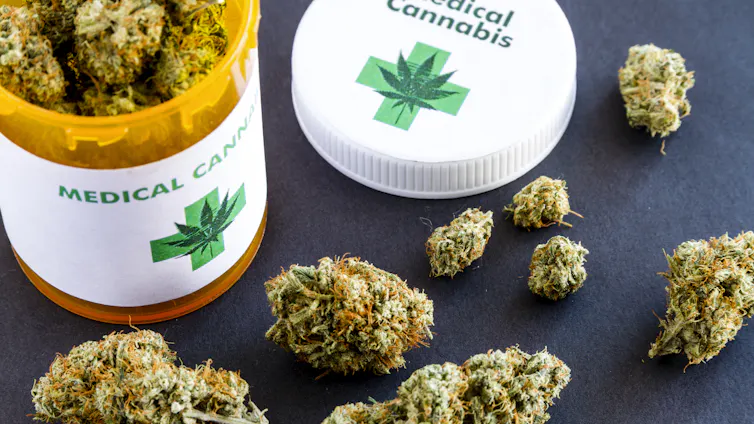
Carey S. Cadieux, Binghamton University, State University of New York
When the U.S. Department of Justice moved to reclassify medical marijuana to a Schedule III drug on April 23, 2026, it set the stage for a vast amount of medical research that has been hobbled for decades by its more restrictive Schedule I classification.
The Justice Department also called for an expedited federal rescheduling process, with proceedings expected to begin in late June 2026, but for now cannabis at the federal level remains a Schedule I drug.
I’m an associate professor of nursing and I edited a textbook for nurses about providing care with cannabis. Cannabis is the umbrella term for the plant genus that includes both marijuana and hemp – two varieties of the same plant distinguished primarily by their content of THC, one of the active components of cannabis.
Moving cannabis to a Schedule III drug ushers in the end of the cannabis prohibition era and the beginning of the regulation era, potentially creating promising opportunities around research and new therapeutics.
How are drugs regulated by ‘schedule’?
The Controlled Substances Act of 1970 categorizes all substances regulated under existing federal law into one of five schedules. The act regulates the manufacturing, importation, possession, use and distribution of substances on each schedule.
Several factors determine schedule placement, including the drug’s medical use, scientific evidence of its benefits and pharmacological effects, patterns and history of abuse, public health risk level, degree of physical or psychological addiction potential, and whether the drug can be used to make another controlled substance.
The Drug Enforcement Administration’s rescheduling of marijuana will move it from its current classification as a Schedule I drug, defined as having a high risk for abuse and no accepted medical use, to a Schedule III drug under the Controlled Substances Act. While still tightly regulated, Schedule III drugs are considered to have moderate to low risk for physical and psychological dependence and to have some medical benefits.
Other Schedule I drugs include heroin, psilocybin, LSD, peyote and MDMA, or ecstasy. These drugs cannot be dispensed or prescribed, with some exceptions. Current Schedule III drugs include ketamine, anabolic steroids, testosterone, products with less than 90 milligrams of codeine per dosage unit and some cannabinoids.
The move to reclassify medical marijuana products as Schedule III drugs applies only to those products certified by state-level medical cannabis programs. All other cannabis products remain a federal Schedule I drug, including those available from states’ recreational cannabis programs.
Impacts of cannabis reclassification
This legal order acknowledges that medical marijuana has some medical value and asserts that it has a lower potential for abuse than under the previous Schedule I classification.
The reclassification also ensures that state-registered medical cannabis patients continue to be permitted to purchase medical cannabis products without changes to their current certification or recommendation.
One of the challenges with this new law is that states have not standardized medical cannabis regulations, and each state will have its own quality and testing standards. In Maine, for instance, medical cannabis is not tested for molds, fungus, heavy metals or pesticides, while recreational cannabis is.
This means that the Schedule III medical cannabis in Maine could be contaminated, while the state’s testing of recreational cannabis makes it much safer to consume.
What are the implications for marijuana research?
For decades, researchers have struggled to conduct high-quality research studies due to their lack of access to the cannabis products that patients actually use and restrictions on their processes.
With the reclassification, researchers who are registered with the DEA to research cannabis will be able to obtain cannabis flower and plant material, as well as manufactured cannabis products, such as tinctures and edibles, directly from state-licensed businesses that are DEA-registered.
This means researchers will no longer need to rely on the federal DEA registry for access to cannabis products for research, which were often inferior in quality and variety in comparison to the everyday products medical cannabis patients typically have access to. Instead, they will be able to study cannabis products that patients use in daily life, such as vapes and various edible products.
This shift in access will now allow researchers to undertake the gold standard of research approaches: the randomized controlled trial.
Randomized controlled trials will help researchers like my colleagues determine how effective cannabis is in treating people with complex medical needs. This includes patients who experience nausea and pain while undergoing cancer treatments, multiple sclerosis patients with severe muscle spasm and stiffness, and chronic pain patients who strive to find relief without using opioids.
Might rescheduling send mixed signals?
Rescheduling may lead people to believe that cannabis is safe for all people to consume.
However, a growing body of research points to possible adverse effects from cannabis use, particularly in vulnerable groups, such as people who are pregnant, adolescents, people with preexisting mental health conditions such as schizophrenia or psychosis, and those with cardiac issues.
Cannabis can also lead to adverse drug interactions. Therefore, medical patients should use it with discretion and under the guidance of a healthcare professional.
For most medical cannabis patients, THC doses should start low and gradually be increased.
Rescheduling will be a big step toward helping researchers build a greatly needed solid body of evidence around both the benefits and potential harms of cannabis. But rescheduling should not be interpreted as a signal that cannabis is harmless.
Carey S. Cadieux, Associate Professor of Nursing, Binghamton University, State University of New York
This article is republished from The Conversation under a Creative Commons license. Read the original article.
Our Lifestyle section on STM Daily News is a hub of inspiration and practical information, offering a range of articles that touch on various aspects of daily life. From tips on family finances to guides for maintaining health and wellness, we strive to empower our readers with knowledge and resources to enhance their lifestyles. Whether you’re seeking outdoor activity ideas, fashion trends, or travel recommendations, our lifestyle section has got you covered. Visit us today at https://stmdailynews.com/category/lifestyle/ and embark on a journey of discovery and self-improvement.




