

Child Health
4 Ways to Promote Positive Maternal Mental Health


(Family Features) The joys of raising and nurturing a baby are practically endless for new parents, yet there remain challenges to overcome. While it may be natural to focus attention and energy on caring for a new baby, it’s equally important for mothers to maintain their own mental health.
According to Malina Malkani, MS, RDN, CDN, maternal mental health (MMH) is often negatively affected by the belief that there is only one “right” or “best” way to feed a baby. Mothers are exposed to this message through peer-to-peer communication, social media, health care providers and more.
To combat negativity, Malkani promotes the importance of family, friends, online communities and others contributing a positive impact toward MMH by recognizing all babies are different, acknowledging there’s no one “right” way to feed a baby, refraining from parent-shaming and judgement, and remembering caregivers have personal feeding decisions to make based on a variety of factors.
The saying “it takes a village” is as applicable today as ever, which is why Plum Organics and the Policy Center for Maternal Mental Health partnered to share resources and information mothers can use to find support in their communities. Consider these ways moms can nurture their little ones along with their own mental well-being.
Understand the Signs of Mental Health Conditions
Depression and anxiety are the most common complications in pregnancy and postpartum, affecting 1 in 7 women, according to the Policy Center for Maternal Mental Health. If you feel any of these symptoms, seek help from a health care provider: overwhelmed, weepy, anxious or nervous, angry, scared by your thoughts, like you’re not yourself, guilt, regret or shame.
Engage in Self-Care
Spending your time thinking about baby is natural, but it’s important to take care of yourself, too. Watch a movie, socialize with friends, meditate, rediscover hobbies – whatever you enjoy doing, prioritize making it part of your life again.
Join a Supportive Movement
Creating a “village” is a key step toward positive mental well-being for moms as it allows them to build support systems showing they’re not alone in their struggles. To continue efforts to destigmatize mental health challenges for moms and deliver research and support, Plum Organics and the Policy Center for Maternal Mental Health are asking mothers (and their loved ones) to sign a “Pin-tition,” wherein a pin is placed on the U.S. map to indicate where participants want to build a village of support.
The movement encourages participants to put a pin on the map if:
- You think moms suffering from postpartum depression should have access to a professional trained in MMH disorders
- You think moms suffering from MMH disorders should have access to mental health providers within driving distance
- You think moms should be screened for MMH disorders during prenatal and postpartum periods
- You think OBGYNs should discuss mental health at the beginning of pregnancy
- You think mental health care is health care
- You think providers should be reimbursed by insurance for MMH care
Prioritize Physical Health
Taking care of yourself includes physical health as well as mental health. Doing yoga, walking or working out 15-30 minutes a day and nourishing your body with nutrient-rich foods can help restore your sense of balance and provide a boost in self-esteem.
Find more information and drop a pin to shed light on your area by visiting PlumOrganics.com.
Mapping Out Maternal Mental Health
Intended as a resource for policy action, funding drivers and strategic planning, the Maternal Mental Health Risk Factors and Resource Maps developed by Plum Organics and the Policy Center for Maternal Mental Health revealed these findings:
- The highest risk factor levels were concentrated in the Deep South with severe conditions identified in the Mississippi Delta region, Gulf Coast, greater Appalachia, New Mexico and Arizona.
- Higher risk factor levels tend to be associated with rural and less-populated regions. Conversely, most major metropolitan areas in the U.S. tend to have comparatively moderate or lower risk factor scores.
- More than 600,000 mothers will suffer from a MMH disorder in the U.S. every year. Left untreated, these disorders can have devastating impacts on a mother’s health and functioning, the baby’s health and development, and overall family stability.
Photos courtesy of Getty Images
SOURCE:
Plum Organics


Food and Beverage
A Lesson in Kindness, Inclusion and How Kids Eat Differently
Kids Eat Differently: The school year brings new classmates, routines and opportunities for children to learn about people whose experiences may be different from their own. They could include friends who use a wheelchair, carry an inhaler or even receive nutrition through a feeding tube.


A Lesson in Kindness, Inclusion and How Kids Eat Differently
(Feature Impact) The school year brings new classmates, routines and opportunities for children to learn about people whose experiences may be different from their own. They could include friends who use a wheelchair, carry an inhaler or even receive nutrition through a feeding tube.
Watch this video to learn more
For families who rely on tube feeding, it is an essential part of daily life but is often understood only by those who experience it. That limited awareness can leave children who are tube fed and their families feeling isolated or unseen, according to Gerard Minor, a pediatric gastroenterology and hepatology specialist.
Parents can use everyday questions as opportunities to help children understand there are many ways people receive nourishment. Teachers, classmates, caregivers and communities can also help make tube feeding part of the everyday conversation around childhood rather than something that separates children from it.
“Helping children understand those differences early can encourage curiosity, kindness and inclusion,” Minor said.
To help bring greater awareness, understanding and representation to children and families who experience tube feeding every day, Compleat, a leader in tube feeding formulas, launched “What Is Better Than How,” featuring “Sesame Street’s” Elmo and his signature warmth and curiosity. The original song celebrates the many ways people eat. Some people eat with a fork, some use a spoon and some use a tube, reinforcing a simple message: What matters is not how you eat. What matters is that you are nourished, loved and included.
To hear the song, create a personalized version and learn more about the campaign, visit Compleat.com/WhatIsBetterThanHow.

SOURCE:

Child Health
Changing the Landscape of Childhood Cancer Survivorship
Childhood Cancer: hile “cancer” is a term no family wants to hear, especially when it comes to their children, there is reason for hope. Today, 85% of children diagnosed with cancer survive at least five years. Survival is only part of the journey, however.

Changing the Landscape of Childhood Cancer Survivorship
(Feature Impact) While “cancer” is a term no family wants to hear, especially when it comes to their children, there is reason for hope. Today, 85% of children diagnosed with cancer survive at least five years, according to the National Cancer Institute, up from 75% three decades ago.
Watch this video to learn more
“This progress is driven in large part by dedicated research,” Hyundai Hope on Wheels Board Member Kevin Reilly said. “Over the last 28 years, Hyundai Hope on Wheels has committed over $300 million in pediatric cancer research and program grants, awarding more than 1,600 grants to 210 medical institutions nationwide, impacting thousands of young lives each year.”
Survival is only part of the journey, however. Nearly half (46%) of U.S. adults believe a child ringing the hospital bell after cancer treatment means the child is cancer-free and their medical journey is largely over, according to a survey conducted by Atomik Research on behalf of Hyundai Hope on Wheels. For the children and families living through a diagnosis, the reality is far more complex.
“The reality is that healing continues long after treatment, which is why sustained investment in survivorship care is a priority for us,” said John Guastaferro, executive director of Hyundai Hope on Wheels.
Isabella Franco-Capps, 11, understands that journey firsthand. Diagnosed with B-cell acute lymphoblastic leukemia at age 5, her journey took two years before she could say she’s “a cancer survivor.”
“I was diagnosed with b-cell acute lymphoblastic leukemia,” she said. “This began my two-year-long journey of scans, pokes, chemotherapy and hospital stays. And now I’m a cancer survivor.”
Fellow Hyundai Hope on Wheels National Youth Ambassador, Jackson Trihn, 12, is using his voice to call for continued research and to bring hope to others.
“The role … is being able to share my story,” he said. “Not just to spread awareness but to spread hope to kids that need it. And awareness is so important because people don’t understand how hard pediatric cancer can be.”
Continued progress can help ensure more children ring the bell and receive the care and support they need long after they’ve had the opportunity to do so. To learn more about these efforts and how you can help, visit HyundaiHopeOnWheels.org.

SOURCE:
💪 Your health journey starts here! Explore the latest health news, fitness tips, wellness trends, and healthy living advice. Share your thoughts in the comments and subscribe to the STM Daily News newsletter to stay informed and inspired every day.
Women's Health
From Pregnancy to Parenthood: How Medicaid Supports Women Across the Maternal Health Journey
When women are planning, expanding or raising families, access to healthcare is a vital source of physical and mental support. For millions of women and families across the U.S., Medicaid provides that support, enabling parents and children to access the reproductive, maternal and pediatric healthcare they need to thrive.
(Feature Impact) When women are planning, expanding or raising families, access to healthcare is a vital source of physical and mental support. For millions of women and families across the U.S., Medicaid provides that support, enabling parents and children to access the reproductive, maternal and pediatric healthcare they need to thrive. It’s there for anyone who needs it, from working adults to families navigating unemployment or disability.
To learn about how Medicaid supports growing families through every stage of the parenthood journey, consider this information from the maternal health experts at Community Catalyst.
Making Family Planning Possible
When people are able to plan and prepare to welcome children into the world, it can remove a lot of stress, uncertainty and complication from their journeys. Medicaid family-planning coverage may include reproductive health counseling, pre-pregnancy screenings, many forms of FDA-approved contraception and other preventive services. Comprehensive access to birth control allows women and couples to make their own decisions about pregnancy timing or spacing between siblings.
Supporting Healthy Pregnancies
Pregnancy is no small endeavor, and a woman with a healthcare team at her side is better prepared to face whatever challenges may arise. Pregnancy often requires frequent appointments for ultrasounds, laboratory testing and monitoring – all of which are made possible and affordable through Medicaid. Since 1 in 4 Medicaid recipients are women ages 15-49, this care can make a difference during their childbearing years.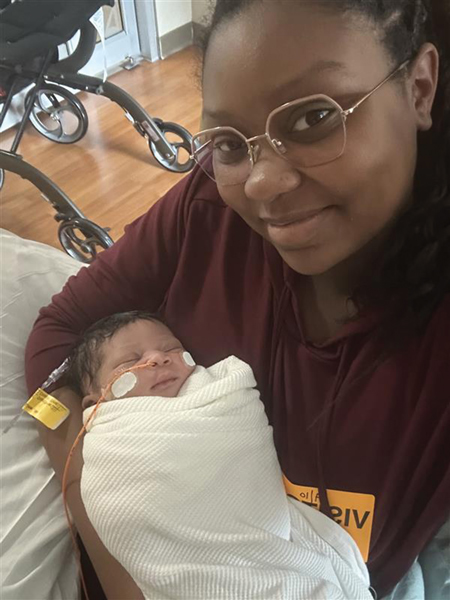
Covering Labor and Delivery Costs
Labor and birth can be unpredictable, but being able to afford them shouldn’t be. Without Medicaid, which finances approximately 41% of U.S. births, based on data from the National Center for Health Statistics, the cost of hospitalization and delivery could be financially devastating to young families. Coverage for labor, delivery and NICU care, if needed, gives parents the ability to focus on their new babies instead of overwhelming medical bills.
Providing Postpartum Care
The need for maternal healthcare doesn’t end when mother and child are discharged from the hospital. Physical recovery takes time, especially if there were any complications during the pregnancy or delivery. Beyond that, postpartum women may need mental health support, treatment for chronic conditions, contraception renewals and other health services that Medicaid can provide. Currently, 49 states plus Washington, D.C. have extended postpartum Medicaid coverage to 12 months, which helps new mothers get continuous care without worrying about insurance lapses.
Caring for Growing Kids
Nearly half of all Medicaid recipients in the U.S. are children ages 0-18 – and sometimes kids qualify for Medicaid even when their parents don’t. The program can help new parents stay up to date with well-child visits for infants, immunizations and ongoing preventive care throughout childhood.
To learn more about access to essential services at every stage of life, visit communitycatalyst.org/maternalhealth.
Filling Gaps in Pregnancy and Postpartum Care: Kayla and Tru’s Story
When Kayla found out she was pregnant at 24 years old, she had no idea how she was going to afford all the costs that were coming. Despite having part-time employment and primary insurance through her mother, she faced gaps in coverage for pregnancy care.
Qualifying for Medicaid changed everything. Not only did it cover Kayla’s prenatal visits, labs, ultrasounds and delivery, but once her son Tru was born, both mother and baby required an extended hospital stay. Medicaid made it possible for Tru to get the care he needed in the NICU while Kayla recovered from birth complications.
Afterward, the program continued to cover Kayla and Tru for follow-up appointments and well-child visits. She’s grateful it was there during her time of need and has one simple message to share: If you qualify for Medicaid, apply.
“You never know what’s going to happen,” she said. “I didn’t expect to be in the hospital as long. I didn’t expect for him to be where he was. But it was definitely needed and helpful.”
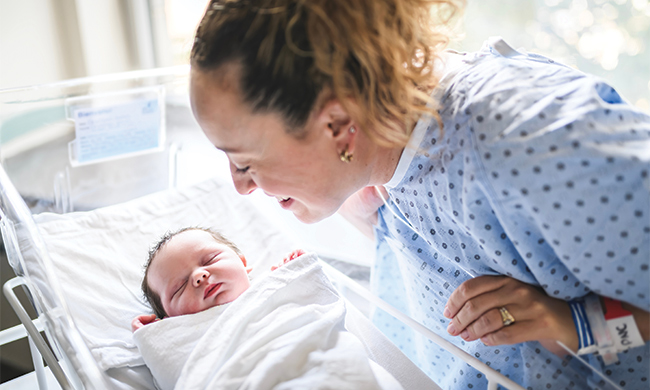
Photo courtesy of Shutterstock (mother leaning over hospital bassinet)

SOURCE:
💪 Your health journey starts here! Explore the latest health news, fitness tips, wellness trends, and healthy living advice. Share your thoughts in the comments and subscribe to the STM Daily News newsletter to stay informed and inspired every day.




