

News
NASA, International Astronauts to Speak with Students in Two States

Last Updated on July 5, 2024 by Daily News Staff
Students from North Carolina and Rhode Island will have separate opportunities next week to hear from NASA astronauts aboard the International Space Station.
The two space-to-Earth calls will air live Wednesday, Sept. 13, and Thursday, Sept. 14, on NASA Television, the NASA app, and the agency’s website.
At 10:10 a.m. EDT Wednesday, Sept. 13, NASA astronaut Frank Rubio and ESA (European Space Agency) astronaut Andreas Mogensen will answer pre-recorded questions from students in Chapel Hill, North Carolina.
The event, hosted by Chapel Hill-Carrboro City Schools, aims to inspire underrepresented and non-traditional students to pursue science, technology, engineering, and mathematics pathways.
Media interested in covering the North Caroline event must RSVP no later than 5 p.m. Tuesday, Sept. 12, to Andy Jenks at 919-967-8211 or ajenks@chccs.k12.nc.us.
At 10:25 a.m. Sept. 14, NASA astronaut Jasmin Moghbeli and Rubio will answer pre-recorded questions from students in Rhode Island. The event, hosted by the Rhode Island Science Teachers Association, is part of a statewide Astronaut Exploration Lollapalooza aimed at connecting students with space research.
Media interested in covering the event must RSVP no later than 5 p.m. Sept. 13, to Cathy Jimenez Long at 401-447-5995 or clong@cpsed.net.
For more than 22 years, astronauts have continuously lived and worked aboard the space station, testing technologies, performing science, and developing the skills needed to explore farther from Earth. Astronauts living in space aboard the orbiting laboratory communicate with NASA’s Mission Control Center in Houston 24 hours a day through the Space Communications and Navigation (SCaN) Near Space Network.
Important research and technology investigations taking place aboard the International Space Station benefits people on Earth and lays the groundwork for future exploration. As part of Artemis, NASA will send astronauts to the Moon to prepare for future human exploration of Mars. Inspiring the next generation of explorers – the Artemis Generation – ensures America will continue to lead in space exploration and discovery.
See videos and lesson plans highlighting research on the International Space Station at:
https://www.nasa.gov/stemonstation
Source: NASA
The science section of our news blog STM Daily News provides readers with captivating and up-to-date information on the latest scientific discoveries, breakthroughs, and innovations across various fields. We offer engaging and accessible content, ensuring that readers with different levels of scientific knowledge can stay informed. Whether it’s exploring advancements in medicine, astronomy, technology, or environmental sciences, our science section strives to shed light on the intriguing world of scientific exploration and its profound impact on our daily lives. From thought-provoking articles to informative interviews with experts in the field, STM Daily News Science offers a harmonious blend of factual reporting, analysis, and exploration, making it a go-to source for science enthusiasts and curious minds alike. https://stmdailynews.com/category/science/


Recipe of the Week
Pack Pasta Salad in a Jar for a Taste of Summer in School Lunches
When students open up their lunchboxes in the cafeteria, it’s fun to be greeted with something bright, colorful and fresh. Pasta salad is a summer picnic staple, but once the weather starts to cool and kids head back to school, there’s nothing to say you can’t send a taste of summer with them.

Pack Pasta Salad in a Jar for a Taste of Summer in School Lunches
(Feature Impact) When students open up their lunchboxes in the cafeteria, it’s fun to be greeted with something bright, colorful and fresh. Pasta salad is a summer picnic staple, but once the weather starts to cool and kids head back to school, there’s nothing to say you can’t send a taste of summer with them.
The beauty of pasta salad is it’s totally customizable, ideal for eating cold and easy to make ahead of time. That means you can spend the evening before school dishing up jars then pop them in the fridge for a quick morning grab-and-go lunchbox filler. Adults in the household can take one to work while kids have their own at school – and if anyone wants a different dressing or no olives, it’s an easy accommodation.
If you’re making this Pasta Salad in a Jar recipe as the main course instead of a lunchtime side, up the protein by adding beans, chicken or cubed cheese to keep kids energized for the second half of the day. Choose whole-grain or high-protein pasta for an extra nutritional boost, and pack in vitamins and fiber with plenty of crunchy fresh produce, from cucumbers and carrots to tomatoes and olives.
Find more school-day recipes at Culinary.net.
Pasta Salad in a Jar
Recipe adapted from Best of This Life
Prep time: 10 minutes
Servings: 1
Dressing:
- 2 tablespoons olive oil
- 2 tablespoons red wine vinegar
- 1/8 teaspoon dried basil
- 1/8 teaspoon oregano
- 1/8 teaspoon parsley
- salt, to taste
- freshly ground pepper, to taste
- 1/4 cup canned chickpeas, rinsed
- 1/2 cup halved grape tomatoes
- 1/2 cup diced cucumber
- 2 tablespoons sliced Kalamata olives
- 1 cup cooked pasta of choice, cooled
- 1 cup chopped spinach
- To make dressing: In canning jar, combine olive oil, vinegar, basil, oregano, parsley and salt and pepper, to taste. Stir in chickpeas.
- Layer tomatoes, cucumbers, olives, cooked pasta and spinach over dressing.
- Refrigerate until ready to serve. To serve, flip jar over and lightly shake to combine dressing with other ingredients.
Photo courtesy of Unsplash

SOURCE:
🍴 What’s your favorite food, recipe, or dining spot? Tell us in the comments! Then subscribe to the STM Daily News newsletter for fresh recipes, restaurant news, food trends, and delicious stories delivered straight to your inbox. Join our growing community of food lovers today!
Economy
How new SNAP restrictions could hit Greater Pittsburgh’s food access and economy
New SNAP work requirements and retailer rules could reduce food assistance across Greater Pittsburgh, increasing food insecurity while hurting families, independent grocers and the regional economy.

Amelia B. Finaret, Allegheny College
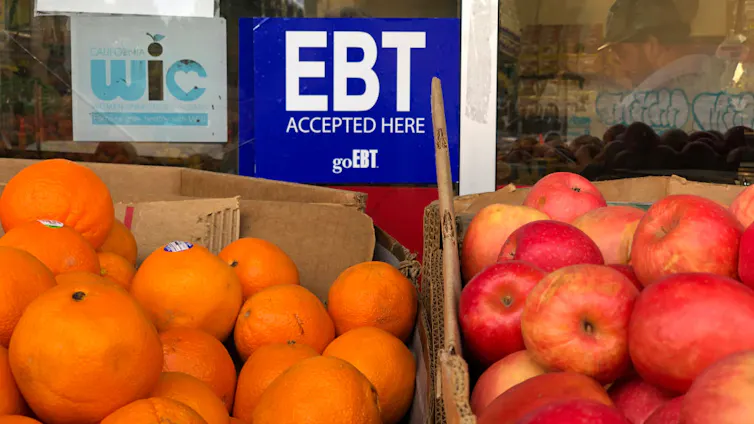
Food assistance is one of the most effective tools for fighting poverty in America. New federal rules are testing that reputation.
The Supplemental Nutrition Assistance Program, better known as SNAP, helps low-income people afford groceries. The program’s benefits reach far beyond the grocery bill, with research linking the program to better outcomes for K-12 students and improved overall health among participants.
However, new federal policy changes are making the program harder for many families to use, and participation is shrinking.
In Pennsylvania’s Allegheny County, the number of people who get SNAP benefits has decreased by about 12% since 2025. SNAP enrollment rates vary widely across the Greater Pittsburgh metropolitan area – from 31% of residents in Fayette County to just 13% in Butler County.
In Allegheny County, where Pittsburgh is located, approximately 17,000 people have already lost their benefits. That’s the second-highest total of any county in Pennsylvania. Roughly 162,000 Allegheny County residents receive SNAP, or about 14% of the county’s population.
Across the country, states like Arizona and Florida are seeing similar effects from these SNAP changes. The specifics vary by state, but the underlying pressures on food assistance are shared nationwide.
As a food economist and clinical dietition working in western Pennsylvania, I have seen how SNAP policy changes affect real people firsthand. Many of my patients are having more trouble making ends meet over the past few years, especially as grocery prices have risen roughly 25% in nominal terms since 2022 – a jump that has outpaced wage growth for many low-income households.
New SNAP work requirements
In November 2025, Pennsylvania began implementing the federal government’s expanded work requirements. The rules previously applied to adults ages 18 to 54 without a disability or dependent children, but they now reach up to age 64. Under these rules, these adults must work, volunteer or take part in education or training programs for at least 20 hours a week to keep receiving SNAP benefits.
Certain groups are especially likely to be affected by this rule change, including early retirees, first-time moms, children and people with disabilities who haven’t applied or been approved for disability benefits.
Stricter and more expansive work requirements increase SNAP benefit denials and reduce the number of people who get benefits, including among women who may become pregnant.
The new work requirements could also worsen food insecurity, which occurs when people cannot obtain enough safe and nutritionally adequate food for an active and healthy life.
Up to 5.4 million people nationwide could lose some or all of their SNAP benefits under the expanded work requirements, including 1.5 million children.
In Allegheny County, 43% of food-insecure children were likely ineligible for SNAP and similar benefits in 2025 because their household incomes exceeded 185% of the federal poverty line – US$61,050 for a family of four in 2026.
Stricter rules for SNAP retailers
Supermarkets and other stores that sell food must be certified to accept SNAP benefits for payment. Beyond helping individual households, SNAP spending boosts local economies, as those benefits get spent at grocery stores and other retailers.
Retailers that sell food are now required to offer seven varieties of foods in each of four staple food categories: grains, vegetables and fruits, dairy, and protein. Stores could meet the new requirements for grains, for example, by offering corn tortillas, whole wheat bread, white bread, brown rice, white rice, oats and infant cereal for sale.
In the 12th and 17th congressional districts that make up Allegheny County, 10.4% and 8.7% of people, respectively, live in areas where it is difficult to get healthy foods. According to data from the Institute for Local Self-Reliance, there are 191 grocery stores in these districts, about 28% of which are either small chains or independent stores that may have a harder time complying with the new requirements.
Between 2017 and 2023, the number of SNAP-authorized stores in Allegheny County increased by 13%, but this trend could reverse under the new rules.
While the stated goal of the new rules is to increase the availability of healthier foods, simply requiring stores to stock them doesn’t mean that customers will eat a better diet. Whether these new retailer policies ultimately improve diets is an open question.
Additional restrictions on purchases
Some states are placing additional restrictions on what people can buy with benefits. Purchasing hot prepared foods, alcohol, vitamins or diapers with SNAP benefits was already prohibited, but 23 states are now restricting the use of benefits to buy sugar-sweetened beverages and some other items that contribute to nutritionally inadequate diets.
While Pennsylvania has not adopted those additional restrictions, some of its neighboring states, such as Ohio and West Virginia, have.
SNAP helps people pay for groceries, but the benefit amount is typically less than what a household would spend on food. SNAP covers some of what a family would’ve spent on groceries anyway, leaving that money for other needs – rent, diapers, utility bills and the like. As a result, research shows the program doesn’t significantly change what or how much people eat, on average.
In my view, as food insecurity remains high in Allegheny County, policies that make it harder for local residents to get SNAP benefits risk weakening one of the nation’s most effective economic support programs.
Read more of our stories about Pittsburgh and Pennsylvania.
Amelia B. Finaret, Associate Professor of Business and Economics and Nutrition, Allegheny College
This article is republished from The Conversation under a Creative Commons license. Read the original article.
Community
9/11 Day Awards $3 Million in Grants to Expand Volunteer Opportunities Nationwide Ahead of 25th Anniversary
9/11 Day announced $3 million in grants to nearly 200 groups across 40 states, expanding service projects for the 25th anniversary observance.

As the United States approaches the 25th anniversary of September 11, 2001, the nonprofit 9/11 Day is putting major resources behind a familiar idea with renewed urgency: remembrance through service. The organization—founded by 9/11 families and leaders and co-led by co-founders David Paine and Jay Winuk—announced $3 million in grants to roughly 200 nonprofits, schools, and community groups across 40 states to expand local volunteer projects tied to this year’s September 11 National Day of Service and Remembrance.
The funding is designed to dramatically increase the number of ways Americans can participate close to home, from food insecurity initiatives to neighborhood cleanups and support programs for veterans and first responders. Together, grant recipients are expected to engage more than 70,000 volunteers nationwide.
A major push toward youth-led service
More than 70% of the grant funding is going to youth organizations and educational institutions, including K–12 schools, universities, and other learning programs. The emphasis reflects a generational reality: millions of students today know 9/11 primarily through textbooks, family stories, and classroom lessons.
“For many students participating in the observance this year, 9/11 is something they’ve only encountered in textbooks or through stories from parents and grandparents,” said Jay Winuk, co-founder and executive vice president of 9/11 Day and a 9/11 family member. “By connecting history with hands-on service, we’re helping young people understand that the legacy of 9/11 isn’t defined only by tragedy. It’s also defined by compassion, resilience and the responsibility we all share to care for one another.”
Youth-focused projects supported by the grants include school-wide days of service, hunger-relief efforts, donation drives, community improvement work, and service-learning initiatives that connect the history of September 11 with practical ways to help others.
UNIITE for Good: turning an anniversary into a nationwide “doing good” moment
The grant program is a cornerstone of 9/11 Day’s nationwide UNIITE for Good campaign, scheduled to officially launch August 24. The campaign aims to transform the 25th anniversary into what organizers describe as America’s largest day of doing good—channeling remembrance into tangible community impact.
The program is administered in collaboration with AmeriCorps, with principal funding provided by AmeriCorps and the Popeyes Foundation. A special emphasis this year is addressing hunger—an issue described in the release as an “ever-growing hunger crisis across the nation.”
Meeting community needs where people live
Grant-funded projects span urban, suburban, and rural communities. Activities include assembling meals for individuals and families facing food insecurity, packing care kits for veterans and first responders, restoring community spaces, and strengthening schools and neighborhoods.
Beyond the service itself, the grants are also intended to help local groups recruit volunteers, purchase supplies, coordinate logistics, and expand the number of service opportunities available in their areas.
“As we mark the 25th anniversary of 9/11, we have a responsibility to preserve not only the memory of that day and those lost and injured, but also the extraordinary way Americans came together in the aftermath of the attacks,” said David Paine, president and co-founder of 9/11 Day. “These community-led projects are helping rekindle that spirit of unity, compassion and service by bringing neighbors together to help solve local challenges.”
AmeriCorps echoed that message, framing service as a way to honor those who responded in the immediate aftermath of the attacks.
“This year, we invite Americans to carry forward that enduring spirit of unity and service by becoming a hero for someone in need,” said Emily Stock, project manager for Volunteer Initiatives at AmeriCorps, noting that AmeriCorps-funded projects will include food drives, home repairs, neighborhood cleanups, and disaster preparedness activities.
The Popeyes Foundation also highlighted its community-focused mission and its role in supporting local projects.
Why this anniversary matters now
Organizers say the 25th anniversary arrives at a pivotal moment: more than 100 million Americans are now too young to have personal memories of September 11. That makes this milestone one of the last major opportunities to connect those who lived through the day with younger generations learning about it as history.
Examples of grant-supported efforts include:
- Marshall University, which plans to build on its existing 9/11 Days of Service tradition, including a Memorial Stair Challenge and volunteer projects supporting veterans, first responders, and families in need.
- Middlebury Elementary School, which will expand hands-on service activities that teach younger students about 9/11 through compassion and community action.
- University of South Dakota, where students will work alongside community partners to address local needs while learning how service can bridge backgrounds and perspectives.
How to get involved
A full list of 2026 9/11 Day Grant Program recipients is available through 9/11 Day. To learn more about the September 11 National Day of Service and Remembrance—and to find ways to participate—visit 911day.org.
STM Daily News will continue tracking community service initiatives and local observances tied to the 25th anniversary as September approaches





