health and wellness
Beyond Hot Flashes: 5 Things Women Wish Everyone Knew About Menopause


(Feature Impact) Menopause is a phase of life every woman knows will come eventually yet few are truly prepared for. Beyond stereotypical symptoms like hot flashes and mood swings, the other realities of menopause can be mysterious, taking women by surprise when their experiences differ from expectations.
Rather than being a single event, menopause involves a gradual transition that happens as estrogen production changes – meaning symptoms can appear and evolve unpredictably. According to a survey commissioned by the National Menopause Foundation, 63% of U.S. women ages 35-54 experienced symptoms they believed may be related to perimenopause or menopause, yet nearly half (49%) said they weren’t prepared for the changes beforehand.
When women and their loved ones understand what they’re facing, they can approach this time with patience and compassion, which can make a real difference to the 71% of women who wished the people in their lives understood more about perimenopause or menopause. Consider these five facts to help fill in the menopause knowledge gap.
Perimenopause Can Start Years Before Menopause
The physiological transition to menopause can happen up to 10 years before a woman’s final menstrual period, although the average length of perimenopause is about four years. Symptoms may quietly begin in a woman’s 30s, 40s or 50s, and what might look like an isolated problem at first – like brain fog, a night of insomnia or an irregular monthly cycle – could be connected to broader hormonal changes.
Menopause Is More Than Just “Hot Flashes”
Since more than half of women surveyed were already aware of menopause symptoms like hot flashes, mood changes, anxiety and fatigue, these may not take them by surprise. Little-known symptoms are a different story – the majority of respondents didn’t anticipate menopausal issues like rage, inner-ear itching or reduced joint mobility. According to the National Menopause Foundation, women may also experience sleep disturbances, sweating, changes in libido, vaginal dryness, incontinence, weight changes and more.
Every woman’s experience is unique, so these symptoms could present in different combinations and intensities during menopausal years or may not appear at all.
Talking About Menopause Can Be Difficult
Even as women go through these physical and emotional shifts, many struggle to open up about their experiences. In fact, women rank menopause symptoms (17%) more difficult to discuss than hot-button topics like political views (13%), weight (13%) and religious beliefs (10%).
However, suffering in silence can lead to feelings of isolation, relationship misunderstandings and hesitation to seek help, which is why 66% of women said the lack of open discussion about menopause makes the experience worse.
Menopause Isn’t All Bad News
Although this season of life comes with challenges, there are joys to embrace as well. Women navigating midlife can come out the other side with more resilience, emotional awareness and a stronger sense of self. In fact, 44% of women surveyed said their outlook on life became more positive since their transition.
What Loved Ones Can Actually Do
Menopause is a highly individual experience, but that doesn’t mean women have to navigate it alone. Support from partners, families and friends can lift women up during difficult moments, and it can be as simple as taking the time to ask questions, listen and learn about how menopause is affecting their lives. With 30% of women in the U.S. labor force – approximately 15-16 million – in the age range corresponding to menopausal transition (ages 45-60), workplaces can also take steps to become more menopause friendly.
For more resources to help understand symptoms and discuss the transition with loved ones, visit nationalmenopausefoundation.org.
Photo courtesy of Shutterstock

SOURCE:


health and wellness
How Clinical Trials Really Work: Understanding the 4 Phases
Understanding how clinical trials work can help demystify the experience, while the research itself helps answer important questions about diseases, treatment options and more. If you, your healthcare team and the study researchers decide an experimental drug trial is right for you, different questions will be answered depending on which phase you participate in.

How Clinical Trials Really Work: Understanding the 4 Phases
(Feature Impact) The idea of participating in a clinical trial can feel overwhelming, especially if you aren’t sure what’s actually involved in the process. Understanding how clinical trials work can help demystify the experience, while the research itself helps answer important questions about diseases, treatment options and more.
According to a study by the Crohn’s & Colitis Foundation, nearly 1 in 100 Americans has inflammatory bowel disease (IBD), a term encompassing a group of conditions that includes Crohn’s disease and ulcerative colitis. These disorders affect the gastrointestinal tract and cause inflammation of the intestines, which can lead to symptoms and sometimes more complicated issues throughout the body. Research into this condition has the potential to change lives, including those of the participants themselves, yet many clinical trials face delays due to lack of enrollment.
“We need more people to get involved in clinical trials, especially those from underrepresented communities, including people of color and older adults, who have some of the highest rates of chronic disease,” said Dr. Ruby Greywoode, a gastroenterologist at Montefiore Medical Center.
Clinical trials can take many forms including medication studies, medical tests, investigating the role of diet in disease management or examining the emotional impact of living with a condition such as IBD. Each trial is typically divided into four phases, which all build on each other but are conducted separately.
If you, your healthcare team and the study researchers decide an experimental drug trial is right for you, different questions will be answered depending on which phase you participate in.
Phase 1: Is the Drug Safe to Use?
The first phase of a clinical trial is the smallest and often conducted among a group of healthy people who don’t have the condition in question. Researchers want to know how the human body reacts to the medication, determine safe dosage ranges and identify potential side effects.
Phase 2: Is the Drug Effective?
Once a drug has been evaluated for overall safety in healthy people, the clinical trial moves on to test the treatment in a slightly larger group of people. Those participating in this phase have the condition for which the new treatment is being developed. For instance, a phase 2 IBD clinical trial might give the drug to 100 people with IBD to see whether it works or causes any short-term side effects. Participants are randomly assigned to different treatment groups, which may involve different dosages or placebos (not active treatment).
 Phase 3: Does It Work Better Than Currently Available Treatments?
If the second phase yields positive results, the study expands again to test the new drug against current treatment options. A phase 3 clinical trial lasts longer and involves more participants than the first two phases as researchers try to gain as much information as possible about how the drug affects different kinds of people, whether it’s better than standard treatments or placebos and what side effects may arise over a longer period of time.
At the end of this phase, the company decides whether the trial results are strong enough to submit an application to the FDA, at which point the treatment will be reviewed and potentially approved.
Phase 4: How Does the Drug Work in Real Life?
Research usually doesn’t end when a drug gets approved. Instead, it moves into the fourth phase, where companies monitor the ongoing real-world uses and effects of the medication. This can involve following thousands of patients for several years to gather as much information as possible.
If you’re one of the millions of people living with IBD in the U.S., clinical trials offer hope for a future with more treatments, less pain and healthier lives. That’s why the Crohn’s & Colitis Foundation wants to make clinical trials less mysterious, more accessible and more representative of the real people affected by these conditions.
Talk to your healthcare professional about whether a clinical trial could be right for you and explore IBD research opportunities at CrohnsColitisFoundation.org.
Clinical Trial FAQs
What is the average length of a clinical trial?
The length of clinical trials vary. They can be as short as a month or as long as one year or more. Generally, the earlier the phase, the shorter the trial period. How do you identify clinical trials you’re eligible for?
Eligibility criteria differ from study to study and may include factors like age, gender, medical history and current health status. For instance, some IBD studies may be looking for patients with mild symptoms, while others want to test treatments for moderate to severe disease. If you’re interested in a particular trial, review the criteria to see if you qualify to participate.
Is it free to participate in clinical trials?
Most clinical trials are federally or privately funded, so there is typically no cost to the participant. Associated costs like travel, time off work and childcare may or may not be covered by the trial sponsor, so it’s worth confirming these details before committing.
What if you enroll in a trial then change your mind?
You’re free to withdraw from a clinical trial at any time. If you drop out during testing, you may be asked to come in for follow-up visits to ensure your safety.
If the treatment helps, can you keep using it after the trial ends?
It depends. Some trial sponsors allow participants to continue receiving the drug voluntarily, while others only make it available after it’s been approved by the FDA.
How can you get involved in clinical trials?
Talk to your doctor about whether participating in a clinical trial may be right for you. If you’re interested in IBD clinical trials, you and your doctor can search for opportunities at crohnscolitisfoundation.org/clinical-trials-community.
“Clinical trials give patients a real way to shape the future of treatment,” Greywoode said. “It’s not just about their own care; it can help others, too. Talking openly with your doctor can help you feel more confident about getting involved.”
Photos courtesy of Shutterstock
SOURCE:
Health
Radon is the second leading cause of lung cancer. 8 in 10 US adults have never tested their home for it
Decades of public health campaigns have reinforced the connection between smoking and lung cancer, helping people understand that their choices can influence their health. Despite radon being the second-leading cause of lung cancer, many have never tested their home for it.

Radon is the second leading cause of lung cancer. 8 in 10 US adults have never tested their home for it
(Sheeka Sanahori) Avoid tobacco products. Eat a healthy diet. Get recommended cancer screenings. Most U.S. adults recognize these behaviors as ways to lower their cancer risk or catch cancer early. Decades of public health campaigns have reinforced the connection between smoking and lung cancer, helping people understand that their choices can influence their health.
But U.S. adults are far less likely to recognize a risk factor they can’t control through daily habits. Radon – an odorless, invisible gas that forms naturally in the ground – is the second leading cause of lung cancer, but new research from the Prevent Cancer Foundation finds that 8 in 10 U.S. adults have never tested their home for radon. The findings are based on the Foundation’s annual Early Detection Survey of more than 7,000 U.S. adults, conducted in January 2026.
With recent high-profile lung cancer cases, such as the October diagnosis of Pope Leo XIV, who is not known to have a history of smoking cigarettes, more people are paying attention to other risk factors for lung cancer, especially for people who have never smoked.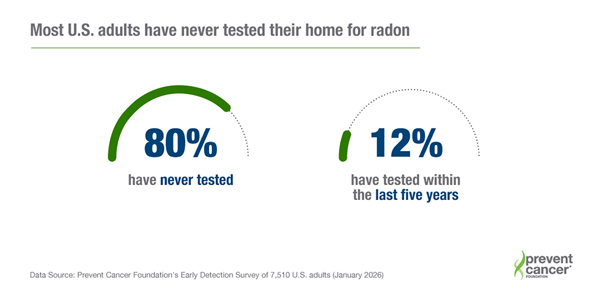
Testing for radon is last on the list
When asked about preventive behaviors, 77.5% say avoiding tobacco lowers their cancer risk. Three out of four say eating a healthy diet and getting routine cancer screenings make a difference, too. More than half also named regular exercise, limiting alcohol and protecting themselves from harmful UV rays.
Testing their home for radon ranked last on the list of preventive behaviors, with only 28% listing it as a way to reduce their cancer risk.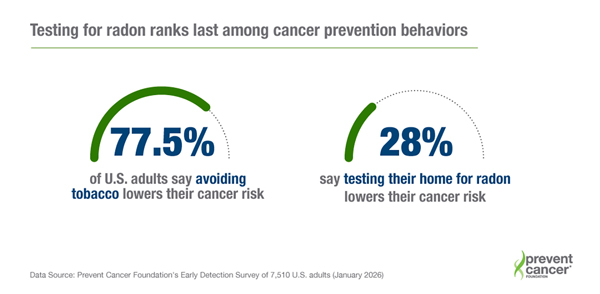
Most homes go untested in every region
Radon hasn’t reached the same level of public awareness as tobacco use, diet and exercise. U.S. adults appear to overlook an environmental risk that could be inside their own homes. Eighty percent of U.S. adults report never having their homes tested for radon, and only 12% have tested within the last five years. The U.S. Environmental Protection Agency (EPA) recommends testing every two years.
In the Northeast, about 7 in 10 people (72%) have never tested their home for radon. That percentage increases for the Midwest (79%), West (82%) and South (83%). Unlike cigarettes, radon does not produce smoke and is odorless, so a test is the only way to detect its presence.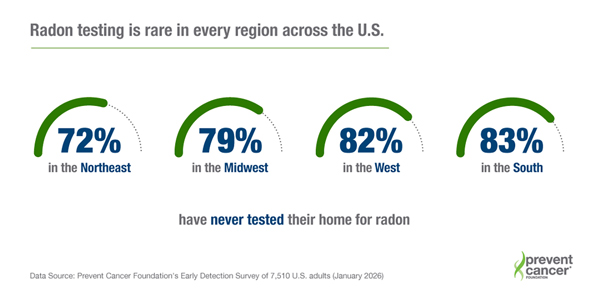
What it takes to find out
Radon can enter homes through the ground when uranium underneath decays. Once it’s inside, it gets trapped. People can live with high radon levels without knowing it, in older homes and new construction alike. Breaking ground on undisturbed land during construction can release more radon.
Renters can either test themselves or ask their landlord whether the home has been tested and request the results. Landlord requirements vary by state.
Test kits are inexpensive and available online and at home improvement stores. The EPA recommends taking action to reduce radon levels at 4 picocuries per liter (pCi/L) or higher, and notes that levels below that may still carry risk. If levels are high, a mitigation system can bring them down.
Beyond radon, the EPA and other health authorities cite avoiding tobacco and secondhand smoke as the most significant steps people can take to lower lung cancer risk, along with following screening guidelines based on personal risk factors.
Methodology
The Prevent Cancer Foundation commissioned Atomik Research to conduct the Foundation’s fourth annual Early Detection Survey of U.S. adults. The study consists of an online survey questionnaire, which includes several repeated measures from a previous year’s questionnaire and a primary data set gathered from a sample of 7,510 adults located throughout the United States. The sample consists of adults 21 years of age or older, and researchers implemented several demographic-based quotas in order to achieve sample characteristics similar to the overall U.S. population of adults 21 and older.
Researchers controlled for demographic variables such as biological sex, age group classification, race/ethnicity, parental status, geographic region, employment status and community classifications (e.g., urban or rural classification).
The margin of error of the overall sample is +/-1 percentage point with a confidence level of 95%. Fieldwork took place between Jan. 10 and Jan. 30, 2026. Atomik Research is an independent market research agency.
Percentages may not add up to 100% due to computer rounding, and/or the acceptance of multiple responses.
Photo courtesy of Shutterstock (family playing)
SOURCE:
Prevent Cancer Foundation
Women's Health
Menopause changes your mouth. Most women have no idea.
Menopause changes your mouth: Many women are familiar with the most talked-about symptoms of menopause – hot flashes, disrupted sleep, brain fog and mood swings. Far fewer know that dry mouth and sensitive teeth belong on that list too.

Menopause changes your mouth. Most women have no idea.
(Sheeka Sanahori) Many women are familiar with the most talked-about symptoms of menopause – hot flashes, disrupted sleep, brain fog and mood swings. Far fewer know that dry mouth and sensitive teeth belong on that list too.
There’s a name for it: menopause mouth. According to survey data from Delta Dental Insurance Company, 83% of women 40 and older in menopause aren’t aware of any of its symptoms.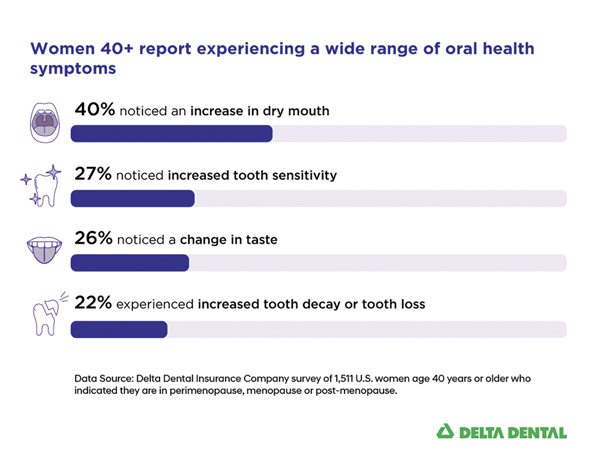
What menopause mouth feels like
Forty percent say they have noticed an increase in dry mouth. Another 27% have noticed more tooth sensitivity in recent months, and 26% say things taste different than they used to. You tell yourself it’s something else. You’re not drinking enough water; you’ve been brushing too hard. Menopause isn’t the first thing that comes to mind.
It adds up. Forty-five percent say oral symptoms associated with menopause, such as tooth pain, dry mouth or gum inflammation, take a toll on their confidence, mood or mental health.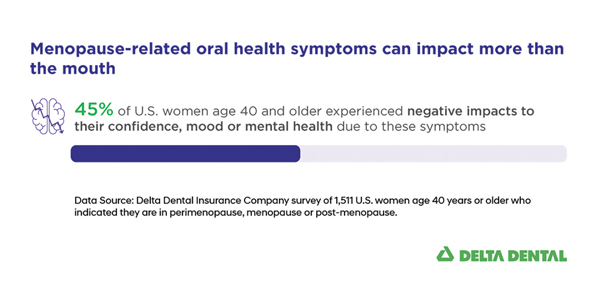
Menopause affects the whole body, mentally and physically. So why is the mouth left out?
Even after learning about this connection, 30% of women say they can’t find information about menopause-related oral health concerns. It isn’t that no one is willing to discuss it.
What makes the conversation hard to start
Three-quarters of dentists say they are comfortable discussing menopause with patients. They just want to know who they’re talking to. Most say they would want more patient history, or to know a patient was in menopause, before raising the subject. Forty-five percent say they would not bring up how menopause affects oral health unless a patient asked.
Dentists also believe that patients are already informed. Ninety-four percent say their patients are at least somewhat aware that menopause can affect oral health. So a patient says nothing about her dry mouth, because it doesn’t seem like a dental problem. The dentist doesn’t bring it up either, assuming someone already has.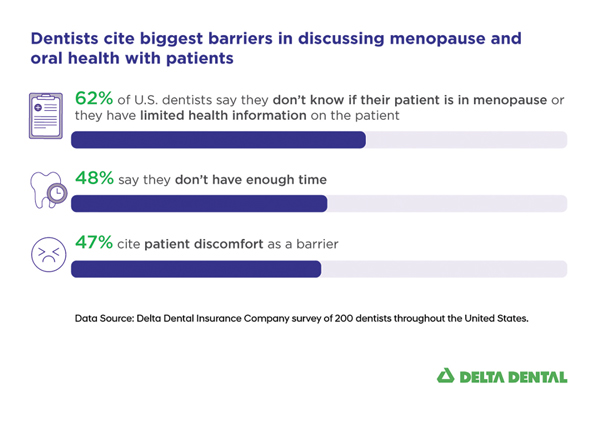
Women are asking for the information
Nearly nine in 10 women say it would help to receive specific instructions during dental visits about managing oral health during menopause. And 69% say they would be more likely to book an appointment if a primary care provider or OB-GYN had told them menopause affects oral health.
No matter who brings it up, the conversation is one worth having. Hormonal changes during menopause can increase the risk of tooth loss or tooth decay, gum disease, receding gumline or loss of jawbone density. Discussing new oral symptoms with a dentist can help women identify potential problems and address them early.
How to start the conversation with your dentist
Your dentist probably doesn’t know you’re in menopause. Start there.
Questions worth asking:
- “Could the changes I’m noticing be related to menopause?”
- “I haven’t had a cavity in 30 years, and now I have two. Could that be tied to hormonal changes?”
- “What can I do about dry mouth?”
- “Are there symptoms I should watch for?”
- “Should I adjust my oral care routine?”
Any one of these questions can get the conversation started.
Methodology
Delta Dental Insurance Company commissioned Atomik Research to conduct two online surveys between June 25 and July 2, 2025.
The first surveyed 200 dentists throughout the United States. The margin of error is +/- 7 percentage points with a 95% confidence level.
The second surveyed 1,511 women ages 40 or older throughout the United States. To qualify, participants had to indicate they are in perimenopause, menopause or post-menopause. Those who were not sure which stage they were in, or who indicated they were not yet in one of the three stages, were excused from participation. The margin of error is +/- 3 percentage points with a 95% confidence level
Atomik Research, part of 4media group, is an independent market research agency.
Photo courtesy of Shutterstock
SOURCE:
Delta Dental Insurance Company