

Health
Self-Care for Sick Days: Navigate cough, cold and flu season like a pro

Last Updated on November 1, 2025 by Daily News Staff
(Family Features) Cooler weather inevitably means cough, cold and flu season isn’t far behind. Now is the time to take precautions and set yourself up with healthy habits.
“As much as we try, avoiding viruses, bacteria and germs to prevent getting sick can be a challenge,” Dr. Tim Tiutan, MD, said. “However, being prepared with the right remedies, listening to your body and its symptoms and remaining diligent with a healthy routine is just as important as treating symptoms head on.”
To help navigate this cough, cold and flu season, consider these tips from Tiutan and the experts at Mucinex.
Prepare and Prevent You won’t find a foolproof way to keep germs away, but you can lessen your chances of getting sick and make sure you’re equipped to weather an illness.
- Practice healthy habits. Keeping your body in prime condition can help ensure you’re in the best condition possible to fight back when germs attack. That means keeping up with exercise and ensuring you’re getting enough vitamins and nutrients through a well-balanced diet.
- Get a flu shot. The flu shot gives your body a head start in fighting back against flu bugs. If you’re exposed to the flu after receiving the shot, your body can immediately go on the offensive against those germs. You may not stay completely symptom-free, but you’re more likely to experience a mild case and be back on your feet quicker.
- Restock the medicine cabinet. The start of cough, cold and flu season is an ideal time to dig through your medicine cabinet. Start by discarding any medications that are out of date and make a list of anything you need to replenish. Be sure to include pain relievers, fever reducers, decongestants, antihistamines and cough syrups to fight symptoms. It’s also a good time to restock items like tissues, cough drops, hand sanitizer and anti-bacterial soap.
Treat Symptoms
Although the flu can hit fast, it’s often hard to tell at first whether your symptoms are due to a simple cough, cold or a case of the flu. Either way, managing symptoms like a cough can bring relief and help you keep comfortable and get plenty of rest.
- Give your body time to heal. Sleep plays an important role in your overall health, especially when you’re under the weather. On average, you need 7-9 hours each night to give your body enough time to fully recharge. When you’re sick, you likely need even more, and it’s a good idea to dial back your activity level, too. Pushing your physical limits often only delays your recovery time.
- Take medications as directed. Nagging symptoms can often keep you from getting the sleep you need. One way to give your body the break it needs is to effectively manage symptoms. A hacking cough is a common symptom that can be painful and disrupt your sleep. Consider an option like Mucinex DM 12-Hour, a cough suppresent which relieves chest congestion and thins and loosens mucus, giving you an extended reprieve. It’s clinically proven to last up to 12 hours, provides relief for chest congestion and makes coughs more productive.
Prevent Spread
Getting sick may be beyond your complete control, but you can take steps to protect others from germs when you’re feeling ill.
- Keep germs to yourself. Washing your hands often, covering your nose and mouth with a tissue when you cough or sneeze and sneezing into your elbow if you don’t have a tissue are simple ways you can limit the spread of germs, especially within your home or workspace. Frequently wiping down high-touch surfaces can also help reduce the spread of germs.
- Skip socializing. If you’re feeling under the weather, stay home. Even a mild cold can easily spread, and an illness that affects you mildly could cause significant distress for someone else. Avoid unnecessary errands and take advantage of services like curbside pickup if you must get out. Also check with your employer about working remotely if you’re up to it.
Find more ways to stay healthy and limit symptoms by visiting Mucinex.com.
Cold vs. Flu
There’s a lot of overlap between cold and flu symptoms, so it can be tricky to figure out whether the bug you’re fighting is a cold or influenza and how to tackle it.
While both the common cold and the flu are respiratory illnesses, they are not caused by the same viruses. Although colds are inconvenient, they are far less likely to develop into anything more serious, as the flu can.
What is a Cold?
Generally, colds are milder than the flu, and more likely to cause runny or stuffy noses (while the flu can cause stuffy or runny noses, it’s less likely to do so). You won’t feel good, but you’ll probably be able to do some or all of your daily tasks. The flu typically hits harder, making it difficult to go to work or follow your usual routine.
What is the Flu?
The flu often feels worse than a cold; you might experience the same symptoms but amplified. The flu comes with more pain and fever than a cold. Common flu symptoms include sore throat, chills, fever, runny or stuffy nose, muscle fatigue or aches and headaches. The flu can also develop into more serious conditions and complications, making it more dangerous than the average cold. While the common cold is rarely serious, the flu can be dangerous for young children, the elderly, pregnant women and people with compromised immune systems.
Treating a Cold vs. Flu
You can be vaccinated against the flu. There is no such vaccine for common colds. If your provider recommends it, getting the flu vaccine each year can go a long way toward preventing sickness.
Whether you have a cold or the flu, symptom relief is largely the same. Get plenty of rest, drink plenty of fluids and take over-the-counter medicines to relieve symptoms. Stay home to avoid spreading sickness. Wash your hands frequently and cover your mouth when you cough or sneeze.
Watch for shortness of breath, chest or abdomen pain, confusion, sudden dizziness, severe or persistent vomiting and flu symptoms that improve then return with fever and worse cough. If you experience any of these symptoms, consult a doctor.
Photos courtesy of Getty Images
SOURCE:
Mucinex


Child Health
Changing the Landscape of Childhood Cancer Survivorship
Childhood Cancer: hile “cancer” is a term no family wants to hear, especially when it comes to their children, there is reason for hope. Today, 85% of children diagnosed with cancer survive at least five years. Survival is only part of the journey, however.

Changing the Landscape of Childhood Cancer Survivorship
(Feature Impact) While “cancer” is a term no family wants to hear, especially when it comes to their children, there is reason for hope. Today, 85% of children diagnosed with cancer survive at least five years, according to the National Cancer Institute, up from 75% three decades ago.
Watch this video to learn more
“This progress is driven in large part by dedicated research,” Hyundai Hope on Wheels Board Member Kevin Reilly said. “Over the last 28 years, Hyundai Hope on Wheels has committed over $300 million in pediatric cancer research and program grants, awarding more than 1,600 grants to 210 medical institutions nationwide, impacting thousands of young lives each year.”
Survival is only part of the journey, however. Nearly half (46%) of U.S. adults believe a child ringing the hospital bell after cancer treatment means the child is cancer-free and their medical journey is largely over, according to a survey conducted by Atomik Research on behalf of Hyundai Hope on Wheels. For the children and families living through a diagnosis, the reality is far more complex.
“The reality is that healing continues long after treatment, which is why sustained investment in survivorship care is a priority for us,” said John Guastaferro, executive director of Hyundai Hope on Wheels.
Isabella Franco-Capps, 11, understands that journey firsthand. Diagnosed with B-cell acute lymphoblastic leukemia at age 5, her journey took two years before she could say she’s “a cancer survivor.”
“I was diagnosed with b-cell acute lymphoblastic leukemia,” she said. “This began my two-year-long journey of scans, pokes, chemotherapy and hospital stays. And now I’m a cancer survivor.”
Fellow Hyundai Hope on Wheels National Youth Ambassador, Jackson Trihn, 12, is using his voice to call for continued research and to bring hope to others.
“The role … is being able to share my story,” he said. “Not just to spread awareness but to spread hope to kids that need it. And awareness is so important because people don’t understand how hard pediatric cancer can be.”
Continued progress can help ensure more children ring the bell and receive the care and support they need long after they’ve had the opportunity to do so. To learn more about these efforts and how you can help, visit HyundaiHopeOnWheels.org.

SOURCE:
💪 Your health journey starts here! Explore the latest health news, fitness tips, wellness trends, and healthy living advice. Share your thoughts in the comments and subscribe to the STM Daily News newsletter to stay informed and inspired every day.

(Feature Impact) Driven by rising rates of obesity, diabetes, high blood pressure and other risk factors,cardiovascular disease has surpassed cancer as the leading cause of death among Hispanic adults in the United States.
Hispanic people represent nearly 1 in 5 of the U.S. population and are the nation’s largest ethnic minority group, yet many continue to face barriers to achieving heart health and accessing high-quality healthcare. A new scientific statement published in the American Heart Association’s flagship journal, “Circulation,” revealed how social, economic, cultural and environmental factors contribute to persistent disparities in cardiovascular health, calling for culturally tailored prevention strategies, equitable access to care and greater representation of Hispanic populations in cardiovascular research.
“Hispanic populations in the U.S. are incredibly diverse even within their own communities with differences in genetic ancestry, language, cultural traditions and social experiences that can significantly influence cardiovascular health,” said Johanna Contreras, M.D., M.Sc., FAHA, director of the Division of Heart Failure and medical director of the Hispanic Heart Center within the Mount Sinai Health System. “Yet Hispanic people remain underrepresented overall in the research that guides prevention and treatment strategies… Without better representation and more detailed data, we risk overlooking important differences that can help us improve care and save lives.”
Hispanic Cardiovascular Health by the Numbers
Cardiovascular risk factors – obesity (nearly 46%), type 2 diabetes (15.5%) and high blood pressure (approximately 44%) – are prevalent among Hispanic adults and often emerge at younger ages and occur more frequently among Hispanic adults compared with white adults.
According to the report, only about 1 in 5 Hispanic adults achieves ideal cardiovascular health as defined by the American Heart Association’s original Life’s Simple 7 metrics. Updated analyses using the Life’s Essential 8 framework demonstrated persistent disparities for heart and brain health, as well as suboptimal dietary quality, sleep patterns and levels of physical activity.
Social and Economic Barriers Matter
Biology alone does not explain cardiovascular health disparities. The environments where people live, work and age, along with social and economic challenges, impact heart health. In fact, approximately 17% of Hispanics live below the federal poverty threshold, compared with 8.2% of white adults.
“Many Hispanic adults face obstacles that extend far beyond the doctor’s office,” Contreras said. “Limited health insurance coverage, language differences, food insecurity, environmental exposures and concerns related to immigration status can make it more difficult to prevent disease, manage chronic conditions and receive timely treatment.”
Contreras emphasized the cultural values and practices of Hispanic people also influence how they perceive their health and healthcare options.
“Family plays a central role in many Hispanic communities and can be an extraordinary source of strength, support and resilience,” Contreras said. “At the same time, family members are often called upon to translate medical information, navigate health systems and help make healthcare decisions for loved ones. Those responsibilities can shape how health information is understood and acted upon.”
An Action Plan for Improving Hispanic Health
There are practical opportunities to achieve equitable cardiovascular health and reduce disparities through community engagement, culturally responsive care, inclusive research and policies that address the underlying drivers of health.
“Reducing cardiovascular disease among Hispanic populations demands action at every level,” Contreras said, “from improving access to culturally responsive care and expanding research participation to addressing the social and environmental conditions that shape health.”
By addressing both medical risk factors and the social conditions that shape health, experts believe there is an important opportunity to reduce disparities and help more people live longer, healthier lives. Learn more at Heart.org.
Photo courtesy of Shutterstock

SOURCE:
Subscribe to our news letter STM Daily News
Food and Beverage
Beyond Protein: 2 Nutrients Your Plate Might Be Missing
Nutrients: Everyone is talking about protein these days whether watching their weight or managing a disease like type 2 diabetes. However, fiber and healthy fats are nutrients many people are overlooking. One food that makes it easier to invest in your health, according to nutrition experts: avocados.
Beyond Protein: 2 Nutrients Your Plate Might Be Missing
(Feature Impact) Everyone is talking about protein these days whether watching their weight or managing a disease like type 2 diabetes. However, fiber and healthy fats are nutrients many people are overlooking. The latest reports show most Americans already meet or exceed recommendations for protein while nearly all (about 95%) do not eat enough fiber, and many people consume too much saturated fat versus unsaturated fat, according to the 2025 Dietary Guidelines Advisory Committee. Prioritizing ways to get more fiber and healthy fats on your plate could be key to managing weight and type 2 diabetes goals this summer.
One food that makes it easier to invest in your health, according to nutrition experts: avocados.
A growing body of research and materials from Avocados – Love One Today, a science-based resource, suggests fresh avocados offer weight management benefits, help with type 2 diabetes management and are good for blood sugar management.
 According to a study* of more than 27,000 adults published in the journal “Internal Medicine Review,” people who ate just over half of an avocado per day weighed 7.5 pounds less, had smaller waist sizes and tended to have healthier overall eating habits, including higher intakes of fiber and healthy fats, compared to people who didn’t eat avocados. Among the list of benefits, this delicious and healthy fruit uniquely contains fiber and healthy fats in each nutrient-dense bite which slows digestion, helping you feel satisfied and fuller longer which can help you consume fewer calories overall. In fact, if you’re using a GLP-1, avocados are one of the foods to add to your menu to make small meals feel more filling and satisfying while supporting nutrient needs.
Scientists also recently took a second look at the largest study* about avocado consumption to-date involving close to 1,000 adults, per the journal “Current Developments in Nutrition,” and found that consistently eating one avocado every day for six months (no other diet changes required) significantly reduced dietary glycemic load (GL) by nearly 14 points, a metric that evaluates how what you are eating is affecting your blood sugar levels. GL may be an important consideration in the management of chronic diseases like type 2 diabetes. By slowing digestion, fiber and healthy fats also support stable blood sugar levels.
There are many ways to enjoy avocados, including chopped, sliced, mashed, blended, in baked goods or even frozen. Avocados add flavor, variety and nutrition across the day.
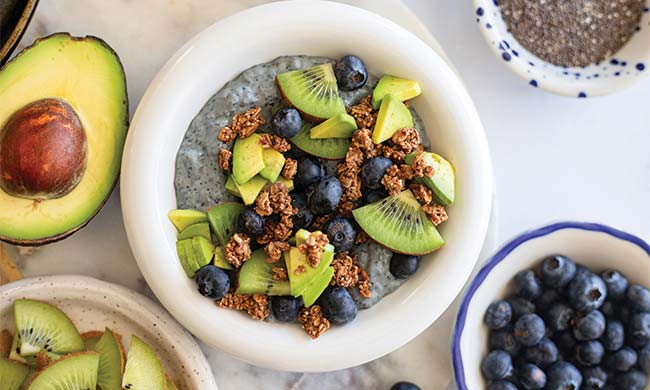
Try these recipes for Avocado and Blueberry Chia Pudding, Avocado Breakfast Bowl with Leafy Greens for your next breakfast or snack.
*Remember: Small, consistent food choices can add up over time. Research suggests regularly eating avocados may support weight management and blood sugar targets while providing the fiber and healthy fats that many Americans are overlooking. These studies were supported by the Avocado Nutrition Center. While these findings are encouraging, the studies highlighted show an association, not cause and effect, and thus more research is needed to confirm these findings in other populations.
To explore evidence-based avocado nutrition information, along with practical tips and easy recipes, visit Avocados – Love One Today, a leading resource for avocado nutrition information.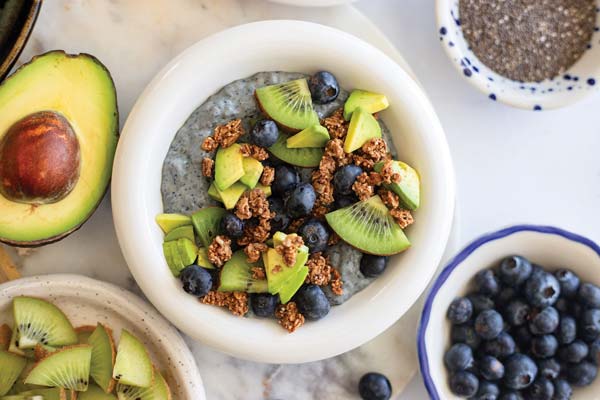
Avocado and Blueberry Chia Pudding
- 1 1/2 cups plain, unsweetened soy milk (or milk of choice)
- 1 ripe, fresh avocado, halved, pitted and peeled
- 3/4 cup frozen blueberries
- 1/2 cup unsweetened vanilla Greek yogurt
- 1 tablespoon maple syrup
- 1/3 cup chia seeds
To Serve:
- 1/3 cup granola
- 1/3 cup fresh blueberries
- 1 kiwi, chopped
- 1/2 fresh, ripe avocado, halved, pitted, peeled and chopped
- In blender, puree soy milk, avocado, blueberries, yogurt and maple syrup until smooth. Pour mixture into storage container or bowl and add chia seeds. Whisk well to combine. Cover with lid or plastic wrap and refrigerate 4 hours or overnight, until thickened.
- To serve, divide into bowls and top with granola, fresh blueberries, kiwi and avocado.
- Notes: Use any milk (dairy or non-dairy) that you prefer in pudding. Use fresh blueberries or conventional frozen blueberries. Other topping options include: nuts, seeds, hemp hearts, sliced banana or strawberries, or nut butter.
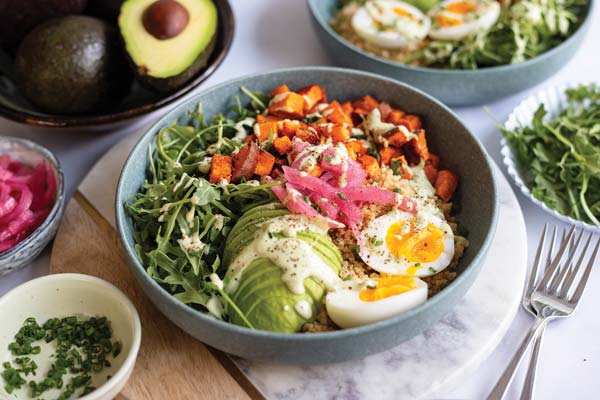
Avocado Breakfast Bowl with Leafy Greens
Bowl:
- 1 medium sweet potato, chopped (about 1 3/4 cup)
- nonstick cooking spray
- 1/4 teaspoon smoked paprika
- 1/4 teaspoon garlic powder
- 1/4 teaspoon salt
- 1/2 cup quinoa
- 1 cup water, plus additional for boiling eggs, divided
- 2 eggs
- 2 cups arugula
- 1 ripe, fresh avocado, halved, pitted, peeled and chopped
- 1/4 cup pickled red onions
Avocado Tahini Dressing:
- 1/2 large avocado
- 1/4 cup tahini
- 1 lemon, juice only (2 tablespoons)
- 3/4 cup water
- 1 tablespoon fresh chives
- salt, to taste
- pepper, to taste
- Preheat oven to 400 F. Add chopped sweet potato to baking sheet. Spray with cooking oil then add smoked paprika, garlic powder and salt. Toss to coat in spices. Bake 22-25 minutes, or until tender.
- In medium saucepan, add quinoa and water. Bring to simmer and cover, cooking 12-15 minutes, or until quinoa is tender and fluffy.
- Fill small saucepan with water and bring to boil. Use slotted spoon to lower eggs into water. Cook 8 minutes then transfer eggs to bowl of ice water to cool before peeling.
- To make dressing: In small blender, puree avocado, tahini, lemon juice, water and fresh chives until smooth. Add more water, 1 tablespoon at a time, if needed, to thin until pourable. Season with salt and pepper, to taste.
- Assemble bowls, each with 1/2 sweet potato, 1/2 cup quinoa, 1 egg, 1 cup arugula, 1/2 avocado, 2 tablespoons pickled red onion and 3 tablespoons dressing. Reserve remaining dressing in refrigerator.
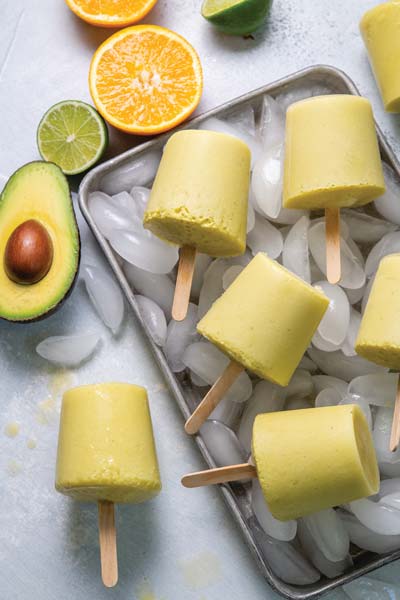
Heart-Healthy Frozen Avocado Banana Paleta
- 1 ripe, fresh avocado, halved, pitted, peeled and diced
- 4 cups orange juice
- 2 medium bananas, peeled and sliced
- 1 tablespoon lime juice
- 8 paper cups (5 ounces)
- 8 wooden craft sticks
- In blender, blend avocado, orange juice, bananas and lime juice on high until smooth. Divide into paper cups. Cover cups with aluminum foil. Insert one stick through center of each foil. Freeze 4 hours until firm.

SOURCE:
🍴 What’s your favorite food, recipe, or dining spot? Tell us in the comments! Then subscribe to the STM Daily News newsletter for fresh recipes, restaurant news, food trends, and delicious stories delivered straight to your inbox. Join our growing community of food lovers today!





