

Lifestyle
4 Tips to Get High Cholesterol Under Control

Last Updated on January 9, 2025 by Daily News Staff
(Family Features) Heart disease is the nation’s leading cause of death for men and women, according to the Centers for Disease Control and Prevention, but many people aren’t aware they may be at elevated risk. More than 71 million adults in the United States have high low-density lipoprotein (LDL) cholesterol and nearly 50 million don’t have it under control, which puts them at higher risk for cardiovascular events, such as heart attack and stroke.
What’s more, nearly one-third (31%) of U.S. adults are not aware that having high cholesterol puts them at greater risk for heart attack and stroke, according to the findings of a recent study conducted by The Harris Poll commissioned by Esperion Therapeutics, Inc. The poll also revealed some inconsistent understanding about treatment options available for those with uncontrolled cholesterol. Fully 3 in 10 (30%) of those taking statins believe statins are the only LDL lowering treatment available for those with high LDL cholesterol.
High Cholesterol
“In auto racing, the red flag means danger on the track, stopping the race immediately,” said Dr. JoAnne Foody, chief medical officer at Esperion. “We are launching a patient education program, ‘Wave the Red Flag,’ to encourage people with uncontrolled high cholesterol to have their levels checked right away and discuss appropriate treatment options with their health care provider.”
If your high cholesterol is uncontrolled, understanding how you can achieve greater control can reduce your risk for serious health conditions, including potentially life-threatening cardiovascular events.
Consider these tips to get high cholesterol under control.
Talk with your doctor. Speaking with your physician is an important first step to managing any health condition. Your doctor can help you understand the severity of your condition and whether a treatment plan should be moderate or aggressive.
Check your progress. Keeping tabs on your cholesterol can help you and your health care team gauge whether your treatment plan is working. If you don’t have heart disease, you may not need to check as frequently, but your doctor can recommend the appropriate intervals to help manage your cholesterol most effectively.
Take medications as prescribed. Statins are the medications most often recommended by treatment guidelines for the management of blood cholesterol, and nearly one-third (30%) of those taking statins believe they are the only cholesterol-lowering treatment available, according to the survey. However, even with maximal statin therapy, some patients with chronic disease do not meet recommended LDL cholesterol levels. Taking your medications regularly and as instructed helps your doctor determine whether additional therapies – including non-statin treatments – could be useful to help manage your blood cholesterol.
Make lifestyle adjustments. Your diet plays a major role in lowering LDL cholesterol. Limiting fatty foods, especially those that are high in saturated and trans fats, is key. Monitoring your overall diet and exercising can also help reduce your risk of high cholesterol. Even if you don’t have high cholesterol, adopting more cholesterol-friendly habits can help prevent your levels from rising to unhealthy levels in the future.
To find additional information about managing your high cholesterol, talk to your health care provider and visit WaveTheRedFlag.info.
Fast Facts About Cholesterol
What is cholesterol?
The liver creates a fat-like waxy substance called cholesterol. It serves useful purposes for the body, including producing hormones and helping digest food.
How do you get high cholesterol?
The human body makes all the cholesterol it needs naturally, so any cholesterol you eat is cholesterol you don’t need. However, it can be difficult to avoid because you can find dietary cholesterol in many common foods, including meat, seafood, poultry, eggs and dairy. Other non-dietary contributing factors include health conditions like obesity and diabetes, as well as family history and advancing age.
What is a normal cholesterol level?
An average optimal level of LDL cholesterol is about 100 milligrams per deciliter (mg/dL).
An average optimal level of high-density lipoprotein, or HDL, cholesterol is at least 40 mg/dL for men and 50 mg/dL for women. HDL cholesterol can actually lower your risk of heart disease and stroke.
Are there symptoms of high cholesterol?
Unlike many health conditions, there are rarely any symptoms that your cholesterol is high. That’s what makes regular screening so important.
Photos courtesy of Shutterstock
SOURCE:
Esperion


Consumer Corner
Cold cities are the most ready for winter, with one exception. See where your city ranks
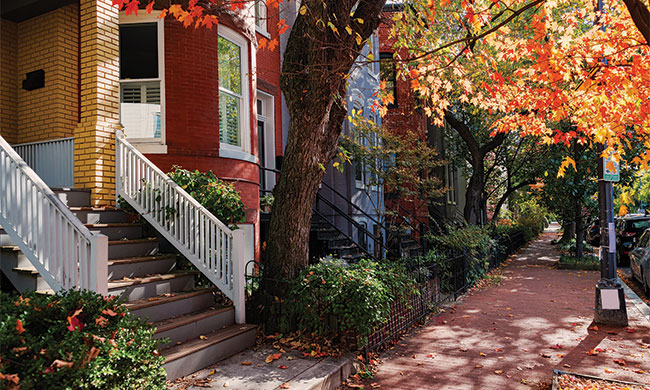
Cold cities? Every neighborhood has a mix of homeowners who approach seasonal home maintenance differently – there are the people who stay on schedule, and on the other end, the procrastinators. There are the dedicated DIYers, and those who have their favorite maintenance pro saved as a favorite contact in their phone. As it turns out, cities are no different. Some metropolitan areas keep their neighborhoods in tip-top shape, while others are a little more slow-going.
Cold cities are the most ready for winter, with one exception. See where your city ranks
(Sheeka Sanahori) Every neighborhood has a mix of homeowners who approach seasonal home maintenance differently – there are the people who stay on schedule, and on the other end, the procrastinators. There are the dedicated DIYers, and those who have their favorite maintenance pro saved as a favorite contact in their phone. As it turns out, cities are no different. Some metropolitan areas keep their neighborhoods in tip-top shape, while others are a little more slow-going.
New data from home services company Angi, covering fall maintenance activity in August, reveals which U.S. metropolitan areas are the most proactive with fall maintenance. Washington, D.C., tops the ranking with the strongest demand for fall maintenance in the country, followed by Columbus, Ohio, and Milwaukee, Wisconsin. Northern cities dominate the rest of the list.
Cleveland, Ohio, and Albany-Schenectady-Troy, New York, round out the top five. Cold-weather markets dominate the ranking, accounting for eight of the 10 most-prepared metros. Rochester, New York; Charlotte, North Carolina; Chicago; Indianapolis; and Pittsburgh complete the top 10.
Least fall-ready metros
Fewer than 1 in 5 American cities is prepping for fall at an above-average rate. Among the 66 metros that recorded at least 100 fall maintenance service requests during the analysis period, Los Angeles had the lowest level of per-capita activity, followed by Oklahoma City and Riverside, California. California accounts for four of the bottom 10 markets, with Los Angeles, Riverside, San Diego and San Francisco all appearing on the list. These metros historically don’t experience the colder winter climates of the Northeast and Midwest, making fall maintenance less of an imperative.
Grand Rapids, Michigan, stands out as the only clearly cold-weather metro among the 10 least-prepared large metros. The New York City metro, which includes Newark and Jersey City, ranked just outside the 10 least-prepared large metros, coming in at number 11. Other New York state metros, including Syracuse, Rochester and the Albany metro area, were on the most prepared list.
Homeowners are choosing upkeep over upgrades
Sixty-three percent of homeowners who have recently hired a professional completed maintenance work, and 58% completed repairs. Although they may be waiting to do that dream kitchen or bath renovation, they’re focusing for now on the maintenance that keeps their homes in order.
The most common fall maintenance projects focus on outdoor upkeep. Nationally, tree trimming was the most popular, followed by lawn and yard waste cleanup and shrub care.
What homeowners should do now
When tackling a home maintenance list, start at the top of the home by inspecting the roof and gutters. Look for loose or damaged shingles, and make sure gutters are debris-free. It’s also a good idea to ensure downspouts direct water far away from the foundation. Homeowners should inspect these areas from the ground or hire a professional if the work requires climbing or feels unsafe.
Next, check for drafts around the windows and doors. Replacing worn weatherstripping and damaged caulk in the fall can prevent warm air from escaping once the heat comes back on. Homeowners should also inspect their HVAC filters and have the heating system checked before the temperatures drop.
Every home’s maintenance needs will vary, depending on the age and condition of the house and where it’s located. Whether homeowners hire a professional or safely address small issues, making the fixes can prevent larger and more expensive problems later.
The ranking: Metros from most to least prepared
America’s 10 Most Fall-Prepared Metros
1. Washington, D.C.
2. Columbus, Ohio
3. Milwaukee, Wisconsin
4. Cleveland, Ohio
5. Albany-Schenectady-Troy, New York
6. Rochester, New York
7. Charlotte, North Carolina
8. Chicago, Illinois
9. Indianapolis, Indiana
10. Pittsburgh, Pennsylvania
10 Metros With the Most Opportunity to Get Fall-Ready
1. Los Angeles, California
2. Oklahoma City, Oklahoma
3. Riverside, California
4. Miami, Florida
5. San Diego, California
6. Houston, Texas
7. Grand Rapids, Michigan
8. San Francisco, California
9. Austin, Texas
10. Memphis, Tennessee
Methodology
The rankings are based on fall maintenance activity recorded on Angi during August 2026. Projects included yard cleanup, winterization, roofing and gutters, heating systems, water and drainage, outdoor plumbing, fireplaces and chimneys, pest prevention, and snow and storm preparation. U.S. metropolitan areas were ranked by activity per 100,000 residents using 2020 U.S. Census population data. To qualify for the least-prepared ranking, metros were required to have at least five service requests or jobs during the analysis period. The rankings reflect activity on Angi’s platform and are not a complete measure of all home-maintenance activity within each metro. These rankings reflect activity observed on Angi’s platform and should not be interpreted as a complete measure of all home-maintenance behavior within a metro area.
Photo courtesy of Shutterstock
SOURCE:
Angi
College Life
Is College Worth It? New U.S. News Rankings Put More Weight on What Graduates Earn
Is college worth it? MIT has taken the No. 1 spot in the 2027 U.S. News Best Colleges rankings, ending Princeton’s 15-year run. But a new Earnings by Major metric could be even more important for families asking whether college is worth the investment.
For millions of students and families, choosing a college increasingly comes down to a basic question: Is college worth it?
The latest U.S. News & World Report Best Colleges rankings are attempting to provide another piece of information to help answer that question.
The 2027 rankings place the Massachusetts Institute of Technology (MIT) at No. 1 among National Universities, ending Princeton University’s 15-year run at the top. But perhaps the bigger story for prospective students isn’t which university occupies the No. 1 position.
It’s a significant change in how U.S. News measures the value of attending college.
For the first time, the rankings include an Earnings by Major factor designed to examine what graduates earn after leaving school — and to compare those earnings with graduates who studied the same subjects elsewhere.
Is College Worth It? U.S. News Looks Beyond Graduation
College has traditionally been promoted as an investment in a person’s future. But as families confront tuition, housing expenses and the possibility of student debt, simply earning a degree may no longer be enough information when deciding where — or whether — to attend.
Students increasingly want to know what happens after graduation.
The new U.S. News Earnings by Major metric examines graduate earnings four years after graduation using data from the U.S. Department of Education’s College Scorecard.
Importantly, the system doesn’t simply compare the average salary of graduates from one university with another.
Instead, earnings are compared within specific academic disciplines.
That distinction matters.
A university graduating large numbers of engineers, computer scientists or students entering other relatively high-paying occupations could otherwise appear to produce stronger financial outcomes simply because of the subjects its students choose to study.
Comparing graduates within similar fields is intended to provide a clearer picture of how graduates from different institutions fare financially.
From Student Debt to Graduate Earnings
The new Earnings by Major metric replaces the Graduate Indebtedness factor previously used by U.S. News.
That represents an important shift in perspective.
Instead of focusing primarily on how much debt students accumulate, the new measure looks at one aspect of what students may receive financially from their education after entering the workforce.
The metric examines employed federal financial aid recipients whose highest degree is a bachelor’s degree.
According to U.S. News, the approach is intended to reduce the influence of family financial advantages and provide a better indication of the economic value institutions may contribute to graduates.
That doesn’t mean earnings alone determine whether a college education is worthwhile.
But for a student potentially investing tens of thousands of dollars — and several years of their life — knowing how graduates in a particular major perform economically can be an important part of the decision.
MIT Takes the No. 1 Spot
Against that changing methodology, MIT moved into the No. 1 position among National Universities in the 2027 rankings.
The top three are:
- Massachusetts Institute of Technology
- Princeton University
- Harvard University
Princeton’s move to second place ends a run at No. 1 that began with the 2012 edition of the rankings.
Among National Liberal Arts Colleges, Williams College remained No. 1, followed by Amherst College at No. 2. Bowdoin College, Claremont McKenna College, Pomona College and Swarthmore College tied for third.
Nearly 1,700 institutions were evaluated in the 2027 edition.
Outcomes Are Becoming a Bigger Part of the Equation
The addition of graduate earnings is part of a broader emphasis on student outcomes in the U.S. News methodology.
U.S. News says outcomes now account for more than half of a school’s total score.
Institutions can be evaluated using as many as 17 weighted measures, including graduation and retention rates, social mobility for lower-income students, post-graduate earnings, faculty resources and academic peer assessments.
The shift reflects a changing conversation surrounding higher education.
For generations, students were often encouraged to focus heavily on getting into the most prestigious college possible. Today’s students may also be asking more practical questions:
How much will it cost?
How much financial aid will I receive?
How much debt might I have when I graduate?
What do graduates in my intended major earn?
And perhaps most importantly:
Will the investment pay off for me?
College Value Isn’t Just About Salary
Graduate earnings can provide useful information, but salary shouldn’t be treated as the sole measurement of the value of higher education.
Different careers have dramatically different compensation structures.
A graduate pursuing teaching, public service, social work, the arts or nonprofit work may earn less than someone entering engineering, finance or technology while still considering their education worthwhile.
There are also benefits of higher education that are difficult to capture in a salary statistic.
That’s why students comparing schools may want to look beyond an institution’s overall ranking and examine factors such as net price after financial aid, scholarships, graduation rates, student debt, internship opportunities, career placement, location and the strength of the program they actually intend to study.
The best-known university isn’t automatically the best financial or educational choice for every student.
Economic Diversity Also Gets Attention
The 2027 rankings also highlight economic diversity among highly ranked institutions.
According to U.S. News, MIT and Princeton rank third and fourth, respectively, among the top 25 National Universities in the percentage of students receiving federal Pell Grants.
Pell Grants generally assist undergraduate students with significant financial need and typically do not have to be repaid.
Among the top 25 National Liberal Arts Colleges, Amherst College ranked highest for economic diversity under the U.S. News measure.
A New Ranking Looks at In-State Value
U.S. News is also placing additional attention on affordability for students considering public universities.
The 2027 edition introduces a Best Value Schools for In-State Students ranking, which evaluates public universities based on academic quality and affordability for residents.
The University of North Carolina at Chapel Hill took the No. 1 position in the inaugural ranking.
That category could be particularly relevant to families deciding whether the prestige associated with attending a private or out-of-state university justifies potentially higher costs compared with attending a public institution in their home state.
The Rankings Look Different This Year
There is another important caveat when comparing the 2027 results with previous years.
Changes to the Carnegie Classification framework resulted in approximately 20% of previously ranked institutions moving into different U.S. News categories.
Because some colleges are now being compared against different groups of institutions, their 2027 rankings may not be directly comparable with previous years.
The changes also expanded eligibility, allowing additional institutions specializing in areas such as engineering, business and health to enter the rankings.
U.S. News also introduced an undergraduate economics specialty ranking while continuing rankings covering areas such as social mobility, innovation, historically Black colleges and universities, artificial intelligence programs, internships, undergraduate research and study-abroad opportunities.
Public Universities, HBCUs and Social Mobility
Among public National Universities, the University of California, Berkeley and UCLA tied for the No. 1 position, followed by the University of Michigan–Ann Arbor.
The top three Historically Black Colleges and Universities were:
- Spelman College
- Howard University
- Tuskegee University
For social mobility among National Universities, Florida International University and the University of California, Riverside tied for No. 1, with Oakland City University ranked third.
These categories illustrate another reason students may want to look deeper than a school’s overall national position. Different rankings can reveal institutions performing particularly well in areas that may matter more to an individual student.
So, Is College Worth It?
There isn’t one answer that applies to every student.
The cost of attending, financial aid, chosen major, career goals, likelihood of graduating and potential debt can dramatically change the financial equation.
A college with a famous name and high national ranking could be a poor financial choice for one student while a less prominent public university with generous financial aid could be an excellent investment for another.
That’s what makes the addition of Earnings by Major noteworthy.
Instead of asking only “Which college ranks highest?”, prospective students now have another reason to ask a much more personal question:
“What am I paying for — and what could I realistically get in return?”
MIT replacing Princeton at No. 1 makes the headline.
But for students and parents trying to decide whether college is worth the cost, the growing emphasis on outcomes, affordability and post-graduation earnings may ultimately be the more important story.
Source: U.S. News & World Report, 2027 Best Colleges rankings, released September 22, 2026.
U.S. News & World Report press release:
MIT Claims No. 1 Spot in U.S. News 2027 Best Colleges Rankings PR Newswire
Stay Informed with STM Daily News
From education and personal finance to technology, lifestyle, transportation and the stories shaping our everyday lives, STM Daily News keeps you informed about what matters — and why it matters. Get more news, useful insights and the latest updates by visiting STM Daily News and subscribe to stay connected to the stories worth knowing.
Health
Type 2 Diabetes Doesn’t Have to Be Your Future: Medicare Has a Benefit That Can Help
Left unchecked, prediabetes can progress to type 2 diabetes. However, with the right support, prediabetes can often be managed or even reversed. If you have Medicare, you may qualify for a Medicare-covered program that can help you lower your chances of developing type 2 diabetes – at no cost to you.

(Feature Impact) Nearly 1 in 2 people age 65 and older has prediabetes – a condition where blood sugar (glucose) levels run higher than normal. Left unchecked, prediabetes can progress to type 2 diabetes. However, with the right support, prediabetes can often be managed or even reversed. If you have Medicare, you may qualify for a Medicare-covered program that can help you lower your chances of developing type 2 diabetes – at no cost to you.
The Medicare Diabetes Prevention Program is a covered Medicare benefit that gives you practical tools, personalized support, and proven strategies to make healthy lifestyle changes. Learn how to eat better, exercise more, and build healthy habits that stick while guided by a certified coach who helps you every step of the way.
Research shows the program works. People with prediabetes who complete the program result in weight loss, which ultimately leads to reduced risk of type 2 diabetes onset.
What can you expect?
Prevention does not mean you have to make big changes all at once. This program helps you take small, realistic steps that can add up to lasting results. It includes 16 core sessions where you can learn how to reduce your diabetes risk by making healthier meals, moving more, and building healthy habits.
The core sessions are followed by six months of monthly maintenance sessions to help you keep your momentum.

You can choose the class format that works for you
You can enroll in these services from approved Medicare Diabetes Prevention Program suppliers and participate in the way most convenient for you:
- In-Person: Attend sessions in a community location.
- Live-Distance Learning: Join interactive group sessions from home.
- Self-Paced Online: This new option allows you to access online content and learn on your own schedule.
Visit www.medicare.gov/PreventDiabetes to find a class that’s right for you.
Who is eligible?
You may qualify if you are enrolled in Medicare Part B and meet these criteria:
- Have had one of the following test results within the past 12 months:
- Hemoglobin A1c between 5.7% and 6.4%
- Fasting plasma glucose between 110 and 125 mg/dL
- Two-hour plasma glucose between 140 and 199 mg/dL after an oral glucose tolerance test
- Have a body mass index (BMI) of 25 or higher (or 23 or higher if you self-report as Asian descent).
- Have never been diagnosed with type 1 or type 2 diabetes or end-stage renal disease (ESRD).
What does it cost?
If you have Medicare Part B and qualify for the program, you pay nothing to participate. If you are in a Medicare Advantage Plan, you may have to go to an in-network provider to get these services. Contact your plan for more information.
Ready to get started on your healthier future?
Take control of your health on your own terms, schedule, and pace that fits into your life. Check with your doctor to find out if you have prediabetes or are at risk for developing type 2 diabetes. If you’re eligible for the Medicare Diabetes Prevention Program, your doctor can refer you, or you can enroll on your own.
If you’re ready to get started today, find the class that’s right for you at: www.medicare.gov/PreventDiabetes.
Information provided by the U.S. Department of Health and Human Services
Photos courtesy of Shutterstock
SOURCE:
Centers for Medicare & Medicaid Services





