

health and wellness
5 Habits to Boost Immunity During Cold and Flu Season


5 Habits to Boost Immunity During Cold and Flu Season
(Feature Impact) Your immune system is your strongest ally during cold and flu season, working hard to keep you healthy as you start hearing those telltale coughs and sneezes all around. Help your body do its job well by adopting a few simple habits that naturally support its ability to fight off germs or recover faster.
Talk to your healthcare provider for personalized advice then work on making these habits normal in your household.
Get Regular Exercise
Exercise is like a wonder drug that can improve nearly every aspect of health and wellness. Physical activity increases blood flow, reduces long-term inflammation, helps immune cells circulate through the body to guard against invaders and may even flush bacteria out of your lungs and airways. Plan to fit at least 150 minutes of moderate exercise into each week, like a bike ride, brisk walk, yoga class or on-demand video workout.
Eat Foods That Support Immune Health
To keep your immune system fueled, experts recommend eating a varied diet featuring plenty of fruits, vegetables, nuts, seeds, whole grains and healthy fats like olive oil. Consider adding fresh grapes to your diet to enjoy benefits from their naturally occurring plant compounds.
Protecting the body starts all the way down at the cellular level, and grapes contain powerful polyphenols that support the health and function of cells. Studies indicate certain compounds in grapes, like resveratrol and flavonoids, support immune system function as well as brain, skin, GI and heart health.
These little fruits are easy to add to your diet, whether you enjoy sweet, juicy Grapes from California by the handful or toss them in a blender to make this California Grape Wellness Juice recipe. Support multiple aspects of wellness with the drink’s powerful combination of fruits and vegetables, delivering a variety of immune-boosting vitamins, minerals and antioxidants.
Stay Hydrated
Drinking enough water helps clean your lymphatic system, which is responsible for producing special white blood cells that fight germs. It also keeps membranes in your nose and mouth moist, decreasing infection risk. If you struggle to drink enough, eating water-rich foods like grapes also helps you improve hydration.
Practice Good Germ Hygiene
To increase your odds of staying healthy during peak illness season, hearken back to the tried-and-true hygiene advice your parents might have tried to drill into your head as a kid. Regularly wash your hands with warm water and soap, avoid touching your face while out and about, keep your distance from symptomatic people and disinfect commonly used surfaces like doorknobs when someone in the house or office is sick.
Sleep More, Stress Less
Before you start feeling stressed that you aren’t getting enough sleep, rest assured there are easy changes you can make to support your well-being in both areas. Try switching up your nightly routine to be oriented less around screens and more around calming activities that actually help you wind down, like yoga, meditation or reading.
Discover more health information and recipes at GrapesFromCalifornia.com.
California Grape Wellness Juice
Servings: 3 (1 cup each)
- 5 cups black or red Grapes from California
- 1/2 cup peeled raw beet slices
- 3/4 cup orange juice
- 1/4 cup lemon juice
- 1 small carrot, peeled and sliced
- 1 piece fresh turmeric (1-inch), peeled and sliced or1 teaspoon ground turmeric
- In high-speed blender, puree grapes, beet slices, orange juice, lemon juice, carrot and turmeric until smooth.
- Pour through fine mesh sieve, stirring to extract as much juice as possible, about 3 cups. Stop when mixture starts to get thick. Enjoy immediately or cover and refrigerate until ready to serve.
Notes: This juice can also be added to iced tea or fizzy water.
Nutritional information per serving: 230 calories; 3 g protein; 58 g carbohydrates; 0.5 g fat (2% calories from fat); 0 g saturated fat (0% calories from saturated fat); 0 mg cholesterol; 35 mg sodium; 0 g fiber.

SOURCE:
California Table Grape Commission


Community
Mariska Hargitay and Purina Team Up to Help Domestic Violence Survivors Keep Their Pets Safe
Mariska Hargitay and Purina are raising awareness about a heartbreaking reality: Many domestic violence survivors delay escaping abuse because they cannot bring their pets. Discover how the Purple Leash Project is helping families and animals find safety together.

Purple Leash Project takes center stage at U.S. Women’s National Team match, raising awareness about a heartbreaking choice facing abuse survivors and their beloved pets.
By STM Daily News | Lifestyle & Pets | October 12, 2026
WASHINGTON, D.C. — For many people, pets are more than companions. They’re family, providing comfort, unconditional love, and emotional support during life’s most difficult moments. But for survivors of domestic violence, the bond with a beloved pet can create an unexpected obstacle when trying to escape an abusive environment.
Actress and longtime domestic violence advocate Mariska Hargitay joined Purina and the U.S. Women’s National Soccer Team on October 10, 2026, to shine a spotlight on this often-overlooked issue.
During the team’s match against Spain at Audi Field in Washington, D.C., Hargitay served as Purina’s Honorary Captain, helping promote the company’s Purple Leash Project, an initiative designed to help domestic violence survivors find safety without leaving their pets behind.
The appearance was part of Domestic Violence Awareness Month, observed every October.


When Escaping Abuse Means Leaving a Pet Behind
For someone experiencing domestic violence, leaving an abusive relationship can be dangerous and emotionally overwhelming. The situation becomes even more complicated when pets are involved.
According to statistics cited by Purina:
- Only 20% of domestic violence shelters allow pets.
- 48% of survivors delay leaving an abusive situation because they cannot take their pets with them.
These figures illustrate a significant barrier to safety.
For survivors whose pets provide emotional stability and companionship, the possibility of abandoning an animal can be devastating. Some may also fear that an abusive partner will harm a pet left behind.
The Purple Leash Project seeks to eliminate that difficult choice by helping domestic violence shelters become more accommodating to animals.
What Is the Purple Leash Project?
The Purple Leash Project is a partnership between Purina and RedRover, a nonprofit organization dedicated to helping animals and strengthening the human-animal bond.
Through grants and financial assistance, the initiative supports domestic violence shelters and social service organizations by funding:
- Renovations that make shelters pet-friendly.
- On-site and off-site housing for survivors’ pets.
- Essential pet supplies and accommodations.
- Necessary veterinary services for animals entering shelter programs.
According to Purina, the initiative has already provided nearly 70 grants totaling more than $2.2 million across over 30 states.
The company has also established a goal of helping provide one million safe nights for survivors and their pets by the end of 2030.
The ultimate objective is simple: Nobody should have to choose between personal safety and protecting a beloved animal.
Mariska Hargitay Brings the Message to the Soccer Field
Hargitay, widely recognized for portraying Olivia Benson on Law & Order: Special Victims Unit, has spent years advocating for survivors of domestic violence and sexual assault.
Her participation in the U.S. Women’s National Team event brought additional visibility to the Purple Leash Project.
During the pre-match ceremonies, Hargitay participated in the ceremonial coin toss alongside Cassidy, a 75-pound Golden Retriever therapy dog, and Cassidy’s handler, Patrice “Pat” Eller.
Cassidy and Eller are part of a Pet Partners therapy team that helps provide comfort to children who may be required to testify in court.
Their presence illustrated the important role animals can play in helping people cope with traumatic experiences.
“Seeing the Purple Leash Project take the field helped turn the stadium into a powerful show of support for survivors and the pets they love,” Hargitay said in a statement released by Purina.
She also emphasized the importance of reducing the stigma surrounding domestic violence and creating more safe spaces where survivors and their pets can recover together.
A Special Soccer Scarf Supporting Survivors and Pets
To encourage fans to participate in the initiative, Purina and U.S. Soccer introduced a limited-edition Courageous & Comfy Soccer Scarf.
The officially licensed scarf is available through the Purple Leash Project’s online store.
According to Purina, 100% of every scarf purchase is donated to RedRover, supporting the effort to help survivors and their pets remain together.
Fans interested in supporting the initiative can visit:
Purple Leash Project Scarf Store
Additional information about the initiative is available at:
Bringing Pets Into the Soccer Experience
Beyond raising awareness for domestic violence survivors, Purina used the event to highlight the relationship between sports fans and their pets.
At Audi Field, the company introduced the Purina Club, a temporary pet-friendly seating area where fans could attend the match with their dogs.
The initiative reflects Purina’s growing involvement in soccer, including collaborations with U.S. Soccer and pet-centered activities associated with the 2026 FIFA World Cup.
While these efforts celebrate the companionship pets bring to everyday life, the Purple Leash Project addresses a more serious reality: For some individuals, the ability to remain with their animals can influence whether they can safely leave an abusive situation.
Why the Human-Animal Bond Matters
Anyone who has experienced the companionship of a dog, cat, or another beloved pet understands how deeply animals can become part of a family.
Pets offer familiarity, routine, comfort, and emotional connection. During times of uncertainty, those relationships can become especially meaningful.
For survivors of domestic violence, maintaining that bond can provide an important source of reassurance while rebuilding their lives.
The Purple Leash Project recognizes that protecting survivors and protecting their animals are often interconnected needs.
“At Purina, we believe survivor safety shouldn’t require sacrifice,” said Nina Leigh Krueger, CEO of Purina, in the company’s announcement.
That philosophy is at the heart of the initiative’s mission to expand access to safe, pet-friendly shelter accommodations.
How You Can Help
Supporting survivors and their pets doesn’t necessarily require a major financial commitment.
Individuals can learn more about the Purple Leash Project, support participating organizations, share information about pet-friendly domestic violence shelters, or contribute to nonprofit programs that help families and animals in crisis.
Organizations such as RedRover also provide resources designed to strengthen the human-animal bond and assist animals during emergencies.
Learn more at RedRover.org.
For anyone currently experiencing domestic violence in the United States, confidential assistance is available through the National Domestic Violence Hotline at 1-800-799-SAFE (7233) or TheHotline.org. If immediate danger exists, call 911.
A Safer Future for Survivors and Their Pets
The partnership between Purina, Mariska Hargitay, RedRover, and U.S. Soccer demonstrates how public awareness campaigns can help bring attention to problems that often remain unseen.
For survivors of domestic violence, the path to safety should not mean having to abandon a loyal companion.
And for the pets who depend on their families, remaining together can mean everything.
By helping shelters accommodate animals, the Purple Leash Project is working toward a future where survivors and their pets can escape dangerous situations, find stability, and begin healing together.
More Lifestyle & Pet Stories From STM Daily News
At STM Daily News, we believe stories about pets are also stories about people, families, communities, and the powerful connections that make life meaningful.
Explore more stories about animal welfare, pet care, family life, and community initiatives in our Lifestyle section at STM Daily News.
Stay informed. Stay connected. Discover stories that matter.
Sources and Additional Resources
- Purina — Purple Leash Project
- RedRover — Animal Welfare and Crisis Support
- National Domestic Violence Hotline
- U.S. Soccer
Source: Nestlé Purina PetCare press release, October 11, 2026. Statistics and grant figures attributed to Purina.


(Feature Impact) Menopause is a phase of life every woman knows will come eventually yet few are truly prepared for. Beyond stereotypical symptoms like hot flashes and mood swings, the other realities of menopause can be mysterious, taking women by surprise when their experiences differ from expectations.
Rather than being a single event, menopause involves a gradual transition that happens as estrogen production changes – meaning symptoms can appear and evolve unpredictably. According to a survey commissioned by the National Menopause Foundation, 63% of U.S. women ages 35-54 experienced symptoms they believed may be related to perimenopause or menopause, yet nearly half (49%) said they weren’t prepared for the changes beforehand.
When women and their loved ones understand what they’re facing, they can approach this time with patience and compassion, which can make a real difference to the 71% of women who wished the people in their lives understood more about perimenopause or menopause. Consider these five facts to help fill in the menopause knowledge gap.
Perimenopause Can Start Years Before Menopause
The physiological transition to menopause can happen up to 10 years before a woman’s final menstrual period, although the average length of perimenopause is about four years. Symptoms may quietly begin in a woman’s 30s, 40s or 50s, and what might look like an isolated problem at first – like brain fog, a night of insomnia or an irregular monthly cycle – could be connected to broader hormonal changes.
Menopause Is More Than Just “Hot Flashes”
Since more than half of women surveyed were already aware of menopause symptoms like hot flashes, mood changes, anxiety and fatigue, these may not take them by surprise. Little-known symptoms are a different story – the majority of respondents didn’t anticipate menopausal issues like rage, inner-ear itching or reduced joint mobility. According to the National Menopause Foundation, women may also experience sleep disturbances, sweating, changes in libido, vaginal dryness, incontinence, weight changes and more.
Every woman’s experience is unique, so these symptoms could present in different combinations and intensities during menopausal years or may not appear at all.
Talking About Menopause Can Be Difficult
Even as women go through these physical and emotional shifts, many struggle to open up about their experiences. In fact, women rank menopause symptoms (17%) more difficult to discuss than hot-button topics like political views (13%), weight (13%) and religious beliefs (10%).
However, suffering in silence can lead to feelings of isolation, relationship misunderstandings and hesitation to seek help, which is why 66% of women said the lack of open discussion about menopause makes the experience worse.
Menopause Isn’t All Bad News
Although this season of life comes with challenges, there are joys to embrace as well. Women navigating midlife can come out the other side with more resilience, emotional awareness and a stronger sense of self. In fact, 44% of women surveyed said their outlook on life became more positive since their transition.
What Loved Ones Can Actually Do
Menopause is a highly individual experience, but that doesn’t mean women have to navigate it alone. Support from partners, families and friends can lift women up during difficult moments, and it can be as simple as taking the time to ask questions, listen and learn about how menopause is affecting their lives. With 30% of women in the U.S. labor force – approximately 15-16 million – in the age range corresponding to menopausal transition (ages 45-60), workplaces can also take steps to become more menopause friendly.
For more resources to help understand symptoms and discuss the transition with loved ones, visit nationalmenopausefoundation.org.
Photo courtesy of Shutterstock

SOURCE:
Consumer Corner
Cold cities are the most ready for winter, with one exception. See where your city ranks
Cold cities? Every neighborhood has a mix of homeowners who approach seasonal home maintenance differently – there are the people who stay on schedule, and on the other end, the procrastinators. There are the dedicated DIYers, and those who have their favorite maintenance pro saved as a favorite contact in their phone. As it turns out, cities are no different. Some metropolitan areas keep their neighborhoods in tip-top shape, while others are a little more slow-going.
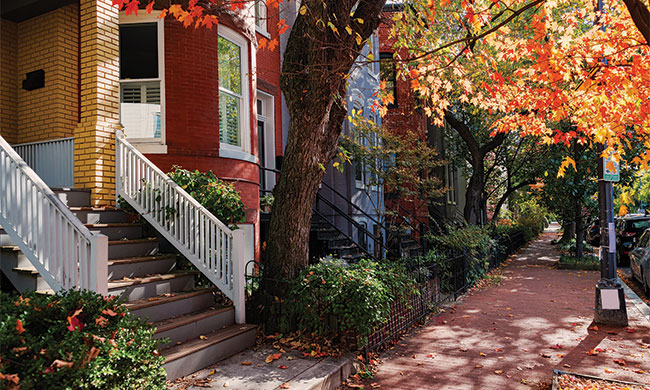
Cold cities are the most ready for winter, with one exception. See where your city ranks
(Sheeka Sanahori) Every neighborhood has a mix of homeowners who approach seasonal home maintenance differently – there are the people who stay on schedule, and on the other end, the procrastinators. There are the dedicated DIYers, and those who have their favorite maintenance pro saved as a favorite contact in their phone. As it turns out, cities are no different. Some metropolitan areas keep their neighborhoods in tip-top shape, while others are a little more slow-going.
New data from home services company Angi, covering fall maintenance activity in August, reveals which U.S. metropolitan areas are the most proactive with fall maintenance. Washington, D.C., tops the ranking with the strongest demand for fall maintenance in the country, followed by Columbus, Ohio, and Milwaukee, Wisconsin. Northern cities dominate the rest of the list.
Cleveland, Ohio, and Albany-Schenectady-Troy, New York, round out the top five. Cold-weather markets dominate the ranking, accounting for eight of the 10 most-prepared metros. Rochester, New York; Charlotte, North Carolina; Chicago; Indianapolis; and Pittsburgh complete the top 10.
Least fall-ready metros
Fewer than 1 in 5 American cities is prepping for fall at an above-average rate. Among the 66 metros that recorded at least 100 fall maintenance service requests during the analysis period, Los Angeles had the lowest level of per-capita activity, followed by Oklahoma City and Riverside, California. California accounts for four of the bottom 10 markets, with Los Angeles, Riverside, San Diego and San Francisco all appearing on the list. These metros historically don’t experience the colder winter climates of the Northeast and Midwest, making fall maintenance less of an imperative.
Grand Rapids, Michigan, stands out as the only clearly cold-weather metro among the 10 least-prepared large metros. The New York City metro, which includes Newark and Jersey City, ranked just outside the 10 least-prepared large metros, coming in at number 11. Other New York state metros, including Syracuse, Rochester and the Albany metro area, were on the most prepared list.
Homeowners are choosing upkeep over upgrades
Sixty-three percent of homeowners who have recently hired a professional completed maintenance work, and 58% completed repairs. Although they may be waiting to do that dream kitchen or bath renovation, they’re focusing for now on the maintenance that keeps their homes in order.
The most common fall maintenance projects focus on outdoor upkeep. Nationally, tree trimming was the most popular, followed by lawn and yard waste cleanup and shrub care.
What homeowners should do now
When tackling a home maintenance list, start at the top of the home by inspecting the roof and gutters. Look for loose or damaged shingles, and make sure gutters are debris-free. It’s also a good idea to ensure downspouts direct water far away from the foundation. Homeowners should inspect these areas from the ground or hire a professional if the work requires climbing or feels unsafe.
Next, check for drafts around the windows and doors. Replacing worn weatherstripping and damaged caulk in the fall can prevent warm air from escaping once the heat comes back on. Homeowners should also inspect their HVAC filters and have the heating system checked before the temperatures drop.
Every home’s maintenance needs will vary, depending on the age and condition of the house and where it’s located. Whether homeowners hire a professional or safely address small issues, making the fixes can prevent larger and more expensive problems later.
The ranking: Metros from most to least prepared
America’s 10 Most Fall-Prepared Metros
1. Washington, D.C.
2. Columbus, Ohio
3. Milwaukee, Wisconsin
4. Cleveland, Ohio
5. Albany-Schenectady-Troy, New York
6. Rochester, New York
7. Charlotte, North Carolina
8. Chicago, Illinois
9. Indianapolis, Indiana
10. Pittsburgh, Pennsylvania
10 Metros With the Most Opportunity to Get Fall-Ready
1. Los Angeles, California
2. Oklahoma City, Oklahoma
3. Riverside, California
4. Miami, Florida
5. San Diego, California
6. Houston, Texas
7. Grand Rapids, Michigan
8. San Francisco, California
9. Austin, Texas
10. Memphis, Tennessee
Methodology
The rankings are based on fall maintenance activity recorded on Angi during August 2026. Projects included yard cleanup, winterization, roofing and gutters, heating systems, water and drainage, outdoor plumbing, fireplaces and chimneys, pest prevention, and snow and storm preparation. U.S. metropolitan areas were ranked by activity per 100,000 residents using 2020 U.S. Census population data. To qualify for the least-prepared ranking, metros were required to have at least five service requests or jobs during the analysis period. The rankings reflect activity on Angi’s platform and are not a complete measure of all home-maintenance activity within each metro. These rankings reflect activity observed on Angi’s platform and should not be interpreted as a complete measure of all home-maintenance behavior within a metro area.
Photo courtesy of Shutterstock
SOURCE:
Angi





