

Lifestyle
Combat the Epidemic of Loneliness by Eating Together

Last Updated on July 13, 2024 by Daily News Staff
(Family Features) According to the U.S. Surgeon General, Americans face a lack of social connection that poses a significant risk to individual health and longevity. “Loneliness and social isolation increase the risk for premature death by 26% and 29%, respectively. More broadly, lacking social connection can increase the risk for premature death as much as smoking up to 15 cigarettes a day,” per the report.
One way to address this epidemic of loneliness is by sharing a meal with friends and family. Learn five of the specific advantages of family meals identified by the Family Meals Movement and take advantage of these benefits during National Family Meals Month this September by sharing one more meal together each week.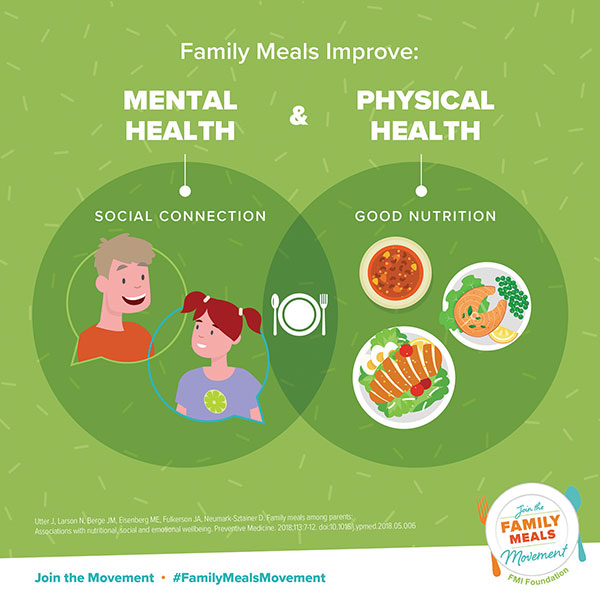
Meals Together Foster Togetherness and Connectedness
Staying connected can be hard when schedules conflict and life gets busy, but shared meals with friends, family or however you define your family can be the glue that holds people together. Studies demonstrate a positive relationship between family meal frequency and measures of family functioning, which is defined as family connectedness, communication, expressiveness and problem-solving. The key is for family members to engage in conversation with one another during mealtimes and take advantage of the one-on-one time without distractions or interruptions from smartphones or other devices.
Meals Together Strengthen Mental Health
An often overlooked benefit of family meals is mental health support. Multiple studies show family meals have long been associated with improving mental health, including reducing symptoms of depression, decreasing violent behavior and lessening thoughts of suicide among youth. Among adolescents, frequent family meals can help mitigate the risks of destructive behaviors by boosting prosocial behaviors and life satisfaction. Data from the FMI Foundation’s “Staying Strong with Family Meals” Barometer shows family meals also help restore a sense of peace, with one-third of survey respondents saying family meals make them feel calm. In short, family meals are a recipe for strengthening emotional well-being among children and adolescents.
Meals Together Improve Nutrition
There is one easy way to help ensure your family is eating fruits and vegetables: a family meal. Research shows family meals improve fruit and vegetable consumption. It also pays to start this trend early, with research finding preschool-aged children who eat frequent family meals are more likely to eat more fruits and vegetables. Overall, researchindicates families who eat together frequently have a better overall healthy diet and lower body mass index.
Meals Together Improve Academic Performance
Helping students’ academic performance begins around the family dinner table. Eating more meals together as a family is associated with improved overall adolescent health, including higher grades. Multiple studies show students whose families eat together frequently perform better academically in areas such as reading and vocabulary. Research also supports a correlation between frequent family meals lowering incidents of risky and harmful behaviors, including drug and alcohol abuse, which may also contribute to school performance.
Meals Together Teach Civility
The family dinner table is a perfect place to show younger generations how to communicate respectfully, according to the Family Meals Barometer summary. In fact, 76% of survey participants agreed family meals are a good opportunity to have and teach respectful interactions while 70% said frequent family meals create a safe environment for families to discuss thornier societal issues. Another 68% affirmed their belief that sitting at a meal together tends to keep conversations more civil.
Learn more about the physical, mental and social benefits of family meals at familymealsmovement.org and follow #familymealsmonth and #familymealsmovement on social media.
Photo courtesy of Shutterstock
SOURCE:
FMI Foundation
Our Lifestyle section on STM Daily News is a hub of inspiration and practical information, offering a range of articles that touch on various aspects of daily life. From tips on family finances to guides for maintaining health and wellness, we strive to empower our readers with knowledge and resources to enhance their lifestyles. Whether you’re seeking outdoor activity ideas, fashion trends, or travel recommendations, our lifestyle section has got you covered. Visit us today at https://stmdailynews.com/category/lifestyle/ and embark on a journey of discovery and self-improvement.


College Life
Is College Worth It? New U.S. News Rankings Put More Weight on What Graduates Earn
Is college worth it? MIT has taken the No. 1 spot in the 2027 U.S. News Best Colleges rankings, ending Princeton’s 15-year run. But a new Earnings by Major metric could be even more important for families asking whether college is worth the investment.
For millions of students and families, choosing a college increasingly comes down to a basic question: Is college worth it?
The latest U.S. News & World Report Best Colleges rankings are attempting to provide another piece of information to help answer that question.
The 2027 rankings place the Massachusetts Institute of Technology (MIT) at No. 1 among National Universities, ending Princeton University’s 15-year run at the top. But perhaps the bigger story for prospective students isn’t which university occupies the No. 1 position.
It’s a significant change in how U.S. News measures the value of attending college.
For the first time, the rankings include an Earnings by Major factor designed to examine what graduates earn after leaving school — and to compare those earnings with graduates who studied the same subjects elsewhere.
Is College Worth It? U.S. News Looks Beyond Graduation
College has traditionally been promoted as an investment in a person’s future. But as families confront tuition, housing expenses and the possibility of student debt, simply earning a degree may no longer be enough information when deciding where — or whether — to attend.
Students increasingly want to know what happens after graduation.
The new U.S. News Earnings by Major metric examines graduate earnings four years after graduation using data from the U.S. Department of Education’s College Scorecard.
Importantly, the system doesn’t simply compare the average salary of graduates from one university with another.
Instead, earnings are compared within specific academic disciplines.
That distinction matters.
A university graduating large numbers of engineers, computer scientists or students entering other relatively high-paying occupations could otherwise appear to produce stronger financial outcomes simply because of the subjects its students choose to study.
Comparing graduates within similar fields is intended to provide a clearer picture of how graduates from different institutions fare financially.
From Student Debt to Graduate Earnings
The new Earnings by Major metric replaces the Graduate Indebtedness factor previously used by U.S. News.
That represents an important shift in perspective.
Instead of focusing primarily on how much debt students accumulate, the new measure looks at one aspect of what students may receive financially from their education after entering the workforce.
The metric examines employed federal financial aid recipients whose highest degree is a bachelor’s degree.
According to U.S. News, the approach is intended to reduce the influence of family financial advantages and provide a better indication of the economic value institutions may contribute to graduates.
That doesn’t mean earnings alone determine whether a college education is worthwhile.
But for a student potentially investing tens of thousands of dollars — and several years of their life — knowing how graduates in a particular major perform economically can be an important part of the decision.
MIT Takes the No. 1 Spot
Against that changing methodology, MIT moved into the No. 1 position among National Universities in the 2027 rankings.
The top three are:
- Massachusetts Institute of Technology
- Princeton University
- Harvard University
Princeton’s move to second place ends a run at No. 1 that began with the 2012 edition of the rankings.
Among National Liberal Arts Colleges, Williams College remained No. 1, followed by Amherst College at No. 2. Bowdoin College, Claremont McKenna College, Pomona College and Swarthmore College tied for third.
Nearly 1,700 institutions were evaluated in the 2027 edition.
Outcomes Are Becoming a Bigger Part of the Equation
The addition of graduate earnings is part of a broader emphasis on student outcomes in the U.S. News methodology.
U.S. News says outcomes now account for more than half of a school’s total score.
Institutions can be evaluated using as many as 17 weighted measures, including graduation and retention rates, social mobility for lower-income students, post-graduate earnings, faculty resources and academic peer assessments.
The shift reflects a changing conversation surrounding higher education.
For generations, students were often encouraged to focus heavily on getting into the most prestigious college possible. Today’s students may also be asking more practical questions:
How much will it cost?
How much financial aid will I receive?
How much debt might I have when I graduate?
What do graduates in my intended major earn?
And perhaps most importantly:
Will the investment pay off for me?
College Value Isn’t Just About Salary
Graduate earnings can provide useful information, but salary shouldn’t be treated as the sole measurement of the value of higher education.
Different careers have dramatically different compensation structures.
A graduate pursuing teaching, public service, social work, the arts or nonprofit work may earn less than someone entering engineering, finance or technology while still considering their education worthwhile.
There are also benefits of higher education that are difficult to capture in a salary statistic.
That’s why students comparing schools may want to look beyond an institution’s overall ranking and examine factors such as net price after financial aid, scholarships, graduation rates, student debt, internship opportunities, career placement, location and the strength of the program they actually intend to study.
The best-known university isn’t automatically the best financial or educational choice for every student.
Economic Diversity Also Gets Attention
The 2027 rankings also highlight economic diversity among highly ranked institutions.
According to U.S. News, MIT and Princeton rank third and fourth, respectively, among the top 25 National Universities in the percentage of students receiving federal Pell Grants.
Pell Grants generally assist undergraduate students with significant financial need and typically do not have to be repaid.
Among the top 25 National Liberal Arts Colleges, Amherst College ranked highest for economic diversity under the U.S. News measure.
A New Ranking Looks at In-State Value
U.S. News is also placing additional attention on affordability for students considering public universities.
The 2027 edition introduces a Best Value Schools for In-State Students ranking, which evaluates public universities based on academic quality and affordability for residents.
The University of North Carolina at Chapel Hill took the No. 1 position in the inaugural ranking.
That category could be particularly relevant to families deciding whether the prestige associated with attending a private or out-of-state university justifies potentially higher costs compared with attending a public institution in their home state.
The Rankings Look Different This Year
There is another important caveat when comparing the 2027 results with previous years.
Changes to the Carnegie Classification framework resulted in approximately 20% of previously ranked institutions moving into different U.S. News categories.
Because some colleges are now being compared against different groups of institutions, their 2027 rankings may not be directly comparable with previous years.
The changes also expanded eligibility, allowing additional institutions specializing in areas such as engineering, business and health to enter the rankings.
U.S. News also introduced an undergraduate economics specialty ranking while continuing rankings covering areas such as social mobility, innovation, historically Black colleges and universities, artificial intelligence programs, internships, undergraduate research and study-abroad opportunities.
Public Universities, HBCUs and Social Mobility
Among public National Universities, the University of California, Berkeley and UCLA tied for the No. 1 position, followed by the University of Michigan–Ann Arbor.
The top three Historically Black Colleges and Universities were:
- Spelman College
- Howard University
- Tuskegee University
For social mobility among National Universities, Florida International University and the University of California, Riverside tied for No. 1, with Oakland City University ranked third.
These categories illustrate another reason students may want to look deeper than a school’s overall national position. Different rankings can reveal institutions performing particularly well in areas that may matter more to an individual student.
So, Is College Worth It?
There isn’t one answer that applies to every student.
The cost of attending, financial aid, chosen major, career goals, likelihood of graduating and potential debt can dramatically change the financial equation.
A college with a famous name and high national ranking could be a poor financial choice for one student while a less prominent public university with generous financial aid could be an excellent investment for another.
That’s what makes the addition of Earnings by Major noteworthy.
Instead of asking only “Which college ranks highest?”, prospective students now have another reason to ask a much more personal question:
“What am I paying for — and what could I realistically get in return?”
MIT replacing Princeton at No. 1 makes the headline.
But for students and parents trying to decide whether college is worth the cost, the growing emphasis on outcomes, affordability and post-graduation earnings may ultimately be the more important story.
Source: U.S. News & World Report, 2027 Best Colleges rankings, released September 22, 2026.
U.S. News & World Report press release:
MIT Claims No. 1 Spot in U.S. News 2027 Best Colleges Rankings PR Newswire
Stay Informed with STM Daily News
From education and personal finance to technology, lifestyle, transportation and the stories shaping our everyday lives, STM Daily News keeps you informed about what matters — and why it matters. Get more news, useful insights and the latest updates by visiting STM Daily News and subscribe to stay connected to the stories worth knowing.
Health
Type 2 Diabetes Doesn’t Have to Be Your Future: Medicare Has a Benefit That Can Help
Left unchecked, prediabetes can progress to type 2 diabetes. However, with the right support, prediabetes can often be managed or even reversed. If you have Medicare, you may qualify for a Medicare-covered program that can help you lower your chances of developing type 2 diabetes – at no cost to you.

(Feature Impact) Nearly 1 in 2 people age 65 and older has prediabetes – a condition where blood sugar (glucose) levels run higher than normal. Left unchecked, prediabetes can progress to type 2 diabetes. However, with the right support, prediabetes can often be managed or even reversed. If you have Medicare, you may qualify for a Medicare-covered program that can help you lower your chances of developing type 2 diabetes – at no cost to you.
The Medicare Diabetes Prevention Program is a covered Medicare benefit that gives you practical tools, personalized support, and proven strategies to make healthy lifestyle changes. Learn how to eat better, exercise more, and build healthy habits that stick while guided by a certified coach who helps you every step of the way.
Research shows the program works. People with prediabetes who complete the program result in weight loss, which ultimately leads to reduced risk of type 2 diabetes onset.
What can you expect?
Prevention does not mean you have to make big changes all at once. This program helps you take small, realistic steps that can add up to lasting results. It includes 16 core sessions where you can learn how to reduce your diabetes risk by making healthier meals, moving more, and building healthy habits.
The core sessions are followed by six months of monthly maintenance sessions to help you keep your momentum.

You can choose the class format that works for you
You can enroll in these services from approved Medicare Diabetes Prevention Program suppliers and participate in the way most convenient for you:
- In-Person: Attend sessions in a community location.
- Live-Distance Learning: Join interactive group sessions from home.
- Self-Paced Online: This new option allows you to access online content and learn on your own schedule.
Visit www.medicare.gov/PreventDiabetes to find a class that’s right for you.
Who is eligible?
You may qualify if you are enrolled in Medicare Part B and meet these criteria:
- Have had one of the following test results within the past 12 months:
- Hemoglobin A1c between 5.7% and 6.4%
- Fasting plasma glucose between 110 and 125 mg/dL
- Two-hour plasma glucose between 140 and 199 mg/dL after an oral glucose tolerance test
- Have a body mass index (BMI) of 25 or higher (or 23 or higher if you self-report as Asian descent).
- Have never been diagnosed with type 1 or type 2 diabetes or end-stage renal disease (ESRD).
What does it cost?
If you have Medicare Part B and qualify for the program, you pay nothing to participate. If you are in a Medicare Advantage Plan, you may have to go to an in-network provider to get these services. Contact your plan for more information.
Ready to get started on your healthier future?
Take control of your health on your own terms, schedule, and pace that fits into your life. Check with your doctor to find out if you have prediabetes or are at risk for developing type 2 diabetes. If you’re eligible for the Medicare Diabetes Prevention Program, your doctor can refer you, or you can enroll on your own.
If you’re ready to get started today, find the class that’s right for you at: www.medicare.gov/PreventDiabetes.
Information provided by the U.S. Department of Health and Human Services
Photos courtesy of Shutterstock
SOURCE:
Centers for Medicare & Medicaid Services
Business and Finance
Handshake Launches Free AI Skills Studio to Help Job Seekers Prepare for an AI-Driven Workplace
Handshake has launched AI Skills Studio, a free project-based learning hub designed to help students and job seekers develop practical AI skills and demonstrate what they can do to prospective employers.

As artificial intelligence becomes a bigger part of everyday work, knowing how to actually use AI tools may become just as important as knowing what they can do.
Career platform Handshake is betting on that shift with the launch of AI Skills Studio, a free learning hub designed to give students and job seekers practical experience using AI through short, hands-on projects.
Handshake’s AI Skills Studio aims to help job seekers build practical, hands-on AI experience as artificial intelligence becomes increasingly important across the workplace. Image: Rod Washington and Firefly.
Announced September 22, AI Skills Studio offers project-based learning “missions” that generally take between 10 and 45 minutes to complete. Instead of focusing primarily on lectures or traditional coursework, participants work directly with AI and technology tools to create something tangible.
Projects can include automated workflows, software, interactive games, data dashboards, portfolios, and tools aimed at preparing users for jobs in areas such as sales and marketing.
The program was developed with a broad group of technology companies and educational partners, including Clay, Figma, Gamma, Google, Lovable, Notion, OpenAI, Replit, Salesforce, Southern New Hampshire University and Vercel.
Turning AI knowledge into something employers can see
One of the more notable aspects of AI Skills Studio is its emphasis on demonstrating skills rather than simply listing them on a résumé.
After completing a mission, learners can add their projects to their Handshake profiles and potentially feature them in the platform’s AI Showcase. Participants also receive verified skill badges intended to provide employers with evidence that they have applied particular AI skills.
That approach reflects a growing challenge for both applicants and businesses: simply saying someone is familiar with artificial intelligence doesn’t necessarily show an employer what that person can accomplish with it.
“Employers know they need people who can work effectively with AI, but a résumé can’t tell you what someone is truly capable of,” Handshake Chief Operating Officer Jon Stull said in announcing the program.
For job seekers, that could make small AI projects increasingly useful as part of a professional portfolio, particularly for people entering the workforce without years of experience.
Students see AI skills becoming increasingly important
Handshake says its own research indicates that many students recognize the importance of AI but don’t necessarily believe their education has kept pace.
According to the company’s 2026 Network Trends Report, 58% of graduating seniors surveyed said they would need a stronger understanding of AI to succeed in the workplace. Only 28%, however, said AI had been meaningfully integrated into their educational programs.
Those figures come from Handshake’s own research, but they highlight a broader issue confronting workers, schools and businesses as generative AI moves rapidly into professional environments.
Julia Stiglitz, Handshake’s Chief Education and Workforce Officer, said people shouldn’t necessarily wait for the technology—or the workplace—to stop changing before beginning to develop AI skills.
“The best thing people can do is start learning and start building,” Stiglitz said.
Learning with tools used in the workplace
Rather than teaching AI only as a theoretical subject, the Studio is designed around tools people could encounter professionally.
OpenAI, for example, is participating with projects involving ChatGPT and Codex. Google is contributing training involving its AI tools and workflows, while other partners bring experience in areas ranging from software development and design to productivity and enterprise technology.
An AI Skills Instructor provides learners with guidance and feedback while they complete projects.
Handshake says connecting those projects directly to a career profile could also give employers another way to evaluate applicants—allowing recruiters to look at what candidates have actually built instead of relying entirely on degrees, résumés or self-reported skills.
AI could change what “experience” means
The development is especially interesting for students, career changers and early-career workers.
Traditionally, gaining experience has often created a familiar problem: employers want applicants with experience, while applicants need employment opportunities to acquire that experience.
Project-based AI training doesn’t eliminate that problem, and completing a short AI exercise isn’t the same as performing a job professionally. But projects can provide another way for someone to demonstrate curiosity, technical familiarity and the ability to apply new tools to a specific task.
As AI becomes embedded in more occupations, portfolios demonstrating how someone uses the technology could become an increasingly useful complement to conventional credentials.
That doesn’t mean everyone needs to become an AI engineer. The more immediate workplace skill may simply be understanding how to use AI effectively within an existing profession—whether that’s marketing, design, software development, sales, research or business operations.
Handshake’s new program is another indication that career preparation is beginning to adjust to that reality.
AI Skills Studio is available free through Handshake’s website and mobile app.
Source: Handshake press release, September 22, 2026. Statistics regarding graduating seniors and AI education are attributed to Handshake’s 2026 Network Trends Report.
Source and Related Links
Handshake — Introducing AI Skills Studio: AI Skills Studio launch and overview — Details the program, project-based missions, participating partners and how completed projects can be displayed to employers.
Handshake — What is AI Skills Studio?: AI Skills Studio Help Center — Official information on how the program works, eligibility, missions and access.
Handshake — Class of 2026 Graduation Report: AI and the Workforce Ahead — Supports the article’s statistics that 58% of graduating seniors say they need stronger AI skills while only 28% say AI has been meaningfully integrated into their academic program. Handshake
Handshake — Workforce Outlook: Class of 2026 in the AI Economy — Additional research on AI adoption, employer demand and attitudes toward AI among graduating students.
Stay informed. Stay curious. From business and technology to lifestyle, entertainment, transportation, science and the stories shaping everyday life, STM Daily News brings you news, insight and useful information that matters.
Discover more stories at STM Daily News: https://stmdailynews.com






