

The Bridge
Darden Restaurants Partners with Feeding America® to Fight Hunger with New Food Truck Donations

In a commendable effort to combat hunger across the United States, Darden Restaurants has once again joined forces with Feeding America®, marking the fourth consecutive year of their impactful partnership. Through a generous $2 million grant from the Darden Restaurants, Inc. Foundation, the company is donating 10 refrigerated trucks to food banks nationwide, significantly enhancing food distribution efforts for communities in need.
Strengthening Food Distribution Programs
These 26-foot refrigerated trucks are designed to carry up to 12,000 pounds of food, allowing food banks to expand their mobile pantry programs and serve individuals and families facing food insecurity more effectively. The trucks will be delivered to important food banks including:
- Central California Food Bank (Fresno, Calif.)
- Coastal Bend Food Bank (Corpus Christi, Texas)
- Feeding America, Kentucky’s Heartland (Elizabethtown, Ky.)
- Harvest Hope Food Bank (Columbia, S.C.)
- Inter-Faith Food Shuttle (Raleigh, N.C.)
- Middle Georgia Community Food Bank (Macon, Ga.)
- Second Harvest of the Greater Valley (Manteca, Calif.)
- South Texas Food Bank (Laredo, Texas)
- Three Square Food Bank (Las Vegas, Nev.)
- United Food Bank (Mesa, Ariz.)
Rick Cardenas, President and CEO of Darden Restaurants, emphasized the company’s commitment: “Darden is uniquely positioned to make a meaningful impact in the movement to end hunger. By leveraging our resources, we ensure nutritious meals reach families who need them most.”
Addressing a Growing Need
According to the U.S. Department of Agriculture (USDA), approximately 47 million people in the U.S. faced hunger in 2023. The increased rate of food insecurity—13.5% of households—highlights the critical need for reliable food distribution solutions. The ability for food banks to deliver food efficiently and minimize waste is paramount in addressing this growing crisis.
Claire Babineaux-Fontenot, CEO of Feeding America, reflects on the significance of this partnership: “Hunger exists in every zip code in the U.S., and it can affect anyone. Our continued partnership with Darden helps strengthen our efforts to ensure food reaches communities where it is needed most.”
Consistent Efforts Over the Years
Since January 2021, Darden’s partnership with Feeding America has delivered 45 refrigerated trucks to 45 food banks across 21 states, substantially enhancing the capacity of these organizations. Not only do these trucks provide logistical support, but Darden’s Harvest food donation program has also been crucial in addressing food waste, channeling surplus food from their restaurants to local nonprofits.
Over the years, Darden has donated more than 140 million pounds of food, translating to over 118 million meals for those experiencing hunger. This landmark initiative demonstrates a profound commitment to reducing food waste while simultaneously providing nourishment to communities across the country.
Embracing a Future Without Hunger
Darden Restaurants showcases an inspiring commitment to philanthropy through its wide array of dining brands, including Olive Garden, LongHorn Steakhouse, and Cheddar’s Scratch Kitchen. The Darden Restaurants, Inc. Foundation has awarded over $110 million to non-profit organizations since its inception in 1995.
To learn more about Darden’s efforts and their partnership with Feeding America, you can visit Darden Restaurants and Feeding America.
Together, through these initiatives, Darden and Feeding America continue to take significant strides towards a future where no one in America goes hungry. As we collectively tackle the challenges of food insecurity, it’s clear that impactful partnerships are essential in building a more inclusive and nourished society.
SOURCE Darden Restaurants, Inc.: General
The Bridge is a section of the STM Daily News Blog meant for diversity, offering real news stories about bona fide community efforts to perpetuate a greater good. The purpose of The Bridge is to connect the divides that separate us, fostering understanding and empathy among different groups. By highlighting positive initiatives and inspirational actions, The Bridge aims to create a sense of unity and shared purpose. This section brings to light stories of individuals and organizations working tirelessly to promote inclusivity, equality, and mutual respect. Through these narratives, readers are encouraged to appreciate the richness of diverse perspectives and to participate actively in building stronger, more cohesive communities.
https://stmdailynews.com/category/the-bridge
At our core, we at STM Daily News, strive to keep you informed and inspired with the freshest content on all things food and beverage. From mouthwatering recipes to intriguing articles, we’re here to satisfy your appetite for culinary knowledge.
Visit our Food & Drink section to get the latest on Foodie News and recipes, offering a delightful blend of culinary inspiration and gastronomic trends to elevate your dining experience.
Related links:
https://www.feedingamerica.org


5 Ways to Make a Difference in Your Community
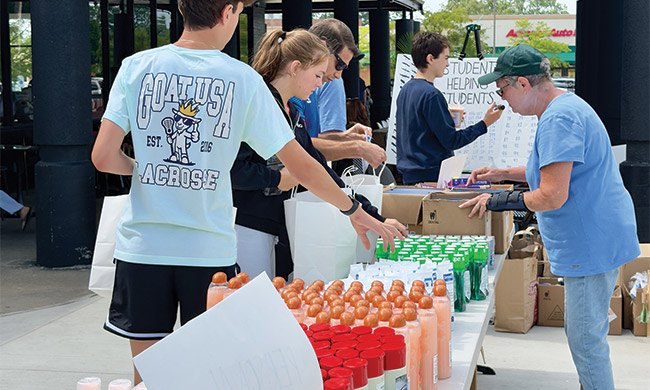
(Feature Impact) Communities are strengthened every day by local organizations working to address challenges close to home, whether that’s helping families access food, supporting students, expanding opportunity or providing essential resources to those who need them most. Often operating with limited resources, these organizations are finding practical solutions that make a meaningful difference in neighborhoods and communities across the country.
Many of these efforts happen quietly, powered by people who volunteer their time, share their expertise, donate resources or simply help spread awareness of causes they care about.
For individuals looking to make a difference where they live, community involvement doesn’t have to start with a large commitment. Consider these five options to get involved.
Give Your Time
Giving your time is one of the most direct ways to support organizations serving your community. Whether it’s packing meals, mentoring young people or participating in neighborhood cleanups, volunteering allows people to contribute directly while gaining a deeper understanding of local needs.
 Share Your Skills
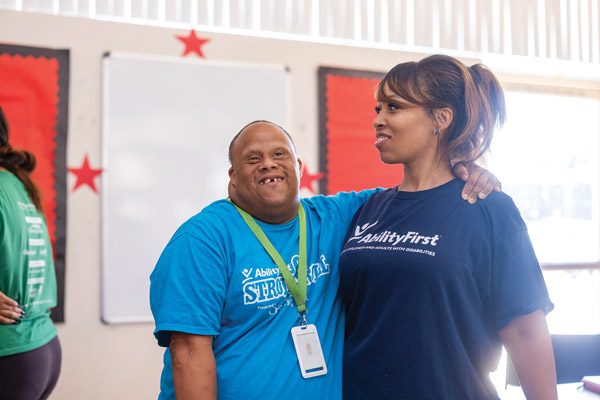
Nonprofits often need specialized skills in addition to hands-on volunteer support. Communications support, technology expertise, event planning, photography, financial guidance and other professional skills can help organizations expand their reach and strengthen their operations. Contributing the skills you’ve developed can often be just as valuable as donating time or resources.
Tap Into Your Workplace
Many employers offer opportunities to support causes that matter to their employees, such as volunteer programs, community grants or other charitable opportunities.
In communities across the country, local nonprofits can receive support through programs like the PepsiCo Foundation’s Community Impact Awards, where employees can nominate nonprofit organizations in their local communities for grant funding. Since 2022, the program has invested more than $3.7 million into organizations working on issues ranging from food access to education and community development.
“Across North America, there are organizations showing up every day for their communities, often without recognition and with limited resources,” said Monica Bauer, SVP of social impact, PepsiCo and president of the PepsiCo Foundation. “The Community Impact Awards help shine a light on organizations that are creating opportunities, solving local challenges and making a real difference in people’s lives. What makes this program special is that the recognition comes from PepsiCo associates who know these organizations firsthand and have seen their impact up close.”
This year, 100 organizations across the U.S. and Canada received $500,000 total in grants and teamed up with their respective nominating employees for volunteer activities supporting their missions, giving employees another opportunity to engage directly.
Give What You Can
Financial contributions are a valuable way to give back, but they aren’t the only option. Many organizations need non-monetary donations such as school supplies, canned goods, clothing, toys and technology. Before collecting items, check with organizations to learn what is most needed and how contributions can make the greatest impact.
Use Your Voice
One person can make a difference. When that person gets a friend or family member involved, more people can discover and support organizations doing important work. Sharing a nonprofit’s mission on social media, inviting others to volunteer or connecting people with causes you care about can help organizations reach new supporters and expand their impact.
Making a difference doesn’t require doing everything at once. Whether you contribute your time, skills, resources or advocacy, small actions can help make a big impact over time.
Across the U.S., nonprofit organizations are helping improve lives, create opportunities and respond to community needs every day. Their work is a reminder that meaningful change often starts locally with people willing to get involved.
Learn more about how individuals and organizations can help address some of the most pressing needs in their communities by visiting PepsiCo.com/about/social-impact.
SOURCE:
PepsiCo

Community
‘Give Like a Kid Again’ for Real-World Impact This Halloween
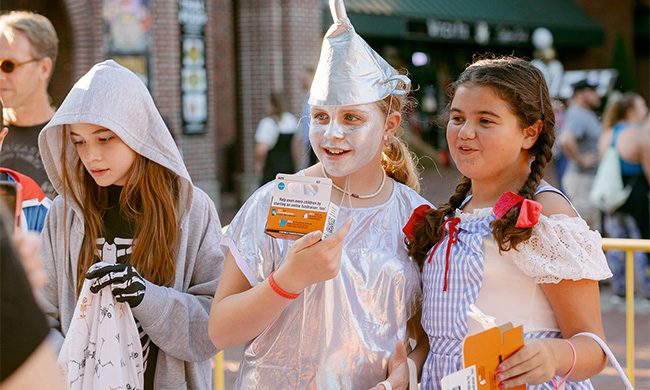
Costumes. Candy. Jack-o-lanterns glowing on porches. Halloween is filled with moments that spark children’s imaginations. This Halloween, children and families can “Give Like a Kid Again,” turning imagination into kindness and helping children around the world.

‘Give Like a Kid Again’ for Real-World Impact This Halloween
(Feature Impact)Costumes. Candy. Jack-o-lanterns glowing on porches. Halloween is filled with moments that spark children’s imaginations.
This Halloween, Trick-or-Treat for UNICEF is inviting children and families to “Give Like a Kid Again,” turning imagination into kindness and helping children around the world. For eight decades,the campaign has shown children that even the smallest act of kindness can travel farther than any front porch and shine brighter than any jack-o-lantern. As the longest-running youth engagement campaign in the United States, it has inspired generations of children to discover that when kids help kids, one Halloween tradition can turn into a lifetime of impact.
What started with just $17 in 1950, when a small group of children filled milk cartons with spare change to help children recovering from World War II, has grown into one of America’s most beloved Halloween traditions, raising nearly $200million to help the organization deliver lifesaving support for children around the world. Today, the iconic orange collection box reminds families that small acts of generosity can create lasting change.
“Each Halloween, Trick-or-Treat for UNICEF reminds us that even the smallest acts of generosity can grow into something extraordinary,” said Shelley Diamond, chief marketing officer, UNICEF USA. “For more than 75 years, this campaign has shown generations of children that you are never too young to make a difference and ‘Give Like a Kid Again’ is about passing that belief on to the next generation.”
Beyond supporting programs in more than 190 countries and territories, donations strengthen the organization’s global humanitarian supply network, delivering emergency essentials like therapeutic food, medicine, blankets and safe water to children impacted by conflict, disasters and disease.
- Be a mermaid and help make waves for clean water. Help provide safe water for a child for a year for $5.
- Be a vampire and help scare away preventable diseases. World Polio Day, just a week before Halloween, provides an opportunity to protect 200 children under age 5 from polio with a $43 donation.
- Be a scientist and help uncover lifesaving answers. Provide 25 malaria diagnostic tests for just $8, helping children receive timely treatment.
- Be a teacher and help children write their next chapter. Provide 1,000 pencils to help children put their ideas, lessons and dreams on paper for $30.
- Be a chef and help cook up a healthier future. Over a two-month period, $10 can treat 15 children by providing 450 packets of micronutrient powder.
- Be an astronaut and help a girl reach for the stars. To helpsix girls feel confident in school, $36 can provide reusable menstrual pads.
- Be a snowman and help bundle up a child against the cold. A donation of $50 could provide a child in an emergency setting with winter clothing, including a jacket, hat, scarf, mittens, socks, winter boots, a warm sweater and warm puffball trousers.
- Be a soccer player (or referee) and help kick off playtime. Provide up to four packages of soccer balls for a child-friendly space for $25 to help kids just be kids again.
This October, everyone can “Give Like a Kid Again” through the iconic orange collection box, online fundraising and family-friendly activities. Visit unicefusa.org/TOT2026 to join the tradition and help make a difference for children around the world.
SOURCE:
UNICEF
📰 Enjoying STM Daily News? Join the conversation!
💬 Leave a comment, share your thoughts, and subscribe to our newsletter for the latest stories, updates, and “News You Can Use This Moment!” delivered to your inbox.
Stay connected with STM Daily News!
Community
PenFed Foundation Raises Over $1.2M for Veterans and Military Families at 23rd Annual Military Heroes Golf Classic
The PenFed Foundation says it raised over $1.2 million for veterans and military families at its 23rd annual Military Heroes Golf Classic.

The PenFed Foundation for Military Heroes said it raised more than $1.2 million to support veterans and military families during its 23rd annual Military Heroes Golf Classic, held Monday, Aug. 31, according to a PRNewswire release. The nonprofit, based in the Washington, D.C. region, focuses on helping veterans transition “from service to success” through programs and grants aimed at military-connected communities.
“We are deeply grateful to our partners and supporters whose generosity and dedication make this event—and the Foundation’s work—possible,” said retired Air Force Lt. Gen. Bradford J. “B.J.” Shwedo, president of the PenFed Foundation, in a statement announcing the fundraising total.
At a dinner held the night before the Golf Classic, PenFed Credit Union President/CEO and PenFed Foundation CEO James Schenck recognized Ed Cody for 25 years of service on the foundation’s board of directors. Cody also serves as chairman of the PenFed Credit Union board and was credited with helping guide initiatives including Defender’s Lodge, the Afghan Rescue and Resettlement Program, the Veteran Entrepreneur Program, and grants supporting wounded, ill, and injured service members.
The foundation said it has provided more than $55 million in financial support to veterans, active-duty service members, and military families since it was founded in 2001. It also noted that PenFed Credit Union covers salaries and administrative costs, allowing more donations to go directly to programs.
What to watch for: How the foundation allocates the new $1.2M across its veteran transition and emergency support programs—and whether it announces new grant rounds tied to entrepreneurship and resettlement work.
SOURCE PenFed Foundation
Subscribe to our newsletter STM Morning Brief!







