

Science
Saltwater flooding is a serious fire threat for EVs and other devices with lithium-ion batteries

Last Updated on March 15, 2026 by Daily News Staff
Xinyu Huang, University of South Carolina
Flooding from hurricanes Helene and Milton inflicted billions of dollars in damage across the Southeast in September and October 2024, pushing buildings off their foundations and undercutting roads and bridges. It also caused dozens of electric vehicles and other battery-powered objects, such as scooters and golf carts, to catch fire.
According to one tally, 11 electric cars and 48 lithium-ion batteries caught fire after exposure to salty floodwater from Helene. In some cases, these fires spread to homes.
When a lithium-ion battery pack bursts into flames, it releases toxic fumes, burns violently and is extremely hard to put out. Frequently, firefighters’ only option is to let it burn out by itself.
Particularly when these batteries are soaked in saltwater, they can become “ticking time bombs,” in the words of Florida State Fire Marshall Jimmy Patronis. That’s because the fire doesn’t always occur immediately when the battery is flooded. According to the National Highway Traffic Safety Administration, about 36 EVs flooded by Hurricane Ian in Florida in 2022 caught fire, including several that were being towed after the storm on flatbed trailers.
Many consumers are unaware of this risk, and lithium-ion batteries are widely used in EVs and hybrid cars, e-bikes and scooters, electric lawnmowers and cordless power tools.
I’m a mechanical engineer and am working to help solve battery safety issues for our increasingly electrified society. Here’s what all owners should know about water and the risk of battery fires: https://www.youtube.com/embed/gWkEGEbpqFc?wmode=transparent&start=10 Emergency responders handle EVs that were immersed in saltwater during Hurricane Ian in Florida in 2022, including some that ignited.
The threat of saltwater
The trigger for lithium-ion battery fires is a process called thermal runaway – a cascading sequence of heat-releasing reactions inside the battery cell.
Under normal operating conditions, the probability of a lithium-ion cell going into thermal runaway is less than 1 in 10 million. But it increases sharply if the cell is subjected to electrical, thermal or mechanical stress, such as short-circuiting, overheating or puncture.
Saltwater is a particular problem for batteries because salt dissolved in water is conductive, which means that electric current readily flows through it. Pure water is not very conductive, but the electrical conductivity of seawater can be more than a thousand times higher than that of fresh water.
All EV battery pack enclosures use gaskets to seal off their internal space from the elements outside. Typically, they have waterproof ratings of IP66 or IP67. While these ratings are high, they do not guarantee that a battery will be watertight when it is immersed for a long period of time – say, over 30 minutes.
Battery packs also have various ports to equalize pressure inside the battery and move electrical power in and out. These can be potential pathways for water to leak into the pack enclosure. Inadequate seal ratings and manufacturing defects can also enable water to find its way into the battery pack if it is immersed.
How water leads to fire
All batteries have two terminals: One is marked positive (+), and the other is marked negative (-). When the terminals are connected to a device that uses electricity to do work, such as a light bulb, chemical reactions occur inside the battery that cause electrons to flow from the negative to the positive terminal. This creates an electric current and releases the energy stored in the battery.
Electrons flow between a battery’s terminals because the chemical reactions inside the battery create different electrical potentials between the two terminals. This difference is also known as voltage. When saltwater comes into contact with metal battery terminals with different electrical potentials, the battery can short-circuit, inducing rapid corrosion and electric arcing, and generating excessive current and heat. The more conductive the liquid is that penetrates the battery pack, the higher the shorting current and rate of corrosion.
Rapid corrosion reactions within the battery pack produce hydrogen and oxygen, corroding away materials from metallic terminals on the positive side of the battery and depositing them onto the negative side. Even after the water drains away, these deposited materials can form solid shorting bridges that remain inside the battery pack, causing a delayed thermal runaway. A fire can start days after the battery is flooded.
Even a battery pack that is fully discharged isn’t necessarily safe during flooding. A lithium-ion cell, even at 0% state of charge, still has about a three-volt potential difference between its positive and negative terminals, so some current can flow between them. For a battery string with many cells in a series – a typical configuration in electric cars – residual voltage can still be high enough to drive these reactions.
Many scientists, including me and my colleagues, are working to understand the exact sequence of events that can occur in a battery pack after it is exposed to saltwater and lead to thermal runaway. We also are looking for ways to help reduce fire risks from flooded battery packs.
These could include finding better ways to seal the battery packs; using alternative, more corrosion-resistant materials for the battery terminals; and applying waterproof coatings to exposed terminals inside the battery pack.
What EV owners should know
Electric cars are still very safe to drive and own in most circumstances. However, during extreme situations like hurricanes and flooding, it is very important to keep EV battery packs from becoming submerged in water, particularly saltwater. The same is true for other products that contain lithium-ion batteries.
For EVs, this means evacuating cars out of the affected zone or parking them on high ground before flooding occurs. Smaller objects, like e-bikes and power tools, can be moved to upper floors of buildings or stored on high shelves.
If you own an EV that has been submerged in water for hours to days, particularly in saltwater, public safety experts recommend treating it as a fire hazard and placing it on open ground away from other valuable property. Do not attempt to charge or operate it. Contact the manufacturer for an inspection to assess battery damage.
Often, a flooded electric vehicle will need to be towed away for further inspection. However, since thermal runaway can occur well after submersion, the car should not be moved until it has been professionally assessed.
Xinyu Huang, Associate Professor of Mechanical Engineering, University of South Carolina
This article is republished from The Conversation under a Creative Commons license. Read the original article.
The science section of our news blog STM Daily News provides readers with captivating and up-to-date information on the latest scientific discoveries, breakthroughs, and innovations across various fields. We offer engaging and accessible content, ensuring that readers with different levels of scientific knowledge can stay informed. Whether it’s exploring advancements in medicine, astronomy, technology, or environmental sciences, our science section strives to shed light on the intriguing world of scientific exploration and its profound impact on our daily lives. From thought-provoking articles to informative interviews with experts in the field, STM Daily News Science offers a harmonious blend of factual reporting, analysis, and exploration, making it a go-to source for science enthusiasts and curious minds alike. https://stmdailynews.com/category/science/


health and wellness
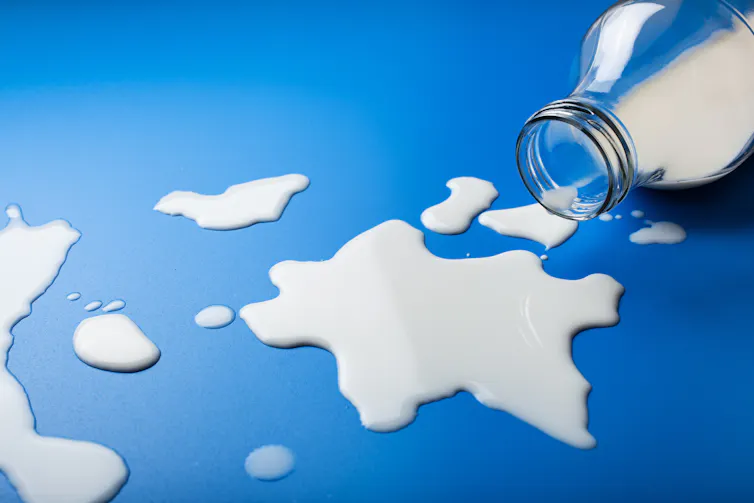
Lactose intolerance is actually the human norm – but racism, the US government and business interests have made it into a condition
Lactose intolerance is the global human norm, but Western dietary standards, government policies and commercial interests helped frame it as a medical deficiency.
Hilary Smith, University of Denver
Lactose intolerance makes drinking milk or eating ice cream a literal pain. For some people, eating a dairy treat can lead to bloating, nausea and diarrhea. You might’ve experienced its effects yourself. If so, you may think of lactose intolerance as a defect rather than the norm.
But did you know that most people in the world today are lactose intolerant – and that the condition itself was invented in the 1960s?
“Surely you mean discovered, not invented,” I hear you saying. I don’t. As a historian who has traced the origins of nutrition-science ideas, I have chosen the word “invented” on purpose.
Inventing lactose intolerance
Variations in people’s ability to digest lactose first came to scientists’ attention after American dairy producers found a way to rid themselves of a postwar milk surplus. To offload what they couldn’t sell, they looked to the government to intervene. And it did, buying the excess and embedding it in school lunches and other places with publicly funded meals.
Suddenly, many people who had not habitually drunk milk were consuming it regularly, including not only some Americans but also people overseas. Part of that same milk surplus found its way into school lunches in places such as Japan and Taiwan in the 1950s as the American government began to sell milk to allies during the Cold War.
Many of the groups drinking milk regularly for the first time did not like it. In fact, it made them feel sick. Intrigued, scientists set up experiments to figure out why. In a 1966 study comparing how Black and white people incarcerated in Baltimore metabolized lactose, researchers found that Black participants had lower levels of lactase – the enzyme that breaks down lactose – in their guts.
To the white scientists conducting this study, the trouble that the Black prisoners had digesting milk looked like an “inborn error of metabolism.” They assumed that the normal human state was lactose tolerance and that the lactose intolerant had inherited a genetic mutation.
It was only after years more work with research participants of many races that experts realized that, as one National Institutes of Health official put it in 1981, “lactose intolerance is a normal physiological condition, shared by every adult animal except for certain ethnic and racial groups in man.” People of northern European descent, it turned out, were the weird ones. It was their ancestors who had passed down a genetic mutation – one that made them able to digest milk after infancy.
In short, what scientists discovered in the 1960s was that different bodies process milk differently. What they invented was the idea that lactose intolerance is a defect. Accepting that framing would mean nearly two-thirds of the human population – the estimated prevalence of lactose intolerance worldwide – is defective.
Instead of acknowledging that dairy-free diets can be healthy, people innovated ways to overcome this supposed disability so everyone could consume more.
Nutritional imperialism
Lactose intolerance is one example of what I call nutritional imperialism: a way of thinking that treats white diets as the norm and everyone else’s as an aberration.
Nutritional imperialism was common in the 20th century, when scientists thought that not only milk-rich but also meat-heavy diets were best; they considered diets outside of the United States and Europe too vegetarian. Some also argued that wheat flour, not rice, ought to be the universal staple.
The same bias applied to bodies. Besides faulty lactose digestion, nonwhite bodies were accused of other failures, too, such as aldehyde dehydrogenase deficiency, an inability to digest alcohol quickly. The less technical term for this may be more familiar: Asian flush.
Such differences might have been thought of as variety, just another way of being human. Instead, each became a deficiency.
Many people today have inherited and perpetuated this way of thinking without knowing it, including those who are deemed deficient by it. In 1959, the director of Japan’s nutrition bureau declared that “rice-eating peoples” such as the Japanese were “resigned and passive” and could correct this by imitating Western diets and switching to wheat.
Today, the most prominent scientist promoting the idea that Asian flush is a disease is a geneticist of Taiwanese descent who started a research consortium to study “the most common human enzymopathy in the world.”
The Chinese Nutrition Society placed a tall glass of milk next to its 2022 Food Guide Plate – never mind estimates that the vast majority of Han Chinese, the largest ethnic group in China and worldwide, are lactose intolerant.
Turning sickness back into difference
Science that pathologizes difference helps racism persist.
In recent years, white supremacists have embraced the concept of lactose intolerance as a distinguishing debility of nonwhite people. Social media users have copied and pasted a map of the geographic distribution of lactose tolerance originally published in the scientific journal Nature into racist chat threads on the online discussion forum 4chan.
In 2017, internet trolls disrupted an anti-racist art installation with neo-Nazi chants and messily downed jugs of milk to accentuate their white identity.
Turning a lactose-digestion difference into a deficiency has done more to reinforce narratives of racial hierarchy than to improve public health. So here’s a suggestion: If you enjoy eating dairy, keep doing it; if you don’t, don’t – and know that there is nothing wrong with you.
Hilary Smith, Professor of History, University of Denver
This article is republished from The Conversation under a Creative Commons license. Read the original article.
📰 Enjoying STM Daily News? Join the conversation!
💬 Leave a comment, share your thoughts, and subscribe to our newsletter for the latest stories, updates, and “News You Can Use This Moment!” delivered to your inbox.
Stay connected with STM Daily News!
News
FAA Certifies Boeing 737-7: What It Means for Airlines and the 737 MAX Program
The FAA has certified Boeing’s new 737-7, clearing the smallest 737 MAX variant for service as Boeing and Southwest prepare for first deliveries.


The U.S. Federal Aviation Administration has certified Boeing’s new 737-7, granting the company an amended type certificate that clears the smallest member of the 737 MAX family for commercial service. The milestone closes a multi-year certification effort and puts the focus on execution: Boeing and launch customer Southwest Airlines say preparations are underway to support first deliveries.
For STM Daily News readers, the headline isn’t just “another plane gets approved.” It’s a signal that Boeing has now cleared a key MAX variant designed for long-range flexibility in a smaller footprint—an aircraft type airlines can use to open or defend routes where demand is strong, but not strong enough to justify a larger narrowbody.
What FAA certification means
An amended type certificate means the FAA has approved the 737-7’s design as compliant with commercial aviation regulations. In practical terms, certification allows airlines to place the aircraft into revenue service once deliveries begin and operator-specific steps—training, manuals, maintenance programs, and entry-into-service planning—are completed.
Boeing also said the FAA updated Boeing Production Certificate No. 700 (PC 700) to include the 737-7, supporting production and delivery activities.
Why the 737-7 matters in the MAX lineup
Boeing positions the 737-7 as the smallest and longest-range member of the 737 MAX family. The company says it typically seats 135 to 160 passengers in a two-class configuration and offers a range of up to 3,800 nautical miles (7,040 km). That combination matters because it gives airlines more options to fly longer “thin” routes—markets where frequency and reach matter more than packing in additional seats.
Boeing also highlights performance for operations out of high-altitude airports and in hot climates, where takeoff performance and payload-range tradeoffs can shape fleet decisions.
Efficiency claims: fuel, emissions, and noise
Boeing says the 737-7, like other 737 MAX jets, reduces fuel use and CO2 emissions by 20% and cuts the noise footprint by 50% compared to the airplanes it typically replaces. For airlines, those improvements typically show up in two ways:
- Route economics: lower fuel burn can improve margins on longer sectors and reduce exposure to fuel-price swings.
- Operational constraints: quieter aircraft can help with airport noise requirements and community pressure, while lower emissions support sustainability targets.
Inside the certification effort
Boeing said the certification program began in 2018 and included more than 1,000 hours of flight and ground testing, extensive system safety analysis, and human factors reviews. The company also noted an updated engine anti-ice system to address a potential condition discovered during flight testing.
Boeing Commercial Airplanes President and CEO Stephanie Pope called the certification “important” validation of the airplane’s design and the work of the MAX development team. Mike Sinnett, senior vice president of Product Strategy, Product Development and Development Programs, said Boeing held regular discussions with the FAA and that the process has sharpened the company’s understanding of current regulatory requirements—knowledge Boeing expects will accelerate future development with a renewed emphasis on human factors, safety, and quality.
What to watch next
With certification complete, the next phase is about delivery timing and real-world deployment.
- First deliveries to Southwest: Boeing and Southwest are preparing for delivery of the first airplane, including updates to final configuration.
- Production stability: certification removes a major hurdle, but supply chain health and production cadence will determine how quickly the 737-7 shows up in airline schedules.
- The 737-10 timeline: Boeing reiterated it is working to certify the 737-10 this year, keeping attention on how quickly the final MAX variant clears regulatory review.
The bigger MAX picture
Boeing said the 737 MAX family order book stands at more than 7,200 airplanes, with more than 2,300 delivered through the end of June 2026. The 737-7’s certification adds another deliverable product to that portfolio—one aimed at airlines that want long range without stepping up to a larger gauge.
Bottom line
FAA certification of the 737-7 is a meaningful milestone for Boeing and for airlines looking for a smaller narrowbody with long-range capability. The real test now is operational: turning certification into on-time deliveries and reliable entry into service—while the industry watches Boeing’s push to certify the 737-10.
Related Links
- Boeing 737 MAX family overview (manufacturer background/specs): https://www.boeing.com/commercial/737max/
- FAA Aircraft Certification (how type certification works): https://www.faa.gov/aircraft/air_cert/
- FAA Airworthiness Directives (regulatory actions database): https://www.faa.gov/regulations_policies/airworthiness_directives
- Southwest Airlines newsroom (launch customer context / fleet updates): https://www.swamedia.com/
- Boeing Commercial Airplanes newsroom (for follow-ups and official updates): https://boeing.mediaroom.com/news-releases?item=130821
📰 Enjoying STM Daily News? Join the conversation!
💬 Leave a comment, share your thoughts, and subscribe to our newsletter for the latest stories, updates, and “News You Can Use This Moment!” delivered to your inbox.
Stay connected with STM Daily News!
Source:
Boeing (PRNewswire), Aug. 3, 2026 — “U.S. FAA certifies new Boeing 737-7 airplane.”
Nature
What in the Heck Is a Sweat Bee? Turns Out, My Wife Wasn’t Making It Up
My wife Rebecca said she thought a sweat bee stung her. I thought she was making it up. Turns out, sweat bees are very real—and their strange name actually makes perfect sense.


It started with a conversation with my wife, Rebecca.
She mentioned that she thought she’d been stung by something called a “sweat bee.”
My immediate reaction was basically:
“What in the heck is a sweat bee?”
I’ll admit it. For a moment, I thought she was making the whole thing up. 😂
A sweat bee? Really?
It sounded like one of those names somebody invents when they don’t know what actually stung them.
“It wasn’t a regular bee. It was a… uh… sweat bee!”
So naturally, I asked ChatGPT the same question: What in the heck is a sweat bee?
Well, Rebecca gets this round.
Sweat bees are absolutely real.
And Yes, They’re Interested in Your Sweat
Sweat bees belong primarily to the Halictidae family, a large group of generally small bees found around the world.
Some are rather ordinary-looking little insects, while others are surprisingly flashy, sporting metallic shades of green, blue, bronze or gold.
But here’s where they earned that wonderfully unfortunate name.
Some sweat bees are attracted to human perspiration.
They’re not after you because they’re angry, and they’re certainly not tiny vampire bees. They’re interested in the salt and minerals in your sweat.
In other words, after you’ve been outside working, gardening, exercising or simply trying to survive a hot summer afternoon, a sweat bee may look at you and think:
“Hey! Free electrolytes!”
Wait…They Can Sting Too?
Unfortunately for Rebecca, there’s another part of her story that checks out.
Female sweat bees can sting.
They’re generally not aggressive and aren’t flying around looking for people to attack. But if one gets trapped against your skin, squeezed or swatted, it may defend itself.
Their sting is generally considered relatively mild compared with those of many other bees and wasps—but “relatively mild” probably isn’t much consolation when you’re the person who just got stung.
So, Rebecca, I officially withdraw my skepticism.
Mostly.
Don’t Declare War on Them
As annoying as having a tiny bee land on your sweaty arm might be, sweat bees are actually beneficial insects.
They’re important pollinators, visiting wildflowers, garden plants and agricultural crops and carrying pollen from flower to flower.
So if one lands on you, gently brushing or blowing it away is probably a better idea than swatting it against your skin.
And that’s today’s unexpected nature lesson.
Sweat bees are real.
They really are attracted to sweat.
The females really can sting.
And, perhaps most importantly…
My wife was right.
There. I said it.
I’m sure I’ll never hear the end of this one. 😂
Related Links
- University of Arizona Cooperative Extension — Arizona Bee Identification Guide — A useful Arizona-focused guide that includes sweat bees and explains their appearance, size, nesting behavior and attraction to salt in perspiration.
- USDA Natural Resources Conservation Service — Native Bees and Their Favorite Flowers — More information about native pollinators and the important role sweat bees play around wildflowers.
- USDA Forest Service — Bee Basics — A broader guide to North American bees, including the colorful metallic members of the sweat bee family.
- Smithsonian National Museum of Natural History — Sweat Bee — See an actual female sweat bee specimen (Augochlorella aurata) and its scientific classification.
📰 Enjoying STM Daily News? Join the conversation!
💬 Leave a comment, share your thoughts, and subscribe to our newsletter for the latest stories, updates, and “News You Can Use This Moment!” delivered to your inbox.
Stay connected with STM Daily News!






