

The Bridge
3 innovative ways to help countries hit by climate disasters, beyond a loss and damage fund

Erin Coughlan de Perez, Tufts University
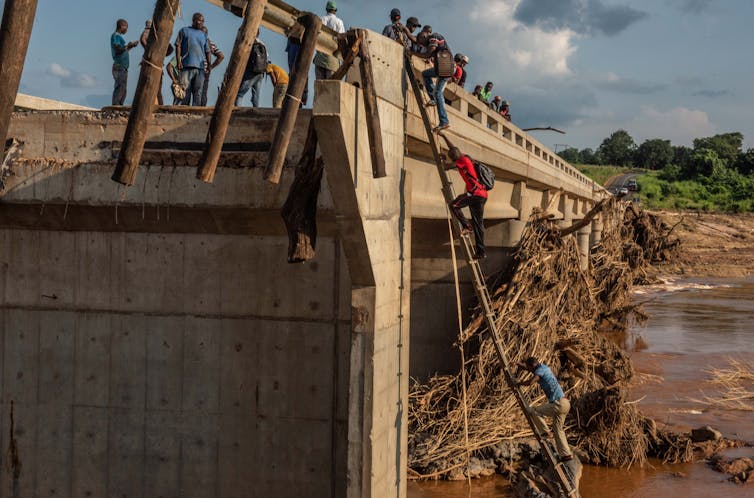
These days, it’s hard to escape news stories discussing how climate change is contributing to extreme weather disasters, including the recent U.S. hurricanes. Aid agencies are increasingly worried about the widespread damage.
A growing question as these disasters worsen in a warming world is how to pay for recoveries, particularly in poorer countries that have contributed the least to climate change.
I am a climate scientist who researches disasters, and I work with disaster managers on solutions to deal with the increasing risk of extreme events. The usual sources of disaster aid funding haven’t come close to meeting the need in hard-hit countries in recent years. So, groups are developing new ways to meet the need more effectively. In some cases, they are getting aid to countries before the damage occurs.
Disaster aid funds aren’t meeting growing need
Countries have a few ways that they typically send money and aid to other countries that need help when disasters hit. They can send direct government-to-government aid, contribute to aid coordinated by the United Nations, or support disaster response efforts by groups like the International Red Cross and Red Crescent Movement.
However, the support from these systems is almost never enough.
In 2023, the amount of humanitarian funding through the U.N. was about US$22 billion. The U.N. Office for the Coordination of Humanitarian Affairs estimated that countries hit hard by disasters actually needed about $57 billion in U.N. humanitarian aid. This does not even include the costs borne directly by disaster-affected people and their governments.
https://datawrapper.dwcdn.net/LO7Uw/1
To help address damages specifically from climate change, the global community agreed at the U.N. climate conference in 2022 to create a new method – a Loss and Damage Fund. Loss and damage is generally defined as consequences of climate change that go beyond what people are able to adapt to.
The goal of the fund is for countries that historically have done the most to cause climate change to provide funding to other countries that did little to cause it yet are experiencing increasing climate-related disasters.
https://datawrapper.dwcdn.net/S1jUD/1
So far, however, the Loss and Damage Fund is tiny compared to the cost of climate-related disasters. As of late September 2024, total pledges to the Loss and Damage Fund were about US$700 million. According to one estimate, the costs directly attributable to climate change, including loss of life, are over $100 billion per year.
One goal of the 2024 U.N. climate conference, underway Nov. 11-22 in Azerbaijan, is to increase those contributions.
Sending aid before the disasters hit
In response to these growing needs, the disaster management community is getting creative about how it helps countries finance disaster risk reduction and response.
Traditionally, humanitarian funding arrives after a disaster happens, when photos and videos of the horrible event encourage governments to contribute financial support and a needs assessment has been completed.
However, with today’s technology, it’s possible to forecast many climate-related disasters before they happen, and there is no reason for the humanitarian system to wait to respond until after the disaster happens.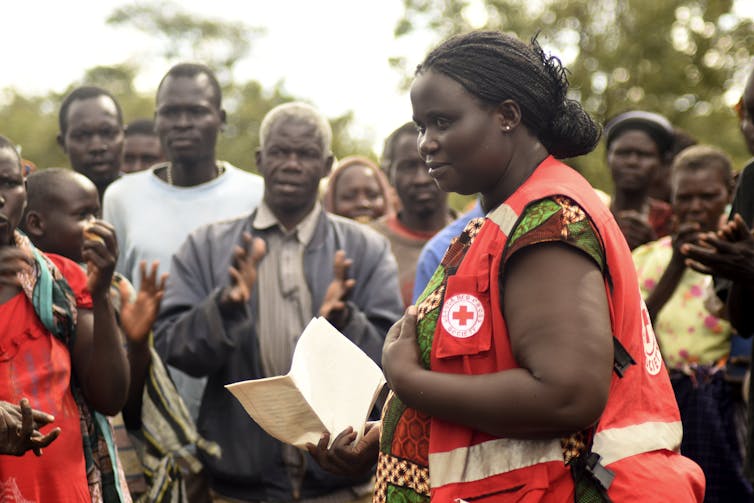
A global network of aid groups and researchers I work with has been developing anticipatory action systems designed to make funding available to countries when an extreme event is forecast but before the disaster hits.
This can allow countries to provide cash for people to use for evacuation when a flood is forecast, open extra medical services when a heat wave is expected, or distribute drought-tolerant seeds when a drought is forecast, for example.
Insurance that pays out early to avoid harm
Groups are also developing novel forms of insurance that can provide predictable finance for these changing catastrophes.
Traditional insurance can be expensive and slow to assess individual claims. One solution is “index insurance” that pays out based on drought information without needing to wait to assess the actual losses.
African nations created an anticipatory drought insurance product that can pay out when the drought starts happening, without waiting for the end of the season to come and the crops to fail. This could, in theory, allow farmers to replant with a drought-resilient crop in time to avoid a failed harvest.
Without insurance, disaster-affected people usually bear the costs of disaster. Therefore, experts recommend insurance as a critical part of an overall strategy for climate change adaptation.
Boosting social protection systems
Another promising area of innovation is the design of social services that can scale up when needed for extreme weather events.
These are called climate-smart social protection systems. For example, existing programs that provide food for low-income families can be scaled up during and after a drought to ensure that people have sufficient and nutritious food during the climate shock.
This requires government coordination among the variety of social services offered, and it offers promise to support vulnerable communities in the face of the rising number of extreme weather events.
Future of the Loss and Damage Fund
To complement these innovative disaster risk finance mechanisms, aid from other countries is crucial, and the Loss and Damage Fund is a key part of that.
There are still many areas of debate around the U.N.’s Loss and Damage Fund and what counts as true financial support. There have been discussions over whether investing in a country’s resilience to future disasters counts, whether existing financial systems should be used to channel finance to countries in need, and what damages are truly beyond the limits to adaptation and qualify.
The new Loss and Damage Fund is only of a part of a mosaic of initiatives that is seeking to address climate disasters.
These novel mechanisms to finance disaster risk are exciting, but they ultimately need to be created in conjunction with investments in adaptation and resilience so that extreme weather events cause less damage when they happen. Communities will need to plant different crops, build flood drainage systems and live in adaptive buildings. Managing climate risk requires a variety of innovative solutions before, during and after disaster events.
Erin Coughlan de Perez, Professor of Climate Risk Management, Tufts University
This article is republished from The Conversation under a Creative Commons license. Read the original article.
The Bridge is a section of the STM Daily News Blog meant for diversity, offering real news stories about bona fide community efforts to perpetuate a greater good. The purpose of The Bridge is to connect the divides that separate us, fostering understanding and empathy among different groups. By highlighting positive initiatives and inspirational actions, The Bridge aims to create a sense of unity and shared purpose. This section brings to light stories of individuals and organizations working tirelessly to promote inclusivity, equality, and mutual respect. Through these narratives, readers are encouraged to appreciate the richness of diverse perspectives and to participate actively in building stronger, more cohesive communities.
https://stmdailynews.com/the-bridge

Community
Kia and its Dealers Expand Community Giving Nationwide
Expand Community Giving Nationwide: Kia announced its fifth annual “Accelerate the Good” dealer match program, which supports St. Jude Children’s Research Hospital. The program also donates to other organizations that make a positive impact in their communities.

Kia and its Dealers Expand Community Giving Nationwide
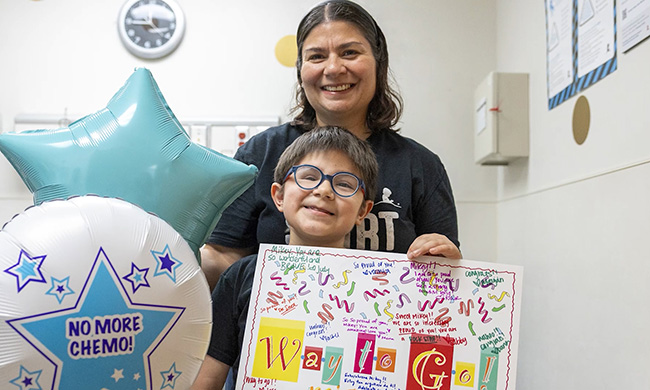
(Feature Impact) Families often arrive at St. Jude Children’s Research Hospital with a tough road ahead. Their child has been diagnosed with cancer, and they’re navigating a complex treatment plan. One thing that families don’t have to worry about is how they’ll pay for this upheaval to their lives. In 2026, Kia donated $2 million to St. Jude to help ensure families don’t receive a bill for medical costs, housing or food during treatment.
Watch this video to learn more
Kia announced its fifth annual “Accelerate the Good” dealer match program, which supports St. Jude Children’s Research Hospital. The program also donates to other organizations that make a positive impact in their communities.
Donations from a network of nearly 800 dealers support organizations such as No Kid Hungry, Toys for Tots, Operation Homefront and several other groups dedicated to children’s health, hunger relief, disaster response and veterans’ well-being. Kia employees also lead volunteer efforts to benefit community pantries, beach cleanups and clothing drives.
“The continued success of our ‘Accelerate the Good’ initiative reflects the shared commitment of Kia and our nationwide retailer network to invest in the communities we serve,” said SeungKyu (Sean) Yoon, president and CEO of Kia North America and Kia America. “Together, we are proud to support organizations that deliver lifesaving care, strengthen families, fight hunger and create meaningful opportunities for people across the country.”
Ahead of September’s Childhood Cancer Awareness Month, Kia and its dealers have reached an important milestone: more than $7.7 million donated to St. Jude Children’s Hospital in four years. The donations are part of Kia’s broader community giving initiatives.
To learn more about how Kia is accelerating good in their communities, visit kia.com.

SOURCE:
Community
Zum Begins 2026–27 School Year With Expanded Student Transportation Network
Zum is launching the 2026–27 school year with expanded school bus operations in Fresno, Los Angeles and other communities, bringing real-time tracking and modern transportation technology to students and families.

New partnerships in Fresno and Kansas join ongoing operations in Omaha, St. Louis, Santa Barbara and Los Angeles
As millions of students return to classrooms, transportation company Zūm is beginning the 2026–27 school year with new district partnerships, expanded technology deployments and thousands of drivers preparing for what the company calls “the most important commute in America.”
The Redwood City, California-based student mobility company announced that its teams have completed months of driver training, route validation and operational planning ahead of the new academic year.
“There is nothing quite like the first day of school at Zum,” founder and CEO Ritu Narayan said in the company’s announcement. “You see drivers arriving before sunrise, teams making final preparations and buses rolling out of yards across the country—all united around one purpose: getting students safely and reliably to school.”
New buses roll out in Fresno
One of Zūm’s largest new launches is in California’s Fresno Unified School District. According to the company, 168 buses were placed into service just two weeks after its local team moved into a new transportation yard.
The district is also introducing the Zūm Parent App, which allows families to track buses in real time, receive arrival alerts, view scheduled rides and receive notifications when a child boards or exits a bus. Registered students will receive bus cards connected to the transportation system, according to Fresno Unified.
The rollout is part of a broader change in how Fresno Unified manages student transportation. Routes and stops will continue to be evaluated using registration information, actual ridership and family feedback, the district says. Beginning September 28, registered students will generally be required to show a bus pass before boarding. Fresno Unified’s transportation page provides registration instructions and assistance for families.
Technology comes to LAUSD’s in-house fleet
In Los Angeles, Zūm says its CMX technology has been deployed across the Los Angeles Unified School District’s internally operated bus fleet.
The platform is designed to connect routing, dispatch, drivers, schools, transportation officials and families through one operating system. Its tools include real-time vehicle visibility, route planning, operational coordination and family communications.
Rather than replacing the district’s in-house drivers, the Los Angeles deployment focuses on providing the technology used to coordinate district-operated buses.
New partnership in Kansas
Zūm also began a new partnership with the Shawnee Mission School District in Kansas. District leaders, drivers, monitors and school employees marked the start of the program with a launch celebration.
The company said Shawnee Mission’s transition is intended to give the district a more modern and technology-supported approach to student transportation.
Meanwhile, Zūm is returning for a third school year in Omaha and Santa Barbara. Its St. Louis operation is entering its second year.
Drivers remain at the center
Although technology plays a growing role in school transportation, Zūm emphasized that drivers remain essential to the daily experience of students and their families.
“Back to school is when months of preparation come to life,” said Liz Sanchez, Zūm’s executive vice president of student mobility. “Our teams spend months hiring and training drivers, validating routes and working alongside our district partners to prepare.”
Drivers often serve as the first school-related adults students see in the morning and the last they see before returning home. Their work can also determine whether students arrive safely and on time—especially in communities where families have limited transportation choices.
A changing school-bus experience
School transportation has traditionally depended on separate systems for scheduling, dispatching, vehicle tracking and communicating with parents. Zūm CMX is designed to bring those functions together and give school districts a clearer view of their daily operations.
For families, the most visible change may be access to real-time bus locations and arrival notifications. These tools can reduce some of the uncertainty associated with late buses, route changes and missed pickups.
Zūm reports that its technology and transportation services now support more than 6,500 schools across 19 states. As the company expands, the 2026–27 school year will test how effectively its technology, drivers and district partnerships can translate into dependable daily service.
For students, however, the goal remains straightforward: a safe ride to school, a reliable trip home and one less obstacle between them and their education.
This article is based primarily on information provided in an August 21, 2026, Zūm press release. Statements about the company’s national reach, fleet deployments and technology are attributed to Zūm unless independently noted.
Source: Zūm official website
Related links:
- Fresno Unified: Zūm Parent App
- Fresno Unified: New Transportation Model
- Fresno Unified: Bus Routes
- Fresno Unified: Back-to-School Resources
📰 Enjoying STM Daily News? Join the conversation!
💬 Leave a comment, share your thoughts, and subscribe to our newsletter for the latest stories, updates, and “News You Can Use This Moment!” delivered to your inbox.
Stay connected with STM Daily News!

Community
ABCs for School Zone Safety: Tips for Drivers, Pedestrians and Bicyclists
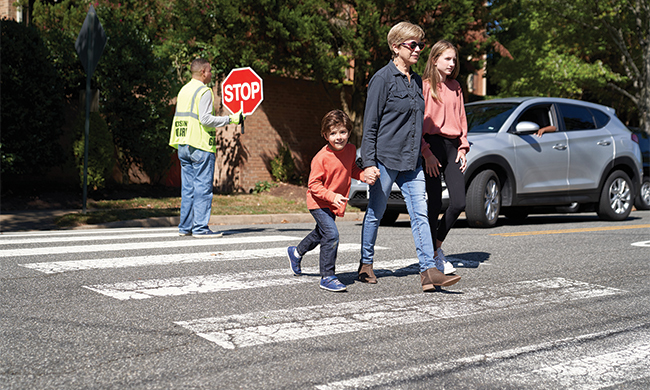
School Zone Safety: A new school year means there’s more traffic around school campuses. Between dropoffs and pickups, children riding bicycles, walking to school and all the shuttling between sports practices and other extracurricular activities, this season is a reminder to make every trip to and from school a safe one.
ABCs for School Zone Safety: Tips for Drivers, Pedestrians and Bicyclists
(Feature Impact) A new school year means there’s more traffic around school campuses. Between dropoffs and pickups, children riding bicycles, walking to school and all the shuttling between sports practices and other extracurricular activities, this season is a reminder to make every trip to and from school a safe one.
To make sure no parent worries about their child getting to school safely, the California Office of Traffic Safety (OTS) and Caltrans are encouraging drivers, pedestrians and bicyclists to remember their “ABCs” on every trip: stay Alert for Bicyclists and watch for and yield to Children crossing the street.
With students in school and traffic patterns changing, consider these tips so students arrive to and from class safely:
Drivers
Because children outside of vehicles do not have the same protections as drivers and passengers, drivers have an outsized role to protect people walking, biking and rolling.
- Take your time and be patient.
- Always follow the speed limit.
- Use extra caution at crosswalks and intersections, especially if you notice children nearby.
- Don’t drive distracted – even a quick glance at your phone can have tragic consequences.
- Never drive while impaired.
- Adjust your driving to the conditions and use extra caution in rain, fog and darkness.
- If you see a bicyclist ahead, wait until it’s safe to pass and give them at least 3 feet of space when you do.
Pedestrians
Pedestrians have an important role in their own safety, particularly in school zones and crosswalks where children and other people may be present.
- Use sidewalks when available. If there are no sidewalks, walk facing traffic so you can see drivers and they can see you.
- Avoid crossing outside of crosswalks. If there is a signalized crosswalk or marked crosswalk, use it.
- Before crossing the street, look both ways. If there are any stopped or turning cars, try to make eye contact with the drivers before crossing so you know they see you.
- If you’re walking after dark or when visibility is poor, make yourself visible by wearing something bright or reflective and shining a light.
- Stay alert – don’t wear headphones or use your phone while crossing the street or walking across a busy road.
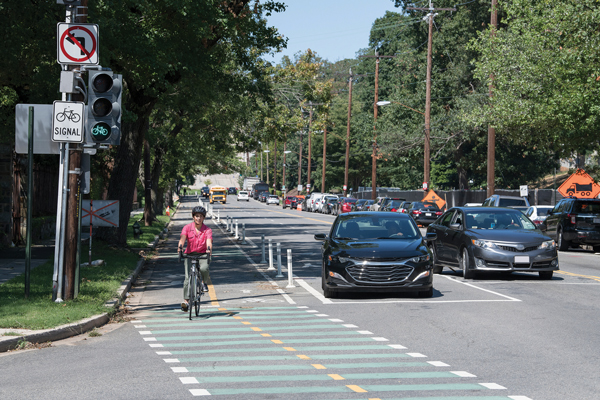 Bicyclists
Bicyclists can help protect themselves by staying alert and visible, especially in areas where traffic, pedestrians and young students may be present.
- When possible, plan your route along bike paths or roads with dedicated bike lanes away from vehicle traffic.
- Equip your bicycle with lights and reflectors to be more visible to drivers and pedestrians.
- Wear a properly fitted helmet and bright clothing.
- Learn cyclist hand signals to communicate when you’re turning, slowing or stopping.
- Stay aware of drivers and always yield to pedestrians.
To learn more and join the movement, visit GoSafelyCA.org.
E-Bike Safety Tips
With more young people using e-bikes than ever before, it’s important that riders and their parents or guardians understand the risks involved and make smart, safe choices.
Since e-bikes can travel at faster speeds than traditional bicycles, they pose greater risk for serious injury or death in the event of a crash. Class 1 and 2 e-bikes can both travel at up to 20 mph unassisted, while Class 3 e-bikes can go as fast as 28 mph unassisted.
E-bike rules vary based on the top unassisted speed, but parents and guardians should follow these tips for e-bikes:
- Many local ordinances and state laws restrict e-bike use for minors or require special licensing.
- Helmets are required for riders under age 18 for Class 1-2 e-bikes and all riders on Class 3 e-bikes, regardless of age.
- You must be 16 years or older to ride a Class 3 e-bike.
- Never ride e-bikes that don’t have pedals as they could be considered e-motos and not legally permitted on roads.
- Ride in bike lanes or on legal paths, avoiding roads with traffic when possible.
- Be as predictable as possible and use caution when making turns, crossing streets or riding in conditions with poor visibility.
E-bike rules may vary by state and regionally. Contact local law enforcement regarding local laws.

SOURCE:
📰 Enjoying STM Daily News? Join the conversation!
💬 Leave a comment, share your thoughts, and subscribe to our newsletter for the latest stories, updates, and “News You Can Use This Moment!” delivered to your inbox.
Stay connected with STM Daily News!





