

Consumer Corner
Retailers that make it harder to return stuff face backlash from their customers


Huseyn Abdulla, University of Tennessee
In 2018, L.L. Bean ended its century-old “lifetime” return policy, limiting returns to one year after purchase and requiring receipts. The demise of this popular policy sparked backlash, with several customers filing lawsuits.
It also inspired my team of operations management researchers to study how customers respond when retailers make their return policies more strict. Our key finding: Whether they often or rarely return products they’ve purchased, consumers object – unless those retailers explain why.
I work with a group of researchers examining product return policies and how they affect consumers and retailers.
As we explained in an article published in the Journal of Operations Management, we designed experiments to study whether and why return policy restrictions irk customers. We also wanted to understand what retailers can do to minimize backlash after making it harder for customers to return stuff.
We conducted three experiments in which we presented scenarios to 1,500 U.S. consumers who played the role of loyal customers of a fictional retailer. We examined their reactions to the fictional retailer’s return policy restrictions, such as charging a 15% restocking fee and limiting open-ended return windows to 365, 180 and 30 days.
Participants became less willing to buy anything from the fictional retailer after it restricted its long-standing lenient return policy. They also said they would become less willing to recommend the retailer to others.
This occurred because the customers began to distrust the retailer and its ability to offer a high-quality service. The backlash was stronger when the restriction was more severe. Even those consumers who said they usually don’t return any products often reacted negatively.
When the fictional retailer announced its new, harsher return policy using official communication channels and provided a rationale, there was less backlash. Consumers found the changes more justified if the retailer highlighted increased “return abuse,” in which customers return products they’ve already used, or the high cost of processing returns.
You might presume that making it harder and more costly to return stuff could drive some shoppers away. Our research shows that the concern is valid and explains why. It also shows how communicating return policy changes directly with customers can help prevent or reduce backlash against retailers.
Why it matters
Americans returned products worth an estimated US$890 billion to retailers in 2024. Processing a single item typically costs $21 to $46. Most of this merchandise ends up in landfills.
The rise of e-commerce and other technological changes have contributed to this trend. Another factor is the ease with which consumers may return stuff long after making a purchase and get a full refund.
Many other retailers besides L.L. Bean have done away with their long-standing lenient return policies. Over the past decade, for example, Macy’s, a department store chain, and Kohl’s, a big-box clothing store chain, have shortened the time frames for returns.
Macy’s restricted its open-ended return window to one year in 2016, further winnowed it to 180 days in 2017, then to 90 days in 2019. It then stopped accepting returns after 30 days in 2023. Kohl’s didn’t have any time limit on returns it would accept until 2019. Then it imposed a 180-day limit. Others, such as fast-fashion giants Zara and H&M, now charge their customers fees when they return merchandise.
However, research shows that customers value no-questions-asked return policies and see them as a sign of high-quality service. And when these arrangements become the industry standard, customers can get angry if retailers fail to meet it.
Interestingly, most retailers that restricted their policies didn’t tell customers directly. Instead, they quietly updated the new policies on websites, store displays and receipts. Although not drawing attention to bad news might appear prudent – as most customers wouldn’t notice the changes that way – dozens of threads on Reddit about these changes suggest that this isn’t always true.
What still isn’t known
We focused on restrictions on refunds and how long after a purchase customers could return merchandise. Other restrictions, such as retailers making heavily discounted items ineligible for returns, could also be worth investigating.
The Research Brief is a short take about interesting academic work.
Huseyn Abdulla, Assistant Professor of Supply Chain Management, University of Tennessee
This article is republished from The Conversation under a Creative Commons license. Read the original article.
Welcome to the Consumer Corner section of STM Daily News, your ultimate destination for savvy shopping and informed decision-making! Dive into a treasure trove of insights and reviews covering everything from the hottest toys that spark joy in your little ones to the latest electronic gadgets that simplify your life. Explore our comprehensive guides on stylish home furnishings, discover smart tips for buying a home or enhancing your living space with creative improvement ideas, and get the lowdown on the best cars through our detailed auto reviews. Whether you’re making a major purchase or simply seeking inspiration, the Consumer Corner is here to empower you every step of the way—unlock the keys to becoming a smarter consumer today!

Health
5 Babyproofing Tips for Baby Safety Month
Babyproofing is about anticipating those discoveries before little ones make them. In honor of National Baby Safety Month, consider these tips you can use to make your home safer all year round.


5 Babyproofing Tips for Baby Safety Month
(Feature Impact) Outsmarting a baby can be harder than it sounds – especially when it comes to transforming your home into a safe place for them to explore. Through their eyes, a coffee table becomes a climbing opportunity, a dangling phone charger looks like a teething toy and a cabinet of cleaning supplies could be an exciting travel destination.
Babyproofing is about anticipating those discoveries before little ones make them. In honor of National Baby Safety Month, consider these tips to make your home safer all year round.
Install Gates and Doorknob Covers
Crawling babies and stairs are a bad combination. Make sure the two never have the chance to meet by securely installing safety gates at the top and bottom of staircases to thwart young explorers. Gates or doorknob covers can also block access to other rooms and areas you’d prefer to keep off limits, like kitchens, bathrooms and laundry areas.
Use Safety Latches Wisely
Cabinets and drawers can contain a myriad of dangerous items, from cleaning products to sharp objects and medications. Even if you have rooms gated off, treat safety latches and locked storage receptacles as a second line of defense to make sure babies and toddlers can’t rummage where they shouldn’t.
Stress-Test Furniture
As babies and toddlers transition from crawling to walking, they often try using furniture to pull themselves up. Tall or unstable objects like TV stands, small tables and bookshelves can tip over if they aren’t properly secured. Try giving these objects a shake to see whether they’re easily moveable or wobbly; if so, anchor them to the floor or wall when possible. While you’re at it, check for sharp corners at the right height to bonk little heads and cover them with softer edge protectors.
Cover Outlets and Stow Cords
Electrical outlets can be tempting targets for curious fingers. Outfit them with covers or plastic safety caps, especially if you don’t already have tamper-resistant receptacles with built-in mechanisms to block foreign objects from entering the slots. As you’re going about your outlet audit, pay attention to cords as well. When possible, tuck them away or secure them with cord organizing systems, and block access to objects like lamps where cords can be used for tugging and toppling.
See the World at Their Level
Although it might feel silly, one of the best ways to spot hazards around your home is to scout for them from a baby’s perspective. Try getting as close to the floor as you can then look around each room for anything that could interest a young child and pose potential danger. In particular, keep an eye out for small objects that could become choking hazards, like dropped coins, batteries or loose toy pieces.
As children grow, so do the needs of your space. Visit eLivingtoday.com for more ideas on designing your home to fit your family.
Photo courtesy of Unsplash

SOURCE:
💪 Your health journey starts here! Explore the latest health news, fitness tips, wellness trends, and healthy living advice. Share your thoughts in the comments and subscribe to the STM Daily News newsletter to stay informed and inspired every day.
Economy
U.S. Consumer Confidence Slips as Americans Grow More Cautious About the Future
U.S. consumer confidence edged lower in August as Americans became more pessimistic about jobs, income and business conditions over the next six months, despite improved views of the current economy.

NEW YORK — U.S. consumer confidence edged lower in August as Americans expressed greater concern about future business conditions, jobs and household income, even as their assessment of the current economy improved.
The Conference Board reported that its Consumer Confidence Index fell 0.8 points to 89.4 in August, down from 90.2 in July.
The relatively small decline, however, masks a widening gap between how consumers view conditions today and what they expect in the months ahead.
The Present Situation Index, which measures consumers’ assessment of current business and labor market conditions, climbed 6.8 points to 121.2, reversing three consecutive months of declines.
Meanwhile, the Expectations Index, which measures the short-term outlook for income, business and employment conditions, dropped 5.8 points to 68.2.
“Consumer confidence moderated slightly in August for a second consecutive month,” Dana M. Peterson, chief economist at The Conference Board, said in the organization’s Aug. 25 release.
Jobs Look Better Today — But Consumers Worry About Tomorrow
Americans’ perceptions of the current labor market improved considerably during August. About 27% said jobs were plentiful, up from 24.4% in July, while 19.5% said jobs were hard to get, down from 21.7%.
The outlook for the next six months was considerably weaker.
Only 14.6% expected more jobs to become available, compared with 16.4% in July. At the same time, 26.1% expected fewer jobs.
Consumers were also less optimistic about their incomes. About 17.6% expected their income to increase, down from 19.5% in July, while 13.8% expected their income to decline.
Prices Remain on Consumers’ Minds
Inflation continues to influence how Americans feel about the economy. According to The Conference Board, consumers’ written responses frequently mentioned prices, oil and gasoline, food and groceries, trade, jobs, and war or conflict.
Average and median expectations for inflation over the next 12 months also increased slightly.
Interest rates remain another concern. More than six in 10 consumers — 61.3% — expected interest rates to rise over the next year, although that was slightly lower than the 62% recorded in July.
Consumers Are Still Planning to Spend
The softer outlook hasn’t eliminated Americans’ willingness to make purchases.
Auto-buying expectations remained strong on a six-month moving-average basis, while homebuying expectations declined slightly in August but remained on a longer-term upward trend after hitting decade lows in early 2024.
Restaurants, bars and takeout; utilities; and streaming, internet and mobile services ranked among consumers’ leading planned service expenses.
Consumers were less enthusiastic about discretionary activities including movies, personal-travel hotels, airfare, amusement parks, museums and historical sites.
Why It Matters
The August numbers paint a mixed picture of the American consumer.
People are seeing some improvement in the economy they are experiencing today, particularly in the labor market. But their expectations for the next six months are becoming noticeably more cautious.
That divide matters because consumer spending represents a major part of U.S. economic activity. If concerns about employment, inflation and household income begin translating into reduced spending, weakening confidence could eventually become more significant for the broader economy.
For now, the August survey suggests Americans haven’t stopped spending — but they’re increasingly keeping an eye on what may be coming next.
The preliminary August Consumer Confidence Survey was conducted online for The Conference Board by Toluna. The survey period was Aug. 3–16, 2026.
Source: The Conference Board, August 2026 Consumer Confidence Survey®, released Aug. 25, 2026.
STM Daily News Economy News Brief
Sources
- The Conference Board — U.S. Consumer Confidence, August 2026 — Primary source for the August Consumer Confidence Index, Present Situation Index and Expectations Index.
- The Conference Board — Consumer Confidence Survey & Data — Consumer confidence survey information, methodology and release schedule.
Related Economic Data
- Bureau of Economic Analysis — Consumer Spending — Official U.S. data tracking personal consumption expenditures. Consumer spending increased 0.2% in July 2026.
- BEA — Personal Income and Outlays, July 2026 — Tracks household income, disposable income, consumer spending and saving.
- Bureau of Labor Statistics — Consumer Price Index — Official inflation data. The July 2026 CPI was up 3.4% from a year earlier; August CPI is scheduled for release September 11.
- Federal Reserve — Consumer Credit — Federal Reserve data covering revolving and nonrevolving consumer credit.
Automotive
Avoiding a Costly Lockout: 4 Reasons to Duplicate Your Car Key
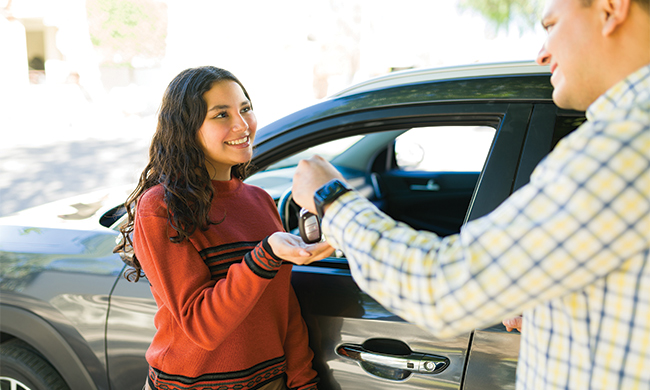
Duplicate Your Car Key: Losing your keys may be frustrating, but realizing you’re locked out of your car – without a spare key – can be truly panic-inducing. Consider these four common reasons drivers make duplicate keys, and how planning ahead can help prevent a lockout from becoming a costly problem.
Avoiding a Costly Lockout: 4 Reasons to Duplicate Your Car Key
(Feature Impact) Losing your keys may be frustrating, but realizing you’re locked out of your car – without a spare key – can be truly panic-inducing. The price of getting back on the road can depend on several factors, including your vehicle make and model, the type of key that needs replacing and whether the situation calls for emergency roadside assistance.
Avoiding a potentially pricey and stressful lockout, which occurs for nearly 4 million Americans each year, starts by planning ahead. According to KeyMe Locksmiths, a service that makes it easy to duplicate car keys at up to 70% off dealership prices, creating a spare before the original is lost, addressing worn keys before they break and keeping backups in secure locations can reduce the need for emergency locksmith services.
“A good rule of thumb is to have at least two working keys for your vehicle,” said Samantha Jahnke, chief experience officer for KeyMe Locksmiths. “If you’re down to one, make a spare while you still have a working key. It can save you stress and expense if you’re ever locked out.”
Consider these four common reasons drivers make duplicate keys, and how planning ahead can help prevent a lockout from becoming a costly problem.
Have a Backup for Lost or Damaged Keys
One car key isn’t enough, because all it takes is one accident or memory lapse to disrupt your day. Maybe you already had a spare key, but it’s been a while since you’ve seen it. Or perhaps you have a habit of locking your key inside your vehicle, so you’d feel better with an extra. Having a spare – or a spare for the spare – gives you peace of mind you have another way to get back on the road without additional hassle.
Give Another Driver Convenient Access
If you share a vehicle with another member of your household, it makes life more convenient for each driver to have their own keys. Instead of passing the primary set back and forth, or arguing over who saw them last, both of you will have reliable access to the car when you need it. Plus, a spare set of keys makes a nice surprise when it’s time to give a new driver in the house access to the car.
Keep a Spare Set for Travel
When you’re far from home, it can be especially risky to only have one set of keys with you. If they happen to fall out of your pocket or get misplaced at the hotel, you could wind up stranded hundreds of miles away, facing the stress of finding a replacement service in an unfamiliar area. Bring a spare to keep in a secure location, like a purse or backpack that always stays on you, so you can focus on enjoying your vacation. If you realize before a trip you don’t have a spare, plan ahead and get a duplicate made before you hit the road.
Make an Extra for a Used Vehicle
Sometimes buying a used vehicle means the previous owner has already done the work of losing the spare key. If your car only comes with one key, make a backup as soon as possible. Having two working keys can also pay off when it’s time to sell or trade in your vehicle, as a missing spare may reduce its value or give a buyer another reason to negotiate.
Learn more about duplicating keys for more than 40,000 different vehicle makes, models and years at CopyKeys.com.

SOURCE:
🚗 Stay in the driver’s seat with the latest automotive news, vehicle reviews, industry updates, recalls, and buying tips. Share your opinions in the comments and subscribe to the STM Daily News newsletter for the latest Consumer Corner Automotive stories delivered straight to your inbox.






