

Family
The ‘choking game’ and other challenges amplified by social media can come with deadly consequences
Teenagers are increasingly engaging in dangerous games amplified by social media, like the Choking Game and Skullbreaker Challenge, which can have deadly consequences. Parental involvement and healthy risk-taking are essential for prevention and guidance.


Steven Wolterning, Texas A&M University and Paige Williams, Texas A&M University
The “choking game” has potentially deadly consequences, as players are challenged to temporarily strangle themselves by restricting oxygen to the brain. It sounds terrifying, but rough estimates suggest that about 10% of U.S. teenagers may have played this type of game at least once.
There’s more, unfortunately: The Skullbreaker Challenge, the Tide Pod Challenge and Car Surfing are but a few of the deadly games popularized through social media, particularly on Snapchat, Instagram, TikTok, YouTube and X – formerly Twitter. Many of these games go back more than a generation, and some are resurging.
The consequences of these so-called games can be deadly. Skullbreaker Challenge, for example, involves two people kicking the legs out from under a third person, causing them to fall and potentially suffer lasting injuries. Swallowing detergent pods can result in choking and serious illness. A fall from car surfing can lead to severe head trauma.
Coming up with an exact number of adolescent deaths from these activities is difficult. Data is lacking, partly because public health databases do not track these activities well – some deaths may be misclassified as suicides – and partly because much of the existing research is dated.
A 2008 report from the Centers for Disease Control and Prevention found that 82 U.S. children over a 12-year period died after playing the Choking Game. About 87% of the participants were male, most were alone, and their average age was just over 13. Obviously, new, updated research is needed to determine the severity of the problem.
A 2008 report from the Centers for Disease Control and Prevention found that 82 U.S. children over a 12-year period died after playing the Choking Game. About 87% of the participants were male, most were alone, and their average age was just over 13. Obviously, new, updated research is needed to determine the severity of the problem.
Peer pressure and the developing brain
We are a professor of educational neuroscience and a Ph.D. student in educational psychology. Both of us study how children regulate their behaviors and emotions, why teenagers are particularly vulnerable to dangerous games, and how social media amplifies their risks.
Risk-taking is a necessary part of human development, and parents, peers, schools and the broader community play an integral role in guiding and moderating risk-taking. Children are drawn to, and often encouraged to engage in, activities with a degree of social or physical risk, like riding a bike, asking someone for a date or learning how to drive.
Those are healthy risks. They let children explore boundaries and develop risk-management skills. One of those skills is scaffolding. An example of scaffolding is an adult helping a child climb a tree by initially guiding them, then gradually stepping back as the child gains confidence and climbs independently.
Information-gathering is another skill, like asking if swallowing a spoonful of cinnamon is dangerous. A third skill is taking appropriate safety measures – such as surfing with friends rather than going by yourself, or wearing a helmet and having someone nearby when skateboarding.
The perfect storm
During adolescence, the brain is growing and developing in ways that affect maturity, particularly within the circuits responsible for decision-making and emotional regulation. At the same time, hormonal changes increase the drive for reward and social feedback.
All of these biological events are happening as teenagers deal with increasingly complex social relationships while simultaneously trying to gain greater autonomy. The desire for social validation, to impress peers or to attract a potential romantic interest, coupled with less adult supervision, increases the likelihood of participating in risky behaviors. An adolescent might participate in these antics to impress someone they have a crush on, or fit in with others.
That’s why the combination of teenagers and social media can be a perfect storm – and the ideal environment for the proliferation of these dangerous activities.
Social media shapes brain circuits
Social media platforms are driven by algorithms engineered to promote engagement. So they feed you what evokes a strong emotional reaction, and they seem to prioritize sensationalism over safety.
Because teens strongly react to emotional content, they’re more likely to view, like and share videos of these dangerous activities. The problem has become worse as young people spend more time on social media – by some estimates, about five hours a day.
This may be why mood disorders among young people have risen sharply since 2012, about the time when social media became widespread. These mood disorders, like depression and conduct issues, more than double the likelihood of playing dangerous games. It becomes a vicious cycle.
Rather than parents or real-life friends, TikTok, YouTube and other apps and websites are shaping a child’s brain circuits related to risk management. Social media is replacing what was once the community’s role in guiding risk-taking behavior.
Protecting teens while encouraging healthy risk-taking
Monitoring what teens watch on social media is extraordinarily difficult, and adults often are ill-equipped to help. But there are some things parents can do. Unexplained marks on the neck, bloodshot eyes or frequent headaches may indicate involvement in the choking game. Some social media sites, such as YouTube, are sensitive to community feedback and will take down a video that is flagged as dangerous.
As parents keep an eye out for unhealthy risks, they should encourage their children to take healthy ones, such as joining a new social group or participating in outdoor activities. These healthy risks help children learn from mistakes, build resilience and improve risk-management skills. The more they can assess and manage potential dangers, the less likely they will engage in truly unhealthy behaviors.
But many parents have increasingly adopted another route. They shield their children from the healthy challenges the real world presents to them. When that happens, children tend to underestimate more dangerous risks, and they may be more likely to try them.
This issue is systemic, involving schools, government and technology companies alike, each bearing a share of responsibility. However, the dynamic between parents and children also plays a pivotal role. Rather than issuing a unilateral “no” to risk-taking, it’s crucial for parents to engage actively in their children’s healthy risk-taking from an early age.
This helps build a foundation where trust is not assumed but earned, enabling children to feel secure in discussing their experiences and challenges in the digital world, including dangerous activities both online and offline. Such mutual engagement can support the development of a child’s healthy risk assessment skills, providing a robust basis for tackling problems together.
Steven Wolterning, Associate Professor of Educational Psychology, Texas A&M University and Paige Williams, Doctoral student in Educational Psychology, Texas A&M University
This article is republished from The Conversation under a Creative Commons license. Read the original article.

child education
Preparing the Next Generation for Economic Mobility in an AI-Driven World
AI-Driven World: Within only a few years, AI has already changed many things about the world and workforce. Entry-level jobs, particularly the ones relying on routine and predictable tasks, are increasingly disappearing to automation, leaving young people wondering how to launch their careers and futures. To learn what preparing students for the future may look like in practice, consider these tips.


Preparing the Next Generation for Economic Mobility in an AI-Driven World
(Feature Impact) Within only a few years, AI has already changed many things about the world and workforce. Entry-level jobs, particularly the ones relying on routine and predictable tasks, are increasingly disappearing to automation, leaving young people wondering how to launch their careers and futures.
Access to economic mobility – the ability to change your income or wealth – doesn’t just rely on technical knowledge and skills but on leaning into humanity. Being able to think outside the box, collaborate, solve problems and grow as a person can open doors in life and at work. AI may be changing the world, but in change lies opportunity. The students who can adapt quickly are more likely to prosper as the economy continues to reshape itself.
To learn what preparing students for the future may look like in practice, consider these tips from the economic and career experts at Junior Achievement.
Build the Kinds of Skills AI Can’t Replace
Young people facing AI as their competition can get a boost from cultivating the uniquely human skills technology can’t replicate. Educators, parents and other adults in kids’ lives can help them develop increasingly important soft skills like critical thinking, communication, teamwork and leadership, which can translate to many different careers. Hands-on skills can fit into this category as well, like the kinds required in entrepreneurship and the trades.
Provide Real-World Experiences
When young people have the chance to test themselves in a real-world setting, it lets them hone their interests, skills and confidence before the time comes to make major decisions about their futures. As early as elementary school, experiential learning activities like Junior Achievement’s Biztown allow students to operate businesses, work with others, manage finances and solve problems, combining in-class learning with hands-on simulations. As kids grow up, other options can include job shadowing, internships and entrepreneurship experiments – all ways to build durable social and professional skills that can help them succeed.
Teach Foundational Financial Literacy
Earning money is only part of the equation for a healthy financial future; equally important is understanding how to manage it. As kids prepare to earn their first sources of income, make sure they’re also equipped with practical financial skills like budgeting, saving, investing, using credit wisely and planning for future goals. Giving them these tools early helps them make informed decisions about their long-term economic advancement.
Connect Students with Employers and Opportunities
Sometimes, all a student needs to succeed is someone who’s willing to give them a chance. Young people in a position to meet business professionals in (and beyond) their communities may be able to turn those connections into future opportunities. This can happen naturally as they seek real-world experiences through apprenticeships, mentorship programs, career fairs and more.
Programs like Junior Achievement’s 3DE puts students in authentic business challenges, connecting them with educators, business partners and volunteers as they work in teams to complete case experiences. This not only gives young people the opportunity to meet potential employers or mentors, it also lets them demonstrate critical thinking, social skills and real-world competence.
Visit jausa.ja.org for more ideas to help young people gain the confidence and connections needed to achieve economic mobility in a changing world.
Photo courtesy of Shutterstock
SOURCE:
Consumer Corner
Cold cities are the most ready for winter, with one exception. See where your city ranks
Cold cities? Every neighborhood has a mix of homeowners who approach seasonal home maintenance differently – there are the people who stay on schedule, and on the other end, the procrastinators. There are the dedicated DIYers, and those who have their favorite maintenance pro saved as a favorite contact in their phone. As it turns out, cities are no different. Some metropolitan areas keep their neighborhoods in tip-top shape, while others are a little more slow-going.

Cold cities are the most ready for winter, with one exception. See where your city ranks
(Sheeka Sanahori) Every neighborhood has a mix of homeowners who approach seasonal home maintenance differently – there are the people who stay on schedule, and on the other end, the procrastinators. There are the dedicated DIYers, and those who have their favorite maintenance pro saved as a favorite contact in their phone. As it turns out, cities are no different. Some metropolitan areas keep their neighborhoods in tip-top shape, while others are a little more slow-going.
New data from home services company Angi, covering fall maintenance activity in August, reveals which U.S. metropolitan areas are the most proactive with fall maintenance. Washington, D.C., tops the ranking with the strongest demand for fall maintenance in the country, followed by Columbus, Ohio, and Milwaukee, Wisconsin. Northern cities dominate the rest of the list.
Cleveland, Ohio, and Albany-Schenectady-Troy, New York, round out the top five. Cold-weather markets dominate the ranking, accounting for eight of the 10 most-prepared metros. Rochester, New York; Charlotte, North Carolina; Chicago; Indianapolis; and Pittsburgh complete the top 10.
Least fall-ready metros
Fewer than 1 in 5 American cities is prepping for fall at an above-average rate. Among the 66 metros that recorded at least 100 fall maintenance service requests during the analysis period, Los Angeles had the lowest level of per-capita activity, followed by Oklahoma City and Riverside, California. California accounts for four of the bottom 10 markets, with Los Angeles, Riverside, San Diego and San Francisco all appearing on the list. These metros historically don’t experience the colder winter climates of the Northeast and Midwest, making fall maintenance less of an imperative.
Grand Rapids, Michigan, stands out as the only clearly cold-weather metro among the 10 least-prepared large metros. The New York City metro, which includes Newark and Jersey City, ranked just outside the 10 least-prepared large metros, coming in at number 11. Other New York state metros, including Syracuse, Rochester and the Albany metro area, were on the most prepared list.
Homeowners are choosing upkeep over upgrades
Sixty-three percent of homeowners who have recently hired a professional completed maintenance work, and 58% completed repairs. Although they may be waiting to do that dream kitchen or bath renovation, they’re focusing for now on the maintenance that keeps their homes in order.
The most common fall maintenance projects focus on outdoor upkeep. Nationally, tree trimming was the most popular, followed by lawn and yard waste cleanup and shrub care.
What homeowners should do now
When tackling a home maintenance list, start at the top of the home by inspecting the roof and gutters. Look for loose or damaged shingles, and make sure gutters are debris-free. It’s also a good idea to ensure downspouts direct water far away from the foundation. Homeowners should inspect these areas from the ground or hire a professional if the work requires climbing or feels unsafe.
Next, check for drafts around the windows and doors. Replacing worn weatherstripping and damaged caulk in the fall can prevent warm air from escaping once the heat comes back on. Homeowners should also inspect their HVAC filters and have the heating system checked before the temperatures drop.
Every home’s maintenance needs will vary, depending on the age and condition of the house and where it’s located. Whether homeowners hire a professional or safely address small issues, making the fixes can prevent larger and more expensive problems later.
The ranking: Metros from most to least prepared
America’s 10 Most Fall-Prepared Metros
1. Washington, D.C.
2. Columbus, Ohio
3. Milwaukee, Wisconsin
4. Cleveland, Ohio
5. Albany-Schenectady-Troy, New York
6. Rochester, New York
7. Charlotte, North Carolina
8. Chicago, Illinois
9. Indianapolis, Indiana
10. Pittsburgh, Pennsylvania
10 Metros With the Most Opportunity to Get Fall-Ready
1. Los Angeles, California
2. Oklahoma City, Oklahoma
3. Riverside, California
4. Miami, Florida
5. San Diego, California
6. Houston, Texas
7. Grand Rapids, Michigan
8. San Francisco, California
9. Austin, Texas
10. Memphis, Tennessee
Methodology
The rankings are based on fall maintenance activity recorded on Angi during August 2026. Projects included yard cleanup, winterization, roofing and gutters, heating systems, water and drainage, outdoor plumbing, fireplaces and chimneys, pest prevention, and snow and storm preparation. U.S. metropolitan areas were ranked by activity per 100,000 residents using 2020 U.S. Census population data. To qualify for the least-prepared ranking, metros were required to have at least five service requests or jobs during the analysis period. The rankings reflect activity on Angi’s platform and are not a complete measure of all home-maintenance activity within each metro. These rankings reflect activity observed on Angi’s platform and should not be interpreted as a complete measure of all home-maintenance behavior within a metro area.
Photo courtesy of Shutterstock
SOURCE:
Angi

child education
Where Curiosity Builds Trade Skills: 5 Ways to Help Kids Discover the Skilled Trades
Help Kids Discover the Skilled Trades: Parents, educators and mentors can encourage young people to broaden their horizons as they plan their futures and build awareness around careers in the skilled trades with these tips.
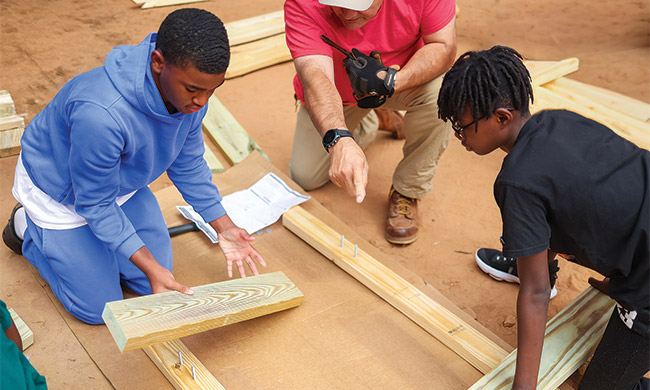
Where Curiosity Builds Trade Skills: 5 Ways to Help Kids Discover the Skilled Trades
(Feature Impact) Most students hear questions about what they want to be when they grow up. By the time their middle and high school years arrive, they’re often starting to consider their answers more in depth. Conversations with adults can help shape their awareness of and interest in various career paths, including skilled trades.
When they’re provided with opportunities to learn, build, experiment and solve problems, young people can discover whether their talents and passions are a good fit for a career in the trades. Programs likePath to Pro Skills Explorers, launched by The Home Depot in partnership with Scouting America and Boys & Girls Clubs of America, provide free, accessible ways to introduce students to options like the plumbing, construction and electrical fields, as well as content on leadership and soft skills.
Parents, educators and mentors can encourage young people to broaden their horizons as they plan their futures and build awareness around careers in the skilled trades with these tips.
Start Career Conversations Early
Choosing a career path doesn’t have to be one intimidating, life-changing moment. Parents and mentors can normalize career conversations by starting them early and keeping things casual. Opening the dialogue sparks curiosity about the activities kids enjoy and allows them to start connecting those interests to potential career paths. To get started, set kids up with access to online programs, videos and introductory courses so they can explore a variety of possibilities.
 Turn Curiosity Into Hands-On Learning
For many students, learning by doing is the most satisfying way to test, improve and build skills. Instead of only reading textbooks or listening to instructors, offer them the chance to follow a plan, work with different materials, troubleshoot problems and build something tangible. Young people considering hands-on careers need hands-on practice to develop confidence and adaptability. Take the first step by researching online resources and local opportunities for classes, job shadowing or even apprenticeships.
Recognize the Skills Kids Are Already Building
Skilled trades aren’t just about knowing which wires to connect or what tool to reach for. They also rely on a variety of soft skills like communication, patience, critical thinking, time management, attention to detail and more. When kids demonstrate these traits, point them out and encourage them. Take opportunities to let them experiment with hands-on projects, whether they want to try building a treehouse, repairing a bike or tinkering with technology.
Expand Views of Career Pathways and Success
The road to success is more like an intersection. Let young people know there are many pathways to fulfilling careers and futures, and while the traditional college-to-career plan can still be a viable option, it isn’t the only one. Skilled trades offer competitive salaries, job security and the opportunity to learn hands-on skills that will always be in demand. Even in a world where technology is rapidly changing many career fields, it takes skilled workers to replace roofs, repair electrical systems, fix sewer lines and lead disaster recovery efforts.
Find Programs That Make Skilled Trades Exploration Accessible
There is a gap between labor supply and demand in the trades, and it’s only widening as older generations approach retirement age. Programs like The Home Depot’s Skills Explorers are designed to empower young people to step into these roles by providing a mix of online resources and hands-on activities to explore viable career paths. As a key part of a commitment by The Home Depot and The Home Depot Foundation to deliver 15 million introductions to the skilled trades by 2032, the program offers an accessible, no-cost curriculum for youth education groups to learn what it’s like to work in these important fields.
“For years, The Home Depot and The Home Depot Foundation’s Path to Pro program have helped separating military, career changers and others build pathways to the trades,” said Michael Rowe, executive vice president of Pro for The Home Depot. “We know that closing the skilled labor gap starts much earlier. We need more young people to see what’s possible and understand the lucrative opportunities these careers provide.”
Visit pathtopro.com/skills-explorers to access the free curriculum and discover how to bring hands-on skilled trade exploration to students.
SOURCE:
🔧 Curiosity today can become a skill for tomorrow. Giving kids opportunities to build, fix, create, and explore trades at an early age can turn natural curiosity into confidence, practical skills, and even inspiration for a future career. Whether it’s woodworking, automotive repair, cooking, electronics, or construction, hands-on learning shows kids that there’s more than one path to success. Visit: https://stmdailynews.com/lifestyle/





