

Lifestyle
Even 1 drink a day elevates your cancer risk – an expert on how alcohol affects the body breaks down a new government report


Many people use the new year to reflect on their relationship with alcohol. Just-released government guidelines are giving Americans another reason to consider a “dry January.”
Over the past few decades, mounting scientific evidence has shown that as little as 1-2 alcoholic drinks per day can lead to increases in the likelihood of several cancers. This prompted the U.S. surgeon general, Dr. Vivek Murthy, to release a new Surgeon General Advisory on Jan. 3, 2025, warning about the link between alcohol and cancer. This report highlighted the evidence and included a call for new cancer warning labels on alcoholic beverages.
The association between alcohol and cancer isn’t new news – scientists have been trying to determine the link for decades – yet most people aren’t aware of the risks and may only associate drinking with liver disease like cirrhosis. In a 2019 survey from the American Institute for Cancer Research, less than half of Americans identified alcohol as a risk factor for cancer.
Alcohol is the third-most preventable cause of cancer in the U.S, putting it just behind tobacco and obesity. As the surgeon general’s report highlights, alcohol is associated with approximately 100,000 cancer cases and 20,000 cancer deaths every year, playing a role in breast, liver, colorectal, mouth, throat, esophagus and voice box cancer cases. Alcohol-induced cancer deaths outnumber alcohol-associated traffic crash fatalities every year.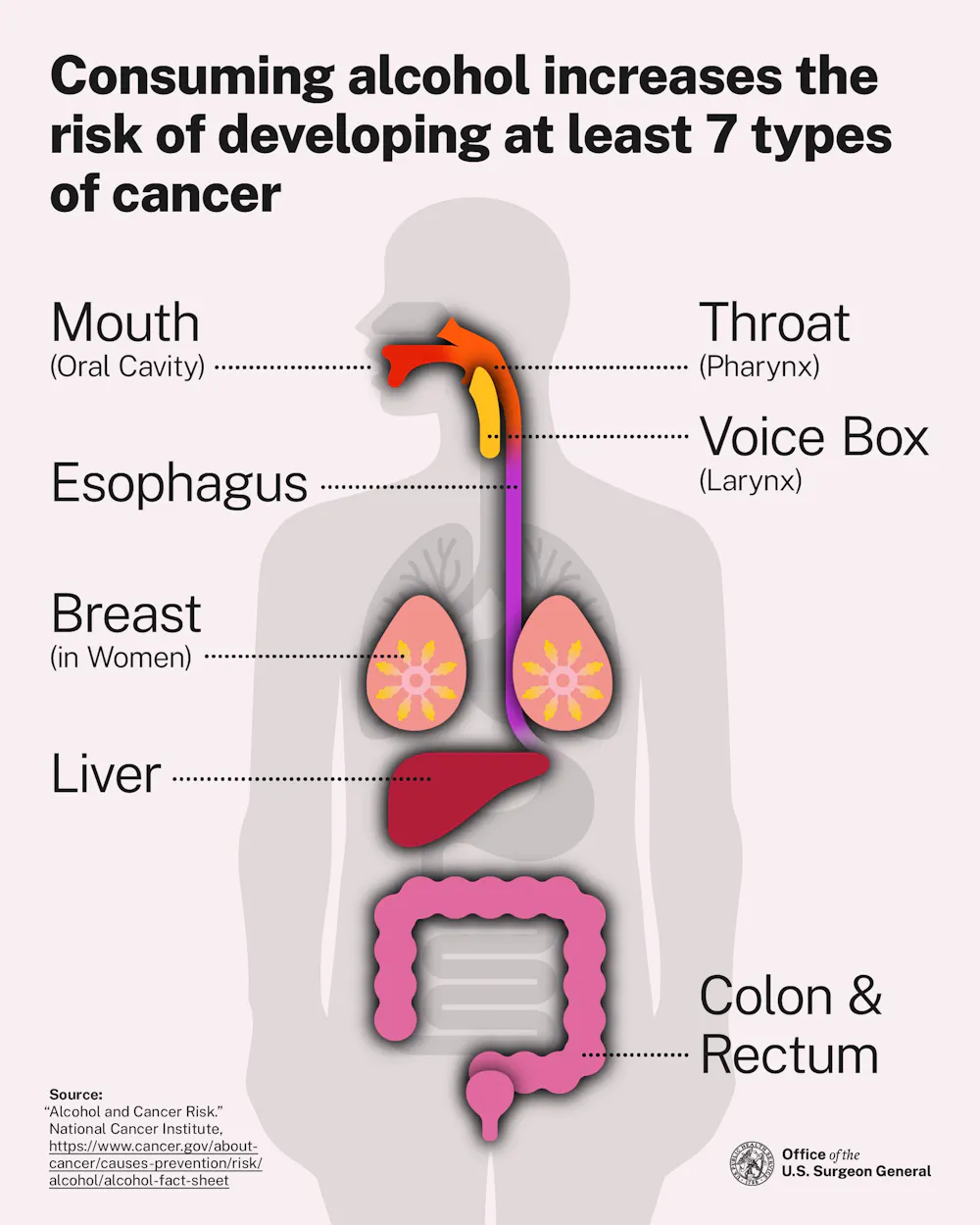
The report included the suggestion to add warning labels to alcohol similar to what is already required for tobacco products – another substance of abuse known to cause cancer.
As a neuroscientist specializing in the neurobiological effects of alcohol use and binge drinking, I am glad to see the call to action for reducing alcohol consumption in the United States.
Key takeaways of the report
With so few people aware of the links between alcohol consumption and various cancers – and the fact that the vast majority of people consume some alcohol every week – it’s easy to see why the surgeon general is calling for greater awareness. The 22-page report highlights what scientists know about the relationship between alcohol and cancer, and suggests actions for moving forward. Those include label changes on alcohol, which have not been updated since they were created in 1988.
Somewhat strikingly, breast cancer carries a large portion of this risk – making it particularly worrisome in the face of increased alcohol use among women.
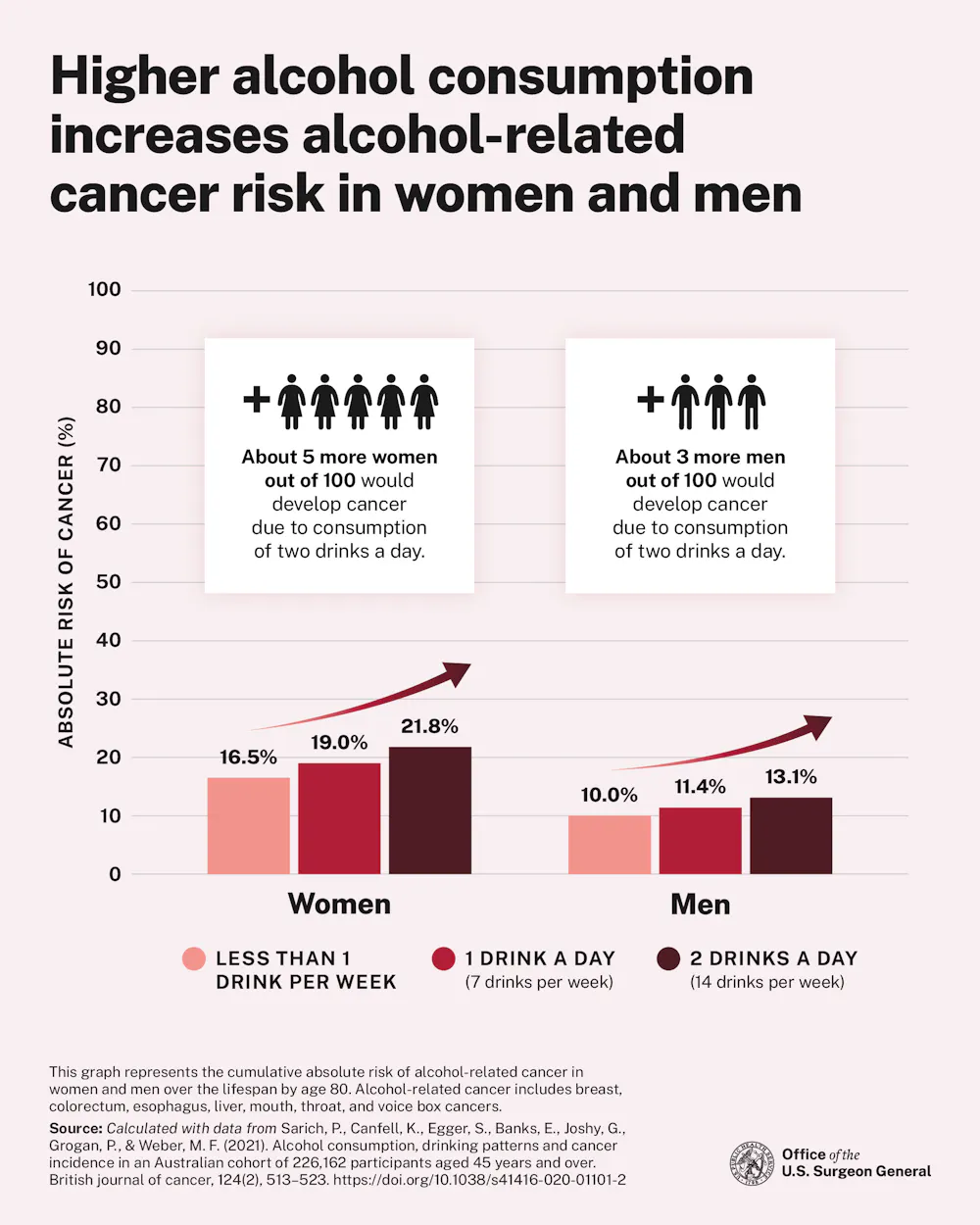
These numbers don’t only apply to heavy alcohol drinkers. While less alcohol is better, 25% of these cancer cases were in people classified as moderate drinkers – consuming, on average, fewer than two drinks per day. This means that anyone regularly drinking alcohol, even small amounts, should know about and understand the risks.
Surgeon general’s advisories are the primary way that the Department of Health and Human Services, where the Office of the Surgeon General resides, communicate health issues of great importance to the public. Surgeon general’s advisories are not necessarily breaking news, but they take the opportunity to bring public awareness to science surrounding big public health issues.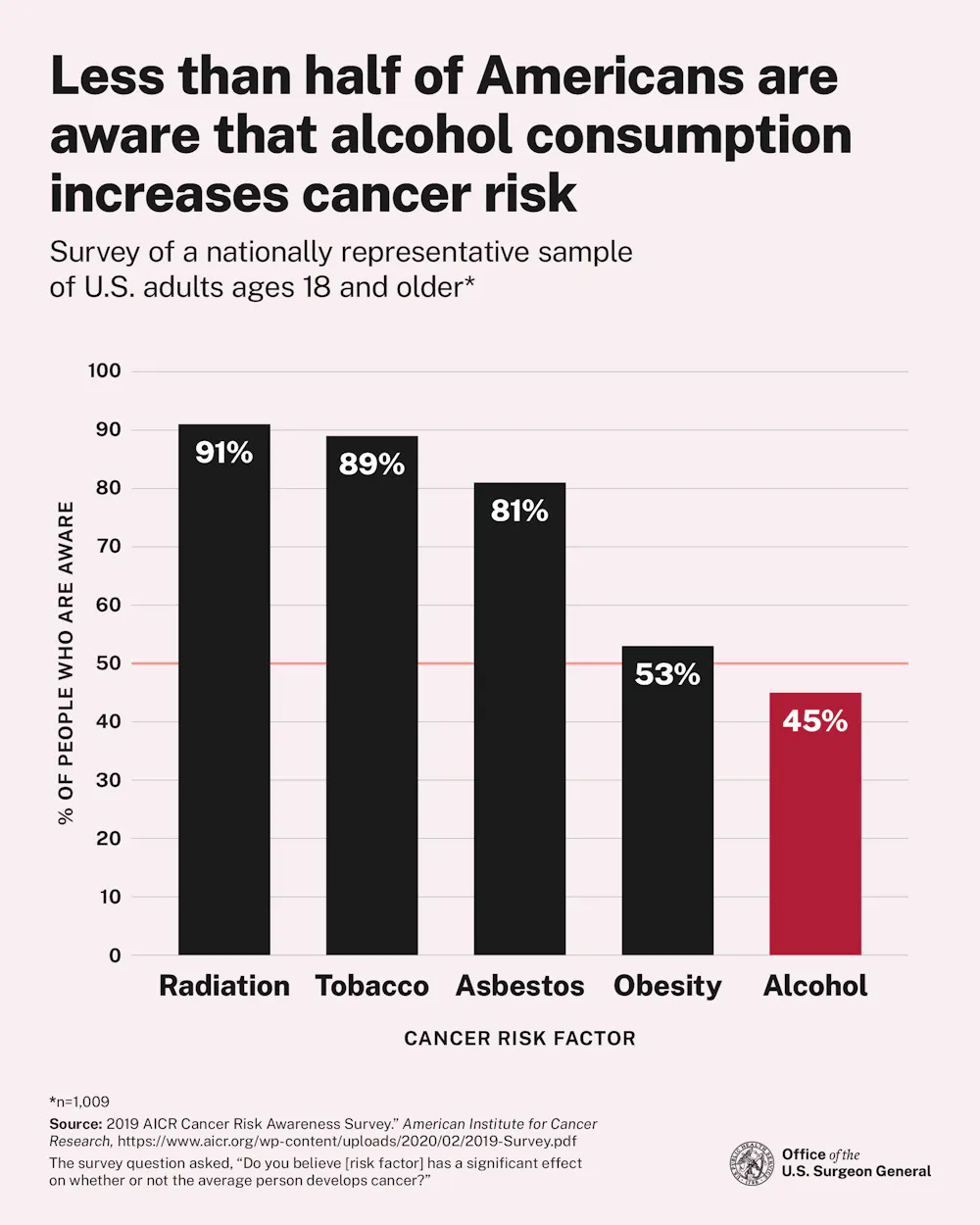
The science behind the link between alcohol and cancer
The relationship between alcohol and cancer has been clear to scientists for decades. In fact, it was highlighted in a 2016 surgeon general’s report as well, which focused on addiction more broadly.
The new report outlines the different types of evidence supporting this link. One way is through epidemiological science, which tries to understand patterns and relationships between the rates of cancer and how much alcohol people consumed. Another is through experimental animal studies, which allow scientists to understand the mechanism and causality of these connections as they apply to specific cancers. Together, studies conclusively show a link and pathway between alcohol consumption and cancer.
The surgeon general’s report highlights four key pathways through which alcohol can cause cancer. These largely focus on the ways alcohol can negatively affect your DNA, the building blocks of cells. While the healthy cells in your body divide all the time, their abnormal growth can be driven by aberrant factors like alcohol-induced DNA damage.
This DNA damage leads to uncontrollable growth of tissue instead of healthy, normal tissue growth. This abnormal tissue growth is cancer. The four pathways through which alcohol can lead to cancer highlighted in the report are:
- The body naturally breaks alcohol down into acetaldehyde. Acetaldehyde can damage and break DNA, leading to chromosomal rearrangements and tumors. This link is so strong that acetaldehyde has been classified as a carcinogen since 1999.
- Alcohol creates reactive oxygen species. Reactive oxygen species, sometimes called “free radicals,” are unstable molecules that contain oxygen and can further damage DNA, proteins and fats.
- Alcohol can influence hormones, like estrogen. Alcohol can raise the amount of estrogen in the body, which may explain its link to breast cancer. This increased estrogen can influence breast tissue by causing – you guessed it – DNA damage.
- Alcohol is a solvent, which means other things can dissolve in it. This makes it easier for carcinogens from other sources – like cigarettes and e-vapes – to be absorbed by the body when the two are consumed together.
Is any amount of alcohol safe?
The biggest question on people’s minds right now is likely “how much alcohol can I safely drink?” and the answer to that might disappoint you – probably none.
Alcohol use remains one of the most preventable risk factors for cancer. And even moderate alcohol consumption – one or fewer drinks per day – may elevate cancer risk for some types, such as breast, throat and mouth cancers.
But none of these studies can tell you what your individual risk for cancer is. The relationship between alcohol and cancer can be influenced by your genes, such as those that control the enzymes that metabolize alcohol, and other lifestyle factors that influence the rates of cancer broadly, like diet and inflammation. All of these lifestyle and personal health factors can influence how risky alcohol consumption is for you.
The Centers for Disease Control and Prevention notes that if you choose to drink, consider sticking to less than one, for women, or two, for men, standard servings of alcohol per day – which might be smaller than you think, and don’t binge drink alcohol at all. The surgeon general is also suggesting a rethinking of these guidelines to include updated limits on daily alcohol consumption and greater educational efforts around the link between alcohol and cancer.
The National Institute on Alcohol Abuse and Alcoholism has similar recommendations around limiting alcohol consumption and advises that for people who choose to drink alcohol, “the less, the better.”
The institute offers tips on its website for managing your alcohol consumption or abstaining from alcohol consumption altogether, including finding alternative hobbies and activities, identifying what leads to your urges to drink and having a plan to handle urges, and identifying a strategy for saying “no” to an alcoholic beverage in social settings.
Nikki Crowley, Assistant Professor of Biology, Biomedical Engineering and Pharmacology, Penn State
This article is republished from The Conversation under a Creative Commons license. Read the original article.
Our Lifestyle section on STM Daily News is a hub of inspiration and practical information, offering a range of articles that touch on various aspects of daily life. From tips on family finances to guides for maintaining health and wellness, we strive to empower our readers with knowledge and resources to enhance their lifestyles. Whether you’re seeking outdoor activity ideas, fashion trends, or travel recommendations, our lifestyle section has got you covered. Visit us today at https://stmdailynews.com/category/lifestyle/ and embark on a journey of discovery and self-improvement.


Lifestyle
7 Fire Prevention Tips to Protect Your Home and Community
7 Fire Prevention Tips: Fires can be devastating, but many of them are preventable with simple precautions and smart everyday choices. Consider these tips to reduce the risk of fires and keep your household, family and community safe.


7 Fire Prevention Tips to Protect Your Home and Community
(Feature Impact) In observance of National Fire Prevention Month, it’s a good time to review your fire safety habits at home and in your neighborhood. Fires can be devastating, but many of them are preventable with simple precautions and smart everyday choices.
Consider these tips to reduce the risk of fires and keep your household, family and community safe.
Test Your Smoke Alarms
Smoke detectors are one of the simplest yet most important tools for protecting your home, loudly alerting you to potential danger at any time of the day or night. Test them monthly, follow manufacturer’s instructions for replacement and change batteries as needed.
Heat Your Home Safely
Depending on how you heat your home, there can be different hazards to remain aware of. Never leave fireplaces unattended when in use and have them inspected and maintained as recommended by a trained professional. If you use portable heaters, keep them at least three feet away from curtains, bedding, furniture and other flammable materials.
Prevent Electrical Fires
Frayed cords, damaged outlets or overloaded appliances can pose real danger to your home when they overheat or spark. Particularly if you live in an older home or have outdated appliances, keep an eye out for warning signs like tripped circuit breakers, malfunctioning devices or the smell of burning. If you’re concerned, have your system inspected by a qualified electrician.
Store Flammable Objects Carefully
Keeping matches and lighters out of reach of children is always a smart first step for household fire safety. Also follow safe storage practices for items like lighter fluid, propane, aerosol cans and other household products that could potentially ignite when exposed to heat or a stray spark.
Practice Smart Kitchen and Grill Habits
From sparks flying off the grill to hot oil forgotten in the frying pan, cooking is the leading cause of household fires. Stay attentive in the kitchen, never leave cooking food unattended and avoid setting combustible materials like paper plates or fabric towels too close to a stove or grill. Also keep your appliances cleaned and well-maintained.
Plan Your Escape Route
Fires can spread quickly, which is why it’s important for everyone in your household to know the plan (and backup plan) for safely exiting different areas of the house during an emergency. Decide on a specific meeting place outside and practice quick fire drills together to build muscle memory.
Observe Local Fire Safety Rules
Where you live determines what kinds of fire risks affect your community, so make sure you stay informed about local regulations. For instance, areas prone to drought or wildfire may have rules about outdoor burning, and local fire prevention ordinances may outline specific requirements for smoke alarms in your home.
Find more home safety tips at eLivingtoday.com.
Photo courtesy of Shutterstock
SOURCE:
eLivingtoday.com

home improvement
5 Simple Steps to Prepare Before Disaster Strikes
Disaster preparedness doesn’t have to be expensive or complicated. It’s all about the small, simple steps you can take to protect yourself, your family and your community.

(Feature Impact) Disaster preparedness doesn’t have to be expensive or complicated. It’s all about the small, simple steps you can take to protect yourself, your family and your community.
Yet, as severe weather becomes more frequent, many people aren’t prepared for the impact.
New research from United Way Worldwide and Verizon revealed that although 60% of U.S. adults are concerned a natural disaster could affect their household in the next year, only 15% would feel very prepared for one.
While many people understand the risks, they face real barriers to preparation. Cost remains the primary obstacle to disaster preparedness with 45% of those surveyed naming it as the top barrier. In addition to cost, lack of time (25%) and not knowing where to start (28%) prevented people from taking action.
That’s why preparedness should be practical and affordable.
For example, the United Way’s United We Prepare initiative, supported by Verizon, offers free disaster preparedness workshops, emergency kit distribution, information on local emergency services and practical guidance to help people plan and be ready to weather a storm.
When individuals and families are better prepared, communities are more resilient. Get started with these simple, zero-cost steps:
 Identify Key Emergency Contacts
Choose a relative or friend outside of your immediate community who can act as a central check-in point or offer shelter during an emergency. Also, take a few moments to create updated digital and physical emergency contact lists with names, phone numbers and addresses of loved ones as well as service and healthcare providers.
Enable Local Alerts
Identify trusted local emergency services and news that can provide weather and emergency information. Turn on wireless emergency alerts in your phone settings, bookmark local news weather pages and save other important website links to ensure you’re in-the-know when disasters strike.
Build a Support System
Before severe weather, touch base with at least two neighbors or family members to identify what help they may need (or what assistance they can provide) and create a plan for checking in with each other in the event of an emergency.
Plan for Special Needs
It’s easiest to make clear-headed decisions before you’re stressed and rushing in the heat of the moment, so sit down and sketch out basic plans for special needs related to transportation, prescriptions, caregiving and pets before severe weather arrives. Decide where you would meet if separated, how to get there if transportation is disrupted, who would pick up children or take care of pets, what health needs or medications need to be considered and more.
Save Key Information and Documents Digitally
During a crisis, you likely won’t have time to search filing cabinets, desks and glove compartments for important documentation. Take photos or make digital copies of identification documents, insurance information, medical cards, prescription details, important household records and other key documents to access if you need to leave home quickly. For insurance purposes, it may also be helpful to take a video of your property and valuable belongings in your home in case they’re damaged or ruined.
The goal isn’t to do everything at once; it’s to start. An hour spent making connections, gathering information and talking through a plan today can make it easier to act when time matters most.
For more simple preparedness tips and resources, visit UnitedWePrepare.org.
Test Your Disaster Preparedness Knowledge
Take the quiz at UnitedWePrepare.org to test your knowledge on 10 disaster preparedness questions customized to your area, such as:
- What should you include in a winter emergency supply kit for your car?
- What is the difference between a Tornado Watch and Tornado Warning?
- When should you evacuate during a wildfire?
- Why is it important to prepare for disasters?
Photo courtesy of Shutterstock (preparation supplies)
SOURCE:
child education
Preparing the Next Generation for Economic Mobility in an AI-Driven World
AI-Driven World: Within only a few years, AI has already changed many things about the world and workforce. Entry-level jobs, particularly the ones relying on routine and predictable tasks, are increasingly disappearing to automation, leaving young people wondering how to launch their careers and futures. To learn what preparing students for the future may look like in practice, consider these tips.

Preparing the Next Generation for Economic Mobility in an AI-Driven World
(Feature Impact) Within only a few years, AI has already changed many things about the world and workforce. Entry-level jobs, particularly the ones relying on routine and predictable tasks, are increasingly disappearing to automation, leaving young people wondering how to launch their careers and futures.
Access to economic mobility – the ability to change your income or wealth – doesn’t just rely on technical knowledge and skills but on leaning into humanity. Being able to think outside the box, collaborate, solve problems and grow as a person can open doors in life and at work. AI may be changing the world, but in change lies opportunity. The students who can adapt quickly are more likely to prosper as the economy continues to reshape itself.
To learn what preparing students for the future may look like in practice, consider these tips from the economic and career experts at Junior Achievement.
Build the Kinds of Skills AI Can’t Replace
Young people facing AI as their competition can get a boost from cultivating the uniquely human skills technology can’t replicate. Educators, parents and other adults in kids’ lives can help them develop increasingly important soft skills like critical thinking, communication, teamwork and leadership, which can translate to many different careers. Hands-on skills can fit into this category as well, like the kinds required in entrepreneurship and the trades.
Provide Real-World Experiences
When young people have the chance to test themselves in a real-world setting, it lets them hone their interests, skills and confidence before the time comes to make major decisions about their futures. As early as elementary school, experiential learning activities like Junior Achievement’s Biztown allow students to operate businesses, work with others, manage finances and solve problems, combining in-class learning with hands-on simulations. As kids grow up, other options can include job shadowing, internships and entrepreneurship experiments – all ways to build durable social and professional skills that can help them succeed.
Teach Foundational Financial Literacy
Earning money is only part of the equation for a healthy financial future; equally important is understanding how to manage it. As kids prepare to earn their first sources of income, make sure they’re also equipped with practical financial skills like budgeting, saving, investing, using credit wisely and planning for future goals. Giving them these tools early helps them make informed decisions about their long-term economic advancement.
Connect Students with Employers and Opportunities
Sometimes, all a student needs to succeed is someone who’s willing to give them a chance. Young people in a position to meet business professionals in (and beyond) their communities may be able to turn those connections into future opportunities. This can happen naturally as they seek real-world experiences through apprenticeships, mentorship programs, career fairs and more.
Programs like Junior Achievement’s 3DE puts students in authentic business challenges, connecting them with educators, business partners and volunteers as they work in teams to complete case experiences. This not only gives young people the opportunity to meet potential employers or mentors, it also lets them demonstrate critical thinking, social skills and real-world competence.
Visit jausa.ja.org for more ideas to help young people gain the confidence and connections needed to achieve economic mobility in a changing world.
Photo courtesy of Shutterstock
SOURCE:





